
The End of an Era: Marvel’s ‘VisionQuest’ and the Twilight of the MCU’s Disney+ Experiment
Main Facts
The Marvel Cinematic Universe (MCU) has reached a critical juncture in its television journey. Disney+ is set to premiere VisionQuest, an eight-episode limited series that the studio has billed as the final chapter of a thematic trilogy. The sequence began with the groundbreaking WandaVision in 2021 and continued through various serialized streaming efforts.
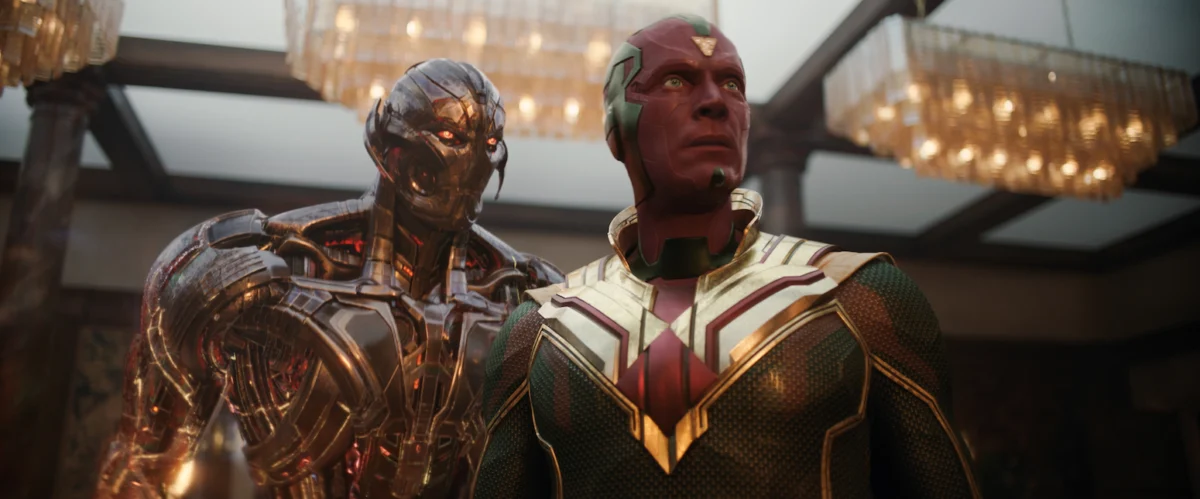
Starring Paul Bettany, who reprises his role as the synthetic hero, VisionQuest arrives with a heavy burden. It functions simultaneously as an intimate existential character study for its lead and as a crucial piece of administrative housekeeping designed to position the character for upcoming crossover events like Avengers: Doomsday.
The series kicks off with a dense, minutes-long exposition monologue delivered by Bettany, recapping the convoluted history of Vision: his creation powered by the Mind Stone, his death at the hands of Thanos in Avengers: Infinity War, his subsequent resurrection as the devoid-of-emotion "The Vision," and Wanda Maximoff’s conjuring of an alternative, memory-sharing counterpart in Westview.
Now, the hero is left seeing double, burdened by memories of a past he did not physically experience. Despite featuring standout contributions—including James Spader reprising his role as Ultron and Todd Stashwick as the bounty hunter Paladin—the series ultimately underscores the systemic flaws that have plagued Marvel’s television wing since its inception.
Chronology
To understand how the MCU arrived at VisionQuest, one must trace the timeline of Marvel’s ambitious, yet often disjointed, expansion onto the small screen.
- January 2021: WandaVision premieres on Disney+, introducing a bold, format-bending stylistic approach that captures the cultural zeitgeist and sets a high watermark for Marvel television.
- 2021–2024: A steady stream of limited series debuts, including The Falcon and the Winter Soldier, Loki, Moon Knight, She-Hulk: Attorney at Law, and Secret Invasion. While achieving varying degrees of commercial success, critics frequently note a recurring struggle to justify feature-film budgets and characters within a traditional television format.
- Late 2024–2025: Marvel undergoes a structural pivot under executive leadership, reevaluating its content output, embracing traditional showrunners, and scaling back production volume to combat "superhero fatigue" and narrative bloat.
- October 14, 2026: VisionQuest premieres its first two episodes on Disney+, marking the de facto conclusion of the initial era of Marvel’s streaming experiments. Weekly episodes roll out leading up to the series finale on November 11, 2026.
Supporting Data and Narrative Breakdown
VisionQuest spends its runtime exploring the intersection of artificial intelligence, trauma, and identity. In the real world, Vision has returned to Edinburgh, working quietly at the same bar where he and Wanda once shared a life. When offline, he sifts through the memories gifted to him by his Westview counterpart, desperate to spark genuine emotional resonance.

The narrative shifts gears when Paladin (Todd Stashwick) tracks Vision down with a staggering revelation: Tommy Maximoff (played by Ruaridh Mollica) is alive. Raised as an orphan named Thomas Shepherd, Tommy possesses the memories of the speedster son Wanda conjured, leaving both "father" and "son" to grapple with the reality of their existence. Are these memories authentic? Can an artificial intelligence truly function as a father to a flesh-and-blood human?
These profound philosophical questions are frequently sidelined by standard MCU plotting. A cohort of mysterious, masked adversaries forces the characters from one safehouse to another, driving a series of forgettable action sequences designed to stretch the narrative across eight episodes. Within his own mind, Vision is aided by a ragtag team of internal AI constructs—echoes of J.A.R.V.I.S., D.U.M.-E., and others—tasked with helping him process his manufactured feelings.
James Spader’s return as Ultron offers a welcome injection of dynamic energy, serving as a darkly comedic, pseudo-paternal foil to Bettany’s earnest protagonist. Yet, the overall progression remains frustratingly slow, substituting genuine emotional discovery for protracted mystery-box teasers.
Official Responses and Industry Context
The rollout of VisionQuest occurs against a backdrop of sweeping behind-the-scenes adjustments at Marvel Studios. Following public critiques regarding the "homework" nature of MCU Disney+ shows—where audiences felt compelled to consume hours of streaming television to understand blockbuster films like The Marvels or Doctor Strange in the Multiverse of Madness—Marvel head Kevin Feige and studio executives signaled a strategic retreat.
Industry reports highlight that the studio’s early refusal to implement traditional showrunner rooms led to disjointed productions where directors and writers struggled to adapt feature-film sensibilities to serialized television formats. Shows like Secret Invasion and The Falcon and the Winter Soldier were heavily criticized for feeling like over-stuffed movies cut into arbitrary 45-minute segments.
While VisionQuest head writer Terry Matalas leans heavily into a character-first methodology, critics note that the underlying corporate mandate remains unchanged: ensure the asset is functional, neatly defined, and ready to report for duty in the next massive cinematic ensemble.

Implications for the Future of MCU Television
The reception of VisionQuest—which currently holds a lukewarm critical consensus—cements a pivotal shift in how Disney and Marvel will approach streaming content moving forward.
For years, the promise of the MCU on television was total narrative integration. Every series was framed as an essential tile in a massive, interconnected mosaic. However, as general audiences and critics began to experience fatigue from mandatory viewing requirements, the financial and creative returns diminished.
The evaluation of VisionQuest as the end of an era suggests that future Marvel television will likely abandon the rigid "eight-episode limited series" model in favor of more self-contained, structurally sound storytelling or traditional multi-season television formats. The notion of streaming content as mandatory cinematic prep school is actively being dismantled.
Ultimately, VisionQuest delivers a melancholic, visually polished meditation on grief and artificial consciousness, led by Paul Bettany’s consistently grounded performance. Yet, constrained by the structural habits of a bygone era of streaming, it serves as a reminder of both what the MCU’s television experiment could have been, and why its current chapter had to close.
