
Bringing Home the Beast: How Indie Horror Phenomenon ‘Buddy’ Conquered the Box Office and Prepares for Domestic Release
By Janel Spiegel
Published October 7, 2026
Main Facts: The Rise of the Orange Unicorn
The indie horror landscape has a new apex predator, and it comes wrapped in bright, nostalgic neon orange. Buddy, the R-rated horror-comedy phenomenon directed by Casper Kelly, has officially transitioned from a theatrical box-office juggernaut into a coveted home-media release. Saban Films and Roadside Attractions have officially announced that audiences can finally invite America’s favorite—and most terrifying—orange unicorn into their living rooms this fall.
Buddy will make its digital debut on October 13, 2026, followed by a physical release on DVD and Blu-ray on December 8, 2026.
The film’s journey from a subversive concept to an unprecedented cultural milestone has stunned industry insiders and horror aficionados alike. Blending the nostalgic, wholesome aesthetics of vintage children’s television programming with unbridled, visceral terror, Buddy captured the collective imagination of moviegoers over the summer. Defying expectations typically reserved for major studio franchises, the independent, non-franchise, R-rated feature slashed its way past the $26 million domestic box office mark, rewriting the rules for mid-to-low-budget genre filmmaking.
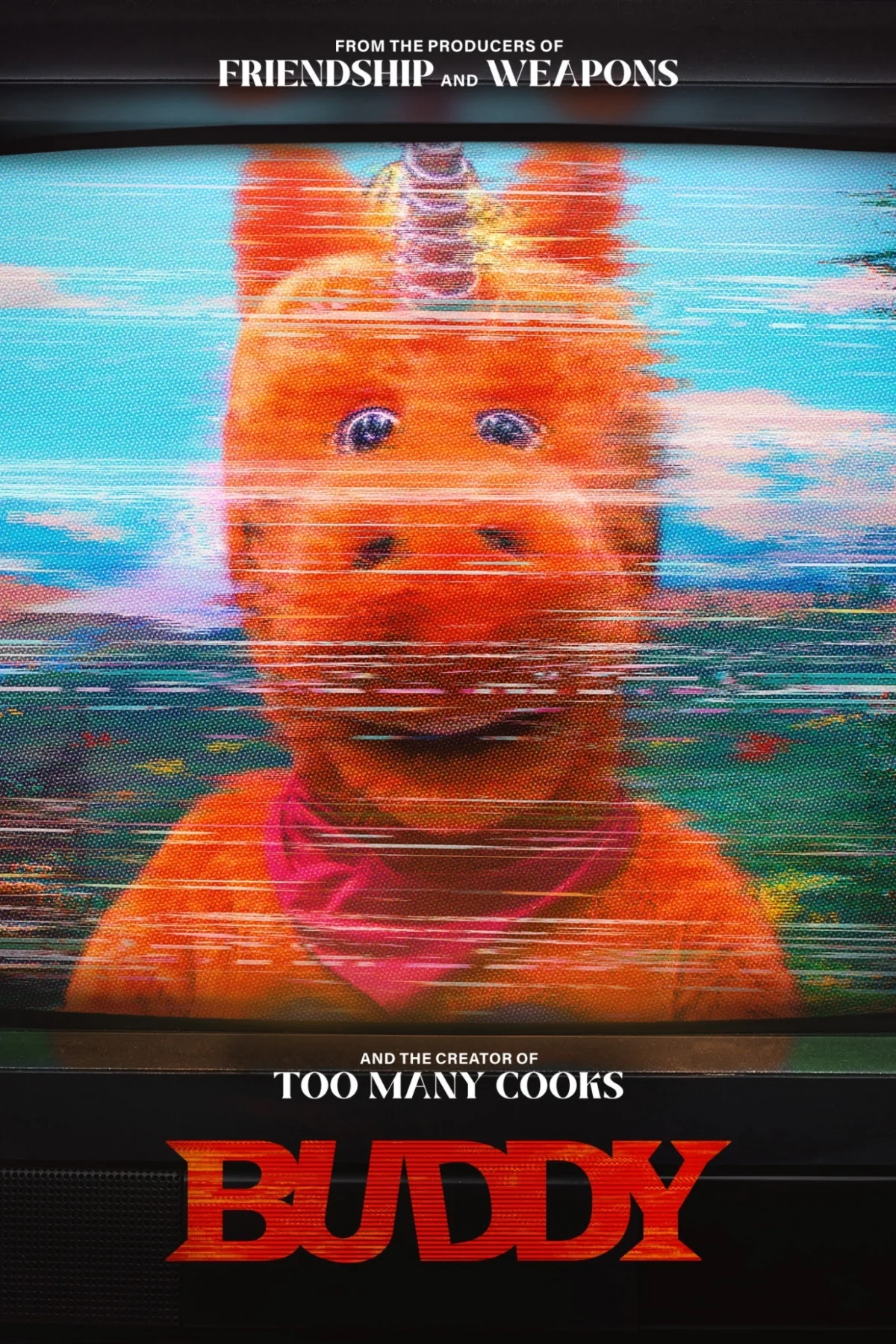
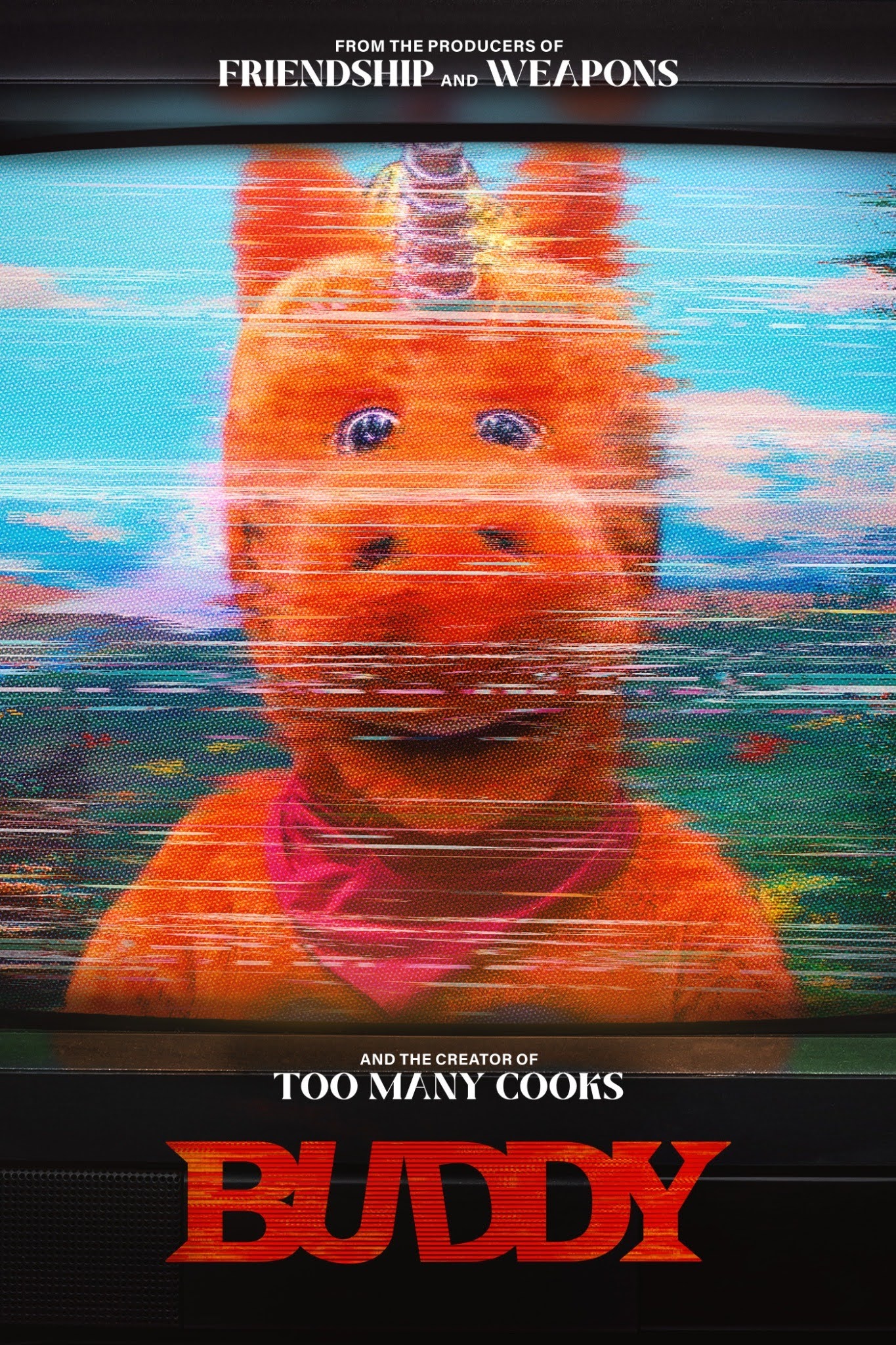
The premise of Buddy centers on the eponymous bright orange unicorn, a beloved icon from a fictionalized classic children’s television program titled It’s Buddy!. Within the colorful, pastel confines of the show, a group of children spend their days singing, dancing, and helping Buddy spread unyielding happiness and life lessons. However, the veneer of wholesome innocence shatters when one child refuses to play along with Buddy’s strict demands for joy. As it turns out, Buddy is not pleased by dissent, and terrifying cracks quickly appear in his seemingly perfect world.
Boasting a star-studded ensemble cast that features Cristin Milioti, Delaney Quinn, Patton Oswalt, Michael Shannon, Topher Grace, and Keegan-Michael Key, Buddy offers far more than a simple monster-in-a-suit slasher. It is a razor-sharp psychological deconstruction of childhood nostalgia, parasocial relationships, and the dark underbelly of forced positivity.
Chronology: From Sundance Sensation to Box Office Triumph
To fully understand the magnitude of Buddy’s upcoming home video release, one must trace the meticulously timed rollout that turned Casper Kelly’s vision into a historic commercial success.
The phenomenon began earlier this year at the prestigious Sundance Film Festival, where Buddy held its world premiere. Independent horror films often face an uphill battle at major festivals, frequently getting overshadowed by prestige dramas and high-concept comedies. However, Buddy immediately generated intense industry buzz and fervent audience word-of-mouth. Its unique blend of unsettling psychological horror and pitch-black satire made it the talk of Park City.
Recognizing the film’s rare commercial potential, Saban Films and Roadside Attractions moved quickly to secure distribution rights, sparking a competitive bidding war. That acquisition would soon prove to be one of the most lucrative investments of the year.
Following its festival circuit acclaim, the studios engineered a platform theatrical release strategy that maximized the film’s cultural footprint. Opening on fewer than 1,800 screens during the competitive summer movie season, Buddy was projected by traditional box office analysts to be a modest, niche performer. Instead, the film unleashed a historic box-office tear. It swiftly crossed the $26 million threshold, securing the crown for the biggest opening of the year for a movie playing on fewer than 1,800 screens.
Rather than fading after its opening weekend, Buddy demonstrated incredible box-office legs, fueled by viral social media marketing, repeat viewings, and intense fan curiosity. By surpassing the box office tallies of fellow festival heavyweight The Invite, Buddy officially cemented its status as the highest-grossing Sundance 2026 acquisition to date.
Now, with its theatrical run winding down, the timeline shifts to the home entertainment market. The digital release on October 13 will capitalize on the rapidly approaching Halloween season—prime real estate for horror consumption—while the December 8 DVD and Blu-ray drop ensures that Buddy will be a staple of holiday wishlists for genre collectors.
Supporting Data: Breaking Records and Shattering Expectations
The financial and commercial metrics surrounding Buddy place it in rare company, elevating it from a simple viral hit to a historic financial milestone for its distributors.
Most notably, Buddy has officially become the highest-grossing film in Saban Films’ entire history. For a company that has distributed dozens of independent features across various genres, the breakout success of an R-rated horror film about a murderous orange unicorn marks a monumental corporate victory.

The film’s triumph is equally impressive within the catalog of Roadside Attractions. Buddy has surged past the box-office totals of acclaimed biographical drama Judy, placing it firmly in elite company. It now stands as the third-highest-grossing film in Roadside Attractions’ history, trailing only behind the massive faith-based hit I Can Only Imagine and Kenneth Lonergan’s Academy Award-winning masterpiece Manchester by the Sea. This puts a hyper-violent, surreal horror-comedy in direct conversation with some of the most successful prestige and demographic-specific releases of the past decade.
Furthermore, industry analysts have highlighted the film’s efficiency. Achieving a $26 million box office haul on a limited screen count of under 1,800 highlights an exceptionally high per-screen average. In an era where audiences frequently wait for streaming services to watch original mid-budget films, Buddy drove moviegoers out of their homes and into brick-and-mortar cinemas in droves.
Behind the scenes, the film’s success is a testament to the collaborative efforts of a powerhouse production and executive team. Directed by Casper Kelly and co-written by Kelly and Jamie King, the production was spearheaded by producers Tyler Davidson, Drew Sykes, Raphael Margules, J.D. Lifshitz, and Tracy Rosenblum. The executive producer roster—featuring Kevin Flanigan, Dexter Braff, Roberto Linck, Nathan McAuley, Emilio Schenker, Gideon Tadmor, Adam J. Wilde, Geoff Yaw, Ryan J. Kelly, Casper Kelly, and Jamie King—provided the institutional backing necessary to bring such a uniquely ambitious vision to life.
The film was brought to the screen through a robust partnership involving Boulderlight Pictures and Low Spark Films, in association with Sipur Studios and Substance, boasting a tight, highly efficient 95-minute runtime rated R for strong bloody violence and language.
Official Responses: The Creative Mind and Cast Speak Out
The unprecedented success of Buddy has prompted widespread acclaim from critics and enthusiastic reflections from the creative team who brought the nightmare to life.
Director and co-writer Casper Kelly, whose distinctive comedic and surreal sensibilities previously birthed viral sensations like Too Many Cooks, crafted Buddy as an exploration of the psychological terrors hidden beneath wholesome Americana. In promotional statements surrounding the film’s release strategy, Kelly expressed gratitude for the audience’s willingness to embrace a project that defies easy categorization.
"We set out to make something that felt genuinely nostalgic, yet deeply unsettling—a nightmare wrapped in bright primary colors," Kelly noted during the film’s festival run. "To see audiences not only embrace that vision, but show up in historic numbers and turn Buddy into a box office powerhouse, has been nothing short of surreal. Buddy is a character who demands absolute love and obedience, and the fans gave him that in the most enthusiastic way possible."

Cast members have similarly expressed awe over the cultural footprint of the film. Cristin Milioti, known for her ability to anchor high-concept and darkly comedic narratives, praised the script’s sharp satirical edge and the collaborative environment fostered on set. Meanwhile, comedy icons Patton Oswalt and Keegan-Michael Key brought their signature vocal and comedic timing to an ensemble that balanced the absurd humor of a murderous mascot with genuine psychological dread. Michael Shannon and Topher Grace added layers of dramatic gravity and tension, ensuring that Buddy functioned as a compelling narrative film rather than relying solely on gimmick-driven scares.
Executives at Saban Films and Roadside Attractions have echoed this excitement, emphasizing that the upcoming home media release is designed to reward the passionate fanbase that propelled the film to record-breaking heights. With robust special features expected on the upcoming Blu-ray release, distributors are banking on deep collector interest to sustain the film’s momentum well into the winter months.
Implications: What Buddy Means for the Future of Indie Horror
The historic run of Buddy—culminating in its strategic digital and physical home releases—carries significant implications for the broader film industry, particularly regarding how independent horror is funded, acquired, and marketed.
For years, the indie horror landscape has been dominated by elevated prestige horror (typified by studios like A24) or micro-budget supernatural thrillers. Buddy carves out a wildly different path: high-concept, high-camp, brightly colored satirical horror that leans heavily into internet-age meme culture while maintaining traditional cinematic craftsmanship. The film proves that audiences are actively craving original, non-franchise intellectual property that takes massive narrative risks.
By shattering Saban Films’ internal revenue records and ranking alongside historical titans for Roadside Attractions, Buddy signals to independent financiers that R-rated genre films with bizarre, high-concept premises are viable financial blockbusters. Traditional studios often hesitate to greenlight projects that combine childhood iconography with extreme violence—fearing limited market appeal or brand backlash. However, the commercial triumph of Buddy demonstrates that subverting beloved nostalgic tropes is a potent recipe for viral marketing and sustained box office revenue.
Furthermore, the dual-release strategy—launching digitally just ahead of the lucrative Halloween viewing window, followed by a physical collector’s edition on DVD and Blu-ray in December—highlights the enduring value of physical media in the modern horror community. Horror fans remain one of the few demographics dedicated to physical media collecting, valuing special packaging, behind-the-scenes featurettes, and director commentaries. By timing the physical drop for the holiday season, the distributors are positioning Buddy as a must-own pop culture artifact.
As Buddy prepares to invade living rooms across the country, its legacy is already secure. It stands as a watershed moment for independent cinema—a reminder that a bright orange unicorn can conquer the box office, rewrite distribution records, and leave a bloody, indelible mark on contemporary pop culture. Whether you stream it on digital starting October 13 or unwrap it on Blu-ray this December, one thing remains certain: Buddy is watching, and he expects you to smile.
