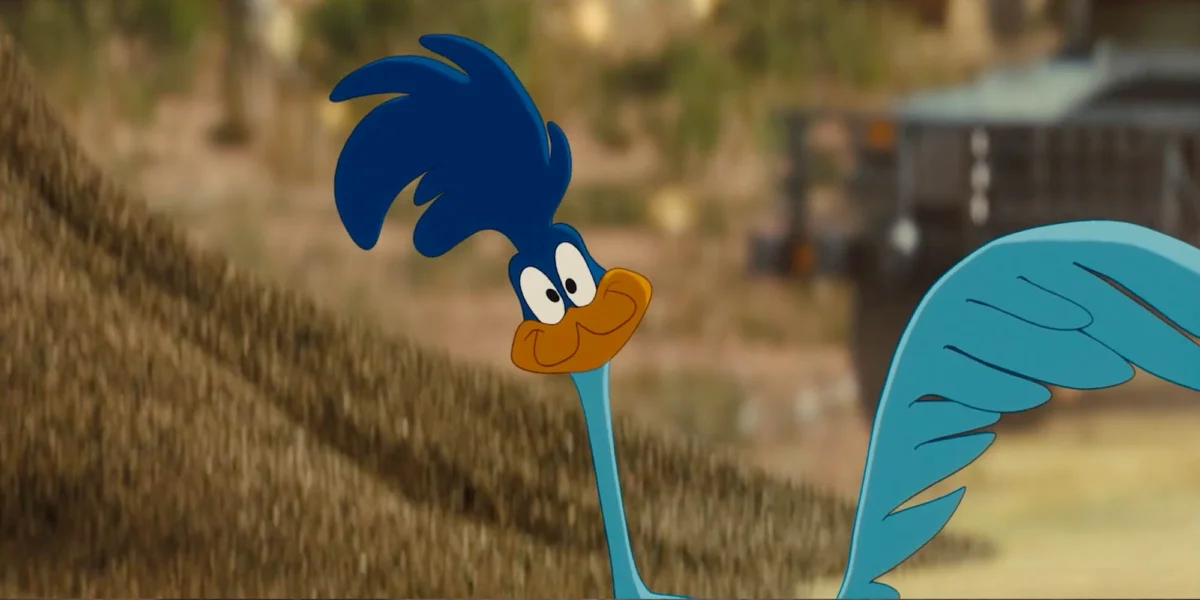
Bridging the Chasm Between Ink and Reality: Inside DNEG’s VFX Masterclass for Coyote vs. Acme
Main Facts
In the landscape of modern visual effects, hybrid films that merge live-action cinematography with traditionally drawn or CG-animated characters are far from novel. Yet, capturing the distinct, elastic, and timeless anarchy of Looney Tunes within a tangible, photographed world has historically proven to be an elusive holy grail of post-production.
In a recent comprehensive deep-dive on the fxpodcast, Visual Effects Supervisor Alexander Seaman and Animation Director Keith Roberts pulled back the curtain on DNEG’s extensive, groundbreaking work for the hybrid feature Coyote vs. Acme. Directed by Dave Green (Teenage Mutant Ninja Turtles: Out of the Shadows) and guided by Production VFX Supervisor George Murphy (Maleficent, The Matrix Reloaded), the project demanded a radical departure from conventional CGI workflows.
Rather than forcing classic cartoon icons into strict photorealistic boxes, DNEG developed a bespoke technological and artistic pipeline. This framework preserved the precise comedy, iconic silhouettes, and exaggerated physics pioneered by legendary animator Chuck Jones, all while integrating seamlessly into live-action plates populated by real actors and practical physical stunts.
Chronology of Production: From Childhood Inspiration to Technical Execution
The Genesis and Early Passion
The journey of bringing Wile E. Coyote out of the 2D ether and into a dimensional space began long before digital rendering commenced. Both Seaman and Roberts approached the assignment with a deep, foundational affection for the source material. Seaman humorously recalled dressing up as Roger Rabbit for a childhood birthday party—a formative moment that practically compelled him to volunteer the moment the Coyote vs. Acme assignment materialized. Roberts, meanwhile, was involved from the earliest conceptual stages, drawn immediately to a production that offered the unique challenge of utilizing both sides of DNEG’s robust studio capabilities.
That baseline enthusiasm proved critical. Faithfully translating these characters into three-dimensional environments required hundreds of deliberate departures from standard industry pipelines.
The Sketchvis Phase and Director Collaboration
Long before heavy 3D assets were spun up, the production relied heavily on an intensive "sketchvis" process. Nearly every shot passed through a nimble team of artists—numbering around ten at peak capacity, though frequently driven by a core group of four—who drew directly over the live-action plates.
This rapid-fire methodology allowed director Dave Green to evaluate multiple comedic alternatives within a single week. Artists could freely explore character staging, comedic timing, and silhouette arrangements without being bogged down by physical lens choices or the mechanical limitations of a 3D rigging system. Once Green locked in the strongest drawings, the animation team worked backward, reverse-engineering substantial adjustments to digital rigs and virtual cameras to replicate the exact look of the 2D concepts.
On-Set Puppeteering and Live-Action Integration
Performance capture on set relied on a clever practical approach: veteran puppeteer Dave Barclay. Equipped with a physical, modular Wile E. Coyote puppet, Barclay provided the human actors with a tangible sightline and a real-time reactive presence.
This interaction laid the baseline rhythm for scenes. A subtle tilt of the puppet’s head could punctuate a line of dialogue or prompt an organic comedic reaction. Once the live-action takes were secured, Seaman’s visual effects crew digitally excised both the puppet and Barclay, leaving behind the authentic timing of the actors.
Flexibility was paramount. The puppet itself was engineered for adaptability, featuring removable ears, nose, and arms. In tighter compositions, Barclay could perform using little more than a set of expressive eyes, minimizing visual obstruction in the background while keeping the actors grounded in the moment.
Supporting Data & Technical Breakdown
Translating a 2D Looney Tunes aesthetic into a modern studio pipeline required monumental shifts in lighting, rendering, camera physics, and timing frameworks.
Defying Conventional CG Physics: The Falling Piano
A prime example of this hybrid philosophy is the classic cartoon trope: the falling piano. The impact needed the abrupt, violent, and consequence-free timing of a Warner Bros. short, yet the automobile crushed underneath it required enough recognizable weight and structural deformation to remain grounded in reality.
The team experimented extensively, even testing whether a photoreal piano executing the action would retain its comedic value. Ultimately, they established the piano’s action and Wile E.’s performance first, structuring the surrounding environment to accommodate the gag. The car destruction itself incorporated a practical special effects stunt that Seaman’s team augmented and retimed, carefully choreographing the collision of two completely different sets of physical rules around the animated punchline.
Frame Timing and the Legacy of Chuck Jones
Animation frame timing required a fluid approach. Early tests mapped animation strictly on "ones" (an update every single frame) and "twos" (a pose held for two frames, standard for traditional cartoon vocabularies). While twos were essential for classic comedic pacing, Roberts discovered that Wile E. walking directly beside a live-action actor necessitated animation on ones to look cohesive.
Furthermore, avoiding the overly smooth, flowing curves and overlapping movements native to modern CG was a constant battle. The team deliberately targeted Chuck Jones’ signature economy of posing. As Roberts noted:
"Their comedy was all about clean timing and about the spare quality of the animation."
Camera Lenses and Perspective Management
To preserve Wile E.’s iconic facial arrangement and graphic silhouette in wide-angle or close-up compositions, the character rendering camera frequently utilized a completely different lens from the live-action photography. A lens tailored perfectly for human actors often distorted the cartoon beyond recognition.
While this split-camera approach created extra layers of compositing work where photoreal elements intersected with toon-shaded assets, it granted artists vital creative control over the character’s facial perspective.
Toon Shading, Houdini Outlines, and Lighting Restraint
Under the hood, DNEG built specialized toon shaders inside Clarisse, initially outputting flat imagery to verify that the core animation read clearly.
Generating outlines was a major technical undertaking. Houdini was deployed to calculate outlines derived from the shading network, dynamically adjusted based on camera distance, movement, and placement on the character. Ensuring consistent line weight—preventing a paw’s outline from swelling disproportionately as it approached the camera lens—was vital to maintaining the illusion of a hand-drawn illustration.
Lighting, too, required severe restraint. Seaman pushed artists away from complex global illumination and hyper-detailed surface modeling, favoring simple key lighting and flatter aesthetics. Much of the heavy lifting was executed in Nuke via roto shapes and targeted light treatments, allowing artists to meticulously sculpt a highlight along Wile E.’s nose while keeping the overall image loyal to its animated roots.
Official Responses and Creative Challenges
Managing the intersection of a hyper-stylized animated icon and tangible environments threw unique logistical hurdles at the production team.
The desert landscapes, while heavily stylized to evoke the warmth of the original theatrical shorts, had to be constructed as fully realized photorealistic spaces. As Seaman reflected on the environment design:
"It needed to be realistic, but you could never actually go to that place."
Epic Games’ Unreal Engine served as an early sandbox, allowing director Dave Green to block out shots, establish spatial relationships, and rough in camera moves. However, because the virtual desert had to remain entirely flexible to accommodate evolving animation gags, much of the final environment’s visual development remained fluid until surprisingly late in the post-production cycle. For Seaman, keeping a massive virtual ecosystem synchronized with shifting animation timing stood out as one of the project’s defining hurdles.
Similarly, complex sequences—such as a dynamic tunnel scene where live-action actors navigated a shifting, cartoon-engineered environment—demanded rigorous body tracking on set. This data enabled the visual effects crew to execute selective relighting and cast stylized, cartoon shadows directly onto physical ground planes, seamlessly gluing the live-action plates to the animated logic.
Implications for the Future of Hybrid Filmmaking
The technical roadmap forged by DNEG, Seaman, Roberts, and Green on Coyote vs. Acme carries profound implications for the visual effects industry. For years, the prevailing technological imperative of digital studios has been absolute photorealism—pushing skin pores, subsurface scattering, and physically based rendering to hyper-detailed extremes.
Coyote vs. Acme proves that audiences do not strictly crave realism when revisiting beloved, stylized properties; they crave authenticity of spirit. By investing heavily in foundational tools like sketchvis pipelines, bespoke toon-shading networks, variable camera lenses, and restrained lighting philosophies, DNEG successfully solved a creative equation that has stumped filmmakers for decades: how to honor 2D heritage without flattening it into a generic digital shell.
As studios look for innovative ways to adapt classic 2D IP into contemporary cinematic formats, the methodologies established here will undoubtedly serve as a masterclass. They demonstrate that technology should bend to artistic vision, ensuring that even when a coyote is flattened by a falling piano, the pure, unadulterated DNA of traditional animation survives the impact intact.