
The Human Touch in the Digital Age: SCAD AnimationFest Celebrates the Future of Storytelling
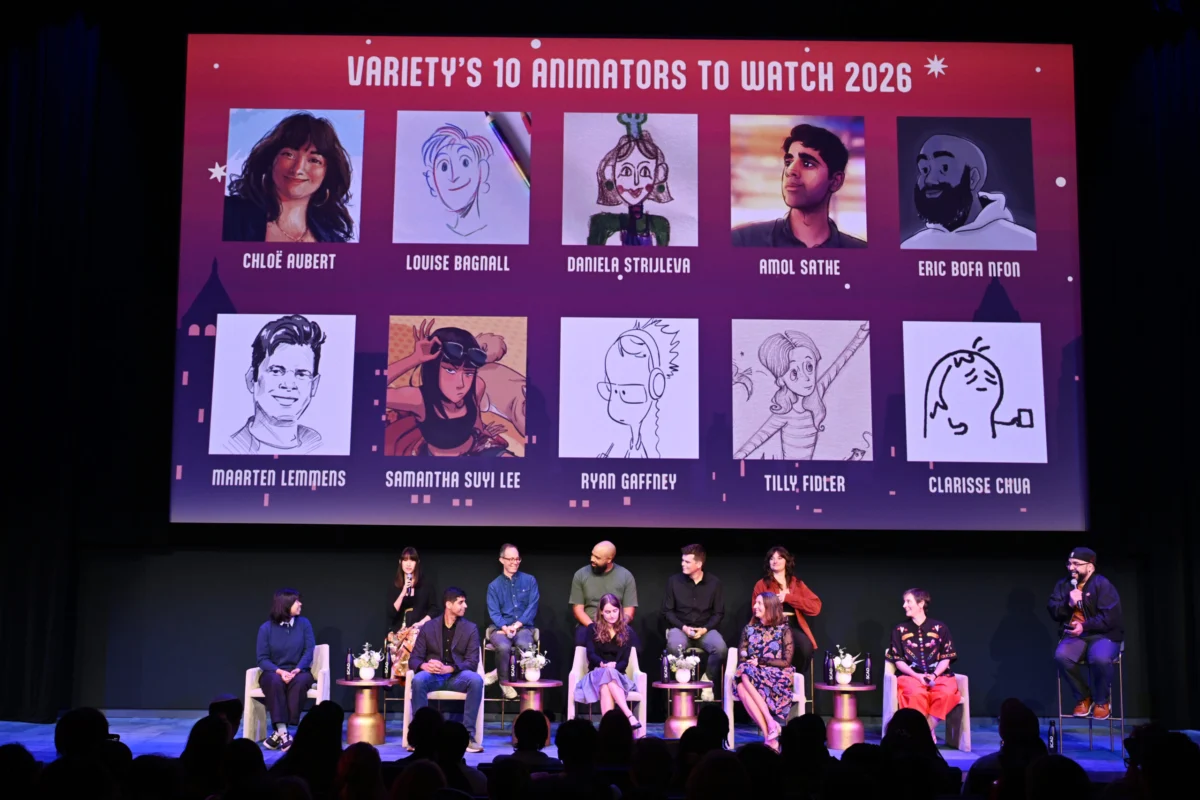
The 10th annual SCAD AnimationFest in Atlanta recently reached a poignant crescendo, serving not merely as a showcase for the industry’s latest visual marvels, but as a robust defense of the human spirit in creative labor. As the festival drew to a close, 10 of the most promising animators in the world—the "Class of 2026"—alongside an Oscar-nominated director, took to the stage to engage in a rigorous debate on the future of their craft.
In an era increasingly dominated by discussions of automation, the consensus among these luminaries was resounding: while technology evolves, the "human hand"—the deliberate, empathetic, and subjective choices made by artists—remains the indispensable heart of animation.
The Global Vanguard: Meet the Class of 2026
Featured in Variety’s New York issue, the "10 Animators to Watch" represent a vibrant, globalized cross-section of the medium. Hailing from Ireland, France, Belgium, Bulgaria, Singapore, Hong Kong, Canada, and the United States, this cohort bridges the gap between massive Hollywood studios and independent boutiques.
The honorees include:
- Louise Bagnall: Director of Cartoon Saloon’s Julián.
- Daniela Strijleva: Production designer for Pixar’s Gatto.
- Tilly Fiddler: Stop-motion animator on Laika’s Wildwood.
- Amol Sathe: Cinematographer and lighting director on Walt Disney Animation Studios’ Hexed.
- Clarisse Chua: Storyboard artist on Ray Gunn (directed by Brad Bird) and Swapped (Nathan Greno).
- Chloé Aubert: Animation director of Iron Boy.
- Maarten Lemmens: Lead animator on DreamWorks Animation’s Forgotten Island.
- Eric Bofa Nfon: Animation director of the hand-drawn feature Tangles.
- Ryan Gaffney: Head of story on Warner Bros. Pictures Animation’s The Cat in the Hat.
- Samantha Suyi Lee: Storyboard artist and custom animation director on Sony Pictures Animation’s Spider-Man: Beyond the Spider-Verse.
A Legacy of Collaboration: The Unseen Workforce
During the panel, Variety chief awards editor Clayton Davis underscored a critical sentiment: "Animation is film, and we must treat it that way." He reminded the audience that behind every Oscar-winning feature—such as the recent victory of KPop Demon Hunters—lies a "small army" of artists whose contributions are frequently eclipsed by the final spectacle.
The discussion served to illuminate the granular, often invisible decision-making processes that define high-level animation. For instance, Eric Bofa Nfon revealed the meticulous effort behind Tangles. Rather than relying on standard frame rates, Bofa Nfon pushed his team to animate on threes, fours, and even eights. This was not a cost-cutting measure, but a deliberate aesthetic choice to manipulate the texture of motion. "You don’t just take twos and push them into threes or fours," Bofa Nfon explained. "You have to think about the motion and where to select your drawings."

Similarly, Maarten Lemmens shared the trial-by-fire experience of working on Forgotten Island. When faced with the requirement to adopt a new visual language rooted in anime, Lemmens committed to an intensive period of self-study over the holidays. His ability to synthesize that research into the film’s production highlights the "homework" that underpins professional success—a testament to the rigor required to master evolving artistic dialects.
The Physicality of Creative Vision
The panel delved deep into the symbiotic relationship between director and artist. Ryan Gaffney discussed his work on The Cat in the Hat, revealing that his approach to the iconic Thing One and Thing Two was inspired by the chaotic, visceral energy of the "Baby Herman" sequence in 1988’s Who Framed Roger Rabbit.
Clarisse Chua provided perhaps the most vivid anecdote of the afternoon, describing her collaboration with veteran director Brad Bird on Ray Gunn. Bird’s process, she noted, was profoundly physical. When story pitches missed the mark, Bird would bypass verbal explanations, opting to "bring out his camera hands" and act out the scenes, running around the meeting room to physically manifest his vision. This high-energy, collaborative environment underscored the importance of directors who can translate abstract concepts into tangible movement.
Navigating the Shadow of Artificial Intelligence
The "elephant in the room"—artificial intelligence—was addressed with both nuance and defiance. Rather than fearing a total obsolescence of the artist, the panelists reframed AI as a catalyst for doubling down on human specificity.
Louise Bagnall argued that AI’s tendency toward "homogeneity" and "middle-ground solutions" is exactly what makes the human perspective more valuable than ever. "Nobody else has your point of view on the world," she asserted.
Chloé Aubert, who has weathered previous industry panics regarding the transition from 2D to 3D, offered a pragmatic perspective. She remains committed to the act of drawing, noting that as she has leaned into her own unique aesthetic, the industry has responded by seeking her out. "I just did what I wanted and showed what I wanted to do, and the more I showed that, the more people gave me work for it," she noted.

For younger artists, the anxiety is more personal. Tilly Fiddler, a 2022 SCAD alumna, noted that she often finds herself losing interest in a project once she discovers it was generated by AI, as it lacks the "emotional and exciting" lineage of work passed down through human generations.
The Ecosystem of Animation: Beyond the Stars
A recurring theme of the festival was the need to de-center the "star" animator and recognize the entire ecosystem of production. The panelists took time to credit the essential roles of production teams, IT staff, riggers, and the "puppet hospitals" of stop-motion.
Chloé Aubert was particularly adamant about tempering ego. "There’s a lot of ego in this industry, because animators can be stars and it gets to your head," she warned. "So please don’t." Ryan Gaffney and Samantha Suyi Lee echoed this, characterizing production teams as the "blood vessels" of the film—without them, the project simply ceases to function.
Mentorship and the Future
In a touching moment that defined the festival’s spirit, the panelists engaged with a student named Lily, a 3D animation major from Georgia who was invited onto the stage and dubbed the "11th animator to watch." The group provided a collective crash course in professional survival, emphasizing that students should view their peers as collaborators, not competitors.
"Don’t suffer in silence," advised Bofa Nfon, urging those entering the workforce to seek help rather than trying to project an image of perfection.
The festival concluded with a masterclass from Joel Crawford, the director of Forgotten Island and the recipient of the Variety Creative Impact Award. After a screening for over 400 attendees, Crawford spent time signing books and posters, sharing his own philosophy on success: "Do not let other people’s success be your failure."

Implications for the Industry
The SCAD AnimationFest of 2026 confirms that while the tools of the trade are shifting, the foundational requirements of the industry remain static: empathy, collaboration, and an unwavering commitment to the "human point of view."
As the industry faces the dual pressures of technological disruption and a rapidly evolving global market, the lessons imparted by the "10 Animators to Watch" are clear. The future of animation will not be determined by the software used, but by the artists’ ability to remain curious about the world, to value the "blood vessels" of their production teams, and to recognize that the most distinct, enduring art is that which bears the indelible fingerprints of its creators.
For the next generation of students and professionals, the message is one of optimism: embrace the unknown, celebrate the success of your peers, and above all, never lose the human touch that makes animation a uniquely powerful medium for storytelling.
