
The Art of the Creative Impasse: How Edgar Wright Unlocks Cinematic Brilliance
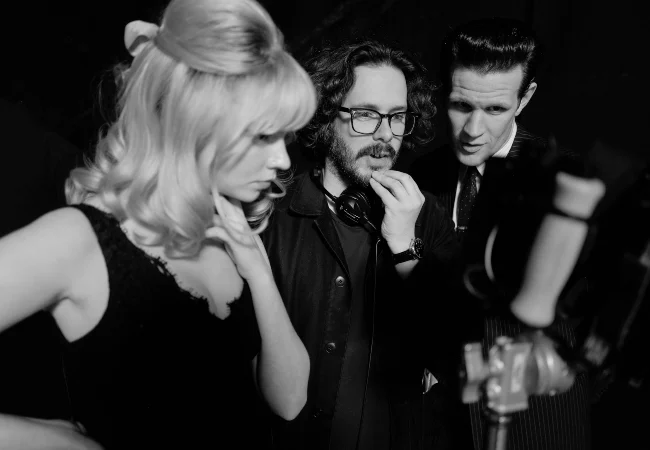
To the casual observer, the filmography of Edgar Wright appears as a seamless, clockwork mechanism of kinetic energy. From the genre-bending wit of Shaun of the Dead to the frantic, music-synced precision of Baby Driver and the neon-drenched psychological descent of Last Night in Soho, Wright’s work is characterized by an exacting, almost obsessive attention to detail. Yet, even a visionary of his caliber is not immune to the universal plight of the storyteller: the creative block.
In a recent, candid conversation with Collider, Wright pulled back the curtain on the grueling, often invisible process of screenwriting. He revealed that even for a director with his pedigree, the road to a finished script is paved with days—and sometimes weeks—of total stagnation. To navigate these doldrums, Wright employs a strategy he dubs “creative procrastination,” a method that transforms passive observation into the fuel for his next narrative breakthrough.
The Anatomy of a Creative Block: A Filmmaker’s Perspective
It is a common misconception that the most prolific creators work in a state of constant, fluid inspiration. Wright, however, is quick to demystify this notion. Discussing his writing process—specifically during the development of his 2017 hit Baby Driver—he noted, “There’ll be whole days, maybe even weeks, where nothing will come.”
For many, this silence is a source of anxiety. For Wright, it is a cue to pivot. Rather than forcing a breakthrough at the keyboard, he steps away from the project to engage in what he calls “osmosis.”
“Doing something that’s nothing to do with the work is maybe not helpful, although sometimes just walking around the block is a good idea if you’re kind of stuck,” Wright explained to Collider’s Steve Weintraub. “But I would just try and read and watch and listen. Even when I was doing Baby Driver, if I was getting stuck, I would go to the Starbucks, I would buy the L.A. Times, and I would read the sort of local section about crimes, and I would just write down names, streets, cars, and just kind of do things where you’re just… it’s sort of like you’re picking up things by osmosis, and then something will unlock, and then in the middle of the night, you’ll say, ‘Ah! I know what it is!’”
This admission is a profound reminder that for filmmakers, the “work” of writing does not end when the laptop is closed. It is a constant, ambient process of absorbing the texture of the world—the names of streets, the details of a local crime blotter, the rhythm of a conversation overheard in a coffee shop—until the disparate pieces click into a coherent narrative.
A Chronology of Craft: From Micro-Budgets to Major Studio Success
Understanding Wright’s approach to difficulty requires an appreciation for his trajectory. His career is a masterclass in scaling up, having navigated the industry from the absolute grassroots level to the high-stakes environment of major studio filmmaking.
The Early Days: The $15,000 Western
Long before the $100 million budgets and international press tours, Wright was a twenty-year-old cutting his teeth on independent film. His directorial debut, the Western A Fistful of Fingers, was produced on a shoestring budget of roughly $15,000. It was here, in the trenches of low-budget production, that Wright learned the necessity of resourcefulness—a skill that remains the bedrock of his directing style today.
The Television Pivot: Spaced
Following his debut, Wright moved into the British television landscape. It was here that he honed his comedic timing and visual language, most notably on the cult-classic series Spaced. Working alongside Simon Pegg and Jessica Hynes, Wright developed the rapid-fire editing and pop-culture-infused aesthetic that would soon define his cinematic voice.
The Breakthrough: The Cornetto Trilogy
The transition back to film with 2004’s Shaun of the Dead marked a watershed moment. Paying homage to George A. Romero’s zombie canon, the film was more than a parody; it was a love letter to the genre that simultaneously deconstructed it. As detailed in Clark Collis’s comprehensive book, You’ve Got Red on You: How Shaun of the Dead Was Brought to Life, the film’s success was built on a foundation of intense preparation and a deep respect for cinematic history.
This trajectory continued through Hot Fuzz (2007) and The World’s End (2013). Each film in what became known as the "Three Flavours Cornetto Trilogy" saw Wright and Pegg usurping genre conventions—buddy-cop and sci-fi respectively—with a level of precision that garnered both critical acclaim and a massive, dedicated fanbase.
The Influence of Influences: Managing the Wealth of Data
One of the most striking aspects of Wright’s work is the sheer density of his influences. As noted in our Fall 2021 cover story on Last Night in Soho, Wright’s biggest challenge is often not finding ideas, but whittling them down. His films are meticulously layered with references to music, art, and the history of cinema.
When a director consumes as much culture as Wright, the risk is paralysis. This is why his “creative procrastination” is so effective; it acts as a filter. By intentionally seeking out the mundane (the local crime section of a newspaper) or the specific (the aesthetic of a particular decade), he gives his subconscious a focused task.
His ability to synthesize these influences is perhaps best exemplified in Scott Pilgrim vs. The World (2010). A bold adaptation of Bryan Lee O’Malley’s graphic novels, the film functioned as a love letter to rock music and video game culture, casting a spotlight on a generation of rising stars, including Aubrey Plaza. Plaza’s own anecdotes about working with Wright highlight his hands-on, highly personal approach to directing. From her humorous, slightly confused audition process to their ongoing professional relationship, it is clear that Wright’s process is as much about the people he works with as it is about the stories he tells.
Bridging the Gap: Mentorship for the Next Generation
Wright’s willingness to discuss the “unproductive” parts of his process makes him an invaluable resource for aspiring filmmakers. Much of the industry discourse focuses on the triumphs of big-budget productions, which can feel alienating to those working on micro-budgets. Wright, however, remains uniquely equipped to bridge this gap.
Through his new BBC Maestro course, Wright is formalizing the wisdom he has gained over three decades. For a filmmaker who has seen both the $15,000 struggle and the multi-million dollar studio set, the message is clear: the process of filmmaking is never truly finished, and the blocks are just as important as the breakthroughs.
Implications: The Future of the Creative Process
The takeaway from Wright’s recent reflections is a refreshing shift in how we view artistic productivity. In an era where efficiency is often prioritized above all else, Wright’s “creative procrastination” serves as a necessary corrective. It validates the time spent not typing, not filming, and not editing.
If one of the most meticulous directors in modern cinema relies on the L.A. Times crime blotter and a walk around the block to solve the structural problems of a screenplay, it suggests that the creative process is inherently non-linear.
As we look toward Wright’s future projects, we can expect the same level of granular detail and structural perfection. However, we now have a better understanding of the cost of that perfection. It is a product of long hours of dormancy, the deliberate ingestion of outside stimuli, and the patience to wait for the “Aha!” moment in the middle of the night.
In the final analysis, Edgar Wright’s career is not just a collection of films, but a testament to the fact that great art requires not just labor, but the wisdom to know when to stop working and start living. For the next generation of filmmakers, that is perhaps the most valuable lesson of all. Whether you are working with a smartphone or a cinema-grade camera, the most essential tool in your kit is your own curiosity—and the willingness to let the world surprise you.
