
The Meta-Reality of Nathan Fielder: Can ‘You Can See Everything’ Rewrite the Rules of Awards Season?
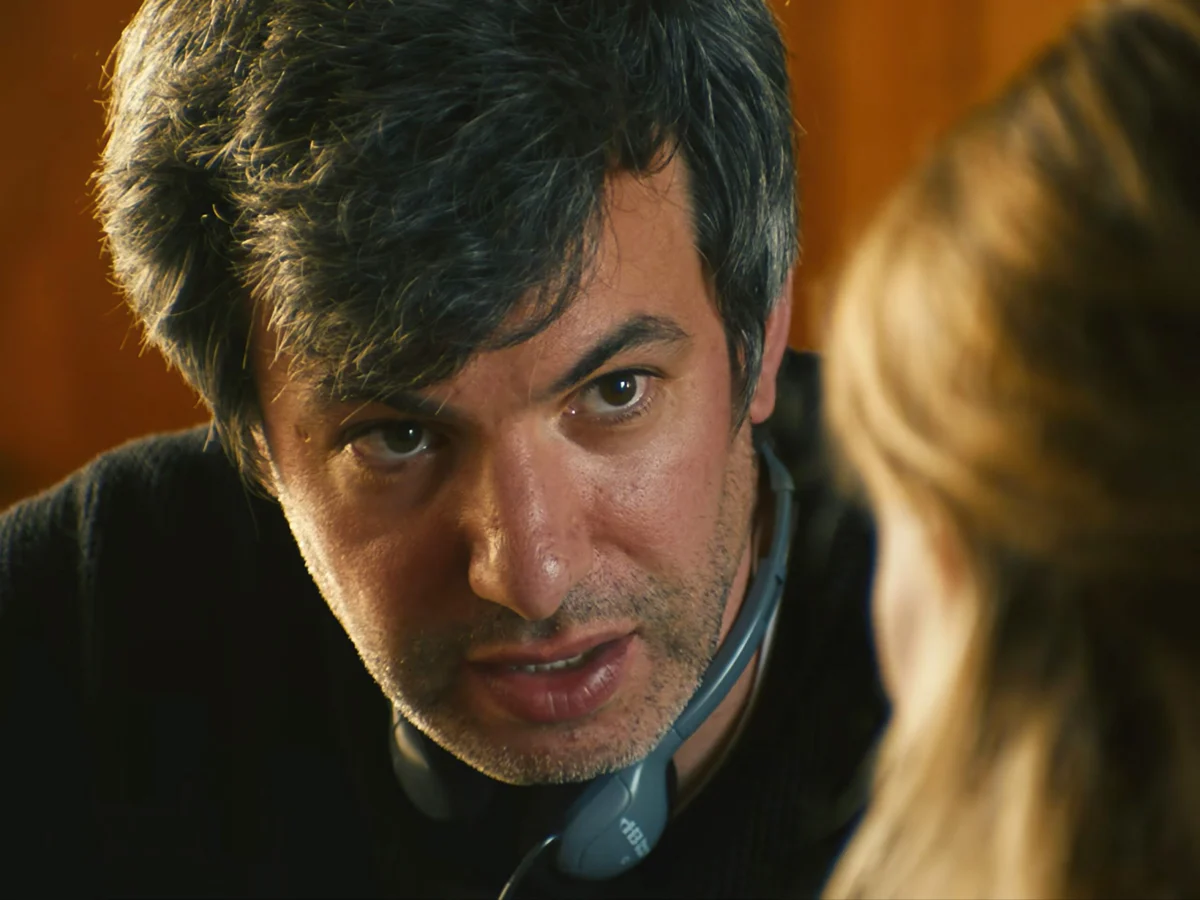
The boundary between the authentic self and the performative persona has long been the primary playground for Nathan Fielder. From his breakout Comedy Central series Nathan for You—where he engineered elaborate, real-world stunts that left participants and audiences alike questioning the limits of sincerity—to his existential HBO experiment The Rehearsal, Fielder has consistently operated in the "uncanny valley" of documentary filmmaking. Now, with the A24-backed project You Can See Everything, co-directed with Lance Oppenheim and featuring disgraced Theranos founder Elizabeth Holmes, Fielder is poised to challenge the rigid infrastructure of the entertainment industry’s most prestigious awards bodies.
As the film remains largely shrouded in mystery, one thing is abundantly clear: Fielder is not merely a director. By inserting himself into the narrative opposite Holmes, he has invited the perennial, exhausting, and fascinating question that follows his every move: Is this Nathan being Nathan, or is this a meticulously curated performance of a man pretending to be himself?
Chronology of a Career Built on Ambiguity
To understand the stakes of You Can See Everything, one must look back at the trajectory of Fielder’s career, which has been a systematic dismantling of genre expectations.
- 2013–2017: The "Nathan for You" Era. Initially classified as a variety sketch series, Nathan for You defied categorization. When Fielder launched "Dumb Starbucks" as a marketing stunt for a segment, the event was covered by legitimate local news outlets as a genuine business endeavor, months before the episode aired. The show blurred the line between satire and actual business consulting.
- 2022: The Rehearsal. This HBO series marked a paradigm shift. Fielder engaged in elaborate, scripted simulations of life’s most difficult conversations. In doing so, he played "both" the director and the subject, creating a meta-textual loop that left critics and viewers struggling to determine where the improvisation ended and the script began.
- 2023: The Curse. His foray into scripted television alongside Benny Safdie and Emma Stone was widely expected to be a dark comedy. Instead, it spiraled into a genre-defying psychological thriller. When the series was submitted to the Emmys in the Drama category, it signaled that Fielder was no longer interested in playing by the rules of comedy.
- 2026: The "You Can See Everything" Premiere. The release of this documentary marks the most daring intersection of his career. By partnering with Lance Oppenheim—a documentarian known for his own eccentric, stylistic approach to non-fiction—and tackling the public figure of Elizabeth Holmes, Fielder has moved into the realm of the "meta-doc," where the filmmaker’s presence is as much of a subject as the primary interviewee.
The Awards Dilemma: Genre, Eligibility, and Institutional Rigidness
The central conflict surrounding You Can See Everything is not just its quality, but its classification. Because Fielder’s work is inherently "too complex to fit into one genre," the industry is grappling with where to place him on the ballot.

The Critics Choice Awards and the "Acting" Precedent
IndieWire has confirmed that acting performances within a documentary are, in fact, eligible in the acting categories at the Critics Choice Awards. This is a critical loophole. Critics’ circles, which rely on committee-based voting and are often more prone to "inspired choices" that favor boundary-pushing creativity, are the most likely candidates to validate Fielder’s performance as legitimate acting. If a performance is judged by its emotional truth rather than the medium in which it is captured, Fielder is a strong contender for nomination.
The Golden Globes: A Structural Barrier
The Golden Globes present a much more hostile environment for a project like You Can See Everything. Their rules are draconian: documentaries are explicitly excluded from all motion picture categories. The only path for a documentary to be recognized as a "Motion Picture" is to meet the financial threshold of $100 million at the domestic box office and $150 million globally—a high bar for an A24 documentary. The Globes’ bylaws state that any film with over 25 percent documentary footage is disqualified from the main awards, effectively locking out Fielder’s latest work unless it undergoes a complete reclassification that seems impossible given its nature.
The SAG-AFTRA Petition Process
The Screen Actors Guild (SAG) occupies the middle ground. Their rules generally bar documentaries from their film awards, but they offer a unique "petition process." If a performer feels their work in a non-traditional film constitutes a legitimate acting performance, they can petition the Awards Committee. This is a non-reviewable, final judgment process. For a figure as high-profile as Fielder, who has already navigated the Emmy waters by submitting himself as a Lead Actor in a Comedy for The Rehearsal (despite its documentary aesthetic), a petition to the SAG committee could be the most strategic move in his campaign.
Supporting Data: The "The Rehearsal" Blueprint
Fielder’s previous awards run provides a roadmap for his current predicament. During the Emmy season for The Rehearsal, HBO made a calculated decision: they submitted the show as a Comedy Series. This was not a move born of traditional genre definitions, but of tactical positioning.

Fielder was ultimately nominated for his writing and directing work on the episode "Pilot’s Code." More importantly, the decision to submit him for Outstanding Lead Actor in a Comedy Series for playing a version of himself was a masterstroke of meta-performance art. It forced the Academy to acknowledge that "being oneself" in a highly constructed, authored environment is, in fact, a form of acting.
If Fielder applies this same logic to You Can See Everything, he is essentially asking the industry to broaden its definition of what constitutes a "performance."
Official Responses and Industry Implications
While A24 has been tight-lipped regarding the specific mechanics of their campaign strategy, their official website for You Can See Everything is conspicuously devoid of an acting category submission among its initial 10 categories. However, insiders have confirmed that should the team choose to pivot, the performance would be eligible at the Oscars.
The Oscars, specifically the Actors Branch—the largest and most influential body within the Academy—represent the ultimate prize. The challenge lies in convincing a large, traditional group of actors that a documentary performance is worthy of an acting nomination. Historically, the Academy is wary of blurring these lines, but in an era where "prestige television" and "auteur-driven documentaries" are colliding, Fielder may be the catalyst for change.

Implications for the Future of Filmmaking
What does it mean if Nathan Fielder is consistently nominated for "acting" in projects that are nominally documentaries?
- The Death of the "Documentary" Label: If the industry begins to treat these performances as "acting," it forces a re-evaluation of what a documentary actually is. Is it a record of reality, or is it a canvas for an auteur’s performance?
- Increased Agency for Auteurs: Fielder’s success in navigating these systems sets a precedent for other filmmakers to ignore genre silos. By essentially "hacking" the awards process, he proves that if the work is compelling enough, the rules can be bent.
- The Audience as Participant: Fielder’s work requires the audience to be as cynical and observant as the creator. By forcing viewers to ask, "Is this real?", he turns the act of watching into an intellectual exercise, which in turn makes the work harder to ignore during awards season.
As You Can See Everything continues to screen and generate buzz, the conversation will inevitably shift from the film’s subject—Elizabeth Holmes—to the architect of the experience: Nathan Fielder. Whether or not he walks away with an Oscar or a Golden Globe is almost secondary to the point he is making. By constantly challenging the criteria of the industry’s most prestigious institutions, Fielder is revealing the inherent artificiality of the awards process itself.
In the end, Fielder’s greatest trick may not be the film at all, but the way he has forced the industry to look in the mirror and ask if they are rewarding the art, or merely the labels we use to categorize it. Regardless of the outcome, one thing is certain: the awards circuit will have to decide whether it wants to evolve alongside Fielder’s brand of meta-reality, or risk becoming just another rehearsal in a much larger, more complex show.
