
The Paradox of Parenthood: Delphine Priet-Mahéo’s Le Chevreuil and the Search for Solitude
Introduction: The Universal Weight of Domesticity
Growing up as the younger of two brothers in a "traditional" household, there was a palpable tension that defined our childhood. We were, by all accounts, the primary instigators of our parents’ stress. With the reckless intuition of youth, my brother and I possessed a near-perfect understanding of exactly how far we could push the boundaries of patience before the proverbial dam would break.
Looking back, the memory of my mother—a woman of remarkable composure—remains etched in my mind. She rarely lost her temper, preferring to dampen the fires of our mischief rather than let them consume the household. But there was one singular moment I remember with haunting clarity: the rare instance when her patience finally evaporated. It was not a display of rage, but of profound, bone-deep exhaustion. It was the look of a person who simply needed the world, and everyone in it, to hit the pause button for just a heartbeat.
This memory resurfaced recently while watching Delphine Priet-Mahéo’s exquisite animated short, Le Chevreuil (The Roe Deer). The film serves as a poignant mirror for the modern parent, navigating the complex, often contradictory landscape of domestic life: the overwhelming, tidal-wave love we feel for our children, juxtaposed against the relentless noise and the accumulation of minor daily frustrations that eventually demand an escape.
The Narrative Architecture: A Chronology of Escape
Le Chevreuil is not merely a film about a mother; it is a film about the universal desire for self-reclamation. The story begins in the trenches of the everyday: the chaos of a household that requires constant vigilance.
The Breaking Point
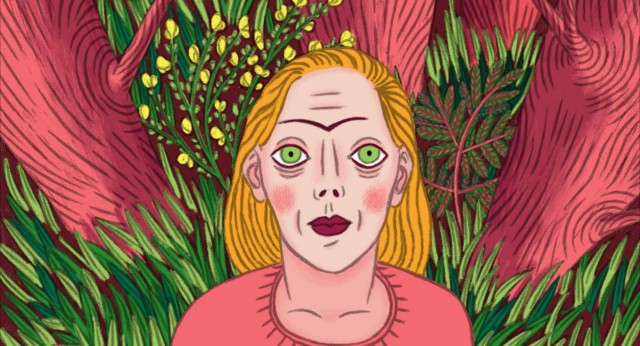
The film opens within the familiar, frenetic confines of a domestic setting. We see the mother, pushed to her absolute limit by the demands of her children and the crushing weight of household routine. The visual language here is grounded and visceral; we feel the claustrophobia of her environment. The director, Priet-Mahéo, masterfully establishes a rhythm of interruption—each time the protagonist attempts to find a moment of stillness, she is pulled back into the fray.
The Inciting Incident: The Roe Deer
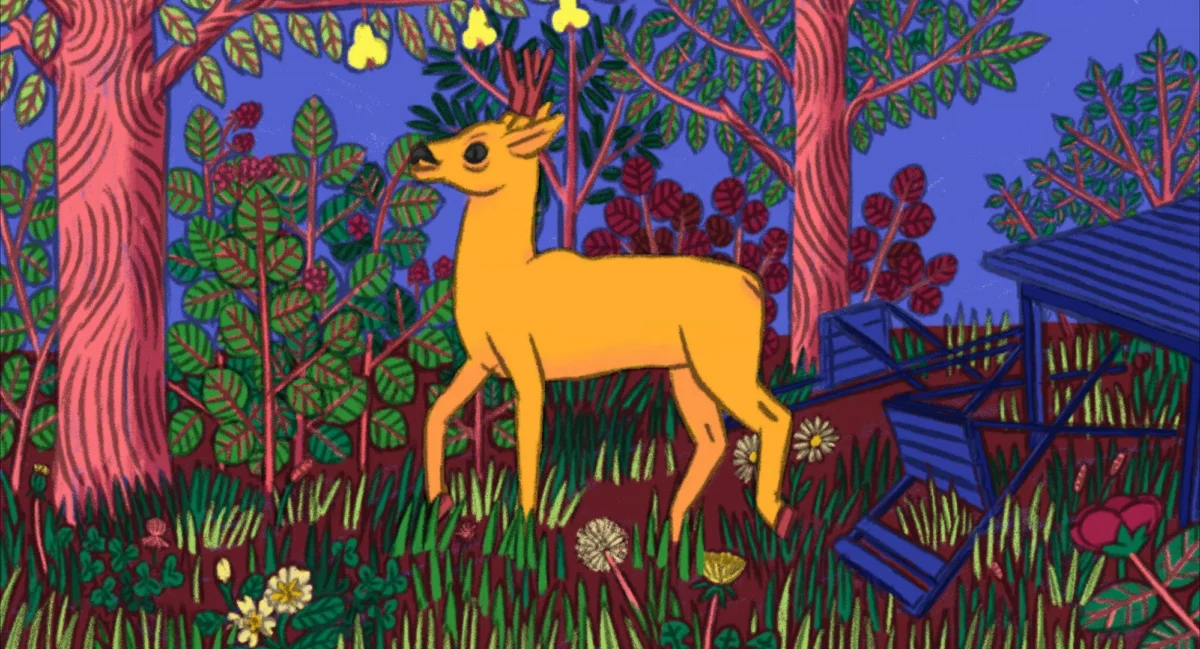
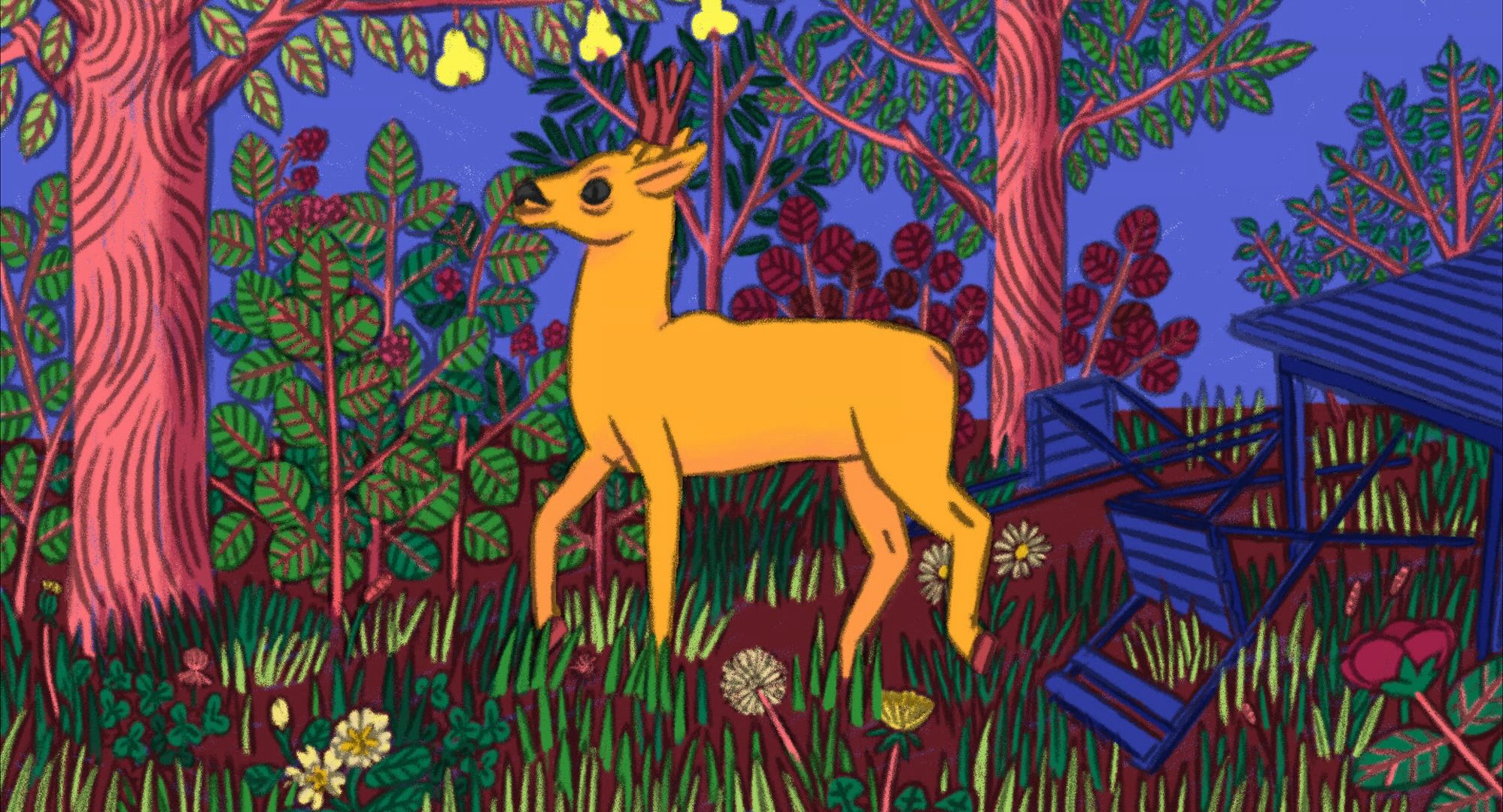
Into this domestic turmoil steps the titular roe deer. In the logic of the film, this creature acts as a bridge between the mundane world and a dreamlike, liminal space. Much like the White Rabbit in Lewis Carroll’s Alice in Wonderland—a primary inspiration for the director—the deer functions as a guide. It represents a promise of freedom, a vestige of the mother’s life before the defining responsibilities of parenthood took hold.
The Forest as a Mirror
As the mother follows the deer into the woods, the narrative shifts from the realistic to the surreal. The forest serves as a psychological landscape, a place where the rules of the house no longer apply. Here, the mother finds the silence she has been craving. However, the film avoids the trap of romanticizing this escape. As she ventures deeper, the initial allure of isolation begins to fray.
The Return to Reality
The turning point arrives with the introduction of hunters in the woods. The sudden threat of danger disrupts the dreamlike state of her retreat, forcing a visceral realization: the freedom she sought is, in fact, devoid of the security she only truly finds within the family unit. The story concludes not with a clean resolution, but with a profound acceptance of the "suffocating" yet "anchoring" nature of love.
Supporting Data: The Psychology of "Parental Burnout"
While Le Chevreuil is a work of fiction, it resonates with documented psychological trends regarding parental mental health. Recent studies in family psychology emphasize the prevalence of "parental burnout"—a syndrome characterized by emotional exhaustion, distancing from one’s children, and a sense of ineffectiveness.
- The Accumulation Effect: Experts note that parental stress is rarely the result of a single "catastrophic" event. Instead, it is the cumulative effect of low-level, high-frequency stressors—the "relentless noise" referenced in the film.
- The Fantasy of Withdrawal: Psychological literature suggests that fantasies of "disappearing" or "abandoning" the family unit are common, healthy, and transient coping mechanisms. They serve as a mental pressure-release valve for parents who feel their identity is being completely subsumed by their caregiving roles.
- The Role of Nature: The forest in Priet-Mahéo’s film functions as a restorative environment. Environmental psychology has long established that exposure to green spaces lowers cortisol levels, which explains why the mother’s initial relief in the woods feels so authentic to the viewer.
Official Perspectives and Aesthetic Choices
In interviews, Delphine Priet-Mahéo has spoken about the challenge of balancing the "fairy-tale logic" of her animation with the grounded emotional realities of her characters.
The Visual Language of the Film
Priet-Mahéo’s aesthetic is intentionally distinct. By utilizing a color palette and line work reminiscent of an illustrated children’s book, she creates a jarring contrast with the heavy, adult themes of exhaustion and existential doubt. This stylistic choice forces the viewer to confront the "complicated, often exhausting" nature of parenting through a lens that feels both nostalgic and slightly unsettling.
Creative Influences
The nod to Alice in Wonderland is more than a stylistic tribute; it is a structural necessity. By framing the mother’s journey as a descent into a rabbit hole, Priet-Mahéo justifies the surreal imagery. The hunters, in this context, are not just external threats; they represent the harsh realities of the outside world that threaten the fragile, idealized peace of the mother’s escape.
Implications: The Duality of Domestic Love
The implications of Le Chevreuil are profound for any audience member who has grappled with the definition of "home." The film posits that our families are, simultaneously, our greatest source of stress and our ultimate sanctuary.
The Paradox of Security
The central irony of the film is that the mother’s flight from her family leads her to a place where she feels fundamentally vulnerable. The "hunters" represent the fragility of existence; without the collective safety of the family, the individual is exposed to the elements. This realization serves as the film’s emotional climax: the mother recognizes that the very people who drive her to the brink of insanity are the same ones who provide the foundation upon which her life is built.
Redefining Parental Success
By showcasing a mother who isn’t perfect—one who feels the urge to flee and who finds solace in the strange and the surreal—Priet-Mahéo challenges the cultural narrative of the "tireless, selfless" parent. The film validates the idea that wanting five minutes of silence does not make one a bad parent; it makes one human.
Conclusion: A Life-Affirming Resolution
Le Chevreuil is a triumph of empathetic storytelling. It captures the exact intersection where fairy-tale aesthetics meet the messy, unfiltered reality of human relationships. The film does not offer a solution to the exhaustion of parenthood, because there is no solution to be found. Instead, it offers something more valuable: a mirror.
For those of us who have lived through the chaos of childhood or are currently orchestrating the chaos of parenthood, the film provides a moment of shared recognition. It reminds us that while the responsibilities of family can be heavy, and the desire to escape to the woods—or anywhere quiet—can be overwhelming, the tether that binds us to our loved ones is the most resilient force in our lives. It is a work that captures the life-affirming experience of loving those who test us, time and time again, until we finally, and gracefully, find our way back home.
