
The Last of the Independents: Reassessing Don Siegel’s Charley Varrick
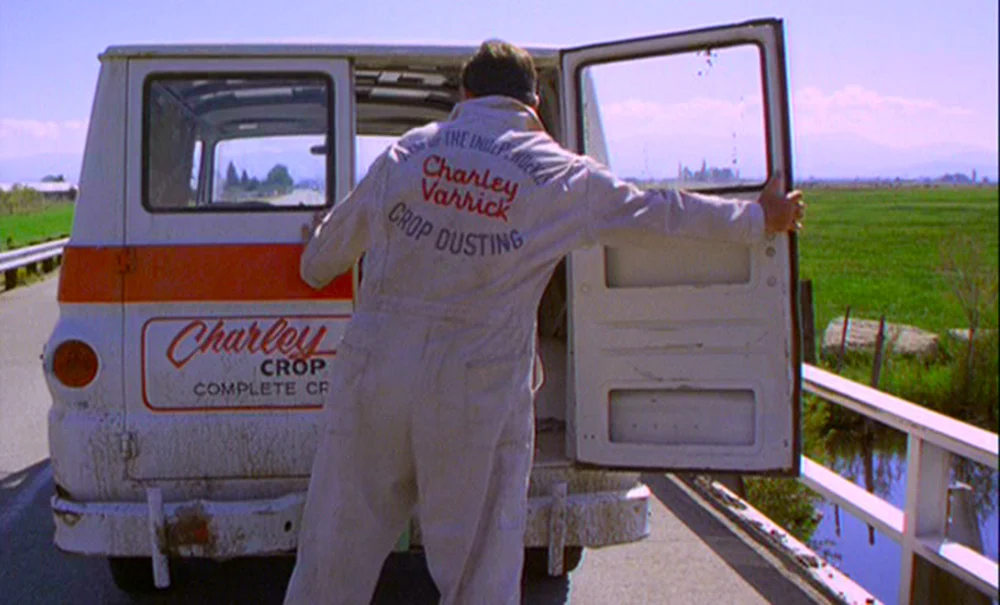
In the pantheon of 1970s American crime cinema, few films possess the jagged, sun-drenched, and ruthlessly efficient mechanics of Don Siegel’s Charley Varrick (1973). Originally titled The Last of the Independents—a name scuttled by Universal Pictures executive Lew Wasserman—the film has transcended its initial lukewarm reception to become a cornerstone of auteurist study. It is a work that captures the transition between the fading glory of classic Hollywood professionalism and the disillusioned, systemic cynicism of the New Hollywood era.
The Heist of a Lifetime: Main Facts
At its surface, Charley Varrick is a neo-noir heist film. It follows Charley Varrick (Walter Matthau), a former stunt pilot turned crop-duster whose livelihood has been decimated by the suffocating monopolies of modern capitalism. Alongside his wife, Nadine (Jacqueline Scott), and a volatile partner, Varrick robs a rural bank in the tiny town of Tres Cruces.
The heist goes disastrously wrong. Nadine is killed in the ensuing shootout, and while Varrick manages to escape with a significant haul, he quickly discovers that the money—far more than any small-town bank should hold—is actually a "bank" for the local Mafia. This realization sets in motion a high-stakes chess game as Varrick attempts to outmaneuver the syndicate, represented by the polished, corporate-minded Maynard Boyle (John Vernon) and the psychopathic hitman Molly (Joe Don Baker).
A Chronology of Conflict and Craft
The production history of Charley Varrick is as storied as its plot. The script was initially tailored for Clint Eastwood, riding high on the success of Siegel’s 1971 hit Dirty Harry. Eastwood famously passed on the project, purportedly finding the protagonist morally irredeemable. In a touch of meta-textual irony, Siegel later inserted a pointed Eastwood-style quip into the dialogue, directed at the hitman Molly.
Walter Matthau, eventually cast in the lead, was notoriously skeptical of the script. In his posthumously published autobiography, A Siegel Film, the director recalls Matthau’s constant, dryly delivered complaints and his suggestion that the film needed a narrative "device"—such as Varrick recounting his story from a psychiatrist’s couch in Argentina—to make the complex plot intelligible to audiences.
Despite these creative frictions, the film’s release in 1973 was met with critical praise but commercial indifference. Matthau, who ironically won a BAFTA for a role he claimed not to understand, later saw the film’s reputation undergo a radical transformation. Today, it is recognized as a masterpiece of economy, where the "Last of the Independents" tag, visible on the burning jumpsuit of Varrick’s stunt-pilot past, serves as the film’s primary thematic anchor.
Supporting Data: The Anatomy of a Masterpiece
To better understand the film’s enduring influence, cinephiles Veronika Franz and Severin Fiala—the directing duo behind The Devil’s Bath—recently sat down with critic Christoph Huber to deconstruct the film’s appeal. Their analysis highlights several key elements:
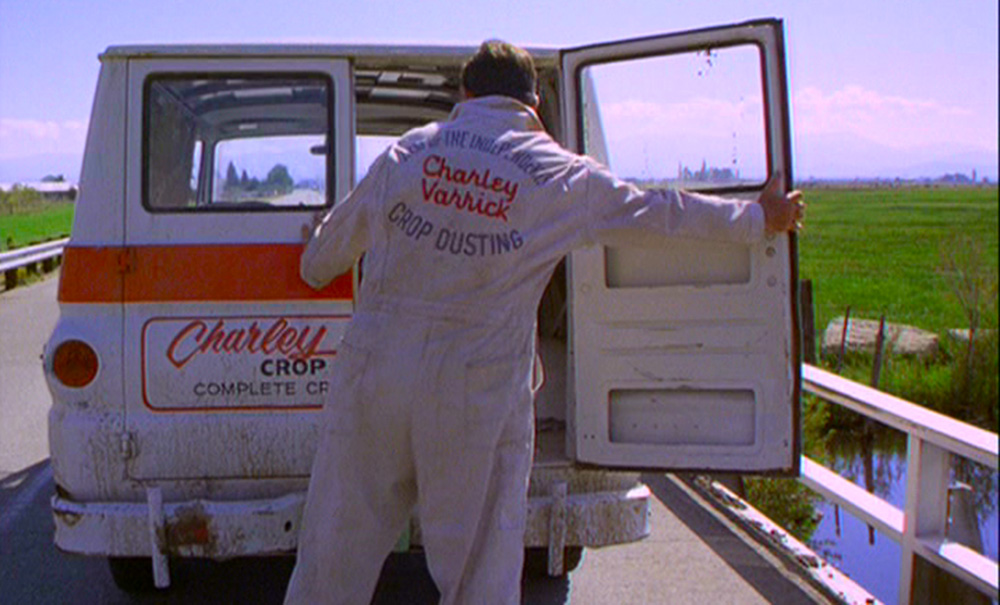
- The "Rural Noir" Aesthetic: Unlike the shadowy, rain-slicked streets of traditional noir, Charley Varrick takes place in broad daylight. The setting is not a specific town but a provincial "state of mind," meticulously crafted through authentic, lived-in locations like trailer parks and dusty junkyards.
- Laconic Suspense: Siegel’s direction eschews the overt stylization of contemporaries like the Coen Brothers. Instead, he uses "laconic" pacing, allowing tension to build through character interaction rather than mere spectacle. A prime example is the scene where Varrick methodically discards his weapons into a small stream—a slow, rhythmic act that contrasts sharply with the frantic, dramatic gun-tosses typical of the genre.
- The "Matthau Effect": Matthau’s performance is defined by his Everyman quality. By casting a comic actor in a role written for a "Superman" action hero, Siegel grounds the film’s absurdity. Matthau brings a "softness" and a believable, albeit cold, intelligence that makes his victory over the "Combine" (the Mafia/Corporate monolith) feel like a triumph of the individual against an suffocating system.
The Intersection of Crime and Capital
The film functions as a biting critique of American power structures. The "Combine" is portrayed not as a collection of mustache-twirling villains, but as a mirror image of the very capitalist forces that put Varrick out of business. The bank manager’s pathetic, terrified adherence to the syndicate’s rules—eventually leading to his suicide—highlights the absolute power these organizations wield over the individual.
The film’s brilliance lies in its refusal to offer easy moral resolution. Varrick is a criminal who kills, yet he is the audience’s proxy. He is a man who loves his wife—evident in the quiet, heartbreaking gesture of taking her ring—while simultaneously using her death as a tactical maneuver to avoid capture.
Implications for Modern Cinema
In contemporary discussions, Charley Varrick is frequently cited as the gold standard for "difficult ambivalence." Many modern filmmakers struggle to balance the audience’s sympathy for a protagonist who is, by all traditional metrics, "evil."
Franz and Fiala argue that current cinema often relies on over-explaining character motivations or "nudging" the audience toward the correct emotional response. In contrast, Siegel trusts his audience. He provides the details—the over-sized photograph on the bedside table, the absurd bulletproof vests of the police, the lace curtains in a trailer—and lets them coalesce into a world that feels both bizarre and undeniably real.
The film’s influence extends to the way it handles narrative beats. It presents a series of meticulously planned steps—the disguise, the disposal of evidence, the final, desperate stunt—with a level of detail that feels earned rather than forced. The final act, involving an antique biplane, serves as a testament to the film’s core philosophy: the independent operator is an endangered species, but one that can, if they are smart enough, outwit the monolithic machine.
Conclusion: A Legacy of Efficiency
Charley Varrick remains a quintessential "filmmaker’s film." It is a masterclass in economy, where every frame serves a purpose and every quirky detail reinforces the film’s internal logic. Whether it is the tragicomedy of a bank robber wearing a leg cast or the chilling, silent professionalism of a hitman, the film captures a specific, cynical American moment with surgical precision.
As Christoph Huber notes, "Film is tragedy in close-up and comedy in long shot." Charley Varrick sits comfortably in that intersection, a rare gem that manages to be both a pulse-pounding thriller and a profound meditation on the cost of remaining an independent in a world designed for conformity. Don Siegel may have lost the title fight regarding the film’s name, but in the final cut, he secured a lasting place in the history of the medium.
