The Frontier of Peak TV: How Star Trek: Deep Space Nine Rewrote the Sci-Fi Playbook
In the landscape of 1990s television, syndication demanded conformity. For decades, science fiction television adhered to a strict episodic mandate: reset the status quo by the end of the hour so that episodes could be broadcast in any order. Yet, nestled within this era of television history, StarTrek: DeepSpaceNine (DS9) staged a quiet, brilliant rebellion. Rather than charting the cosmos aboard a pristine starship, DS9 anchored itself to a battered, Cardassian-built mining station, choosing to explore the internal friction of a community left in the wake of a brutal colonial occupation.
Over its seven-season run from 1993 to 1999, creators Rick Berman, Michael Piller, and showrunner Ira Steven Behr constructed a serialized masterpiece. However, this dense narrative architecture has historically made the series intimidating for casual viewers. To understand the genius of Deep Space Nine, one must look at the episodes that successfully balanced serialization with standalone accessibility—the essential hours of television that serve as entry points to the franchise’s most mature work.
Main Facts: The Structural Evolution of Deep Space Nine
Unlike its predecessor, Star Trek: The Next Generation (TNG), which championed a techno-utopian vision of the future where humanity had outgrown interpersonal conflict, Deep Space Nine was designed to test those utopian ideals.
The Core Premise and Setting
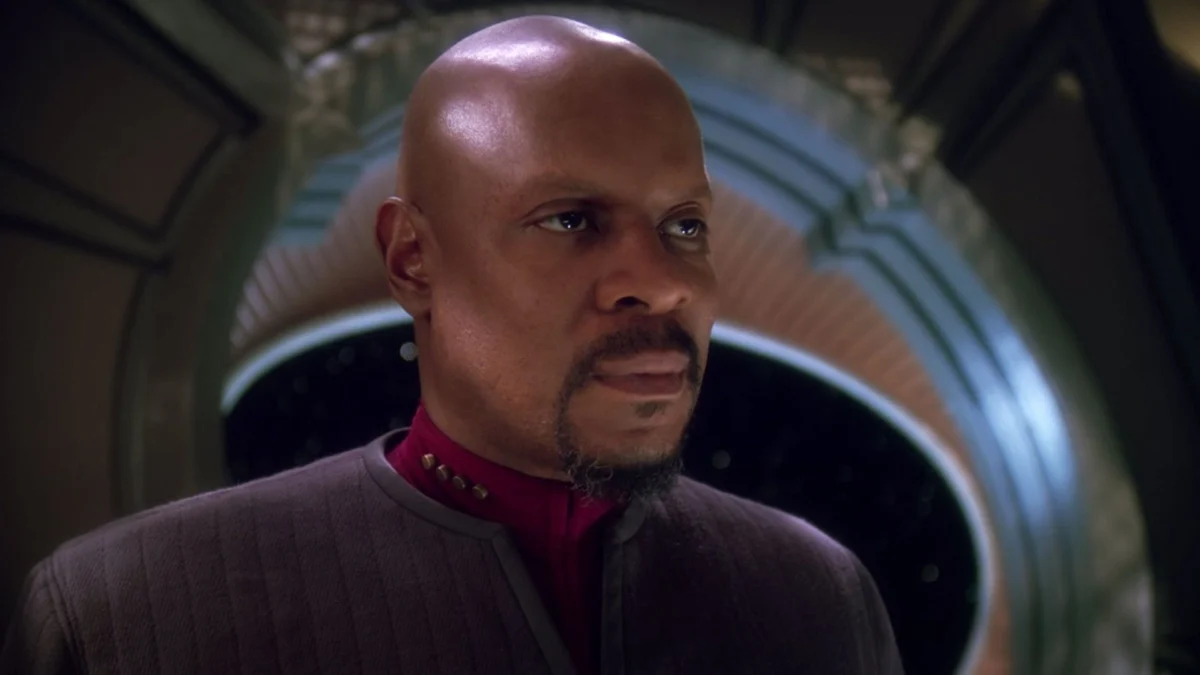
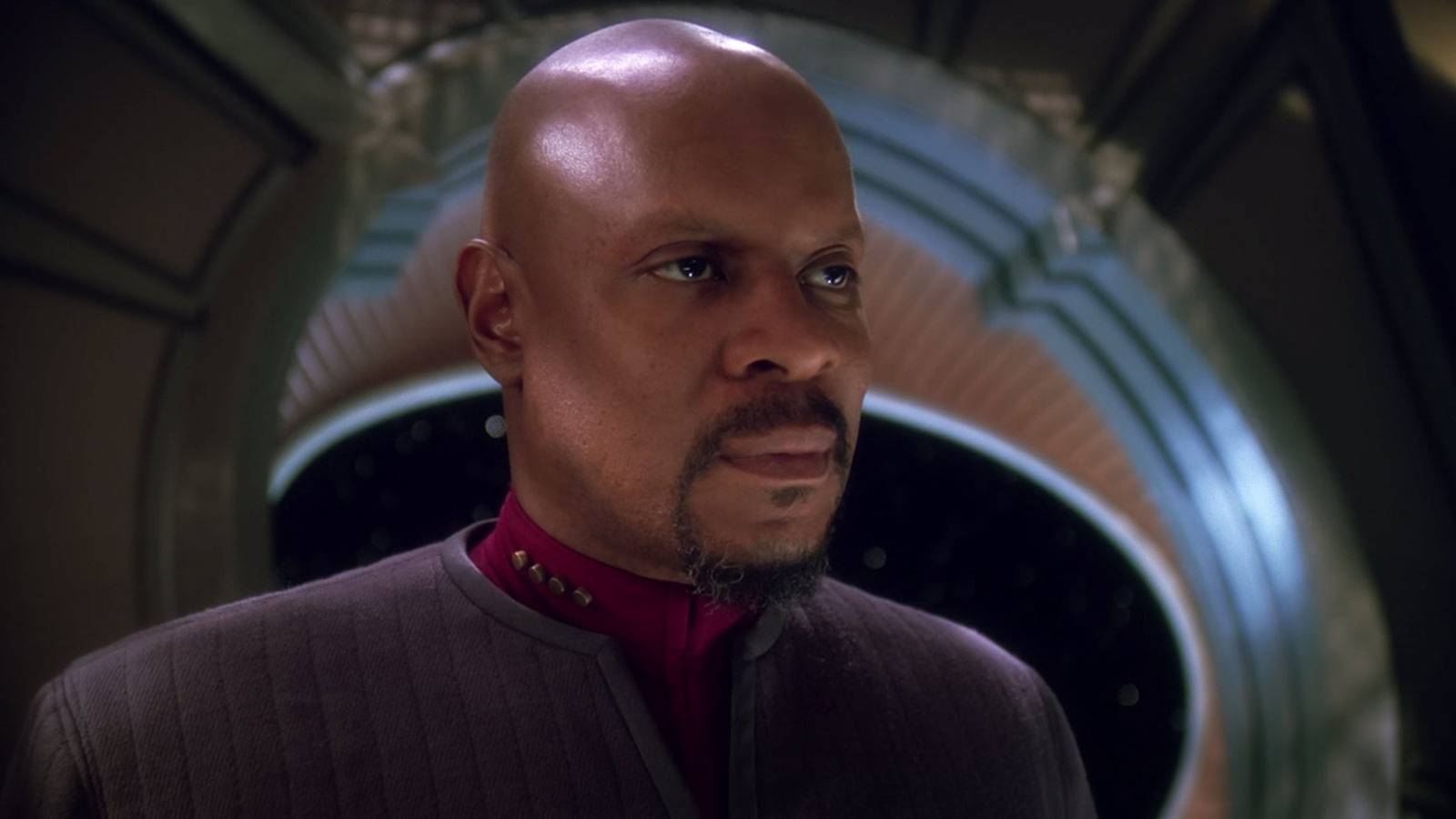
The series begins in the immediate aftermath of the Cardassian Union’s withdrawal from the planet Bajor. Starfleet is invited by the provisional Bajoran government to co-administer "Terok Nor," a desolate space station renamed Deep Space Nine. Commander Benjamin Sisko (Avery Brooks) is tasked with preparing the deeply religious, war-torn Bajorans for Federation membership.
The discovery of a stable wormhole to the unexplored Gamma Quadrant transforms the backwater station into a vital geopolitical hub. It also positions Sisko as the "Emissary of the Prophets"—a messianic figure in the Bajoran faith—creating an immediate conflict between his secular duties as a Starfleet officer and his spiritual responsibilities to a foreign culture.
The Serialization Dilemma
DS9 pioneered long-form narrative arcs, most notably the Dominion War, which spanned the show’s final three seasons. While this approach anticipated the "Golden Age of Television" and modern streaming habits, it alienated casual viewers of the 1990s who missed key episodes. To appreciate DS9’s legacy, critics point to a curated selection of standalone episodes. These narratives function as self-contained short stories, requiring minimal prior knowledge of the show’s dense lore while showcasing the series’ psychological depth, moral gray areas, and political complexity.
Chronology: A Narrative Journey Through DS9’s Best Standalones
[Season 1] ─── "Duet" (Ep. 18)
                 │
[Season 2] ─── "The Jem'Hadar" (Ep. 26)
                 │
[Season 3] ─── "The House of Quark" (Ep. 3)
                 │
[Season 4] ─── "The Visitor" (Ep. 2) ─── "Little Green Men" (Ep. 8) ─── "Our Man Bashir" (Ep. 9)
                 │
               "Homefront" & "Paradise Lost" (Eps. 10 & 11) ─── "Hard Time" (Ep. 18)
                 │
[Season 5] ─── "Trials and Tribble-ations" (Ep. 6)
                 │
[Season 6] ─── "Far Beyond the Stars" (Ep. 13)
The following ten episodes represent the chronological evolution of Deep Space Nine’s unique storytelling style, demonstrating how the writers used standalone formats to deconstruct the franchise’s grandest themes.
10. "Duet" (Season 1, Episode 18)
The Plot: A Cardassian passenger arriving at the station is suspected of being Aamin Marritza, a notorious war criminal responsible for atrocities at the Gallitep labor camp. Major Kira Nerys (Nana Visitor), a former Bajoran freedom fighter, conducts a grueling interrogation of the dying man.
Why It’s Essential: "Duet" is widely regarded as the episode where DS9 found its dramatic voice. It is a masterclass in minimalist television—essentially a two-character play set in an interrogation room. The episode avoids easy moralizing, exploring the psychological toll of collective guilt, systemic trauma, and the hollow nature of vengeance.
9. "The Jem’Hadar" (Season 2, Episode 26)
The Plot: While on a camping trip in the Gamma Quadrant, Commander Sisko and his son Jake, along with the Ferengi Quark and Nog, are captured by the Jem’Hadar—the genetically engineered shock troops of the Dominion.
Why It’s Essential: Though it serves as a season finale, this episode is a self-contained survival story that introduces the main antagonists of the rest of the series. The Jem’Hadar are presented not as cartoonish villains, but as a cold, highly disciplined military threat that completely destabilizes Starfleet’s sense of superiority.
8. "The House of Quark" (Season 3, Episode 3)
The Plot: Quark, the station’s opportunistic Ferengi bartender, accidentally kills a Klingon warrior in self-defense. To bolster his business, he claims he slew the Klingon in battle, leading him to be forcibly integrated into a powerful, declining Klingon noble House.
Why It’s Essential: DS9 excelled at using its alien races to explore cultural clashes. This episode subverts traditional Klingon warrior tropes by showing how their feudal society is vulnerable to financial manipulation. It proves that comedy in Star Trek can be intellectually stimulating when grounded in rich anthropological world-building.
7. "The Visitor" (Season 4, Episode 2)
The Plot: An elderly Jake Sisko (played with profound grief by Tony Todd) recounts his life story to a young writer. He explains how his father, Benjamin Sisko, was lost in a temporal anomaly, and how Jake spent his entire adulthood obsessing over a way to rescue him from the temporal rift.
Why It’s Essential: "The Visitor" is frequently cited as one of the greatest episodes in the entire Star Trek canon. It uses a high-concept sci-fi premise as a vehicle to explore the devastating nature of grief, the bond between father and son, and the tragedy of a life left unlived due to trauma.
6. "Little Green Men" (Season 4, Episode 8)
The Plot: While traveling to Earth to drop Nog off at Starfleet Academy, Quark, Rom, and Nog are thrown back in time due to a warp drive malfunction, crashing in Roswell, New Mexico, in 1947.
Why It’s Essential: This episode serves as a humorous critique of mid-20th-century humanity. Through the eyes of the hyper-capitalist Ferengi, human history—marked by nuclear testing, tobacco use, and paranoia—looks absurd. It is a lighthearted romp that highlights the show’s talent for social satire.
5. "Our Man Bashir" (Season 4, Episode 9)
The Plot: A transporter accident forces the physical patterns of several senior staff members to be stored in the station’s Holodeck. Dr. Julian Bashir (Alexander Siddig) must play through his 1960s James Bond-style spy program without dying, as any safety failure will erase his friends’ consciousnesses.
Why It’s Essential: While TNG had Sherlock Holmes and Dixon Hill, DS9 perfected the Holodeck genre by embracing camp and genre parody. It allows the ensemble cast to play wildly different, over-the-top villain roles while cementing the deep, complex friendship between Dr. Bashir and the Cardassian tailor/former spy Elim Garak (Andrew Robinson).
The Plot: Following a terrorist bombing on Earth by Changeling infiltrators, Sisko is appointed head of Starfleet Security on Earth. He quickly realizes that the militarization of Earth’s cities and the suspension of civil liberties pose a greater threat to the Federation than the Changelings themselves.
Why It’s Essential: This two-part story is remarkably prescient, anticipating the post-9/11 debates regarding security versus liberty by more than five years. It directly challenges the idea that Earth is a perfect utopia, demonstrating how easily democratic institutions can crumble under the influence of fear.
3. "Hard Time" (Season 4, Episode 18)
The Plot: Chief Miles O’Brien (Colm Meaney) is falsely accused of espionage by an alien race. Instead of physical incarceration, he is given a simulated 20-year prison sentence that is implanted directly into his mind over the course of a few hours. Upon returning to DS9, he must cope with severe PTSD.
Why It’s Essential: "Hard Time" is a harrowing exploration of mental illness and the psychological scars of solitary confinement. Colm Meaney delivers an incredibly raw performance as a man struggling to reintegrate into a peaceful society, demonstrating the franchise’s capacity for mature, character-driven drama.
2. "Trials and Tribble-ations" (Season 5, Episode 6)
The Plot: The crew of the USS Defiant is sent back in time to the 23rd century, where they must stop a Klingon spy from assassinating Captain James T. Kirk using a bomb disguised as a Tribble.
Why It’s Essential: Produced for the 30th anniversary of Star Trek, this episode seamlessly inserts the DS9 cast into footage from the classic 1967 episode "The Trouble with Tribbles." It is a technical marvel of its time and a joyful, self-aware love letter to the history of the franchise.
1. "Far Beyond the Stars" (Season 6, Episode 13)
The Plot: Sisko experiences a vivid psychic vision where he is Benny Russell, a Black science fiction writer in 1950s New York. Benny writes a story about a futuristic space station commanded by a Black captain named Benjamin Sisko, only to face systemic racism and censorship from his publisher.
Why It’s Essential: Directed by Avery Brooks, this episode is a monumental piece of television. By stripping away the sci-fi metaphors to confront real-world racism, the episode honors the history of speculative fiction as a tool for social change. It remains the absolute pinnacle of DS9’s artistic achievements.
Supporting Data: Critical Re-evaluation and Ratings Shift
When Deep Space Nine originally aired, it was often dismissed as the "middle child" of the franchise, sandwiched between the mainstream success of The Next Generation and the more traditional episodic adventure of Star Trek: Voyager. However, the advent of streaming media has radically altered the critical consensus.
In retrospective reviews from publications like Variety, The Hollywood Reporter, and Vulture, DS9 is consistently ranked as the best Star Trek series of the classic era. The very element that hindered its syndication success in the 1990s—its complex, multi-layered serialization—has made it the most binge-worthy and modern series of its cohort on platforms like Paramount+.
Official Responses: Perspectives from Creators and Cast
The creative team behind Deep Space Nine was acutely aware that they were pushing the boundaries of what was permitted under the strict creative mandates of the Star Trek brand, which was closely guarded by studio executives.
                  "We wanted to see what happened when the voyage ended...
                   when you couldn't just warp away from your problems."
                                      — Michael Piller, Co-Creator
                                                   │
                                                   ▼
"The 'Roddenberry Box' was a real thing. It dictated that Starfleet officers
 couldn't have conflict with one another. We had to break that box to tell real stories."
                          — Ronald D. Moore, Executive Producer / Writer
                                                   │
                                                   ▼
"With 'Far Beyond the Stars,' we weren't just making sci-fi. We were speaking
 directly to the human condition, to our history, and to the struggles of black artists."
                                  — Avery Brooks (Captain Sisko)
In the 2018 documentary What We Left Behind, showrunner Ira Steven Behr reflected on the studio’s constant pushback:
"We were always the black sheep. The studio wanted us to be more like The Next Generation. They wanted clean, easy resolutions. But we knew that if we didn’t push the envelope, if we didn’t show the dirt and the compromise under the fingernails of the Federation, we’d just be repeating what came before."
Implications: Paving the Way for Modern Peak TV
The narrative strategies developed in Deep Space Nine—and highlighted in these ten episodes—did not merely change Star Trek; they laid the groundwork for the future of prestige television.
The Direct Line to Modern Sci-Fi
Following his work on DS9, writer and producer Ronald D. Moore went on to reboot Battlestar Galactica in 2004. That series, which is widely celebrated as a milestone of 2000s prestige television, directly inherited DS9’s gritty tone, political skepticism, and serialized structure. The influence of DS9’s moral ambiguity can also be seen in modern science fiction masterpieces like The Expanse and Disney’s Andor.
The Blueprint for Streaming-Era Star Trek
Modern entries in the franchise, such as Star Trek: Discovery, Star Trek: Picard, and the animated Star Trek: Lower Decks, owe their structural existence to DS9. The transition from episodic "planet of the week" adventures to season-long narratives is a direct continuation of the creative risks taken aboard the Cardassian station in the 1990s. By proving that Star Trek could examine its own utopian ideals and emerge stronger for it, Deep Space Nine ensured the franchise’s relevance for generations to come.