
The Anatomy of Story Collapse: Screenwriting Pitfalls, Legacy Sequels, and the Shift in Hollywood’s Rotten Tomatoes Paradigm
Introduction: The Modern Box Office Divide and Structural Failures
As demographic divides at the box office play out across competing major releases—pitting contrasting genres against one another in a weekend battle for consumer attention—fundamental questions regarding narrative architecture, character continuity, and critical reception take center stage. Within the broader landscape of contemporary screenwriting, few trials match the sheer difficulty of legacy characters returning after decades away, or the delicate balance required to maintain narrative momentum across serialized television.
When storytellers misjudge these challenges, the resulting structural collapse is often swift and absolute. Recent streaming offerings and box office tentpoles provide a masterclass in these exact phenomena, illustrating how narrative integrity evaporates the moment a writer prioritizes manufactured plot mechanics over organic human behavior.
When Television Goes Off the Rails: The Beef Case Study
To understand how rapidly a narrative can disintegrate, one need look no further than recent missteps in serialized television, most notably seen in the later episodes of Beef. What began as a tightly wound, psychologically promising premise has devolved into an exercise in narrative sloppiness, turning what should be grounded character studies into borderline unwatchable spectacles.
The breakdown becomes glaringly obvious by Episode 7, which inexplicably transplants an entire country club cast to Seoul, South Korea. The machinery required to force this development is painfully transparent; the screenplay bends itself into pretzels, manufacturing far-fetched justifications to get every single character onto a transatlantic flight.
Once the ensemble arrives, the show abandons all logic. A group of completely ordinary suburban individuals suddenly finds their lives at mortal risk, thrust into an elaborate kung-fu battle against an underground syndicate of violent plastic surgeons. The sequence plays out like a hyper-stylized Jackie Chan parody directed through a John Wick lens: the camera sweeps wildly as characters dive, punch, kick, and execute synchronized dual-strikes against a swelling, heroic musical score.
The Core Screenwriting Error: Forced Plot Over Organic Action
The root cause of this structural failure highlights a foundational rule of screenwriting: stories begin to fall apart the second a writer imposes what they want characters to do, rather than allowing characters to behave realistically within a given situation.
In real life, people avoid direct confrontation, procrastinate, and sidestep mortal danger whenever possible. Most normal individuals would never make the choices forced upon them in Beef. While a writer must inevitably shepherd characters toward a dramatic conclusion, the transition must feel plausible. When a narrative relies on dragging characters around by the neck to satisfy a predetermined set piece rather than internal motivation, audiences feel the disconnect immediately. They may not possess formal script-analysis terminology, but they instinctively recognize when a story stops behaving like human life and starts behaving like artificial orchestration.
The Death of Critical Supremacy: The Shift in Studio Metrics
While television struggles with internal logic, the feature film landscape is undergoing a profound structural shift regarding how studios interpret success. For the better part of the two decades following the turn of the millennium, the review aggregator Rotten Tomatoes held an iron grip on Hollywood commercial viability.
During the height of Marvel Studios’ Phase One and Phase Two strategies, the formula was straightforward: reverse-engineer critic approval into the earliest drafts of the screenwriting process. If a movie secured an 85% or higher on the platform, studios weaponized that score as objective proof of artistic excellence. Falling below the 70% threshold often spelled commercial doom.
The Rise of Audience Disconnect
However, a cultural pivot has disrupted this dynamic. In recent years, high-profile projects have routinely generated mediocre or poor critic scores while pulling staggering box office numbers driven by passionate audiences—best exemplified by the theatrical run of The Super Mario Bros. Movie.
Current box office trackers highlight contrasting metrics for major genre releases:
- Mortal Kombat: 65% Critic Score / 90% Audience Score
- The Devil Wears Prada (Legacy/Revisit projects): 78% Critic Score / 86% Audience Score
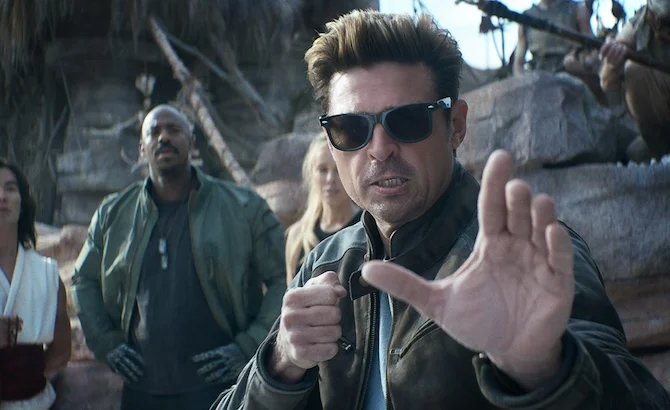
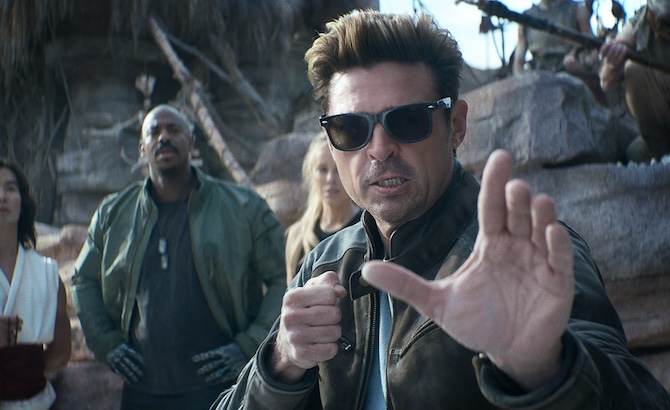
For studio executives navigating the 2026 media landscape, the audience score has usurped the critic score as the primary north star. This valuation change frees screenwriters from the pressure of stuffing screenplays with "fake depth," pseudo-intellectual themes, or characters engineered strictly to provoke online discourse. Instead, properties like Mortal Kombat succeed by leaning into their core appeal—anchoring ridiculous, high-concept tournaments around charismatic, grounded human protagonists like Johnny Cage rather than pretending to be profound meditations on the human condition.
The Legacy Sequel Trap: Evolution Versus Erosion
Examining properties that return after a hiatus of two decades or more reveals one of the most perilous traps in modern screenwriting. Whether looking at cinematic returns like Happy Gilmore 2, The Last Jedi, or legacy television revivals, writers tasked with resurrecting beloved characters almost invariably stumble into the same foundational error.
The Chronology Trap vs. The Essence Trap
The mistake typically begins with a well-intentioned creative question: "What has this character been doing for the last twenty or twenty-five years?"
While tracking a character’s chronology feels like a natural step in building out a rich backstory, beginning with biography rather than narrative essence is dangerous. It forces writers to approach character development backward.
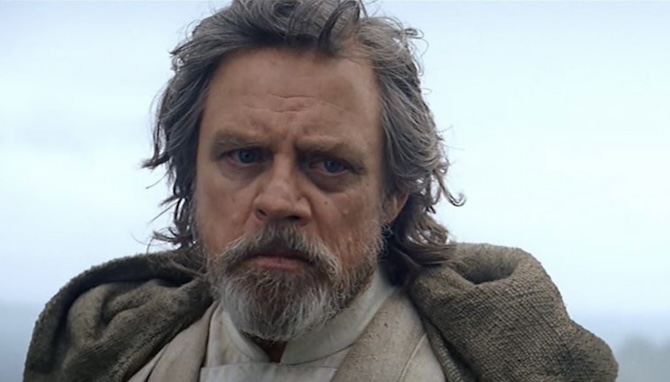
In both Happy Gilmore 2 and The Last Jedi, writers obsessed over the intervening years and arrived at identical, cynical conclusions: the passage of time must have reduced these iconic heroes into bitter, depressed, cynical shells of themselves. This approach fundamentally misjudges what an audience wants. After decades away, viewers do not return to reconnect with the worst, most broken version of a beloved figure; they return to reconnect with the core essence of why they loved them initially.
J.J. Abrams and the Han Solo Standard
By contrast, J.J. Abrams largely avoided this trap with Han Solo in the Star Wars sequel trilogy. A lesser writer might have marooned Solo as a defeated suburbanite pushing a cart through an alien grocery store, mistaking middle-age erosion for character evolution. Instead, Abrams maintained the character’s core identity: the swagger, the rogue spirit, and the penchant for stirring up trouble across the galaxy.
- Evolution: Organic growth, psychological maturity, and shifting perspectives that still honor the character’s fundamental psychology.
- Erosion: Stripping away core traits, agency, and charm solely to manufacture dramatic friction or unearned tragedy.
While robust backstories are essential for uncovering a character’s internal wounds, contradictions, and psychological motivations, backstory must never dictate identity to the point where the character ceases to feel like themselves.
Implications for the Future of Entertainment
The convergence of these trends—forced television plotting, shifting studio reliance on audience approval metrics, and the mishandling of legacy character continuities—signals a transitional era for media production.
- For Television Writers: Tight production schedules and rapid content turnaround cannot excuse compromised internal logic. As audiences become increasingly vocal about narrative drop-offs, streaming platforms will face mounting pressure to prioritize structural integrity and character consistency over rushed, high-concept set pieces.
- For Major Studios: The decline of critical gatekeeping in favor of direct audience satisfaction validates populist entertainment. Franchises will increasingly design their narratives around delivering visceral, entertaining experiences anchored by clear emotional touchstones rather than chasing awards-season validation.
- For Legacy IP Management: Writers rooms tackling multi-decade revivals must learn to decouple the passage of time from character assassination. Honoring legacy requires preserving the internal engine that made a character iconic in the first place, ensuring that nostalgia serves the story rather than destroying it.
