
Beyond the Box Office: Charlie Kaufman’s Radical Call to Arms for Screenwriters
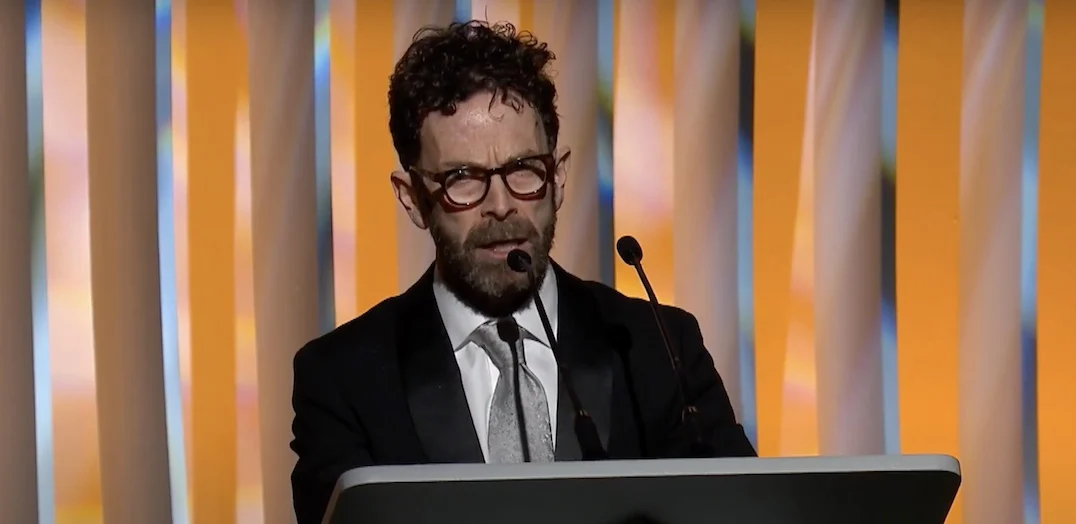
In an industry often defined by quarterly earnings reports, demographic targeting, and the relentless pursuit of "four-quadrant" appeal, the voice of the screenwriter has frequently been relegated to the background. However, at the 2023 Writers Guild of America (WGA) Awards, Charlie Kaufman—the mastermind behind surrealist masterworks like Being John Malkovich and Eternal Sunshine of the Spotless Mind—shattered that status quo. Accepting the prestigious Laurel Award for Screenwriting Achievement, Kaufman delivered a searing, existential critique of the Hollywood machinery, urging his peers to abandon the pursuit of corporate approval in favor of radical, unflinching honesty.
His speech served as a clarion call during a period of immense industry volatility. As the WGA prepared for high-stakes negotiations with Hollywood producers—a process that would ultimately culminate in a historic strike—Kaufman’s words resonated with a room full of storytellers who have long felt the encroaching pressure of algorithmic content production.
A Night of Recognition and Resistance
The 2023 WGA Awards ceremony was marked by a dichotomy of celebration and apprehension. While the evening lauded the creative ingenuity of the past year—notably with Daniel Kwan and Daniel Scheinert (the duo known as "The Daniels") taking home Best Original Screenplay for the multiversal phenomenon Everything Everywhere All at Once, and Sarah Polley securing Best Adapted Screenplay for the searing drama Women Talking—the specter of labor unrest loomed large.
The ceremony was punctuated by the introduction of Kaufman by Jessie Buckley, the star of his most recent project, I’m Thinking of Ending Things. Buckley’s introduction underscored the unique position Kaufman holds in the industry: an auteur who has spent decades navigating the tension between high-concept artistic integrity and the commercial demands of the studio system. When Kaufman took the stage, he did not offer the standard list of platitudes or industry thanks. Instead, he offered a confession and a warning.
The Anatomy of the Pitch: A Legacy of Suppression
Kaufman’s address began with a haunting recollection of a "pitch session" he observed two decades prior. He described the scene with the precision of a psychological thriller: a panel of executives—devoid of a single writer—sitting in judgment of "supplicants" who had come to plead for the opportunity to tell their stories.
He recounted a young writer beginning a pitch, only to be cut off mid-sentence by an executive’s arrogant, "Stop! You’ve lost me already." For Kaufman, this anecdote was not merely a memory; it was an allegory for the systematic conditioning of writers.
"We writers are trained by the business," Kaufman told the rapt audience. "We are trained to believe that what we do is secondary to what they do. We are trained to do the bidding of people who are motivated, not by curiosity, but by protecting their jobs."
This "training," Kaufman argued, is the primary source of the creative malaise currently plaguing the film industry. By forcing writers to internalize the logic of the executive—to worry about marketability, franchise potential, and opening-weekend viability—the industry has effectively severed the writer’s connection to the human condition.
The Ethical Responsibility of the Storyteller
Perhaps the most potent moment of the speech came when Kaufman pivoted from industry critique to moral philosophy. He challenged the audience to reconsider the fundamental purpose of their craft.
"Our work is to reflect the world, say what is true in the face of so much lying," Kaufman declared. He warned that when writers prioritize the fortunes of a corporation or the approval of critics over the pursuit of truth, they risk becoming "window dressing" for propaganda. To illustrate the gravity of this moral failure, he drew a stark comparison to Leni Riefenstahl’s Triumph of the Will, the 1935 Nazi propaganda film. While a provocative hyperbole, the message was clear: silence or submission in the face of corporate homogenization is an abdication of the artist’s duty.
Kaufman bolstered his argument with a quote from the poet Adrienne Rich: "I do know that art means nothing if it simply decorates the dinner table of the power which holds it hostage."
This sentiment resonated deeply in a room that was weeks away from a major labor confrontation. By positioning the writer as a counter-weight to "the power which holds it hostage," Kaufman effectively shifted the narrative of the impending strike from a mere salary dispute to a struggle for the soul of cinema itself.
The Burden of Regret and the Path Forward
Kaufman did not position himself as an outsider looking in; he stood as an insider who had spent his career grappling with these very traps. He admitted to the audience, "I have dropped the ball. I have wasted years seeking the approval of people with money."
This vulnerability served to bridge the gap between the legendary screenwriter and the up-and-coming writers in the room. He urged them to reject the "world of box office numbers" and instead embrace the messy, chaotic reality of the human experience. "Don’t pitch," he advised. "Be nervous. Be vulnerable. Just make your story honest and tell it."
His closing remarks were a rallying cry for collective empowerment: "They’ve tricked us into thinking we can’t do it without them. But the truth is they can’t do anything of value without us."
Implications for the Industry
Kaufman’s speech arrived at a critical juncture for Hollywood. The WGA’s subsequent negotiations with the Alliance of Motion Picture and Television Producers (AMPTP) centered on issues that Kaufman’s speech highlighted: the devaluation of writing in the age of streaming, the threat of artificial intelligence, and the erosion of the "writer’s room" as a space for creative development.
1. The Devaluation of Creativity
Kaufman’s critique addresses the "gig economy" model that has begun to define screenwriting. By treating writers as transient content-creators rather than essential storytellers, studios have inadvertently stifled the very innovation that keeps the medium alive. The "pitch session" culture he described is now echoed in the "mini-rooms" that have become the standard in television, where writers are hired for short bursts of time without the long-term creative agency required to shape a narrative.
2. The Algorithmic Threat
The "world of box office numbers" that Kaufman warned against has evolved into the "world of data analytics." Studios now utilize complex algorithms to predict audience behavior, often leading to a homogenization of plot points and character arcs. Kaufman’s insistence on "truth" and "vulnerability" is a direct challenge to this data-driven approach, which often prioritizes familiarity over resonance.
3. The Power Dynamic
The most profound implication of Kaufman’s speech is the realization of the writer’s leverage. The 2023 WGA strike, which followed shortly after these awards, proved that when the "minions" stop working, the machinery of the entire industry grinds to a halt. By encouraging writers to stop seeking approval, Kaufman was essentially encouraging them to realize their own value as the source of the industry’s entire output.
Conclusion: A New Standard for Screenwriting
Charlie Kaufman’s WGA Award speech was more than an acceptance speech; it was a manifesto for a new era of screenwriting. In an era where the artist is pressured to be a brand manager, an influencer, and a content-producer, Kaufman’s call to "work for the world" acts as an essential reset.
The success of films like Everything Everywhere All at Once and the critical acclaim for projects like Women Talking suggests that audiences are indeed hungry for the "truth" Kaufman champions. As the industry continues to navigate the complexities of new technology and changing consumption habits, the lesson from Kaufman remains clear: the power of a story lies not in its ability to satisfy an executive’s check-list, but in its ability to mirror the complicated, beautiful, and often painful truth of the human existence.
For the next generation of screenwriters, Kaufman’s message is both an invitation and a challenge: stop asking for permission to be great, and start writing the stories that only you can tell.
