
Uncaging the Beast: A Critical Deep-Dive into Jacob Rainer’s High-Concept Spec Script Wildman
Introduction and Main Facts
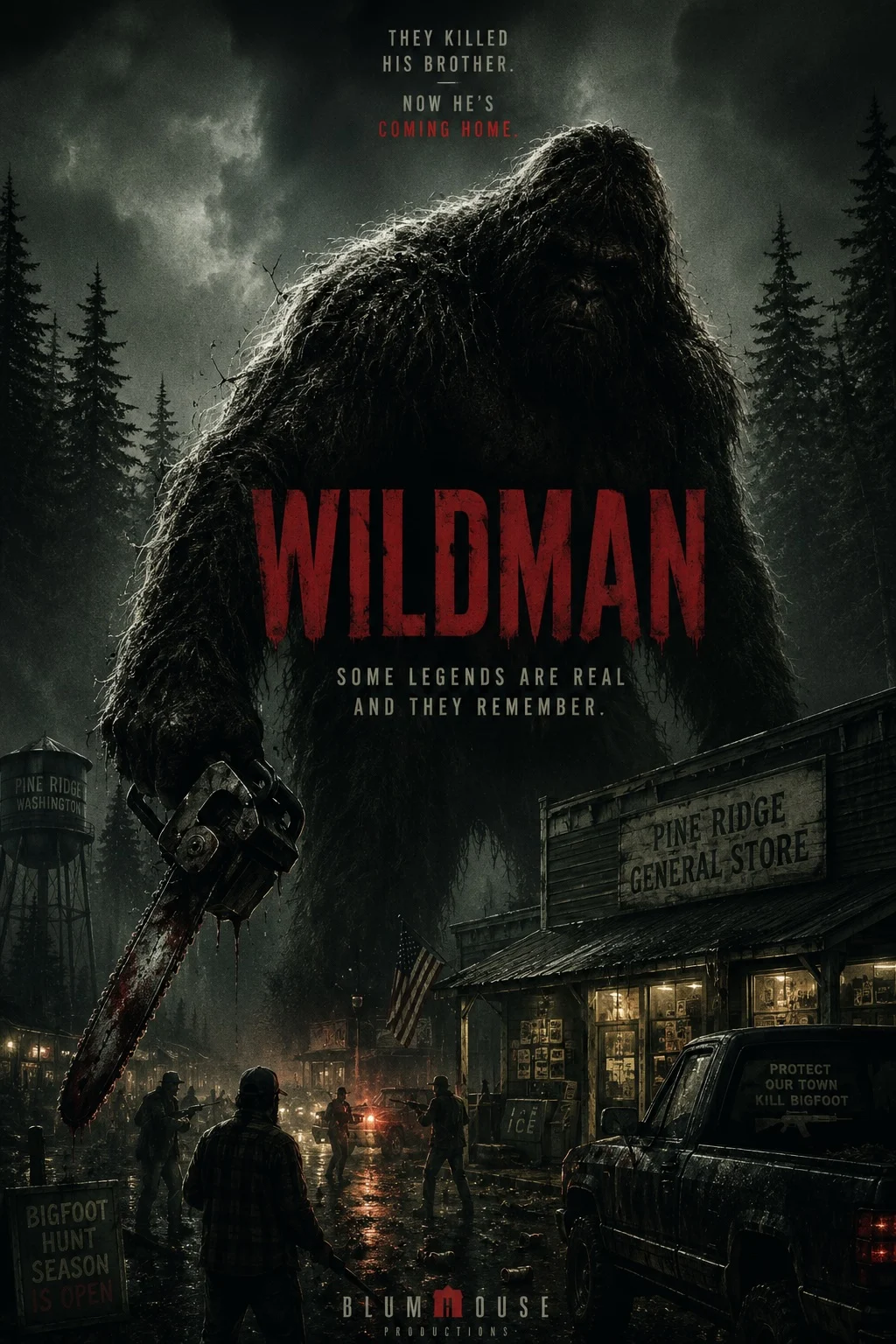
In the competitive, hyper-saturated ecosystem of screenwriting contests, high concepts are the undisputed currency. Few scripts from the recent Blood & Ink Horror Screenplay Contest generated as much immediate, electrified chatter as Jacob Rainer’s action-horror spec, Wildman. The premise alone is a masterclass in hook-driven marketing: when a violent, murderous militia guns down his younger brother, a reclusive Bigfoot named Joel abandons his secluded mountain sanctuary to wage a brutal warpath of vengeance. His quest for retributive justice steers him on a collision course with a homicidal local cop, stone-cold psychopaths, and a bloodthirsty militia—culminating in a rampage where Joel stops at nothing short of tearing his enemies limb from limb.
Spanning a hefty 121 pages, Wildman emerged from a rigorous six-month development gauntlet. The Blood & Ink contest requires writers to pitch their concepts publicly, securing a green light either through direct editorial endorsement or by amassing at least 15 community upvotes in the comments. Out of over 90 selected writers who survived the pitch phase, Rainer penned a script that pushes boundaries, introduces unforgettable set-pieces, and delivers a delightfully unhinged cinematic experience. Yet, despite its explosive strengths, the script presents structural flaws that highlight the perennial tug-of-war between audacious genre ambition and disciplined narrative pacing.
Chronology of a Carnage: The Narrative Arc of Wildman
To understand the trajectory of Wildman, one must trace its narrative blueprint, which blends traditional small-town thriller mechanics with gonzo monster-movie energy.
The script opens in media res with a sensory-assault sequence: a furious Bigfoot is systematically dismantling a local militia outside the general store of a remote Washington town, leaving a trail of carnage, shattered glass, and terrorized locals in its wake.
The narrative then flashes back a few days to establish the human ecosystem of the fictional logging community. Amidst a populace steeped in local folklore, paranoid bloodlust, and generational Bigfoot legends, Sheriff Cale Dyer stands out as a rare voice of reason. Conversely, the town harbors a volatile menagerie of dangerous personalities: a trigger-happy young deputy named David, his abrasive convenience-store-clerk girlfriend Georgie, war veterans Casey and Bryan, the seemingly amiable Luke, the deeply unsettling giant Kevin, and the undisputed apex predator of malice, Ranse.
The inciting incident arrives when Luke obtains a bootleg acoustic "Bigfoot call"—a primitive wooden knocking device reminiscent of hunting duck calls—designed to lure the cryptids out of hiding. Pressured by his bloodthirsty cohorts, Luke ventures deep into the emerald labyrinth of the Pacific Northwest forest to trap a specimen.
Far deeper in the wilderness lies a hidden, idyllic mini-utopia shared by Joel and his younger brother, Ethan. Unlike the stoic, cautious Joel, Ethan harbors an insatiable curiosity about the outside world. Drawn by the hypnotic acoustics of the human-made call, Ethan steps into a forest clearing. The camouflaged rednecks instantly unleash a barrage of gunfire, killing him within minutes. Joel arrives just in time to witness the execution, fixing a deathly glare on the faces of his brother’s killers before launching his counter-offensive.
After surviving an initial bullet wound and seeking refuge at a remote farm—where elderly residents attempt to help him before the militia descends to bag their second trophy—Joel pivots. He arms himself with an iconic tool scavenged from the farm: a roaring chainsaw. A Bigfoot wielding a chainsaw makes quick work of an entire bar filled with hostile locals, setting the stage for a town-wide siege where Joel hunts down every conspirator involved in his brother’s murder to reclaim Ethan’s body.
Supporting Data and Creative Anatomy
Voice, Personality, and the Human Element in Writing
One of the most valuable takeaways from the evaluation of Wildman lies in the mechanics of descriptive prose. In screenwriting, the distinction between functional exposition and vibrant, voice-driven prose often dictates whether a reader stays awake or zones out.
Consider the difference in how an opening scene can be rendered:
-
Logical, sterile writing:
We’re on: Georgie’s General Store.
A common store that looks similar to other stores in small towns.
In the parking lot are a number of men in military gear holding AR-15s.
-
Personality-infused writing:
Injecting distinct authorial voice, stylistic flair, and rhythmic cadence that reflects an engaged human consciousness reacting to the scene in real time.
While prose styling does not fundamentally alter plot mechanics, injecting authentic personality makes the reading experience visceral, signaling passion and creative ownership to professional gatekeepers.
The Problem with Page Count and Script "Fat"
At 121 pages, Wildman stumbles into a classic thriller trap. In professional screenwriting, the golden rule for action-thrillers is merciless efficiency. Thrillers must build momentum, sustain high adrenaline, and reach a definitive resolution before the audience—or the professional reader—grows fatigued.
Excess length inevitably invites narrative bloat, or "fat." While a small amount of fat can slow a script down, a medium-to-large amount can actively sabotage its pacing. Wildman attempts to shoulder a complex backstory, expansive town lore, and an ensemble cast that dilutes the velocity of what should be a relentless, lightning-fast revenge narrative.
Official Reviewer Assessment and Critical Insights
The Highs: Unforgettable "Movie Scenes"
Despite its pacing drag, Wildman succeeds in a category that many spec scripts fail to conquer: it contains undeniable "movie scenes." In the lexicon of cinematic development, a movie scene is a sequence so potent, distinct, and visually arresting that a producer reads it on the page and immediately visualizes audiences reacting to it in a packed theater.
Just as Blake Snyder famously noted that his spec sale was driven by an unconventional, slow-speed car chase featuring a mother driving Sylvester Stallone, Wildman boasts transcendent set-pieces. The general store massacre and, most notably, the chainsaw-wielding bar annihilation are masterclasses in outrageous, crowd-pleasing genre execution. Jacob Rainer deserves immense credit for leaning fully into the absurdity of his premise without winking at the camera. He pushes past conventional boundaries—introducing taboo psychological elements and visceral gore—that more timid writers would avoid.
Strategic Recommendations for a Polish
To elevate Wildman from a promising contest entry into a genuinely marketable, buzz-generating spec script, structural consolidation is essential.
- Trim the Excess: Ruthlessly cut the script down to a lean, aggressive 85 to 90 pages. Eliminate extraneous subplots and streamline the human ensemble.
- Shift the POV: Consider centering the narrative entirely around Joel’s perspective, treating him with the silent, relentless gravity of a character like John Wick. Minimizing or entirely removing conventional human dialogue for the protagonist would heighten the primal, mythic quality of the story.
- Elevate the Stakes through Scouting: If the script maintains a tighter focus on the creature, human antagonists like the psychotic Kevin can still be established through Joel’s stealthy, menacing surveillance from the shadows, maximizing the audience’s hunger for retribution.
Broader Implications: Screenwriting in the Age of Artificial Intelligence
The critical discourse surrounding Wildman touches upon a broader, increasingly urgent macro-trend within the entertainment industry: the rise of artificial intelligence in creative writing.
As language models and generative AI tools become more sophisticated, the market is quickly flooding with structurally competent, logically sound, and grammatically correct screenplays. AI can effortlessly handle the mechanical aspects of scene heading formatting, standard three-act pacing, and straightforward prose description.
However, AI inherently lacks an individual human soul, lived experience, and a distinct, idiosyncratic voice. Scripts like Wildman—with all their messy, audacious, boundary-pushing flaws—demonstrate why human personality on the page is more critical than ever. An AI could never organically invent a chainsaw-wielding Bigfoot driven by fraternal grief because it lacks the messy, unpredictable emotional interiority of a human creator taking a massive artistic swing.
Final Verdict
- Contest Status: Confirmed for the official Top 10 of the Blood & Ink Horror Screenplay Contest.
- Critical Rating: Worth the Read (Outperforming standard genre entries through sheer audacity, though requiring targeted structural revisions before hitting the commercial market).
For writers studying how to infuse raw energy into high-concept horror, Jacob Rainer’s Wildman serves as both an inspiring blueprint of unbridled imagination and a cautionary tale about the perils of narrative bloat.
