
‘You Can See Everything,’ A24’s Elizabeth Holmes Documentary, Scores an Impressive $1.75 Million in Thursday Previews
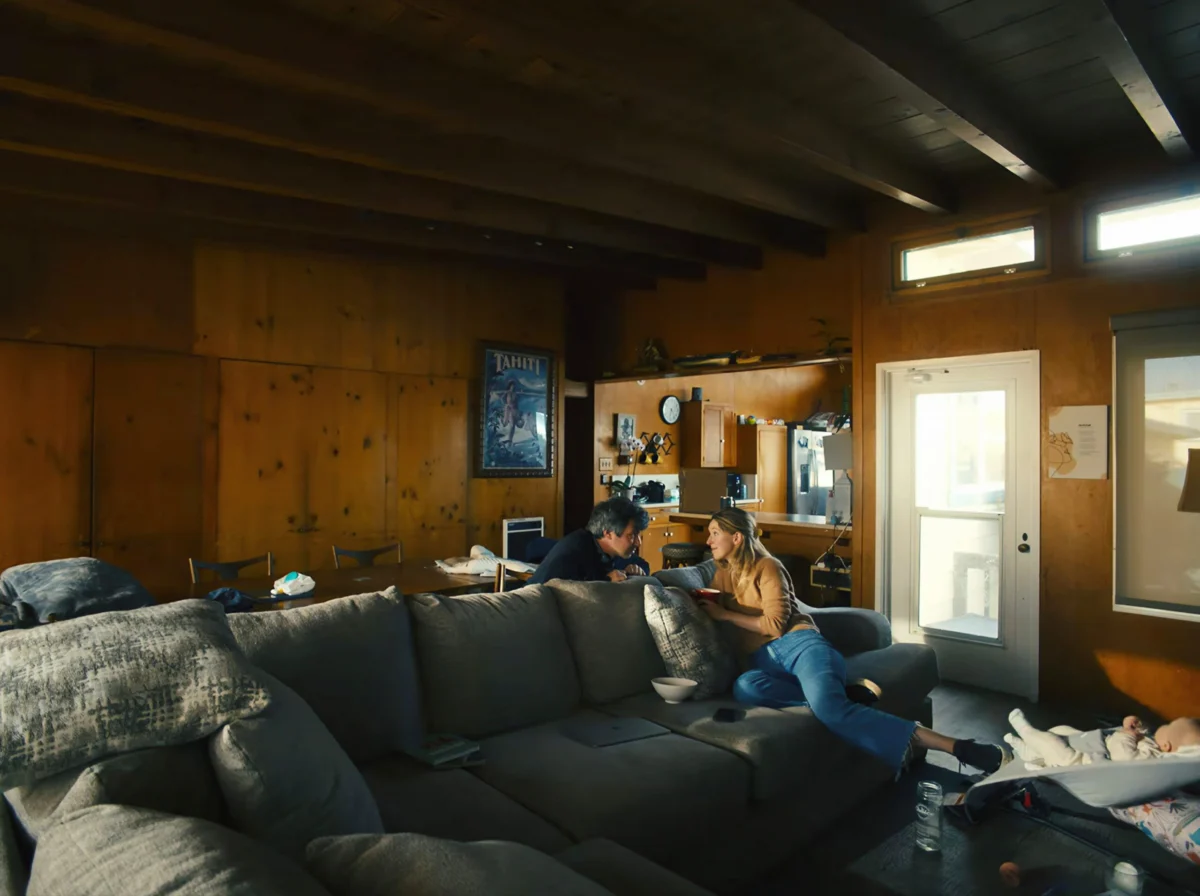
Main Facts
The cultural fascination with disgraced Theranos founder Elizabeth Holmes remains as potent as ever, proving that the public appetite for Silicon Valley cautionary tales is far from saturated. You Can See Everything, the highly anticipated documentary directed by master of social discomfort Nathan Fielder and breakout nonfiction filmmaker Lance Oppenheim, has officially arrived in theaters. Distributed by A24, the film debuted to a staggering $1.75 million from just 855 screens during its Thursday preview showings alone.
The film’s theatrical rollout was preceded by a notoriously rigorous, secretive marketing campaign designed to keep audiences completely in the dark and protect the documentary’s narrative twists. That aura of mystery sparked a fierce wave of pre-release demand, with ticket buyers rushing out to Thursday screenings to bypass potential spoilers circulating online. Heading into its opening weekend, industry analysts projected a domestic gross between $7 million and $8 million—a phenomenal achievement for a standard, non-music feature-length documentary.
To put these figures into perspective, major concert films like Taylor Swift’s The Eras Tour pulled in massive, record-breaking tallies, but standard socio-political or investigative documentaries rarely cross the threshold into mainstream box office hits. For comparison, the celebrated 2018 Ruth Bader Ginsburg documentary RBG finished its entire theatrical run with $14.4 million. You Can See Everything is on track to collect half of RBG’s lifetime gross in a single weekend.
Chronology
The journey toward You Can See Everything spans years of public obsession, creative evolution, and a carefully orchestrated rollout strategy.

- 2015–2018 (The Rise and Fall): Elizabeth Holmes graces the covers of glossy business magazines, heralded as a visionary entrepreneur and the next Steve Jobs. By 2018, investigative reporting by The Wall Street Journal and subsequent federal investigations reveal that Theranos’s proprietary blood-testing technology, Edison, is an elaborate fraud, leading to the company’s collapse.
- 2019–2022 (The Media Saturation): The cultural zeitgeist devours the Holmes saga. Bestselling books like John Carreyrou’s Bad Blood, podcasts, Alex Gibney’s HBO documentary The Inventor: Out for Blood in Silicon Valley, and the Emmy Award-winning Hulu drama series The Dropout (starring Amanda Seyfried) cement Holmes as a permanent fixture in the modern rogue’s gallery.
- Late 2023–Mid 2025 (Conception and Production): Nathan Fielder—riding high on the acclaim of Comedy Central’s Nathan for You and HBO’s mind-bending docu-comedy The Rehearsal—joins forces with Lance Oppenheim, whose distinct cinematic eye and penchant for eccentric Americana have made him a rising star. Rumors of a clandestine collaboration regarding a new investigative project begin circulating within industry inner circles.
- Early 2026 (The Secretive Rollout): A24 launches an intentionally obscure marketing campaign for You Can See Everything. Trailers offer minimal footage, and review embargoes are strictly enforced to preserve narrative surprises, fueling fervent speculation online.
- October 2026 (The Theatrical Premiere): The film opens in 855 theaters nationwide, pulling in a massive $1.75 million in Thursday previews and positioning itself as a major box office anomaly.
Supporting Data
The box office metrics surrounding You Can See Everything place it in rare historical company for theatrical documentaries:
- Thursday Preview Gross: $1.75 million across 855 screens, signaling an exceptionally high per-screen average for a non-fiction project.
- Opening Weekend Projections: $7 million to $8 million, competing favorably against mid-tier studio fiction releases.
- Comparative Box Office Benchmarks:
- The Eras Tour (2023): $92.8 million opening (music-driven anomaly).
- RBG (2018): $14.4 million total lifetime domestic gross.
- Primetime (2026): Oppenheim’s recent A24 narrative/docu-hybrid success starring Robert Pattinson, which surpassed $42 million domestically against a $15 million budget.
- Budget and Scale: While exact production budgets for You Can See Everything have not been officially disclosed by A24, the film’s distribution footprint of roughly 855 locations reflects a moderate, calculated theatrical rollout designed to maximize cultural urgency and word-of-mouth momentum.
Official Responses and Industry Reactions
The unusual marketing strategy employed by A24 has been the primary talking point among film critics, exhibitors, and industry observers. Studio executives noted that the choice to withhold preview screeners and lock down plot details created an environment of "event cinema" typically reserved for major superhero blockbusters or psychological thrillers.
Exhibitors have expressed relief and excitement over the film’s performance, noting that specialty and documentary titles have historically struggled to draw substantial weekday crowds. Theater operators in major metropolitan areas reported packed auditoriums for Thursday night showtimes, with many attendees demonstrating a demographic skew toward younger, internet-literate audiences—a testament to Fielder’s dedicated cult following.
Critics who have attended post-embargo screenings have praised the film’s refusal to retread familiar ground, highlighting the unique stylistic fingerprints of both co-directors. By blending Fielder’s signature knack for engineering uncomfortable sociological spaces with Oppenheim’s flair for heightened, cinematic realism, You Can See Everything reportedly offers an entirely unprecedented perspective on a story the public thought it knew completely.

Implications
The triumphant opening of You Can See Everything carries significant implications for the future of documentary distribution and the commercial viability of non-fiction cinema on the big screen.
First, it demonstrates that audiences are willing to treat documentary features like narrative fiction, provided there is a distinct creative hook, an aura of mystery, and recognizable auteur branding. For years, the conventional wisdom dictated that standard investigative documentaries were destined for streaming platforms rather than theatrical windows, with rare exceptions. A24’s success with both Primetime and now Fielder and Oppenheim’s latest venture suggests a growing appetite for hybrid, provocative non-fiction storytelling that defies traditional genre boundaries.
Second, the film’s marketing strategy provides a blueprint for generating theatrical urgency in an era dominated by streaming convenience. By treating the details of Elizabeth Holmes’s continued cultural footprint like a closely guarded Hollywood spoiler, A24 successfully mobilized a digital generation of moviegoers who refuse to be left out of the cultural conversation.
Finally, the film proves that the public fascination with late-stage Silicon Valley hubris remains unquenched. Even after years of investigative journalism, dramatic reenactments, and multi-part television series, the psychological makeup of individuals like Elizabeth Holmes continues to command attention. As You Can See Everything heads through its opening weekend—facing off against heavy-hitters like Paramount’s Street Fighter—it has already proven that when it comes to examining the grand illusions of the tech elite, Fielder and Oppenheim are out for blood.
