
The AI Revolution in Professional Hardware: ASUS Unveils the ProArt P16, P14, and GR1X Powered by NVIDIA RTX Spark
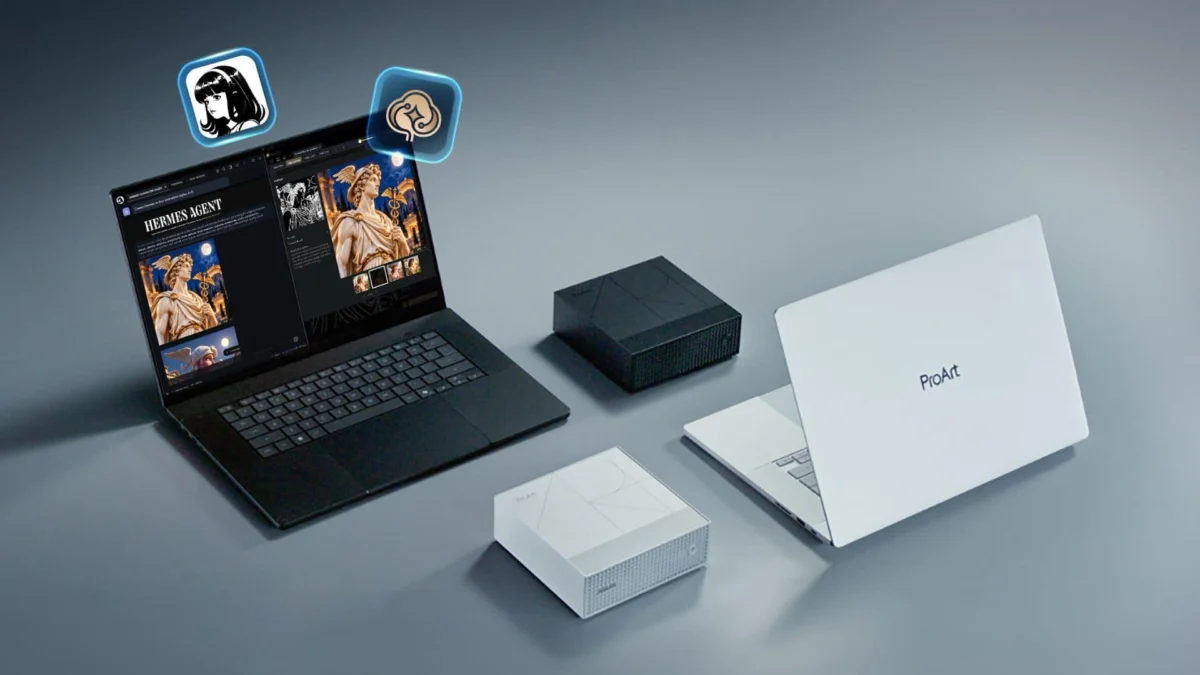
The landscape of professional creative computing is undergoing a seismic shift. As generative AI transitions from a cloud-based novelty to a local, high-performance necessity, hardware manufacturers are scrambling to provide the infrastructure required to support this evolution. ASUS has taken a definitive step forward with the global launch of its ProArt P16 and P14 laptops, alongside the compact but formidable ProArt GR1X mini PC. These devices represent more than just a spec-bump; they are the first systems to integrate the NVIDIA RTX Spark platform, signaling a new era of "agentic" computing for video editors, 3D artists, and developers.
The Core Innovation: What is NVIDIA RTX Spark?
To understand why these machines carry a starting price tag of $2,599, one must look under the hood at the NVIDIA RTX Spark architecture. First teased during Computex earlier this year, RTX Spark is an integrated hardware solution designed to handle the massive compute overhead associated with local AI inference.
At its heart, RTX Spark merges an NVIDIA Blackwell-based RTX GPU with an NVIDIA Grace CPU, utilizing the ultra-high-speed NVLink-C2C interconnect. This pairing allows for a level of unified memory—up to 128 GB—that was previously reserved for workstation-grade server racks. Furthermore, the inclusion of fifth-generation Tensor Cores with dedicated FP4 support enables these laptops to achieve up to 1 petaflop of AI performance.
This is not merely about "faster rendering." It is about enabling "agentic AI"—the ability for software to autonomously execute complex creative tasks, from organizing raw footage to generating high-fidelity 3D assets, without relying on the latency or privacy risks of cloud-based APIs.
Chronology: From Concept to Consumer Reality
The journey of these devices has been a calculated rollout by ASUS and NVIDIA, designed to align with the maturation of the AI software ecosystem.
- June 2026 (Computex): ASUS provided the world with its first public look at the ProArt lineup. At the time, the focus was on the architectural potential of the Blackwell-Grace integration.
- Late Summer 2026: Throughout August and September, industry insiders and creative professionals began testing early prototypes, particularly focusing on the compatibility of the Arm-based architecture with legacy creative suites.
- October 7, 2026: ASUS officially opened pre-orders for the P16 and P14 models in the United States, setting the stage for a mid-October release.
- October 16, 2026: The scheduled date for the first consumer units to land in the hands of creative professionals, marking the first time the general public can harness 1-petaflop-capable mobile hardware.
- Late 2026 (Forthcoming): Adobe is scheduled to roll out fully optimized, native versions of its Creative Cloud suite, specifically reworked to leverage the unique strengths of the RTX Spark platform.
Technical Specifications and Design Philosophy
ASUS has maintained its commitment to the "ProArt" branding, ensuring that these machines are as much about professional aesthetics as they are about internal power. Both the P16 and P14 feature CNC-machined aluminum chassis, available in refined Nano Black and Neo White finishes.
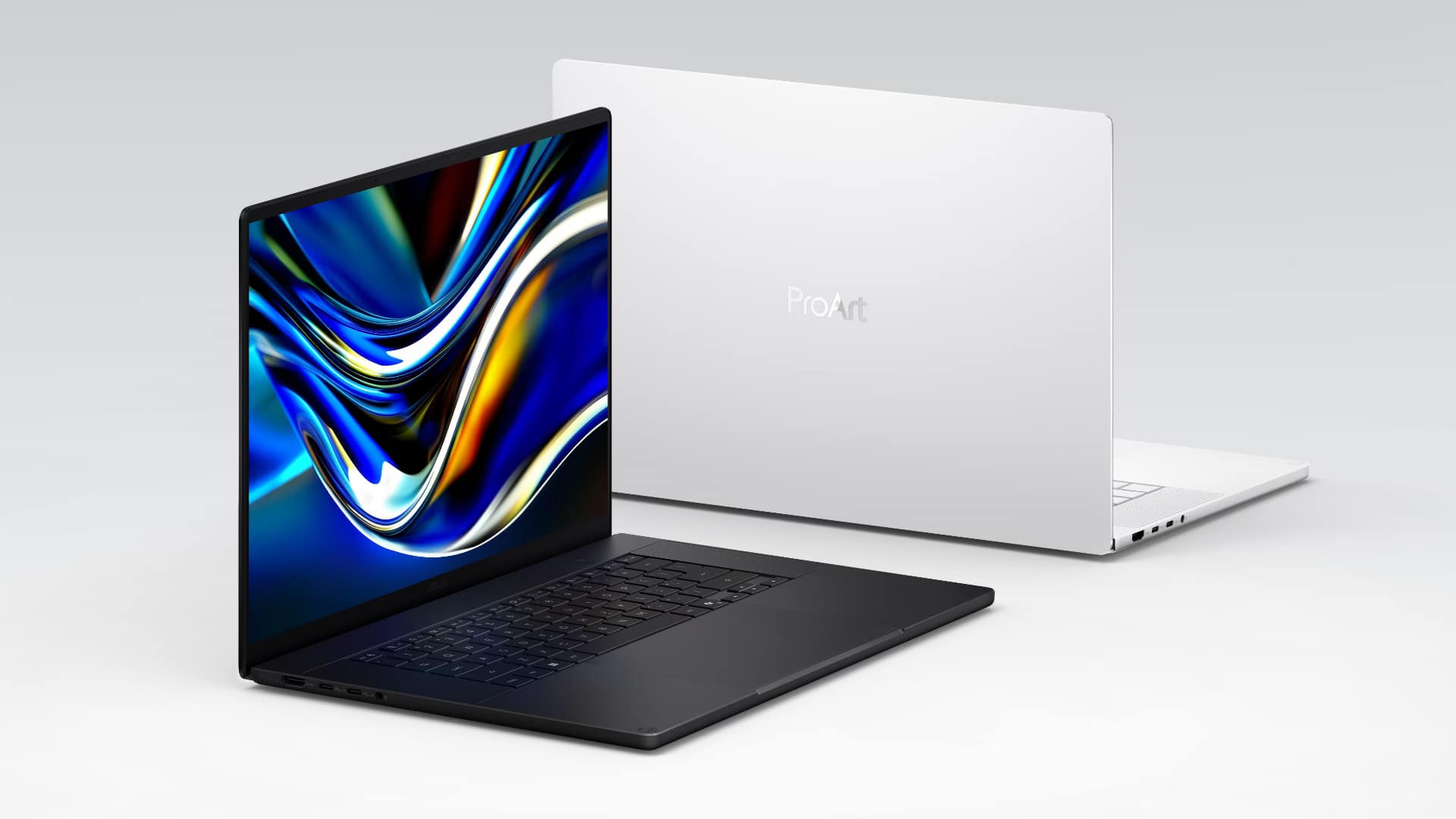
The P16 and P14: A Study in Portability
Despite the massive compute power inside, the physical dimensions remain remarkably slim. The ProArt P16 measures just 12.9 mm (0.51 inches) in thickness and weighs 1.77 kg (3.9 lbs), housing a robust 99 Wh battery. The smaller P14, weighing 1.48 kg (3.3 lbs), is slightly thicker at 13.9 mm (0.55 inches) but features a 90 Wh battery.
Both laptops sport ASUS Lumina Pro OLED displays, which are calibrated for professional color-critical work. These panels boast a Delta E < 1 accuracy, peak brightness levels of up to 1600 nits, and a 120 Hz variable refresh rate with advanced anti-reflection technology.
The GR1X: The Mini PC Powerhouse
For those who prefer a desktop-adjacent workflow, the ProArt GR1X packs similar RTX Spark performance into a 150 x 150 x 51 mm (5.9 x 5.9 x 2 inch) form factor. Designed for high-density environments, the GR1X includes dual-fan cooling, dual M.2 SSD slots for massive storage arrays, and enterprise-grade connectivity: 10GbE networking, WiFi 7, and Bluetooth 5.4, with support for up to four 4K displays.
Performance Benchmarks and Real-World Utility
The technical specifications are impressive, but they must be contextualized by the workflows they enable. NVIDIA and ASUS have specifically highlighted the machines’ capabilities in four high-demand areas:
- 12K Video Editing: The unified memory architecture allows for seamless scrubbing and color grading of 12K 4:2:2 footage, a feat that would typically choke standard consumer hardware.
- 3D Scene Complexity: With the ability to process 90 GB-plus 3D scenes, these laptops are effectively portable render farms for Unreal Engine and Blender professionals.
- AI Video Generation: The systems are capable of 4K AI video generation, turning prompt-based inputs into high-resolution visual assets in a fraction of the time required by cloud-based services.
- LLM Support: The hardware supports local execution of Large Language Models with up to 120 billion parameters, allowing for truly private, secure, and offline AI-assisted coding or writing.
The Adobe Integration
The most critical factor for adoption will be software optimization. Adobe is currently working on deep-level integration for Photoshop and Premiere, specifically for the Arm-based RTX Spark architecture. While the system can handle applications that are not natively built through emulation, the performance gains will truly materialize once Adobe’s native updates go live later this year.
Implications: The Shift Toward Localized AI
Perhaps the most significant implication of the ProArt P16/P14 launch is the shift in economic and operational models for creative professionals.

Cost Savings and Data Sovereignty
By moving from cloud-based AI to local execution, users can bypass the "per-token" or "per-generation" fees that have become common in the industry. For a creative studio producing hundreds of AI-generated assets daily, this local capacity represents a massive long-term cost reduction.
Furthermore, data sovereignty is a major selling point. By keeping sensitive client footage and proprietary models on-device, professionals can ensure that their intellectual property never leaves their physical control—a critical requirement for agencies and film studios.
Flexible Workflows
The hardware supports a "hybrid" model. Users can utilize local power for the bulk of their creative work while retaining the flexibility to ping cloud services for massive-scale training or collaborative tasks. Tools like Hermes Agent and ComfyUI have been preloaded, providing a "plug-and-play" experience for users to begin building repeatable, agent-connected workflows immediately.
Availability and Market Positioning
As of October 2026, the ASUS ProArt P16 and P14 are available for purchase, with configurations ranging from 24 GB to 128 GB of unified memory. The $2,599 starting price places these machines firmly in the high-end professional tier, targeting creators who have reached the limits of traditional x86-based laptops.
The distribution strategy reflects this premium positioning. While the base configurations are available through Best Buy and ASUS’s own eShop, the maxed-out 128 GB models are being funneled through specialized channels, including Micro Center, ensuring that the hardware reaches the power users who will push it to its limits. The GR1X mini PC is expected to follow later in the year, rounding out the ecosystem for studio environments.
Conclusion
ASUS, through its collaboration with NVIDIA, has successfully bridged the gap between the mobile laptop form factor and the immense processing power required for the next generation of generative AI. By prioritizing unified memory, high-performance Arm-based architecture, and professional-grade display technology, the ProArt P16 and P14 are not just tools—they are the new standard for the AI-enabled creative workspace. As the industry continues to move toward local, agentic AI, these machines stand as a testament to the fact that the future of creativity is not in the cloud, but right on your desk.
