
Beyond the Half-Century Wall: The Sundance Premiere of Free Leonard Peltier and the Ongoing Struggle for Indigenous Justice
By Bailey Pennick | Adapted and Expanded for Journalistic Publication
Main Facts
Just days before its high-profile premiere at the 2025 Sundance Film Festival, the narrative surrounding the documentary Free Leonard Peltier underwent a seismic, real-life transformation. After spending half a century behind bars—making him one of the longest-serving political prisoners in modern U.S. history—Leonard Peltier’s life sentence was commuted to house arrest by outgoing President Joe Biden.
The documentary, co-directed by Jesse Short Bull and David France, arrives at a critical juncture in American history. It chronicles the volatile origins and profound impact of the American Indian Movement (AIM), the systemic corruption embedded within reservation governance, the tragic and contentious 1975 shoot-out at the Pine Ridge Reservation, and the devastating legal and personal fallout that followed.
However, as filmmakers, activists, and subjects made clear during the emotional post-screening panel at The Ray Theatre, Peltier’s clemency is not a neat, happy ending to a tragic chapter. Instead, it serves as a catalyst for a broader, ongoing reckoning regarding the United States government’s historic and systemic mistreatment of Indigenous populations.
Chronology: Fifty Years of Incarceration and Resistance
To understand the weight of the Free Leonard Peltier premiere, one must trace the timeline of a struggle that spans generations:
- 1968: The American Indian Movement (AIM) is founded in Minneapolis, Minnesota, emerging as a militant and community-focused civil rights organization dedicated to addressing systemic poverty, police brutality, and treaty violations affecting Native Americans.
- 1975: The tense socio-political climate on the Pine Ridge Reservation in South Dakota culminates in a deadly shoot-out on June 26. Two FBI agents, Jack Coler and Ronald Williams, and a young Native American man named Joe Stuntz, lose their lives.
- 1977: Following a controversial extradition from Canada—secured via testimony later revealed to be coerced—Leonard Peltier is convicted in federal court of first-degree murder and sentenced to two consecutive life terms, despite widespread international skepticism regarding the fairness of his trial.
- 1977–2024: For nearly five decades, a global "Free Leonard Peltier" movement organizes tirelessly. Human rights organizations, international leaders, former prosecutors, and activists petition successive U.S. presidential administrations for clemency, citing suppressed evidence, coerced witness testimony, and systemic prejudice.
- January 2025: In the final days of his term, President Joe Biden commutes Peltier’s sentence to house arrest, granting him his first taste of freedom in 50 years.
- January 2025: Free Leonard Peltier makes its world premiere at the Sundance Film Festival, drawing critical acclaim and sparking urgent dialogues about civil rights, state power, and Native sovereignty.
Supporting Data and Background
The documentary delves deep into the archives of the American Indian Movement, bringing to light the complex geopolitical and social conditions that fueled the unrest of the 1970s. Key elements highlighted in the film and surrounding discussions include:
- The Pine Ridge Jurisdiction: During the mid-1970s, the Pine Ridge Reservation experienced an unprecedented wave of violence, marked by dozens of unsolved murders of traditional Native people. The community was fractured between traditionalists and a tribal government backed by federal authorities.
- Legal Irregularities: Peltier’s trial has long been cited by legal scholars and human rights advocates as a miscarriage of justice. Notably, withheld ballistic evidence and recanted testimonies from key witnesses—such as Myrtle Poor Bear, who admitted to FBI coercion—plagued the prosecution’s case.
- The Human Toll: Over 50 years behind bars, Peltier’s health deteriorated significantly. He survived bouts of COVID-19, diabetes, an aortic aneurysm, and near-total blindness in one eye, all while being repeatedly denied parole despite meeting standard criteria for release.
- Global Solidarity: The campaign for Peltier’s freedom transcended borders. Amnesty International, the Dalai Lama, Nelson Mandela, and Pope John Paul II all advocated on his behalf over the decades, recognizing his imprisonment as a symbol of broader global injustices against Indigenous communities.
Official Responses and Perspectives
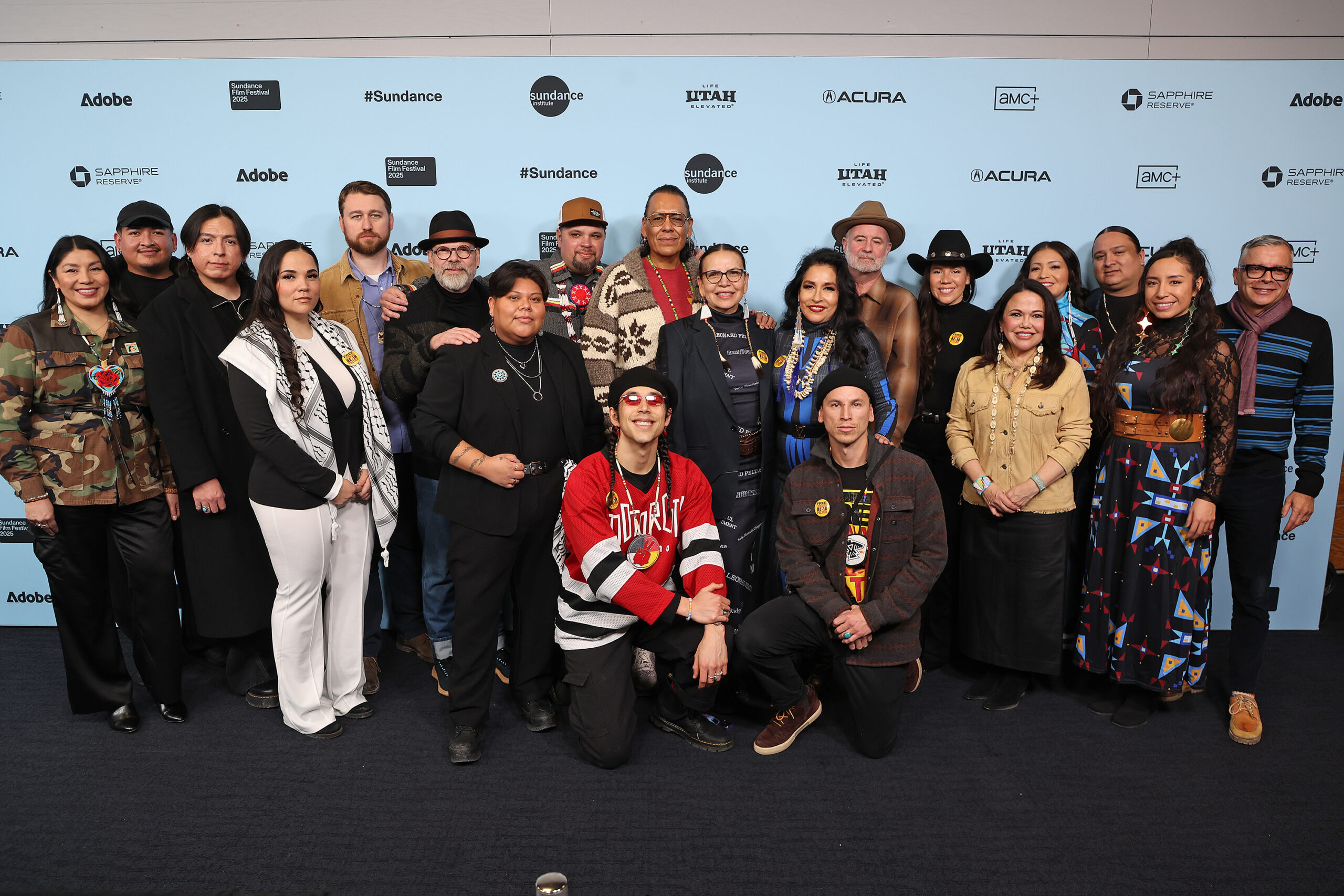
The emotional weight of the film’s premiere was palpable inside The Ray Theatre, where the audience was forced to reconcile cinematic history with real-time news of Peltier’s commutation.
Jean Roach, an Indigenous activist and survivor of the events at Pine Ridge, spoke tearfully during the post-screening panel. Reflecting on the decades-long campaign, she admitted the lingering disbelief shared by many within her community:
"It was really emotional watching all that stuff that we’ve been through… I really want to thank everybody, it wasn’t just a few of us — worldwide we’ve had support [for Leonard]. I can’t believe it till I see him come out."
That deep-seated skepticism toward federal promises is a central thesis of the film. Co-director Jesse Short Bull shared how the project materialized, expressing a sense of higher calling:
"For whatever reason, I think that… the Creator kept pushing us together. Pushing David and I together to see how we could try to serve this story."
Co-director David France, renowned for his investigative documentary work, noted the profound personal impact of following the case for half a century:
"I have followed Leonard’s case for 50 years since his arrest and have learned so much from the American Indian Movement and the work that they did back then and continue to do today. When I realized that Leonard’s 50th anniversary was coming up — the anniversary of his incarceration — I thought it was time for me to play my part in adding my voice to the Free Leonard Peltier movement."
Activist Nick Tilsen expanded the conversation beyond Peltier’s individual release, cautioning against viewing the commutation as a definitive conclusion. Addressing the crowd after the credits rolled, Tilsen contextualized the struggle within a broader historical framework:
"I don’t think it’s just about the next month, and I don’t think this film is just about the last 49 years. I think this film is about everything the Indigenous people have been through since the founding of this country. And every single one of Leonard’s struggles — from the boarding schools that he survived, all the way to his prosecution, all the way to his incarceration — that’s how this country has always treated Indigenous people."
Tilsen further connected the historical narrative to the contemporary political landscape, urging vigilance:
"Now we have a huge opportunity because we have not had that many victories as Indian people, but we have one now. We have one now and I want to say that it’s timely of where we are at in history. At this moment this film, his resistance, our resistance, is relevant right now at this historical moment when we’re watching the rise of authoritarianism here in the United States. It’s required; we cannot fight authoritarianism in the shadows, we have to mobilize if we want a future, and if Leonard Peltier can fight for 49 years and win, then let’s go."
Implications for the Future
The release of Free Leonard Peltier—coupled with his long-overdue clemency—marks a pivotal moment for Indigenous rights advocacy in the United States. The film transcends standard biographical documentary filmmaking; it serves as an indictment of systemic government overreach and a testament to the endurance of Native resistance.
As Peltier transitions to house arrest, the coalition behind the film aims to redirect public attention toward systemic reforms. These include addressing the ongoing crisis of Missing and Murdered Indigenous Relatives (MMIR), protecting treaty rights, and dismantling the lingering structures of institutional racism within the American legal and carceral systems.
Ultimately, Free Leonard Peltier ensures that the next half-century of American history will not forget the lessons of Pine Ridge, the resilience of the American Indian Movement, or the cost of a justice system that took fifty years to correct a profound wrong.
