
Beyond the Green Light: Inside the Massive Success of HBO’s Lanterns and the Creative Roadmap for Season 2
Main Facts
Following a critically acclaimed freshman run that captivated audiences and dominated streaming metrics, HBO’s gritty, grounded adaptation Lanterns has officially closed the book on its first season. The series, which reimagines the classic DC Comics Green Lantern mythology through a grounded, noir-infused lens, has emerged as a premier powerhouse for the network, averaging an astonishing 19 million viewers per episode.
Despite the show’s runaway success and ongoing early development for a second season, co-creator Damon Lindelof—renowned for his visionary work on HBO’s Watchmen, The Leftovers, and ABC’s Lost—has confirmed that neither he nor co-creator Tom King will return to helm a potential second season. Furthermore, the season one finale delivered a massive, devastating narrative twist regarding the fate of iconic cosmic lawman Hal Jordan, leaving fans and critics alike parsing through what the future holds for the DC Cinematic Universe’s small-screen endeavors.
Chronology: The Journey from Concept to Cosmic Phenomenon
The path to Lanterns becoming a premier television event was years in the making, evolving from DC Studios’ broader strategy to overhaul its interconnected universe under the creative vision of James Gunn and Peter Safran.
- Early Development and Creative Assembly: When HBO first announced the series, the project was framed not as a traditional, high-budget space opera, but as a grounded, detective-style mystery—often described by insiders as True Detective meets intergalactic law enforcement. Bringing in heavy-hitting creators like Damon Lindelof and comic book visionary Tom King immediately signaled to the industry that this adaptation would treat the source material with narrative weight and psychological depth.
- The Season 1 Broadcast Run: Debuting to intense scrutiny from lifelong comic fans and mainstream viewers alike, the series quickly defied expectations. Rather than relying solely on massive CGI spectacle, Lanterns focused on atmospheric tension, character-driven drama, and the intricate dynamics of the Green Lantern Corps. Week by week, viewership climbed, ultimately settling on a stellar average of 19 million viewers per episode.
- The Season 1 Finale: The climax of the first season brought an abrupt and emotionally punishing end to the narrative arc for Hal Jordan, culminating in a death that shocked the fandom. While television history is rife with "fake-out" demises, the creative team deliberately opted for finality.
- The Post-Finale Revelations: Immediately following the finale’s broadcast, Lindelof revealed to Collider (in reports corroborated by IGN) that a writers’ room has already been quietly assembling to brainstorm and ideate concepts for Season 2, even as HBO weighs an official, formal greenlight. However, Lindelof made it clear that he and King have passed the torch, clearing the path for fresh creative voices to take the reins.
Supporting Data and Audience Metrics
The commercial and critical impact of Lanterns cannot be overstated in an era where prestige television faces fierce competition from across the streaming landscape.
- Viewership Milestones: Averaging approximately 19 million viewers per episode across linear and streaming platforms, Lanterns ranks among the most-watched first-season debuts for an HBO original drama in recent memory.
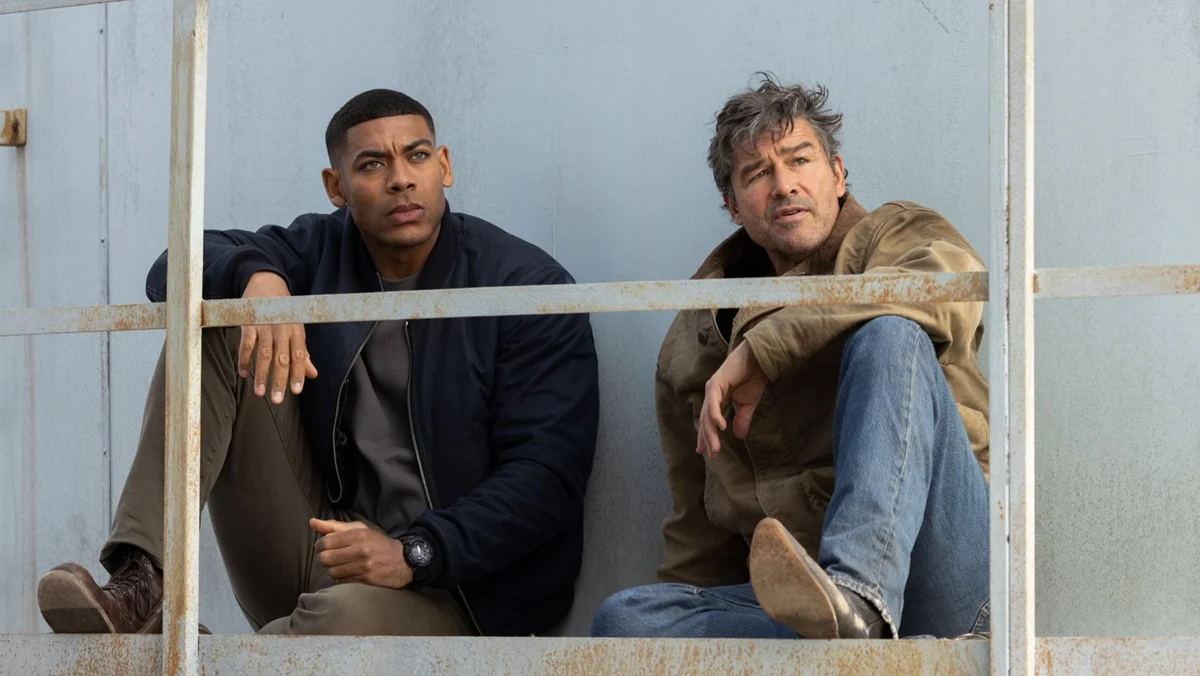
- Critical Reception: Review aggregators highlighted the show’s ability to "stick the landing" with its finale, praising its restrained aesthetic and mature storytelling. Critics particularly lauded the lead performances—most notably Kyle Chandler’s emotionally resonant portrayal of Hal Jordan and Aaron Pierre’s magnetic screen presence—which helped ground high-concept comic book lore in gritty reality.
- Production Scale: While the series leaned heavily into procedural detective tropes, the production budget reflected HBO’s commitment to matching cinematic standards. Every detail, from the manifestation of the green energy rings to the detailed set designs of terrestrial and extraterrestrial environments, was crafted to satisfy both casual viewers and meticulous comic nerds.
Official Responses and Creative Philosophy
The decision to permanently dispatch a foundational comic book icon like Hal Jordan was not made lightly. In his post-finale interview with Collider, Damon Lindelof elaborated on the intense debates that took place inside the Season 1 writers’ room regarding the character’s ultimate fate.
"I can only tell you that everybody in the Season 1 room, inclusive of the writers who are working on ideating on Season 2, felt like even though we knew that it was going to be emotionally devastating and/or disappointing and maybe even frustrating, that the worst possible schmuck-baity thing that we could do is show you a pilot where Hal Jordan was definitively dead, and then try to walk it back and say, ‘Oh, he was a clone’ or ‘He’s only mostly dead’ in the Princess Bride vernacular."
Lindelof emphasized that cheap narrative workarounds—such as claiming a character survived via sci-fi tropes or cloned bodies—ultimately undermine the emotional investment of the audience. By allowing Hal Jordan’s sacrifice or demise to carry genuine weight, the creative team hoped to honor the stakes of the story.
At the same time, Lindelof acknowledged the vast, multiversal elasticity of DC Comics lore, noting that characters like Hal have historically cheated death multiple times through entities like Parallax and various cosmic rebirths. He explicitly stated his desire to leave future showrunners and writers unhindered:

"I do not know anything about the creative [for season 2]. And I wouldn’t want to hamstring those writers in any way for what future storytelling mechanisms they could indulge in. Knowing what the comics have done with Parallax — and Hal, I think, has died at least three or four times over the course of the canon, and celebrating everything that Kyle [Chandler] did in his performance to get the audience to fall in love with Hal."
Implications for Season 2 and the Future of the Franchise
As HBO deliberates on an official, formal greenlight for Season 2, several critical questions loom over the production, shaping the future trajectory of the DC Universe on television.
Can the Show Survive Without Hal Jordan?
The most pressing question for the fanbase is how the series intends to proceed if Hal Jordan remains dead. The title of the show itself—Lanterns (plural)—has always implied a dual-hero dynamic or an ensemble cast. If Hal is truly gone, the narrative burden shifts heavily onto Aaron Pierre’s character, alongside potential pairings with other classic Corps members such as John Stewart or Guy Gardner.
Furthermore, industry analysts and critics note that Kyle Chandler’s performance was arguably the emotional anchor of the entire first season. Completely writing him out of the franchise moving forward could alienate a significant portion of the audience that tuned in specifically for his veteran gravitas.
Creative Freedom vs. Fan Expectations
The departure of Damon Lindelof and Tom King opens the door for a new creative team to leave its stamp on the DCU. While this presents an exciting opportunity for fresh perspectives, it also introduces a period of uncertainty. Will the incoming writers respect the grounded, noir-inspired tone established in Season 1, or will they pivot the show toward a more traditional, cosmic superhero spectacle?
Moreover, balancing comic book reverence with television realism will remain a tightrope walk. As Lindelof noted, comic book readers are accustomed to resurrection loops, Parallax possessions, and multiversal resets. However, prestige television audiences often demand narrative permanence. If Season 2 decides to resurrect Hal Jordan, it will have to do so with enough narrative finesse to avoid the "schmuck-baity" traps the Season 1 writers explicitly sought to avoid.
The Verdict on HBO’s Next Steps
For now, fans are left waiting for HBO to formally rubber-stamp the second season. Given the show’s massive 19-million-viewer average, a renewal feels less like a gamble and more like an absolute certainty. As industry pundits have jokingly pointed out, a network would be hard-pressed to cancel a runaway hit about heroes whose primary power source is a bright green light—after all, it’s a sign.
