
The Extinction of Sitcom Comfort: Why the Bleak Finale of ABC’s Dinosaurs Remains Unmatched in Television History

When television enthusiasts discuss the most polarizing, debated, or disastrous series finales in the history of the medium, a familiar pantheon of shows inevitably emerges. Viewers often point to Seinfeld, which famously broke decades of sitcom convention by placing its beloved, cynical main characters behind bars for criminal indifference. Others recall the deeply emotional and spiritually resonant conclusions of The Good Place and The Fresh Prince of Bel-Air, both of which gracefully reflected on how their respective casts matured over years of shared life.
Conversely, How I Met Your Mother is frequently cited as a masterclass in how not to end a multi-season series—a finale so controversial it seemingly torched nearly a decade’s worth of audience goodwill overnight.
Yet, tucked away in the archives of 1990s network television is a series finale that dwarfs them all in sheer audacity, leaving behind what is arguably the bleakest, most uncompromising ending in television history. Decades later, that finale has not only aged like fine wine, but its environmental warnings have grown increasingly prophetic.
That sitcom is Dinosaurs, the Jim Henson Company creation that premiered on ABC in 1991.
Main Facts: The Anatomy of a Puppet-Powered Phenomenon
True to its straightforward title, Dinosaurs centered on the Sinclairs, a domestic family of anthropomorphic prehistoric reptiles navigating modern suburban life, corporate exploitation, and familial squabbles. To hammer the premise home, the series eschewed traditional animation or live-action actors in favor of state-of-the-art, life-sized animatronic dinosaur puppets engineered by Jim Henson’s legendary Creature Shop.
Conceived by the late Jim Henson before his untimely death in 1990, the series quickly carved out a unique niche for itself. While it functioned on the surface as a family-friendly sitcom—featuring laugh tracks, catchphrases like "Not the mama!", and domestic disputes—Dinosaurs shared a DNA with satirical giants like The Simpsons. It used the safety net of comedy to skewer corporate greed, environmental destruction, religious dogmatism, and social conformity.

However, the tone of the series took a historically dark turn with its final episode, titled "Changing Nature." In this series finale, ABC aired a narrative conclusion that completely shattered the parameters of network television comedies: it depicted the literal, irreversible extinction of the entire main cast.
Chronology: How the End of the World Began in the Sinclair Household
The trajectory toward television’s most shocking finale unfolds across the final episodes of the show’s run, culminating in "Changing Nature."
The plot begins innocuously enough, rooted in mundane corporate overreach. Patriarch Earl Sinclair—a tree pusher employed by the monopolistic corporation WESAYSO—learns that the annual migration of the Bunch Beetles has mysteriously halted. These beetles typically arrive in the spring to devour a fast-growing, highly resilient vine that plagues the prehistoric ecosystem.
Seeking answers, Earl eventually encounters Stan, a Bunch Beetle and the last of his kind. Stan reveals a terrifying truth: WESAYSO has ruthlessly sprayed the entire region with a toxic insecticide called "White Panicky Stuff" to clear land for a new factory designed to manufacture synthetic wax fruit.
With the Bunch Beetles eradicated, nothing checks the growth of the aggressive vine. In an attempt to solve the crisis, WESAYSO’s corporate leadership—under the guidance of the perpetually oblivious megalomaniac B.P. Richfield—devises a series of increasingly catastrophic "solutions." They attempt to destroy the vines by dropping bombs, which instead blankets the atmosphere in a thick, synthetic cloud of ash and smoke.
This triggers a sudden, unnatural winter. As temperatures plummet and the greenhouse effect takes full, devastating hold, the sun is entirely blotted out. The episode concludes not with a punchline, but with a quiet, lingering, and profoundly haunting shot of the Sinclair family home slowly being buried under heavy sheets of snow and ice, awaiting the dawn of an inescapable global Ice Age.

Supporting Data and Creative Intent: Sticking the Landing with Apocalypse
Executing a mass-extinction event for a family comedy starring puppets was an astronomical risk for a network television broadcast during a family viewing hour. Yet, unlike many of its contemporaries that faltered under the weight of high-concept endings, Dinosaurs deliberately stuck its thematic landing.
Series co-creator Michael Jacobs candidly discussed the rationale behind this radical narrative choice in an extensive oral history conducted by Vulture. According to Jacobs, the ending was baked into the premise of the show from its earliest conception.
"From the moment we first talked about the show, we discussed the idea that it was the domestication of these dinosaurs that made them go extinct," Jacobs explained. "The thing that human beings knew about dinosaurs was that, in the end, they were extinct, so we always had that idea in the back of our minds. The show would end by completing the metaphor and showing that extinction."
Jacobs, alongside co-writer Bob Young, intentionally penned "Changing Nature" as a sobering fable: a narrative designed to teach audiences that monumental ecological disasters often stem from small, seemingly insignificant human choices. WESAYSO’s decision to spray the Bunch Beetles with pesticide is the microscopic domino that initiates a macro-apocalypse.
Crucially, the show does not place the blame solely on corporate boardroom executives. Earl Sinclair is initially complicit, going along with company policy to protect his paycheck until it is far too late to reverse the damage.
Official Responses and Network Reactions: A Gamble That Paid Off
Allowing a comedy about talking dinosaurs to conclude with the death of every single character was not an easy pitch to network executives. In the early 1990s, television standards were heavily geared toward episodic reset buttons, where status quos were strictly maintained from week to week to facilitate syndication.
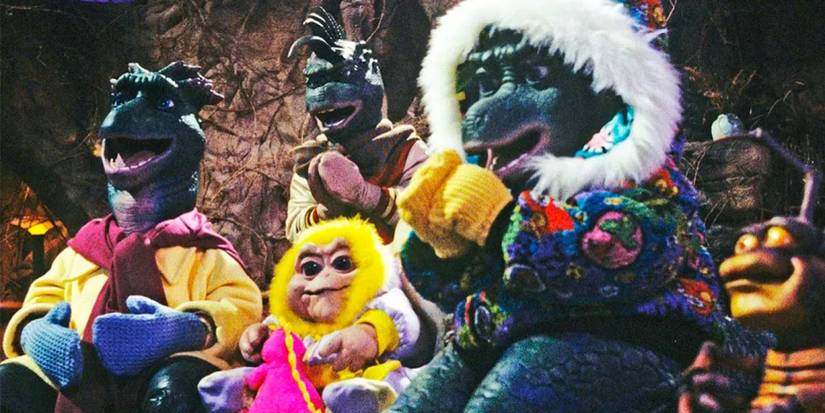
When ABC executives initially confronted the writers’ room regarding the grim direction of "Changing Nature," the creative team stood their ground. They argued that softening the blow—or pretending that the prehistoric creatures simply migrated away or survived the Ice Age—would betray the satirical integrity of the entire series. Dinosaurs had spent four seasons tackling civil rights, vegetarianism, sexual identity (via the character Robbie Sinclair’s non-conformity), and corporate malfeasance. To shy away from the ultimate consequence of environmental neglect would have rendered the show’s social commentary toothless.
Ultimately, ABC permitted the episode to air as the series finale on July 20, 1994 (with subsequent syndication rollouts cementing its legacy). While contemporary children tuning in were undoubtedly traumatized by the sudden death of Baby Sinclair and his family, adult viewers recognized the artistic bravery of the network pulling the plug on a permanent note.
Implications: The Urgent Modern Relevance of Dinosaurs
While Dinosaurs wrapped up its broadcast run over three decades ago, "Changing Nature" has transitioned from a shocking piece of television history into a prescient cultural touchstone. The themes tackled in the series finale remain intensely, sometimes uncomfortably, urgent in the modern socio-political landscape.
Climate change has escalated from a theoretical scientific projection in the 1990s to an everyday reality defined by extreme weather events, rising global temperatures, and systemic ecological strain. Furthermore, modern technological and industrial booms—such as the massive energy and water consumption required to fuel modern data centers and artificial intelligence infrastructure—draw eerie parallels to WESAYSO’s relentless, short-sighted pursuit of corporate profit at the direct expense of the planet’s life-support systems.
When viewers revisit Dinosaurs today, they find a text that transcends its era of rubber suits and animatronic eyes. The series finale serves as an enduring reminder that human actions—and corporate compliances—carry profound, irreversible consequences for the future of Earth.
The snow-covered roof of the Sinclair home stands not merely as a punchline to a dark joke, but as a timeless cautionary tale: nature does not negotiate with the consequences of human apathy.
