
A Night of Nostalgia and Surf-Rock Soul: Jack Johnson Brings the Beach to the Hollywood Bowl
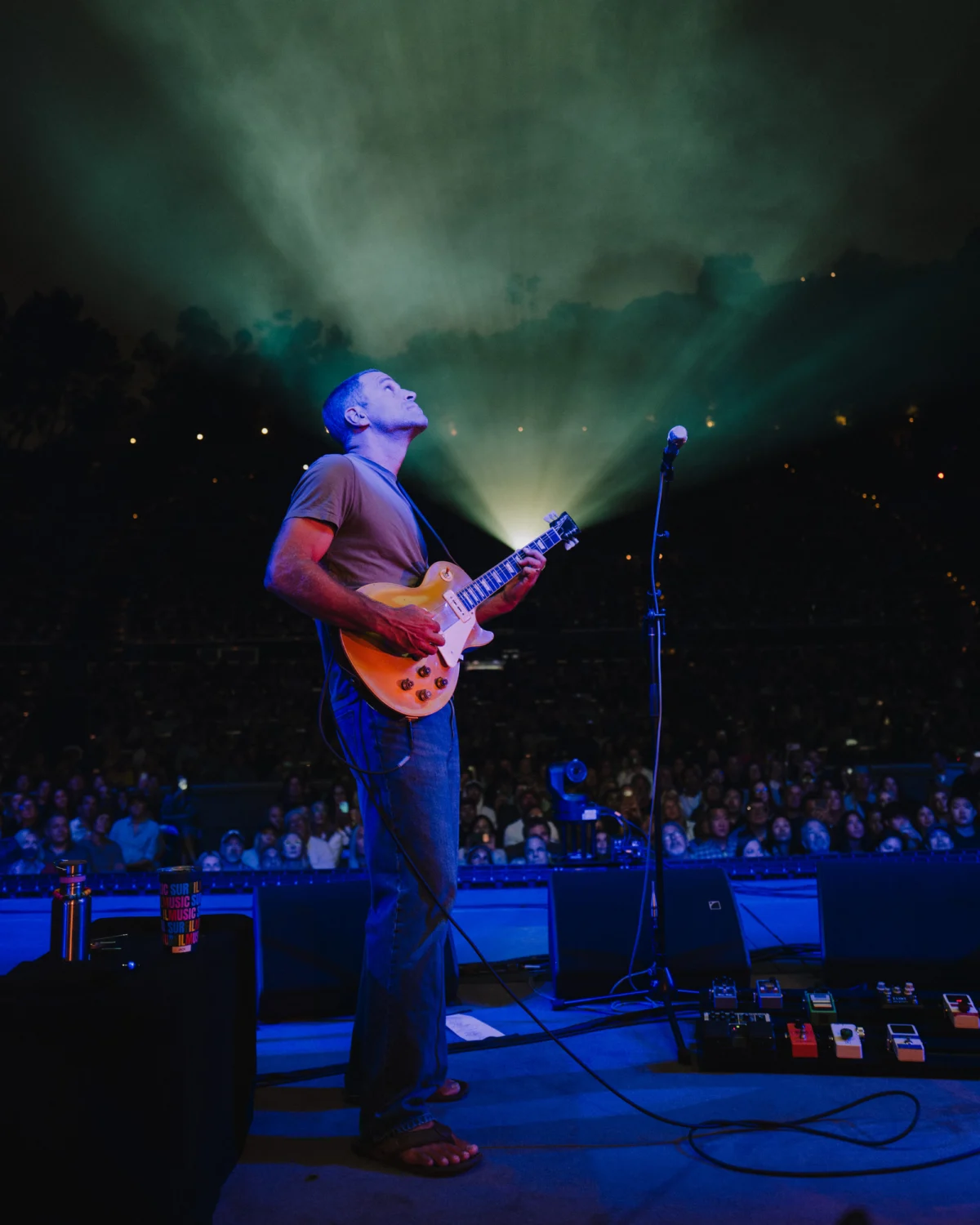
It was a homecoming of sorts, a gathering of the coastal faithful under the iconic, star-dusted proscenium of the Hollywood Bowl. On Saturday night, Jack Johnson, the quintessential troubadour of acoustic chill, took to the stage for the first of two sold-out shows, effectively bringing his North American tour to a triumphant close. As the balmy, occasionally misty air of a tropical-storm-touched Los Angeles settled over the venue, Johnson looked out at the sea of fans and offered a knowing greeting: “Y’all came ready to sing, right?”
The answer was a resounding, harmonious "yes." For the 51-year-old singer-songwriter, the Hollywood Bowl shows represented more than just a tour stop; they were a celebration of a career trajectory that has seamlessly blended surfing, filmmaking, and a signature brand of folk-pop that defined the soundtrack of the early 2000s.
The Evolution of an Icon: From Surfboard to Stage
The tour was centered on the support of SURFILMUSIC, an intimate, revealing documentary directed by Emmett Malloy. The film tracks Johnson’s journey from his roots as a professional surfer to his emergence as an environmental advocate and a globally recognized musician. For those in attendance, the film provided a necessary context for the performance: Johnson is not just a performer, but a storyteller whose life has been inextricably linked to the rhythm of the ocean.
Throughout the night, the stage design mirrored this narrative. Behind Johnson and his band, giant screens projected archival surf footage, candid family home videos, and aesthetic shots of the coast. These visuals transformed the cavernous Hollywood Bowl into something resembling a late-night bonfire on a North Shore beach.
A Chronology of the Evening: A Setlist Through Time
Johnson’s set was a masterclass in pacing, balancing the deep cuts that satisfy the day-one fans with the massive, radio-friendly anthems that brought him to prominence.
The evening opened with “Mudfootball (For Moe Lerner),” a track from his 2001 debut studio album, Brushfire Fairytales. The song immediately transported the audience back to the era of college dorm rooms and acoustic jam sessions. He followed this with the percussive, syncopated drive of “Sitting, Waiting, Wishing,” and the fan-favorite “Bubble Toes.” In a playful display of musical versatility, Johnson wove the Steve Miller Band’s “Keep on Rockin’ Me Baby” and “Take the Money and Run” into the intro and outro of “Bubble Toes,” proving that even after decades, his improvisational spirit remains sharp.
As the night progressed, the mood shifted from the playful to the introspective. “Banana Pancakes” was met with a roar of recognition, but it was the soulful, unexpected cover of Dolly Parton’s “9 to 5” that showcased the band’s versatility. The ensemble—anchored by longtime musical sidekick Zach Gill—was a marvel of efficiency. Gill, who has been with Johnson since their undergraduate days at UC Santa Barbara, cycled through an array of instruments including the accordion, harmonica, piano, and melodica, adding a textured, organic depth to Johnson’s trademark stripped-back sound.
One of the evening’s most poignant moments occurred during the performance of “Holes to Heaven.” A meditation on father-son bonding, the song’s chorus—“And there were so many fewer questions / When stars were still just the holes to heaven”—seemed to resonate deeply with an audience that, much like the artist himself, has aged alongside these tracks.
Supporting Acts and Collaborative Spirits
The musical foundation for the night was laid by the opening act, Hermanos Gutiérrez. The Latin instrumental duo, comprised of Ecuadorian-Swiss brothers Alejandro and Estevan Gutiérrez, provided a moody, cinematic soundscape. Their use of lap steel guitars set a tone of desert-swept tranquility that perfectly transitioned into Johnson’s own aesthetic. The brothers, who collaborated on the score for SURFILMUSIC, rejoined Johnson later in the evening for a series of mashups from the documentary’s soundtrack, creating a seamless blend of instrumental virtuosity and lyrical storytelling.
The collaborative spirit of the evening peaked when longtime friend and musical contemporary Ben Harper joined Johnson on stage. The two performed “Flake” and a soul-stirring cover of The Wailers’ “High Tide or Low Tide.” The rapport between the two men was palpable, a testament to a friendship forged in the fires of the early-2000s acoustic scene. Later, professional surfer Kelly Slater joined the fray for a casual, stripped-back cover of Jimmy Buffett’s “A Pirate Looks at Forty.” It was a rare moment of levity—two titans of the surf world trading verses in a way that felt like a quiet night on a porch rather than a performance for thousands.
The Demographic Shift: Growing Up with the Music
There was a palpable sense of nostalgia among the crowd. For a significant portion of the audience—Gen Xers and older Millennials—this was the music that played while they navigated their own early adulthood. Now, as many of these fans find themselves helping their own children apply to college, the lyrics took on a different gravity.
Johnson, however, wears this "middle age" effortlessly. He hasn’t attempted to reinvent his sound to chase modern trends; instead, he has leaned into the consistency that his fans crave. His voice remains clear, his ukulele playing remains sharp, and his commitment to the "feel-good" vibe of his music acts as a stabilizing force in an increasingly chaotic world.
Implications: The Legacy of the "Surf-Folk" Movement
What does a two-night sell-out at the Hollywood Bowl say about Jack Johnson’s legacy? It suggests that the "surf-folk" movement, often dismissed by critics in its early days as mere background noise for coffee shops and beach bars, has developed a profound staying power.
The implications for the industry are clear: authenticity remains the most valuable currency. Johnson’s career has been built on a refusal to compromise his values—his commitment to environmental sustainability (his tours are famously carbon-neutral) and his insistence on keeping his music grounded in the personal rather than the performative.
The evening concluded with an encore of “Better Together.” As the final notes drifted up toward the hills, it was clear that the song had transcended its status as a popular wedding track. For the thousands of people who sang along, it served as a summary of the entire evening: a celebration of community, the enduring nature of long-term friendships, and the simple, undeniable power of a song well-played.
As the house lights came up, the "drizzly night sky" that had threatened the outdoor venue throughout the evening seemed to have held its peace, as if in deference to the music. Jack Johnson, the surfer-turned-filmmaker-turned-musician, had done what he has done for two decades: he had created a space where, for a few hours, the questions were fewer, and the music was enough.
The SURFILMUSIC documentary, which premiered at SXSW on March 13, continues its run in select theaters, serving as a companion piece to a tour that solidified Johnson’s place as a permanent fixture in the American musical landscape. Whether or not he continues to tour at this scale, his influence—on the sound of coastal living and the emotional landscape of his generation—is firmly set in stone.
