
The Sonic Soul of Satire: How Laura Karpman’s Jazz Score Redefines American Fiction
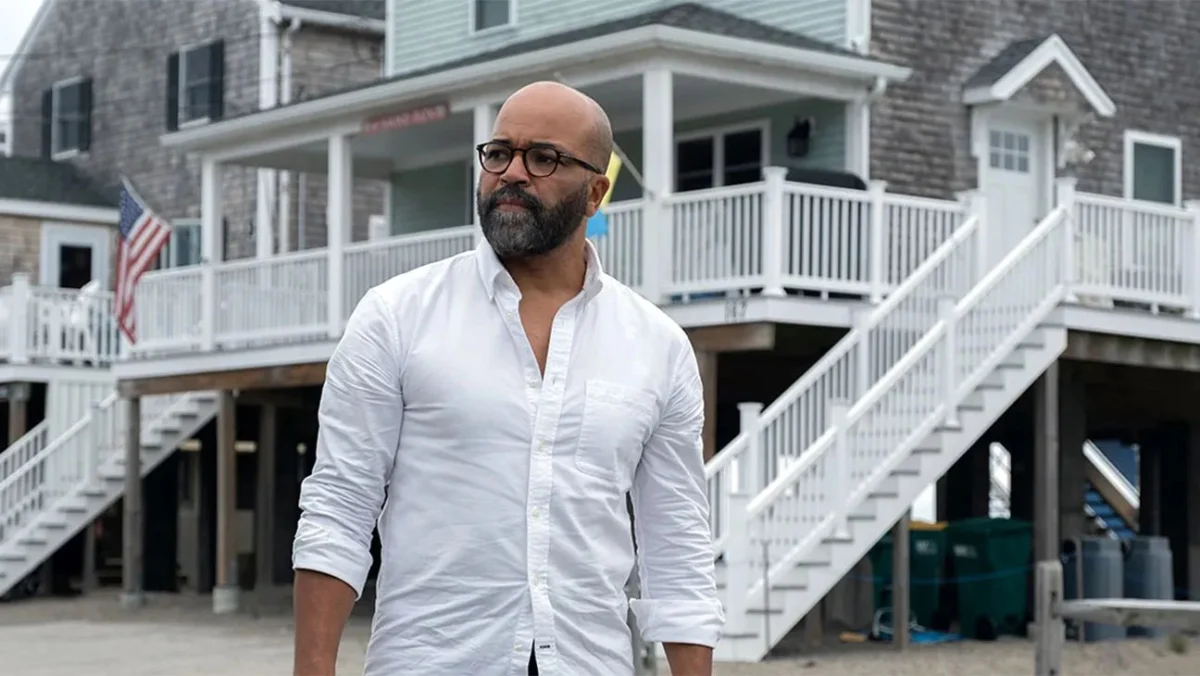
In the landscape of modern cinema, where tonal whiplash is often a sign of a disjointed screenplay, Cord Jefferson’s American Fiction stands as a masterclass in tonal equilibrium. The film, which navigates the treacherous waters of biting satire, intimate family drama, and unexpected romance, maintains a cohesive, pulsating heart. While Jefferson’s screenplay is undoubtedly sharp, the glue holding these disparate narrative threads together is the exquisitely crafted, jazz-infused score by composer Laura Karpman.
Karpman’s work on American Fiction does not merely underscore the action; it acts as a surrogate for the characters’ internal monologues, providing a voice for the emotions that the protagonists—most notably Jeffrey Wright’s Thelonious "Monk" Ellison—are often unable to articulate. By treating the dialogue as a musical partner, Karpman has created a soundscape that is as intellectually rigorous as the film itself.
The Genesis of a Musical Conversation
The collaboration between Jefferson and Karpman was rooted in a profound understanding of the film’s unique architecture. From the outset, Karpman viewed the actors’ vocal deliveries not as independent elements, but as essential instruments within her ensemble.
"When Jeffrey says a line, the sax will play something in response that is really working and dancing with the dialogue," Karpman explained. She describes the interaction as "swapping fours"—a traditional jazz term for alternating solo sections—where the rhythmic cadence of the character’s speech integrates seamlessly with the saxophone and flute arrangements. This approach ensures that while the music feels spontaneous and improvisational, it is anchored by a rigid, intentional structure designed for maximum emotional resonance.
A Legacy of Improvisation: The Thelonious Monk Connection
The title character’s name, Thelonious "Monk" Ellison, is a direct homage to the legendary jazz pianist, and his influence permeates the film’s sonic identity. Early in the production, there was a consideration of utilizing actual compositions by Thelonious Monk. However, as the specific narrative needs of the film crystallized, the creative team realized that a bespoke score would better serve the story’s unique demands.

Karpman turned to the structural philosophy of Monk’s playing style to inform her themes. She noted the distinct duality in Monk’s technique: "The left hand is pointed and sharp and blocky, and the right hand is fluid and moves quickly."
This duality became the cornerstone for developing Monk Ellison’s musical theme. Because the protagonist is essentially living a double life—balancing his identity as a misunderstood academic with his pseudonymous persona as the literary provocateur Stagg R. Leigh—the music had to reflect this fracture. The result is a theme that possesses a jagged, playful edge, mirroring the intellectual agility of the character, while also finding the space to pivot into the tender, vulnerable territory of the film’s romantic subplots.
The Mechanics of Disconnect: The Family Theme
If the protagonist’s theme is defined by his internal duality, the film’s "family" theme is defined by the messy, often painful reality of human connection. For the sequences depicting Monk’s complex relationships with his siblings and his mother, Karpman employed a clever musical metaphor.
The family theme is executed through two instruments playing the identical musical material, but with a slight, calculated delay between them. "It’s the way this family works—they always feel a little out of sync," Karpman observed. This structural choice highlights the emotional distance between the characters, making the rare moments when the instruments finally align in harmony—such as in a pivotal scene between Monk and his brother—all the more impactful. It is a subtle, yet devastating, application of musical theory to illustrate familial estrangement and reconciliation.
The "Pafology" of Sound: Bridging High and Low Art
Perhaps the most ambitious musical sequence in the film occurs when Monk, frustrated by the literary establishment, decides to create his own path by writing My Pafology—a cynical, intentionally reductive pastiche of Black trauma narratives.

To underscore this scene, Karpman opted for a layered piano arrangement. She utilized a restored Steinway B, which carried its own historical weight, to create a soundscape that evolves alongside Monk’s creative process. The scene begins with "mystery music" and gradually introduces a second piano, creating a "flow without destination." As the arrangement builds with the inclusion of a full string orchestra, it transforms into a sophisticated piano concerto that mirrors the complexity of Monk’s internal conflict.
Karpman’s goal was to "sandwich high and low art together simultaneously," reflecting the absurdity of the literary world Monk is mocking while acknowledging the genuine, if manipulated, pain behind the prose.
Navigating Genre: The Climax of Complexity
The film’s climax serves as the ultimate test of Karpman’s musical dexterity. Because the scene requires the audience to process a singular moment through three different lenses—the realistic, the romantic-comedy trope, and the 90s-style action thriller—the score had to be incredibly versatile.
Karpman revisited the "My Pafology" theme for the realistic beats, shifted into a lush, sweeping orchestral swell for the romantic elements, and leaned into high-tension, percussive tropes for the action sequences. This exercise in genre-hopping was not just a stylistic choice; it was a necessary component of the film’s broader satire. By supporting these shifting genres with score, Karpman provides the audience with the cues they need to understand the film’s satirical intent, effectively giving them "permission to laugh" at the absurdity unfolding on screen.
Implications for Modern Film Scoring
The success of American Fiction demonstrates a shift in how composers are being utilized in contemporary cinema. Karpman’s work proves that a score can be both a functional narrative device and an intellectual commentary on the text. By embedding the music so deeply into the dialogue and the psychological state of the characters, she has elevated the film from a standard dramedy to a multi-layered exploration of identity, art, and the commercialization of culture.

Furthermore, the integration of jazz as a structural foundation—rather than just a stylistic preference—suggests a growing trend in film scoring where the genre’s history of improvisation and tension is being tapped to mirror the complexities of modern, nuanced storytelling.
Conclusion
As American Fiction continues to resonate with audiences, much of its lasting impact can be traced back to this marriage of image and sound. Laura Karpman has not only composed a score that fits the film; she has composed a score that understands it. From the "out of sync" melodies of the family drama to the sharp, blocky chords of the protagonist’s double life, the music provides a map for the audience to navigate the film’s emotional and intellectual terrain.
In the final analysis, the score serves as a reminder that the most effective cinema is that which speaks to us on multiple levels simultaneously. Just as Cord Jefferson’s writing challenges us to look beyond the surface of what is presented as "authentic," Karpman’s music asks us to listen to the spaces between the notes—where the real story, and the real humanity, resides. Through this collaborative synergy, American Fiction achieves a rare, harmonious balance, proving that even in a world of satire and artifice, there is always room for a truth that hits a resonant chord.
