
Looking Back at the Cinematic Landscape of 1994: A Definitive Ranking of the Year’s Defining Science Fiction Films
Cinematic history often looks back at specific years as watersheds, moments where the medium shifted gears and charted a brand-new course. Nineteen ninety-four (1994) was undeniably one of those wild, unpredictable years at the box office. While dominant cultural touchstones leaned heavily toward animation, nostalgic Americana, and auteur-driven indie dramas—cementing a cultural footprint for films like The Lion King, Forrest Gump, Pulp Fiction, and Clerks—the science fiction genre was quietly undergoing an identity crisis.
Sci-fi in 1994 didn’t conform to a single, easily digestible corporate formula. Instead, it was an eclectic mix of slapstick absurdity, franchise misfires, ambitious star vehicles, and literary adaptations that refused to play by the rules. To understand the trajectory of genre filmmaking in the mid-1990s, one must examine the diverse landscape of its science fiction offerings.
Below is an in-depth retrospective ranking of the five most notable science fiction films released in 1994, exploring their production histories, thematic goals, and lasting cultural impact.
1. Timecop
Main Facts & Premise
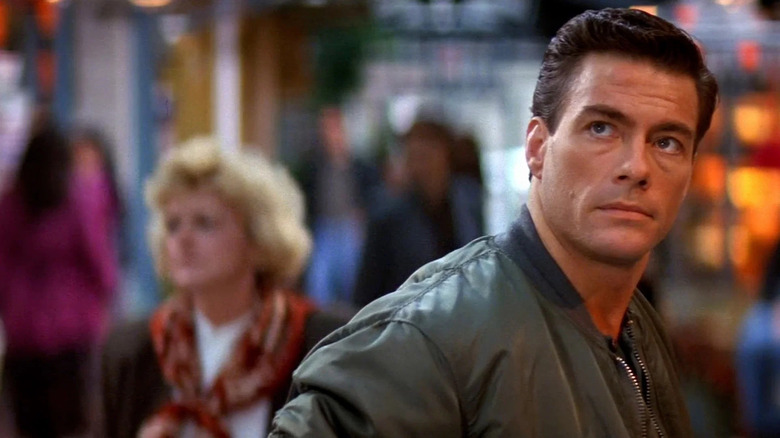
Directed by Peter Hyams and produced by the powerhouse team of Sam Raimi and Robert Tapert, Timecop stands as one of the most commercially successful yet bizarre sci-fi action vehicles of the mid-1990s. Jean-Claude Van Damme stars as Max Walker, an operative working for the Time Enforcement Commission (TEC) in a near-future 2004. In this timeline, time travel has been invented but is heavily regulated, primarily used by corrupt politicians and criminals to alter history for financial gain—such as the film’s opening sequence, which features a time-traveler stealing Confederate gold.
Chronology & Supporting Data
Released by Universal Pictures in September 1994, Timecop arrived at the absolute peak of Van Damme’s bankability as an international action star. Despite a mixed critical reception regarding its clunky script, the film grossed over $100 million worldwide against a modest $27 million budget, making it Van Damme’s highest-grossing film as a leading man.
Implications & Analysis
While Timecop suffers from a screenplay that struggles to balance high-concept temporal mechanics with traditional martial arts showdowns, it deserves credit for its remarkably consistent world-building rules. The film smartly establishes that no one can travel to the future (because it has yet to be written) and introduces strict physical consequences for temporal paradoxes, such as the danger of matter occupying the same space. Ron Silver delivers a brilliantly unhinged performance as the primary antagonist, pushing the film into camp territory that arguably elevated its entertainment value. Had it leaned harder into the drive-in sensibilities of its producers, Timecop might have achieved cult-classic status on par with Raimi’s other genre-bending works.
2. Stargate
Main Facts & Premise
Before Roland Emmerich became synonymous with global-scale destruction in 1996’s Independence Day, he broke into the American mainstream with Stargate. Co-written and directed by Emmerich, the film is rooted in a grandiose conspiracy theory: that the Egyptian pyramids were actually landing pads and construction projects built by extraterrestrial beings who served as the basis for ancient polytheistic religions.
James Spader stars as a brilliant, eccentric linguist, Dr. Daniel Jackson, who decodes an ancient ring-shaped artifact (the Stargate), while Kurt Russell plays Colonel Jack O’Neill, a stoic military officer tasked with leading a heavily armed reconnaissance team through the portal to a distant alien world.
Supporting Data & Official Responses
Distributed by MGM/UA, Stargate opened in October 1994 to a surprisingly strong $16.7 million domestic opening weekend, ultimately hauling in nearly $200 million globally. Critics were initially divided, praising the film’s state-of-the-art special effects and production design while poking fun at its derivative pulp narrative.
Implications
Stargate demonstrated that high-concept, serialized sci-fi world-building could capture the public imagination in a pre-MCU era. What began as a standalone feature film unexpectedly morphed into one of the most prolific television franchises in history. The 1997 television spin-off Stargate SG-1 ran for an astonishing 214 episodes across 10 seasons, paving the way for multiple television offshoots (Atlantis, Universe, Origins), video games, and expansive tie-in media. The film’s legacy is that of a deceptively simple sci-fi premise that birthed an entire multimedia universe.
3. The Class of Nuke ‘Em High 3: The Good, the Bad and the Subhumanoid
Main Facts & Premise
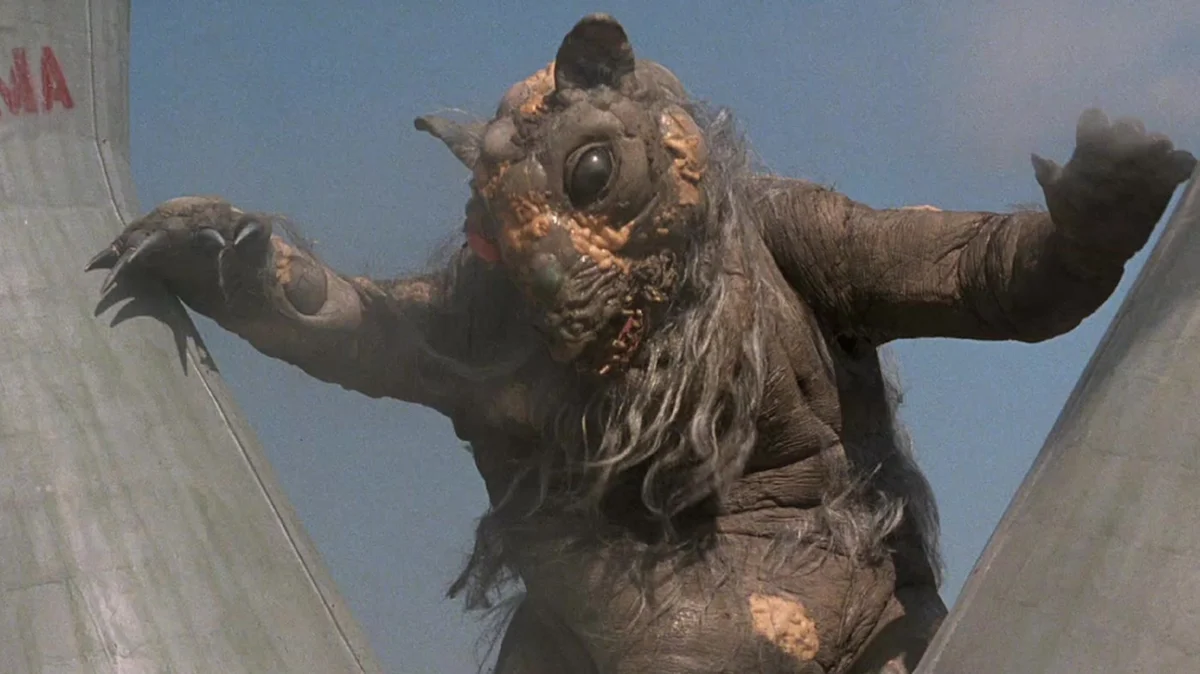
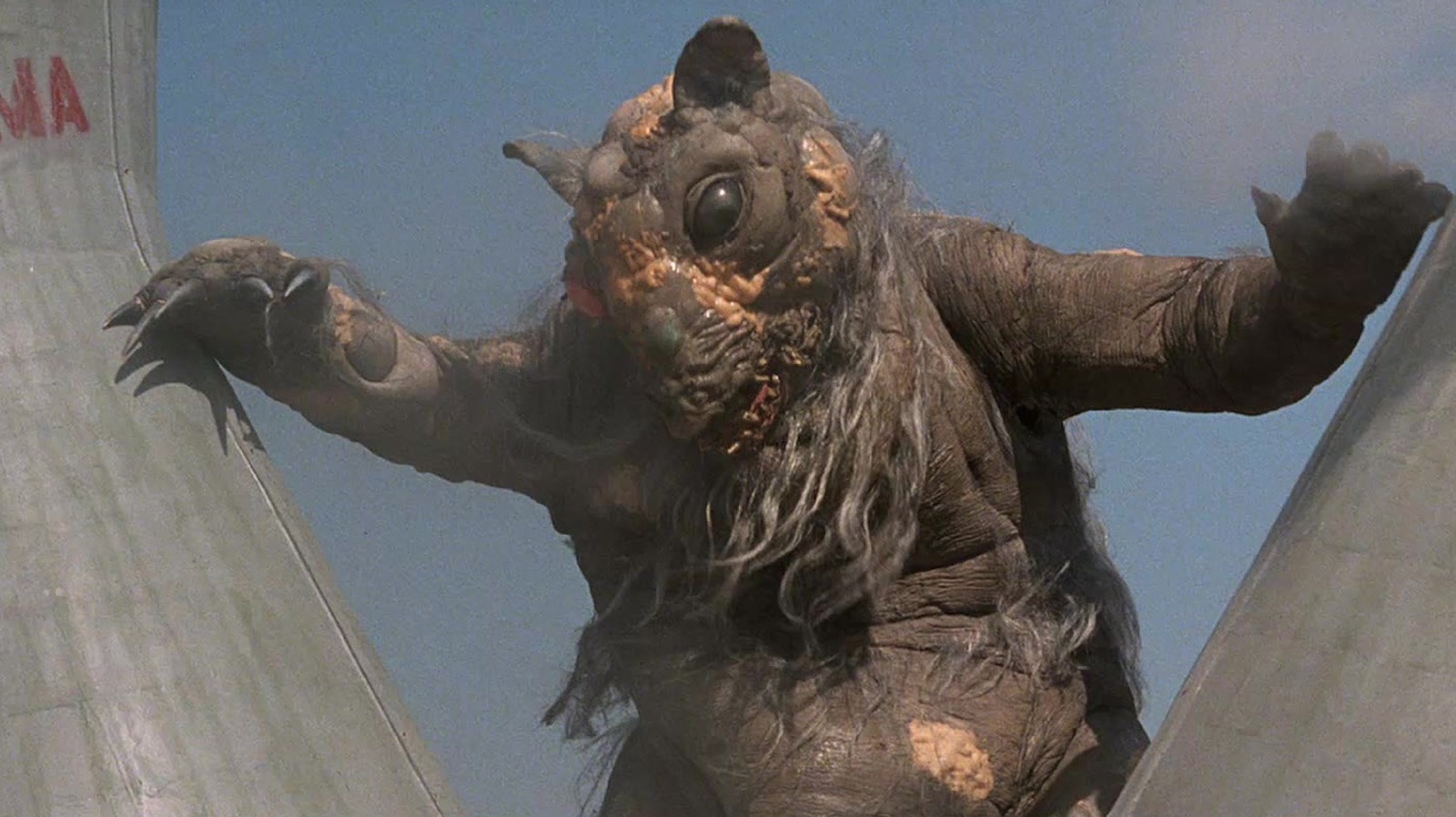
To understand the chaotic counter-culture of 1994 cinema, one must look toward the fringes of independent exploitation cinema. Enter Troma Entertainment’s The Class of Nuke ‘Em High 3: The Good, the Bad and the Subhumanoid, co-written by studio co-founder Lloyd Kaufman and directed by Eric Louzil. This bizarre feature acts simultaneously as a satire of Reagan-era nuclear power policies, a parody of teen comedies, and a loose retelling of William Shakespeare’s The Comedy of Errors.
The plot centers on identical twin brothers Dick and Adlai—both played by professional wrestler Brick Bronsky—who were separated at birth. One is raised with upstanding morals, while the other is molded into a malicious crony. Set against the toxic backdrop of Tromaville High School, situated uncomfortably close to a leaking nuclear power plant, the film revels in slime, mutant subhumanoids, and juvenile slapstick.
Chronology & Supporting Data
Released directly to video and select midnight screenings by Troma in 1994, the film never threatened the box office supremacy of Disney or Paramount. However, it cemented Troma’s status as an uncompromised bastion of independent, low-budget genre filmmaking.
Implications
While major studios chased prestige and mainstream demographics, Troma continued to mine nuclear anxiety for gross-out laughs. The Class of Nuke ‘Em High 3 is a dizzying, sensory-overload experience that defies conventional narrative structure. It serves as a historical reminder of the vast gulf between polished Hollywood blockbusters and the wild, unregulated experimentation happening in the indie underground of 1994.
4. Star Trek: Generations
Main Facts & Premise
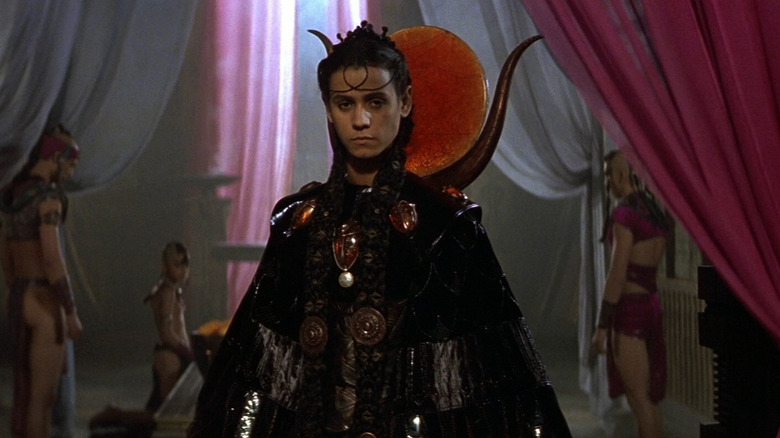
Paramount Pictures took a monumental risk in November 1994 by officially transitioning television’s reigning sci-fi champions to the silver screen in Star Trek: Generations. Directed by David Carson, the film was designed to pass the torch from the classic Original Series cast—specifically William Shatner’s iconic Captain James T. Kirk—to Patrick Stewart’s crew from Star Trek: The Next Generation, which had recently concluded a highly successful seven-year television run.
The plot revolves around Dr. Tolian Soran (played with theatrical relish by Malcolm McDowell), a rogue scientist obsessed with entering an extra-dimensional space anomaly known as the Nexus, where time has no meaning and individuals can live out their absolute fantasies. Picard must enlist the help of a long-dead Kirk, pulled out of the Nexus, to stop Soran from destroying a populated star system.
Supporting Data & Official Responses
Star Trek: Generations was a commercial success, grossing over $118 million worldwide against a $35 million budget. However, critical and fan reception was sharply divided. Many hardline Trekkies argued that the screenplay relied on convenient plot contrivances, particularly the underwhelming death of Captain Kirk and the forced narrative mechanics required to bridge two distinct television eras.
Implications
Despite its structural and narrative flaws, Star Trek: Generations remains a fascinating artifact of mid-90s franchise expansion. For millions of fans, the film was part of a golden era of Star Trek saturation, running concurrently with Deep Space Nine and just months before the launch of Star Trek: Voyager. Even if the film’s emotional beats didn’t entirely land, the sheer spectacle of seeing the Enterprise-D crash onto a planetary surface cemented its place in franchise lore.
5. Mary Shelley’s Frankenstein
Main Facts & Premise
Closing out 1994’s strongest science fiction offerings is TriStar Pictures’ prestige adaptation, Mary Shelley’s Frankenstein, directed by and starring Kenneth Branagh. Trading subtle dread for operatic, Gothic romanticism, Branagh’s film attempts to stay closer to the epistolary structure of Shelley’s seminal 1818 novel than previous cinematic iterations, while filtering the narrative through a modern, science-fiction lens.
Branagh portrays Victor Frankenstein not as a detached mad scientist, but as a passionate romantic driven mad by grief after his mother dies in childbirth. His obsession with cheating death leads to the creation of his infamous Creature, played with visceral, tragic intensity by Robert De Niro.
Chronology & Supporting Data
Released in October 1994 with massive production backing—including executive producer Francis Ford Coppola—the film carried high expectations. Unfortunately, it underperformed domestically, grossing roughly $112 million worldwide against a hefty $45 million budget, failing to capture the mainstream box office gold anticipated by the studio.
Implications
Upon release, critics were polarized by Branagh’s maximalist, visually aggressive direction, often accusing the filmmaker of ego-driven excess. Yet, decades later, Mary Shelley’s Frankenstein deserves reevaluation. De Niro’s portrayal of the Creature—shifting away from the mute, stumbling monster of Universal’s classic horror films to a fully articulate, deeply wounded adult grappling with existential despair—is a masterclass in tragic sci-fi acting. The film brilliantly bridges the gap between 19th-century Gothic literature and modern bioethical dilemmas, proving that 1994’s sci-fi cinema was capable of aiming for high art, even when it stumbled on its own ambition.
