
Ridley Scott Returns to the Alien Franchise: New 20th Century Studios Project Enlists Writer Aaron Guzikowski
Main Facts
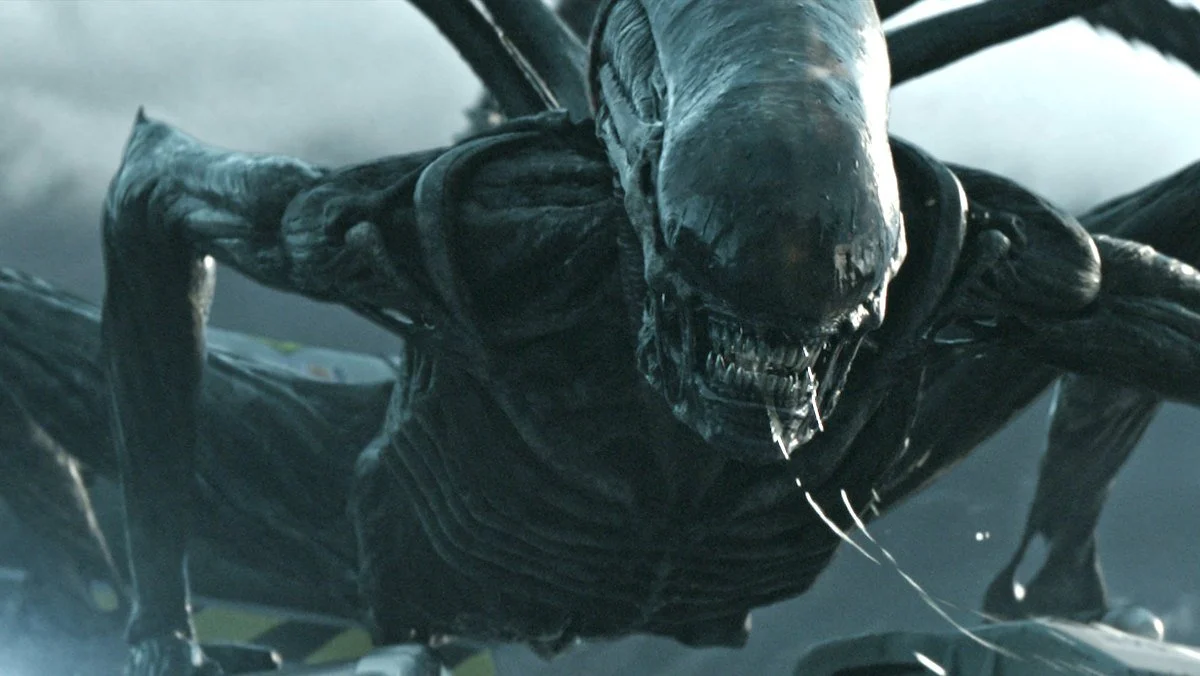
The enduring cinematic legacy of the Alien franchise is expanding once more. Ridley Scott, the visionary filmmaker who redefined science fiction and horror with his 1979 masterpiece, is officially returning to the universe he birthed. According to exclusive reports from The Hollywood Reporter, a brand-new Alien feature is currently in development at 20th Century Studios.
While Scott will not be stepping behind the camera for this installment, he will serve in a vital producing capacity, ensuring that the creative integrity and atmospheric dread of his foundational universe remain intact. To pen the screenplay, 20th Century Studios has tapped acclaimed writer Aaron Guzikowski, best known for his gripping work on Denis Villeneuve’s tense psychological thriller Prisoners.
Guzikowski is no stranger to the Alien mastermind. The screenwriter previously collaborated with Scott as the creator and showrunner of the ambitious HBO Max sci-fi series Raised by Wolves, for which Scott directed the first two episodes. Industry insiders report that this new cinematic venture is intended to serve as a continuation of Scott’s narrative thread established in his last two directorial contributions to the franchise: 2012’s philosophical prequel Prometheus and 2017’s visceral Alien: Covenant.
This announcement arrives at a fascinating commercial and creative crossroads for the franchise. The Alien property is currently experiencing a massive renaissance across multiple mediums. However, the exact trajectory of this new film—and how it impacts other active projects in the pipeline—remains a subject of intense speculation among cinephiles and industry analysts alike.
Chronology of the Franchise and the Prequel Era
To understand the significance of Guzikowski’s upcoming script and Scott’s continued involvement, it is essential to trace the chronology of the franchise’s modern narrative arc.
In 1979, Ridley Scott introduced audiences to the Nostromo, a commercial towing vehicle whose crew encounters a deadly extraterrestrial organism. The film became a cultural touchstone, blending industrial industrial design, cosmic horror, and an unforgettable breakout performance by Sigourney Weaver as Ellen Ripley.
Decades later, Scott returned to the universe with Prometheus. Set decades before the events of the 1979 original, the film explored the origins of humanity and the mysterious Engineers, introducing Michael Fassbender’s complex, morally ambiguous synthetic human, David. Prometheus was a commercial success, grossing over $403 million worldwide, though its heavy philosophical leanings and departure from traditional creature-feature tropes divided fans.
Seeking to bridge the gap between Prometheus and the original Alien, Scott directed Alien: Covenant (2017). The film doubled down on body horror and explored David’s descent into bio-engineering madness, culminating in a chilling cliffhanger that left the synthetic in control of a colony ship filled with unwitting human colonists and thousands of dormant Xenomorph embryos.
Unfortunately, Alien: Covenant underperformed domestically, grossing $240 million globally against a hefty production and marketing budget. The commercial disappointment effectively put Scott’s planned direct sequels on indefinite hold, leaving the fate of David and the Covenant crew hanging in the balance for nearly a decade.
Now, with Guzikowski brought on board, 20th Century Studios is finally opening a portal back to that specific timeline, raising hopes that the narrative threads left dangling in 2017 might finally be tied together.
Supporting Data and Franchise Landscape
The announcement of a new Ridley Scott-produced Alien movie arrives at a time when 20th Century Studios is actively expanding the intellectual property across both theatrical and streaming spaces.
Most recently, the franchise saw a massive theatrical triumph with Fede Álvarez’s Alien: Romulus. Originally greenlit as a direct-to-streaming feature for Hulu, Romulus proved so strong during early screenings that Disney and 20th Century Studios pivoted to a major theatrical release. The gamble paid off exponentially: Romulus pulled in critical acclaim for returning to the claustrophobic, terrifying roots of the original film and grossed over $350 million worldwide.
In the wake of that success, studio executives quickly teased the development of an Alien: Romulus sequel, though little concrete information regarding its production status has emerged in the months since.
Simultaneously, the television landscape is playing host to Noah Hawley’s critically praised universe expansion, Alien: Earth. The FX/Hulu series has carved out its own distinct space in the timeline and is currently shooting its second season.
Crucially, industry reports indicate that Aaron Guzikowski’s newly announced film does not conflict with either Alien: Earth or the narrative world of Alien: Romulus. Instead, it occupies a distinct corner of the sprawling cinematic timeline, specifically catering to fans invested in the grand cosmic mythos initiated by Scott over a decade ago.
Official Responses and Creative Implications
While 20th Century Studios has kept strict secrecy regarding the exact plot details, loglines, and casting sheets for Guzikowski’s script, the implications of this creative pairing are profound.
The most pressing question surrounding the project involves the fate of Michael Fassbender’s David. The connective tissue of Prometheus and Covenant hinges entirely on the synthetic’s nihilistic quest for creation and destruction. While current production reports state that Fassbender is not officially attached to the project yet, many narrative analysts argue that bringing back David is an absolute necessity if the film aims to resolve the lingering cliffhanger of Covenant.
Fans have waited nearly ten years to find out what happened to the colony ship Covenant and whether David succeeded in establishing his twisted empire of genetic monsters. Furthermore, a lingering critique of the prequel era was its perceived distance from the classic lore of the 1979 film. If Guzikowski and Scott can successfully bridge Covenant directly to the events preceding the Nostromo’s fateful detour, it would offer closure to a narrative arc that has spanned generations of filmmaking.
Looking Forward: Room for Multiple Xenomorph Stories
Ultimately, the expansion of the Alien universe points to a healthy, diversified strategy by 20th Century Studios. Rather than pinning the entire future of the brand on a single director or a singular style of storytelling, the studio is allowing distinct creative voices to explore different facets of the universe.
For loyal Xenomorph enthusiasts, this era represents an embarrassment of riches. We are looking at a future where atmospheric, philosophical prequel continuations spearheaded by Ridley Scott can coexist harmoniously with standalone cinematic rollercoasters like Alien: Romulus and deep-dive television explorations like Alien: Earth.
The cinematic timeline is vast enough, and the lore rich enough, to accommodate multiple terrors lurking in the dark. As Aaron Guzikowski sits down to write the next chapter of the Alien mythos, one thing is certain: in space, the horror is only just beginning anew.
