
The Blue Geometry of Obsession: Deconstructing Michael Mann’s Heat
It has been nearly three decades since Michael Mann’s Heat (1995) redefined the modern crime saga, yet its status as a seminal exploration of human isolation remains unchallenged. More than a heist film, Heat is a psychological study of two men—Vincent Hanna (Al Pacino), an obsessive LAPD detective, and Neil McCauley (Robert De Niro), a master thief—who mirror one another across the chasm of the law. They are titans of their respective crafts, existing in a state of perpetual midlife crisis, driven by an insatiable need to perform their duties until the final, inevitable collision.
The Architecture of the Chase: Main Facts and Premise
At its core, Heat is a story of professional symmetry. Vincent Hanna is a man whose life is a "disaster zone," defined by his inability to detach from the carnage he investigates. He is haunted by dreams of victims, a purgatory where the dead look at him, demanding a resolution he can only offer through the relentless pursuit of their killers.
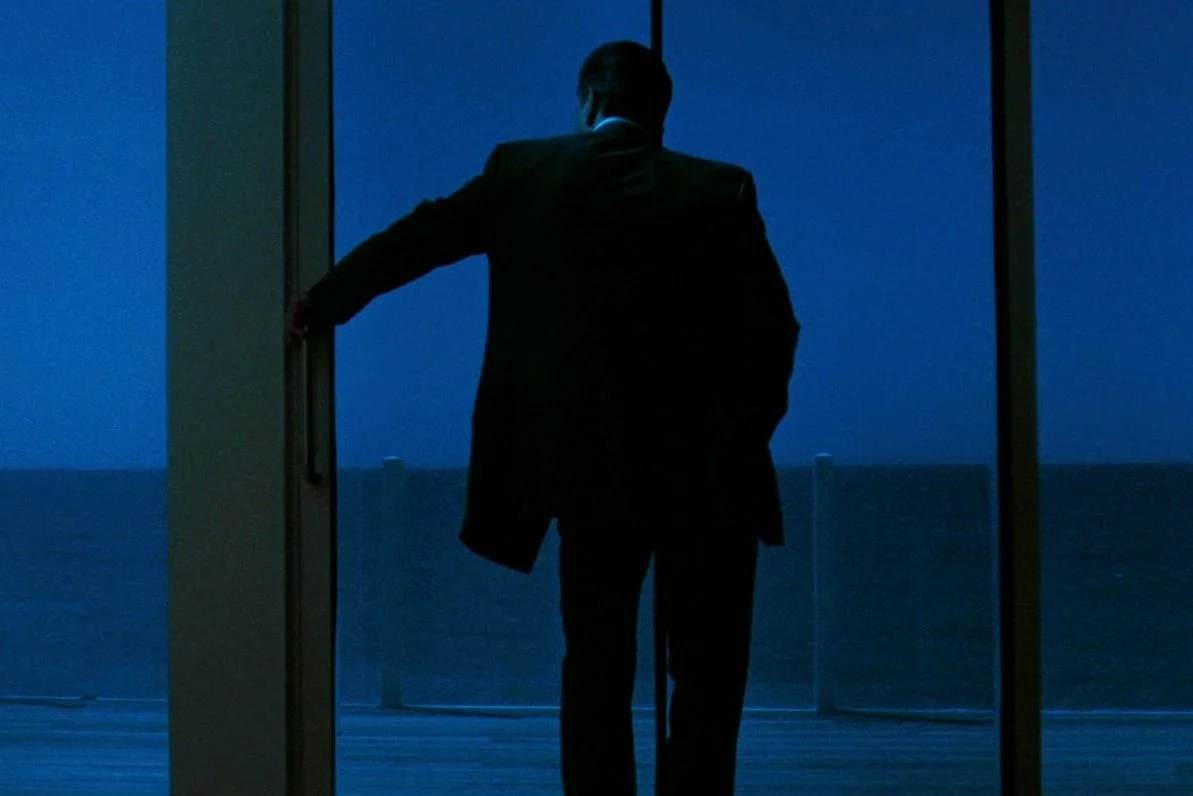
Conversely, Neil McCauley is an ascetic, a man who lives in a glass-walled house with no furniture, purged of personal history and emotional baggage. His life is governed by a singular, rigid code: never have anything in your life you can’t walk out on in thirty seconds flat if you feel the heat around the corner.
These two men exist in the liminal spaces of Los Angeles—a sprawling, grid-locked urban landscape that Mann captures in a cold, melancholic blue. Their conflict is not merely about criminal apprehension; it is an existential competition between two individuals who have traded an "ordinary life" for a pursuit that consumes them entirely.
A Chronology of Escalation: From Heist to Hunt
The narrative structure of Heat follows the slow, rhythmic tightening of a noose.
The Catalyst
The film begins with a high-stakes armored car robbery, where McCauley’s crew—Chris Shiherlis (Val Kilmer), Michael Cheritto (Tom Sizemore), and Trejo (Danny Trejo)—executes a flawless operation. However, the introduction of a loose cannon, Waingro (Kevin Gage), introduces chaos. Waingro’s reckless murder of a guard forces McCauley to attempt a cleanup, but the act leaves a forensic breadcrumb that eventually leads to Hanna’s doorstep.
The Mid-Film Synthesis
The film’s centerpiece, the legendary diner scene, serves as the narrative pivot. For the first time, the hunter and the hunted share a space of intellectual parity. They discuss their dreams—Hanna’s dream of the unavenged dead and McCauley’s fear of drowning. It is a moment of profound recognition; they understand that they are the only people in the world who truly comprehend the other’s obsession.
The Climax
The tension breaks during the bank heist in downtown Los Angeles. Unlike their previous surgical strikes, this job descends into an urban war zone. The "process"—the methodical, almost religious adherence to procedure that defines Mann’s characters—is shattered by the unpredictable reality of violence. The ensuing shootout leaves key members of the crew dead or wounded, stripping away the professional detachment both men had spent the film cultivating.
The Professional Ethos: Supporting Data and Methodology
In the world of Heat, competence is the highest currency. Mann presents his characters through their expertise. We see the precision of the crew as they steal power tools, plan their routes, and calculate the odds. This is not just theft; it is an act of defiance against a mundane existence.
McCauley’s crew is characterized by their "professionalism," which contrasts sharply with the frantic, ego-driven nature of law enforcement. Hanna, meanwhile, exhibits his own form of competence: a nervous, twitchy, caffeine-fueled intensity. He is the "fighting dog" who refuses to let go.
The supporting cast provides the human cost of this devotion:
- Chris Shiherlis: Represents the tether to reality through his marriage, a relationship that eventually buckles under the weight of his gambling and his commitment to the crew.
- Justine Hanna: Vincent’s wife, who serves as the mirror reflecting his failure to be present. Her realization that he is "a shadow of a man" highlights the tragedy of his total absorption in his work.
- Eady: The woman McCauley meets, who represents the life he claims he doesn’t want but finds himself yearning for.
Official Perspectives: The Director’s Vision
Michael Mann has often spoken of Heat as a study in "the process." Through his lens, the city of Los Angeles becomes a character—a grid of neon and asphalt where the blue light of the night reflects the coldness of his protagonists’ internal lives.
The "official" perspective, if one can call it that, is the grim reality of the film’s resolution. There is no triumph for the law, only the cessation of the hunt. When Hanna finally corners McCauley at the airport, there is no joy in the capture. As McCauley dies, the hand-holding between the two is an admission that they were, in truth, the only two people who understood each other.
Implications: The Legacy of Heat
The implications of Heat resonate throughout modern cinema. It forced a re-evaluation of the "action movie," proving that high-octane sequences could coexist with profound character studies.
The Cost of the "Extraordinary"
The film posits a terrifying question: Is a life defined by extraordinary, singular focus worth the cost of human connection? Both Hanna and McCauley are, by any conventional measure, failures. They have alienated their partners, abandoned the possibility of a "barbecue and baseball" lifestyle, and sacrificed their peace of mind for an adrenaline-fueled chase.
The Persistence of the Void
The film concludes with the haunting strains of Moby’s "God Moving Over the Face of the Waters." The music signals the return to a "formless and void" state. The hunt is over, the criminal is dead, and the cop is left standing in the dark, looking at the sky. The implication is clear: the void does not disappear just because the antagonist has been eliminated. The "midlife crisis" that propelled these men was not a temporary state; it was a symptom of their rejection of the ordinary.
In the final assessment, Heat remains a masterpiece of existential noir. It serves as a stark reminder that when one builds a life solely around a singular purpose—whether it be the enforcement of the law or the breaking of it—one risks becoming nothing more than the wreckage left behind in the pursuit of the next score, the next case, and the next moment of high-stakes clarity. The blue light fades, the planes depart, and the city continues to pulse, indifferent to the men who once tried to command its shadows.
