
Beyond the Nightmare: How LAIKA’s Wildwood Redefines Stop-Motion Fantasy
By Film & Culture Desk
Published: October 2026
Main Facts
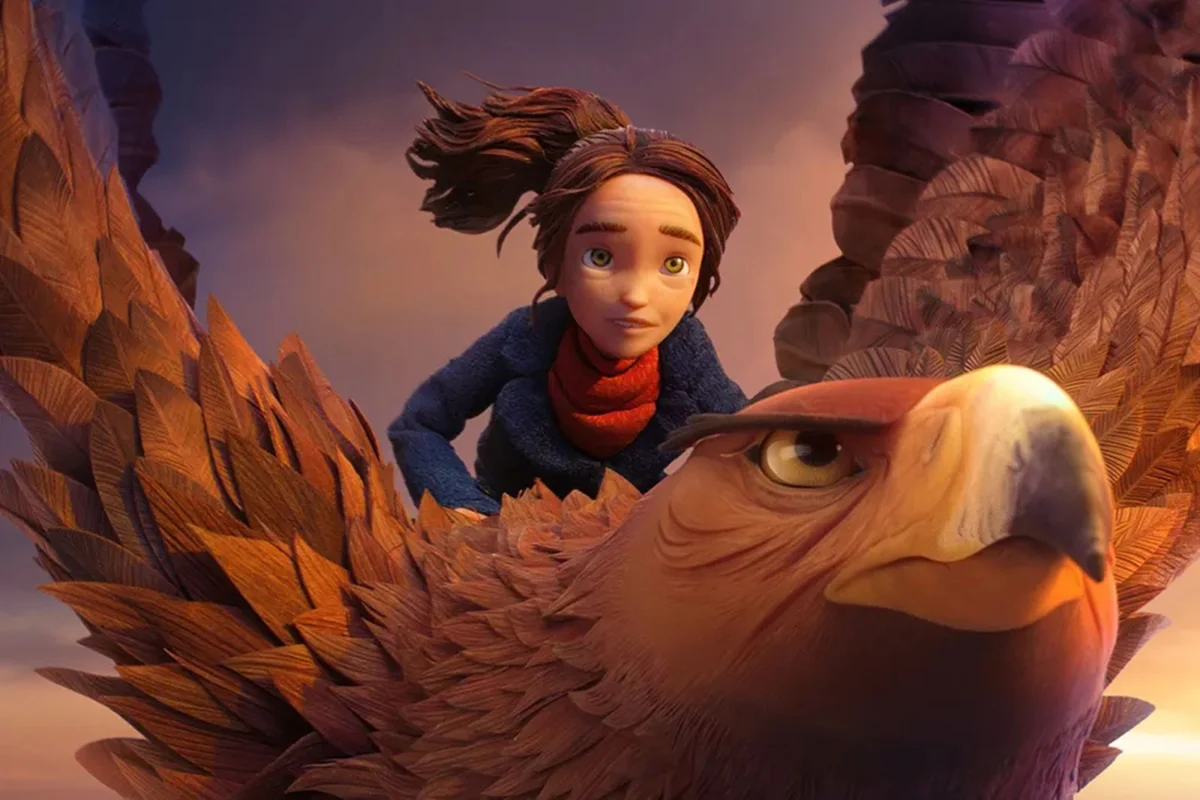
LAIKA, the acclaimed stop-motion animation studio renowned for its tactile craftsmanship and willingness to embrace the macabre, returns with Wildwood, its most ambitious and visually breathtaking project to date. Directed by studio chief Travis Knight, the film is a lavish, uncompromising adaptation of the 2011 young adult fantasy novel written by Colin Meloy, lead singer of the indie-folk band The Decemberists. Premiering at the 2026 BFI London Film Festival ahead of its wide theatrical release on October 23, Wildwood pushes the boundaries of PG-13 animation, trading corporate-mandated safety for the rich, untamed terrors of traditional folklore.
Featuring a star-studded voice cast—including Peyton Elizabeth Lee, Jacob Tremblay, Carey Mulligan, Jake Johnson, and Maya Erskine—the film follows a young girl named Prue McKeel as she ventures into the forbidden, overgrown forests outside modern-day Portland to rescue her baby brother from a sinister faction of animal clans. Earning its PG-13 rating within its opening moments, Wildwood sidesteps sanitized tropes, leaning instead into a dark, Brothers Grimm-esque aesthetic that recalls the atmospheric empowerment tales of Studio Ghibli’s Hayao Miyazaki and the epic, sprawling scale of Peter Jackson’s The Lord of the Rings trilogy.
Chronology: From Page to Screen and Festival Stardom
The journey of Wildwood stretches back well over a decade, taking shape through a meticulous, years-long production cycle characteristic of LAIKA’s uncompromising artistic vision.
- 2011: Colin Meloy publishes Wildwood, the first installment in his bestselling contemporary fantasy trilogy, featuring evocative illustrations by Carson Ellis. The novel immediately captures the imagination of readers with its blend of modern-day Pacific Northwest geography and deep-woods mythmaking.
- September 2016: LAIKA officially announces its development of a film adaptation of Wildwood, signaling Travis Knight’s return to the director’s chair following his critically lauded work on Kubo and the Two Strings (2016) and his live-action foray into the Transformers franchise with Bumblebee (2018).
- 2021–2025: Throughout years of painstaking stop-motion production, the studio tackles monumental technical challenges. Animators construct intricate miniature sets, expansive forest landscapes, and complex puppet rigs, balancing the scale of epic fantasy with the intimate demands of frame-by-frame manipulation.
- Early 2026: Voice casting and final post-production wrap, locking in performances from Peyton Elizabeth Lee, Carey Mulligan, Jacob Tremblay, and others.
- October 2026: Wildwood makes its world premiere at the BFI London Film Festival, drawing rave reviews from critics who praise its technical mastery and daring narrative tone.
- October 23, 2026: The film officially arrives in theaters nationwide, positioned as one of the premier cinematic events of the autumn season.
Supporting Data & Production Scale
While computer-generated animation routinely relies on infinite digital rendering, LAIKA’s commitment to physical media remains its defining characteristic—and its highest financial hurdle. To understand the magnitude of Wildwood, one must look at the studio’s historical output and the staggering logistics required to bring its worlds to life:
- The Budgetary Legacy: LAIKA’s previous globe-trotting adventure, Missing Link (2019), holds the record as the most expensive stop-motion film ever made. While it earned critical acclaim and an Academy Award nomination, its box office returns fell significantly short of recouping its massive budget. Wildwood follows in this tradition of high-risk, high-reward artistic expenditure.
- Aesthetic Influences: The production draws upon a unique convergence of inspirations. The opening sequence introduces a gothic, mechanical horror element before shifting into a modern urban landscape swarmed by a Hitchcockian murder of crows. The world-building blends the tactile decay of European fairy tales with the breathtaking scale of Helm’s Deep-style cinematic warfare.
- Runtime and Rating: Earning a hard-fought PG-13 rating, Wildwood does not shy away from existential dread, featuring complex themes of trauma, sacrifice, and permanent emotional scarring that challenge contemporary conventions of family entertainment.
Official Responses and Creative Vision
The creative team behind Wildwood has been vocal about their desire to challenge young audiences rather than coddle them. Director Travis Knight has consistently maintained that children possess a sophisticated appetite for darkness and emotional depth in storytelling, provided it is handled with artistic integrity.
Speaking on the adaptation process, Knight and his collaborators emphasized the importance of honoring Colin Meloy’s dense, imaginative geography while translating it into the distinct physical language of stop-motion animation. Rather than softening the edges of the narrative to chase broader demographic appeal, the filmmakers leaned into the inherent grit of the source material.

Voice cast members have similarly lauded the project’s ambition. Carey Mulligan, who voices the complex and morally ambiguous former governess Alexandra, noted in promotional discussions that the script offered rare psychological depth for an animated feature, allowing performers to explore themes of grief, obsession, and redemption through their vocal work.
Implications for the Animation Industry
Wildwood arrives at a precarious crossroads for the Hollywood animation industry. At a time when major studios are increasingly risk-averse—relying heavily on predictable intellectual property, algorithmic trend-chasing, and sanitized formulas aimed at universal global appeal—LAIKA stands virtually alone as a bastion of uncompromising auteur-driven craftsmanship.
1. The Financial Paradox of Stop-Motion
The film’s release underscores the ongoing tension between artistic innovation and commercial viability. High-end stop-motion requires armies of sculptors, painters, costume designers, and animators working for years to produce mere minutes of finished footage. When a studio pours this level of resources into a dark, challenging fantasy like Wildwood, the financial risks are immense. If the film underperforms at the box office—as adventurous stop-motion projects have historically tended to do—it raises uncomfortable questions about the long-term sustainability of independent, high-budget physical animation in a market dominated by low-cost digital pipelines.
2. Respecting the Intelligence of Young Audiences
By rejecting the notion that children’s entertainment must be bright, loud, and entirely devoid of genuine peril, Wildwood proves that animation can serve as a gateway to deeper emotional literacy. Much like the works of Hayao Miyazaki or the classic fantasy literature of C.S. Lewis and J.R.R. Tolkien, the film understands that children are capable of processing fear, wonder, and melancholy simultaneously. In doing so, it serves as a vital antidote to the homogenized content currently flooding streaming platforms.
3. Inspiring a New Generation of Artists
As is customary for LAIKA, Wildwood concludes with a mid-credits, behind-the-scenes sequence that demystifies the magic of its creation, showcasing the physical puppets, silicone molds, and miniature sets used by the animators. In an era where digital tools often obscure human labor, pulling back the curtain serves a dual purpose: it honors the tireless craftsmanship of the crew, and it plants a seed in the minds of young viewers.
Much like the legendary influence of The Velvet Underground—whereby a small group of listeners were inspired to form their own bands—Wildwood carries the profound potential to inspire a new generation of tactile artists, filmmakers, and storytellers who see that human hands can still build entire universes out of wire, clay, and fabric.
Ultimately, Wildwood transcends the boundaries of a mere movie release. It is a triumphant reminder of what animation can achieve when guided by courage, vision, and an absolute refusal to compromise.
