
The Eternal Failure of the Second Chance: Why John Frankenheimer’s Seconds is the Definitive Horror of Our Time
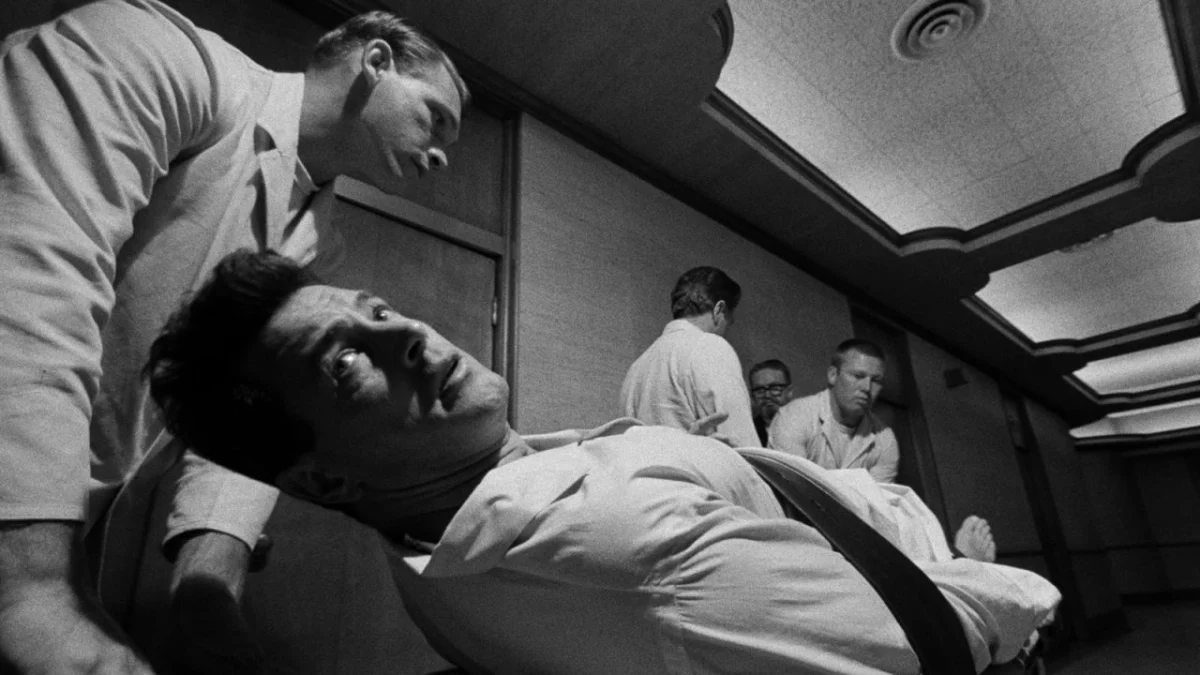
The operating theater is a place of clinical sterility, yet in John Frankenheimer’s 1966 masterpiece Seconds, it is the site of a profound, visceral violation. We are forced to witness the cold silver of surgical instruments, the harsh, unforgiving glare of overhead lights, and the blurred faces of masked surgeons who view the human body not as a temple, but as a site of renovation. The camera lingers on skin being prodded, sliced, and reshaped. It is a sequence that feels ripped from a modern "body horror" film like The Substance (2024), yet it arrived nearly six decades ago, a harbinger of the anxieties that would eventually define our century.
In an era where the pursuit of eternal youth has evolved from a vanity project into a trillion-dollar industry—where billionaires treat death as a design flaw and social media feeds are saturated with the uncanny, filtered uniformity of "Instagram face"—Seconds has moved from a misunderstood box-office failure to a prescient, terrifying mirror of our contemporary reality.
The Anatomy of a Forgotten Masterpiece
The premise of Seconds is deceptively simple: Arthur Hamilton (John Randolph), a bored, middle-aged bank executive trapped in the stifling, colorless malaise of a conventional suburban life, is approached by a secret organization known only as "The Company." For a fee of $30,000, they offer him the ultimate commodity: a "second chance." The process involves faking his death, undergoing radical plastic surgery, and being reborn as a younger, vibrant man—Antiochus "Tony" Wilson (Rock Hudson).
However, the "new" life is hollow. Beneath the handsome, square-jawed exterior of Hudson’s character lies the same alienated, miserable soul that haunted Arthur Hamilton. The film tracks the inevitable collapse of this charade, culminating in a finale so harrowing that it remains one of the most chilling sequences in American cinema history.
Chronology of a Cultural Misfire
When Seconds premiered in 1966, the critical and commercial reception was nothing short of a catastrophe. Coming off the heels of the director’s "paranoia trilogy"—The Manchurian Candidate (1962) and Seven Days in May (1964)—Frankenheimer was expected to deliver another taut political thriller. Instead, he presented a nightmarish, avant-garde fusion of sci-fi, psychological horror, and existential drama.
The Cannes Rejection
The film’s debut at the Cannes Film Festival remains a cautionary tale of auteur ambition clashing with audience expectation. The audience, repulsed by the graphic nature of the surgery scenes and confused by the tonal shifts, famously booed the film. The backlash was so severe that a humiliated Frankenheimer skipped the post-screening press conference.
The Evolution of Appreciation
For decades, Seconds languished in obscurity, relegated to late-night television slots and the fringes of cinephile discourse. It wasn’t until the late 1990s—coinciding with a laserdisc release that allowed for a critical re-evaluation—that the film began to be recognized as a lost classic. Its inclusion in The Criterion Collection in 2013 cemented its status, proving that while 1966 audiences were unprepared for its bleakness, the 21st-century viewer is perfectly attuned to its cynicism.
Supporting Data: A Visual and Performance-Driven Dystopia
The success of Seconds as a work of art is largely owed to the innovative collaboration between Frankenheimer and legendary cinematographer James Wong Howe.
The Howe Technique
Howe, a pioneer of the wide-angle lens, utilized custom-built camera rigs strapped directly to the actors. This technique created a "sickeningly close" perspective that traps the viewer within the character’s headspace. By avoiding standard cinematic framing, Howe forced audiences to experience the world as Hamilton does: distorted, disoriented, and claustrophobic. This visual language prefigured the work of directors like David Lynch and the existential dread found in Terry Gilliam’s Brazil.

Rock Hudson’s Career-Defining Risk
The casting of Rock Hudson was a masterstroke of subversion. At the time, Hudson was the quintessential Hollywood romantic lead—the man who swept Doris Day off her feet in Pillow Talk. To see him play a man shattered by the realization that he is a "second-rate" version of himself was profoundly jarring to mid-century audiences.
Hudson reportedly insisted on playing the role with raw vulnerability, even consuming alcohol before filming the pivotal party scene to capture the character’s desperate, drunken breakdown. In the film’s final, visceral act, Hudson’s performance reaches a fever pitch of terror. His struggle against the medical attendants—who are, in reality, professional football players brought in to ensure the scene’s physical intensity—remains a testament to his commitment to a role that essentially dismantled his own public persona.
Implications: The Pyramid Scheme of Modern Existence
Seconds functions as a scathing critique of the "get-happy-quick" mentality. The Company, as revealed in the latter half of the film, is not a philanthropic entity; it is a pyramid scheme. Participants are required to recruit others, binding them in a shared cycle of deception and regret.
The Cost of "Seconds"
The title of the film functions on multiple levels: the tick-tock of the clock counting down to mortality, the "second chances" purchased by the wealthy, and the gluttonous desire for "seconds" at the banquet of life. Frankenheimer suggests that this greed for more—more youth, more beauty, more life—is a spiritual infection.
The film highlights a haunting parallel to our modern obsession with "biohacking" and extreme aesthetic modification. Today, the "Company" is no longer a shadowy organization in a thriller; it is the global beauty industry, the supplement market, and the digital facade of social media, all promising a version of the self that is forever young and forever "optimized."
Philosophical Echoes
The film’s conclusion provides one of the most haunting lines in cinema. When the "Old Man," the founder of the company (Will Geer), asks Arthur if he has finally found his "dream come true," Arthur’s reply—"I guess I never had a dream"—serves as an indictment of the modern condition. It reflects the realization that when you remove the struggles and the aging that define a human life, you are left with nothing but an empty vessel.
Conclusion: The Horror of Being
Seconds is no longer just a movie; it is a mirror. It captures the essence of the mid-life crisis, the terror of mortality, and the hollow promise of consumerism with a precision that feels more relevant today than it did in 1966.
Frankenheimer once remarked that Seconds was the only film he ever made that went "from failure to classic without ever being a success." Perhaps that is because the film’s "success" was never meant to be measured in box office receipts, but in its endurance as a profound, albeit terrifying, truth. As we continue to chase the mirage of eternal youth, Seconds serves as an essential reminder: there are no second chances, and the dream of escaping one’s own humanity is the most dangerous nightmare of all.
In a world increasingly obsessed with the exterior mask, we would do well to heed the lesson of Arthur Hamilton: the face may be changed, the skin may be tightened, and the identity may be scrubbed clean, but the soul—with all its baggage, its boredom, and its inevitable decay—remains the only thing that cannot be replaced.
