Sixteen Years in the Making: How LAIKA Shattered Its Own Limits to Bring Wildwood to Life
Main Facts: A Monumental Milestone in Stop-Motion Animation
After sixteenyears of development, creative iteration, and technical evolution, director Travis Knight’s long-awaited passion project, Wildwood, has finally taken flight. Produced by acclaimed stop-motion studio LAIKA, the fantasy film is an adaptation of the beloved children’s novel written by Colin Meloy and illustrated by his wife, Carson Ellis.
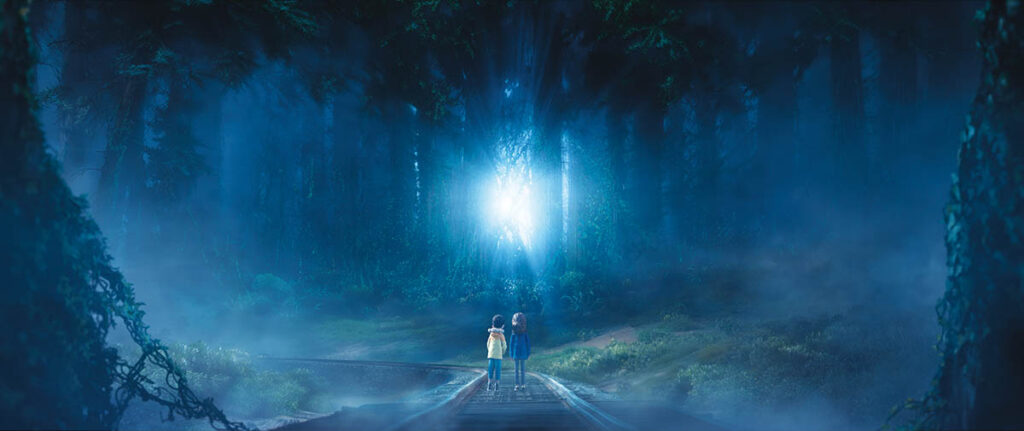
The narrative follows 12-year-old Prue McKeel as she journeys into the "Impassable Wilderness"—a magical, hidden world thriving just beyond the borders of Portland, Oregon—to rescue her baby brother, Mac, after he is abducted by a menacing flock of crows.
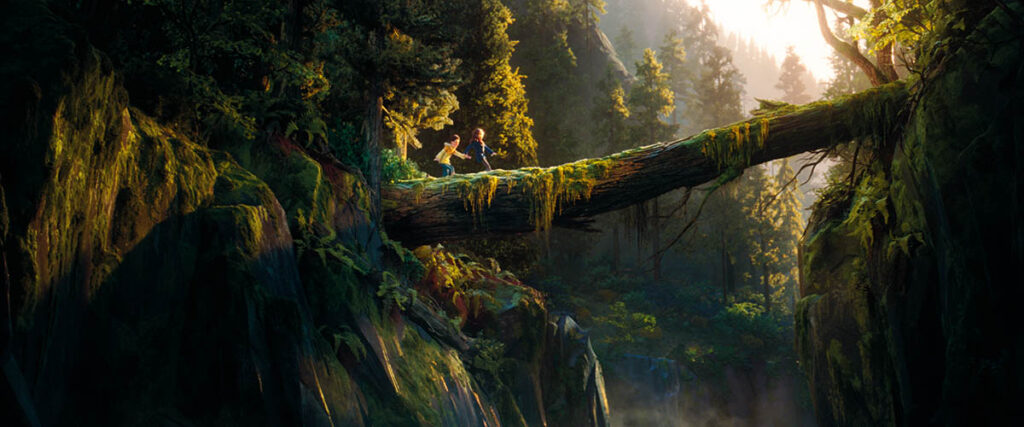
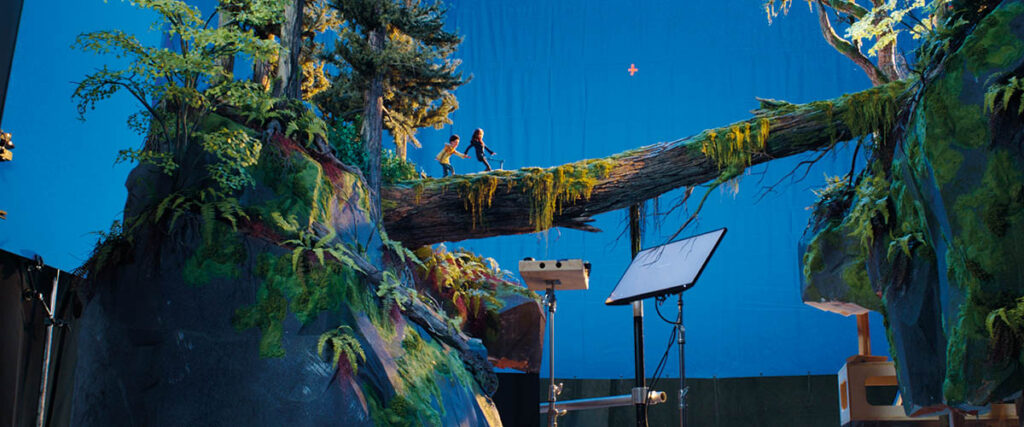
However, bringing Wildwood to the silver screen required LAIKA to shatter its own operational boundaries. The production doubled the typical shot count of a standard LAIKA feature to an astonishing 2,800 shots. To manage this unprecedented visual scope, the studio expanded its internal visual effects workforce from 90 to 300 artists and, for the first time in corporate history, collaborated with an external partner—enlisting the renowned Wētā FX.
Simultaneously, Travis Knight found himself navigating the grueling reality of directing two films within the same calendar year: Wildwood and the live-action/hybrid fantasy Masters of the Universe. For a studio renowned for rejecting digital shortcuts in favor of painstaking, handcrafted artistry, Wildwood stands as both its magnum opus and its most harrowing endurance test.
Chronology: A Decade-and-a-Half Journey Through Crisis and Creation
The timeline of Wildwood is a testament to perseverance against mounting odds. The project’s origins trace back sixteen years, evolving through various stages of conceptualization while LAIKA steadily built its reputation on masterworks like Coraline, ParaNorman, The Boxtrolls, Kubo and the Two Strings, and Missing Link.
The Genesis (Early 2010s): Following the successful establishment of LAIKA’s distinct visual style, Travis Knight identified Colin Meloy’s novel as fertile ground for a sweeping cinematic adaptation. Initial conceptualization began, though the studio prioritized its existing slate of original stories.
The Threshold (Late 2010s): After completing five feature films, the studio reached a critical mass of confidence. Believing they possessed the technological and artistic maturity required to tackle Meloy’s dense lore, pre-production ramped up, though the sheer scale of the world-building immediately presented compounding hurdles.
The Gauntlet of Crises (2020–2022): As principal work intensified, the production faced a compounding series of external catastrophes. The COVID-19 pandemic fractured traditional studio workflows, historic wildfires ravaged the Oregon landscape, and civil unrest unfolded in the streets of Portland.
The Production Marathon (2022–2025): Defying the elements and operational disruptions, the expanded team executed the most complex physical and digital pipeline in the studio’s history. Sets were fragmented across multiple stages, puppets were fabricated concurrently using advanced 3D-printing pipelines, and external partnerships were forged to cross the finish line.
The Dual Release (2026):Wildwood premieres alongside Knight’s costume drama Masters of the Universe, marking an unprecedented dual-release year for the filmmaker.
Supporting Data: The Engineering and Artistry Behind the Wilderness
The scale of Wildwood can be measured not just in years, but in the staggering logistics of its physical and digital architecture.
Shot Count & Scale: While a typical LAIKA feature averages around 1,400 to 1,500 shots (such as Missing Link at roughly 1,450), Wildwood explodes that metric to 2,800 shots, effectively doubling the workload.
Workforce Expansion: The internal Visual Effects department ballooned from its baseline of 90 artists to 300 professionals, supplemented by external collaboration with Wētā FX.
Puppet Fabrication Volume: The puppet fabrication team produced 236 fully functional puppets for the production. This was achieved by decoupling the fabrication process, utilizing digital design software (Maya, AutoCAD, Inventor) to pre-visualize armatures and costume constraints simultaneously.
Advanced Material Technologies: LAIKA adopted a new wax 3D-printing workflow. Due to wax’s extreme precision, the studio printed complex organic shapes—such as coyote fur—that were molded and cast in silicone. Furthermore, these prints were melted and investment-cast in bronze to fabricate bespoke, high-stress metal parts for armatures and wardrobe components at unprecedented speeds.
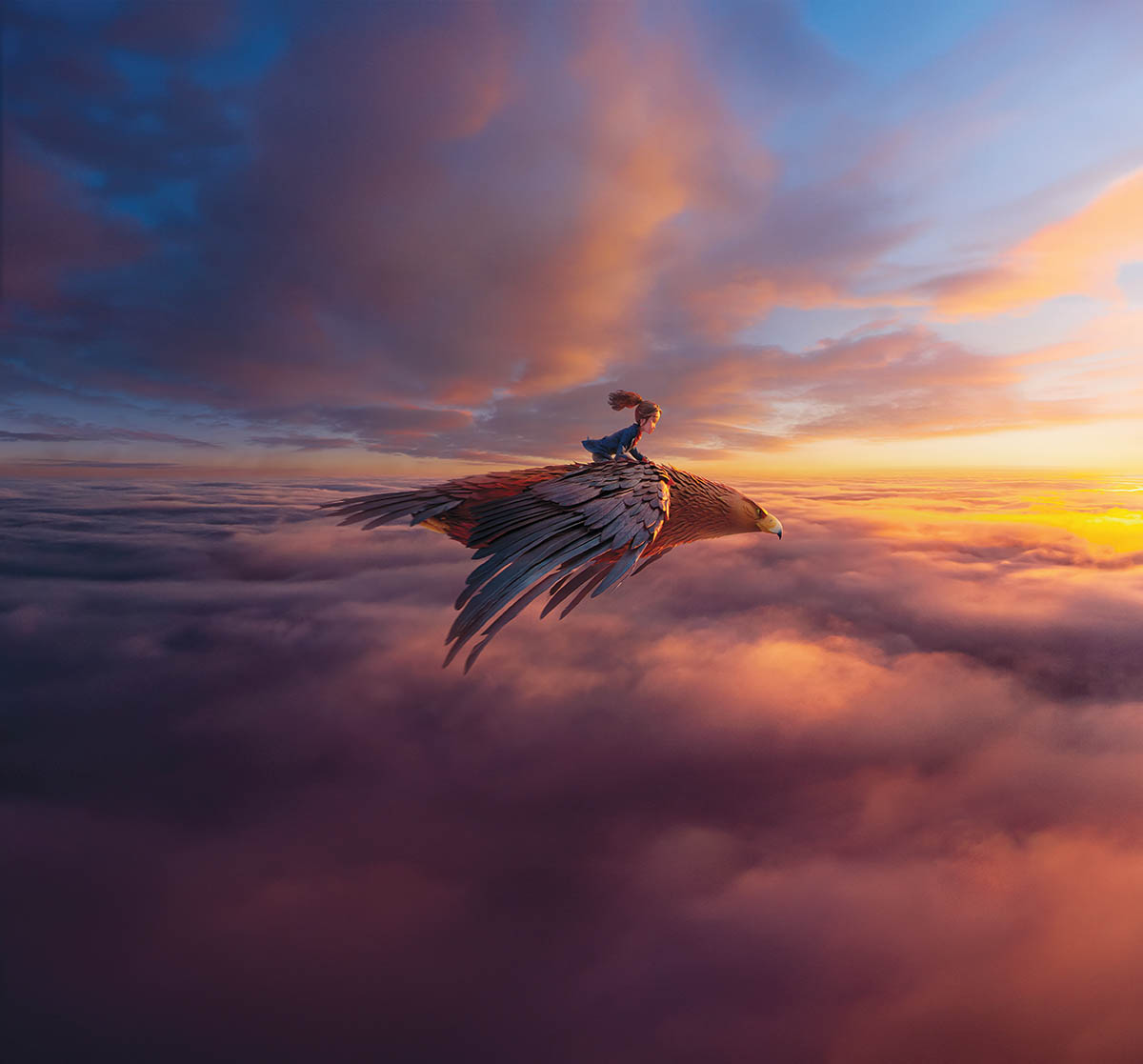
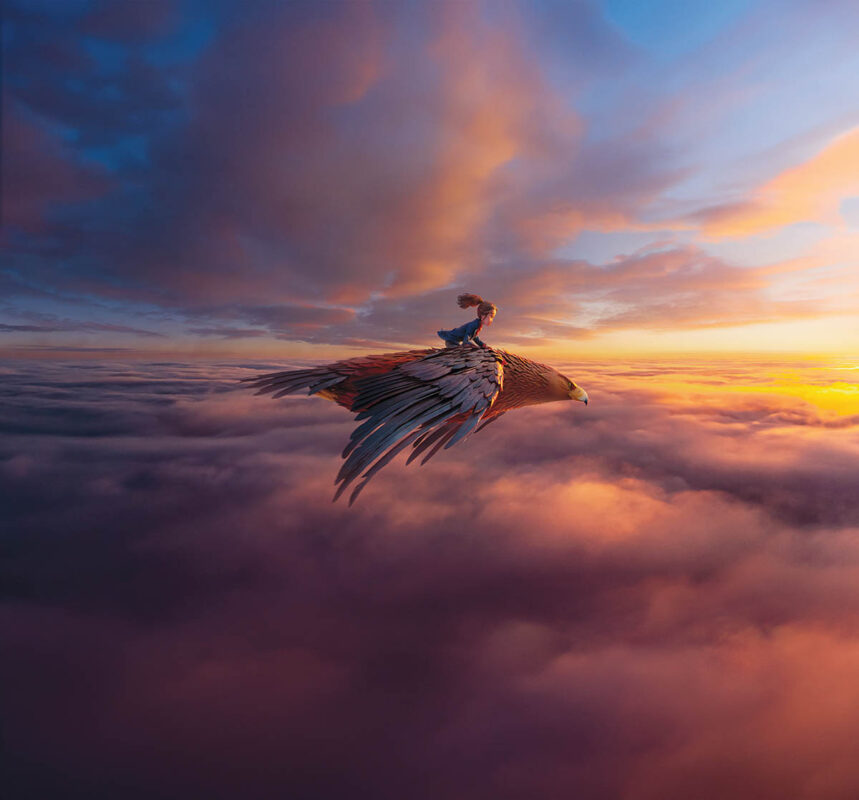
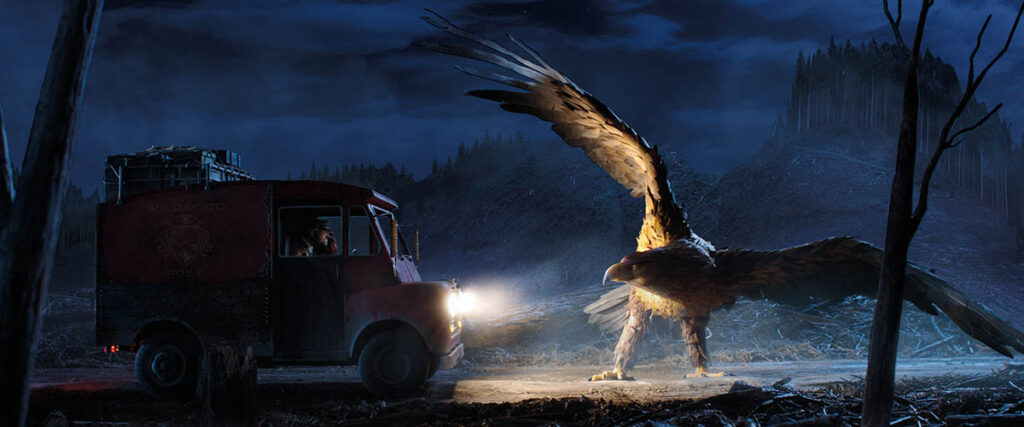
The General’s Specifications: The largest puppet created for the film was "The General," a colossal golden eagle boasting a five-foot wingspan and 3,000 individual feathers constructed from poly-satin fabric threaded with gold to catch the dawn light. The puppet utilized FDM (fused deposition modeling) 3D-printed materials and an aluminum armature, complete with shoulder motors to manage repetitive wing-flapping cycles.
Official Responses: Insights from the Creative Leadership
The creative team behind Wildwood has been candid about the psychological and technical tolls required to bring the Impassable Wilderness to life.
Director Travis Knight reflected on the compounding challenges of the production:
"I’m sure it has taken years and years off my life. I have been working on it in various forms for 16 years… It’s happenstance that Wildwood is coming out in the same year that I’ve got my little costume drama. At times, I felt like the universe was conspiring against us. The pandemic hit. These crazy wildfires ripped through Oregon. There were riots in the streets of Portland. It was one thing after the next when we were trying to make this movie. But we persevered… No question about it, it’s the hardest thing I’ve ever done."
Detailing the symbiotic relationship between practical stop-motion and digital visual effects, Knight emphasized LAIKA’s core philosophy:
"Visual effects have always been an absolutely indispensable part of what we do, and it’s one of the things that actually makes LAIKA unique in that handcrafted, practical, virtual and digital are entwined together. Each one of those techniques informs the other… Stop-motion animation is effectively a visual effect… But this movie required a lot of handholding between those two things in a way that we hadn’t done before."
Visual Effects Supervisor Steve Emerson addressed the studio’s deliberate choice to embrace discomfort:
"We will choose to do things the difficult way because it’s uncomfortable, and other studios flat-out don’t do it; that goes back to the spirit of stop-motion animation. Who would ever be crazy enough to take a week to get three and a half seconds of animation when you can pick up a camera and tell stories at 24 frames per second? We are chasing an art form that welcomes doing things in a difficult way. If we make it too easy on ourselves, then we’re doing it wrong."
Production Designer Nelson Lowry discussed the geographic touchstones anchoring the narrative:
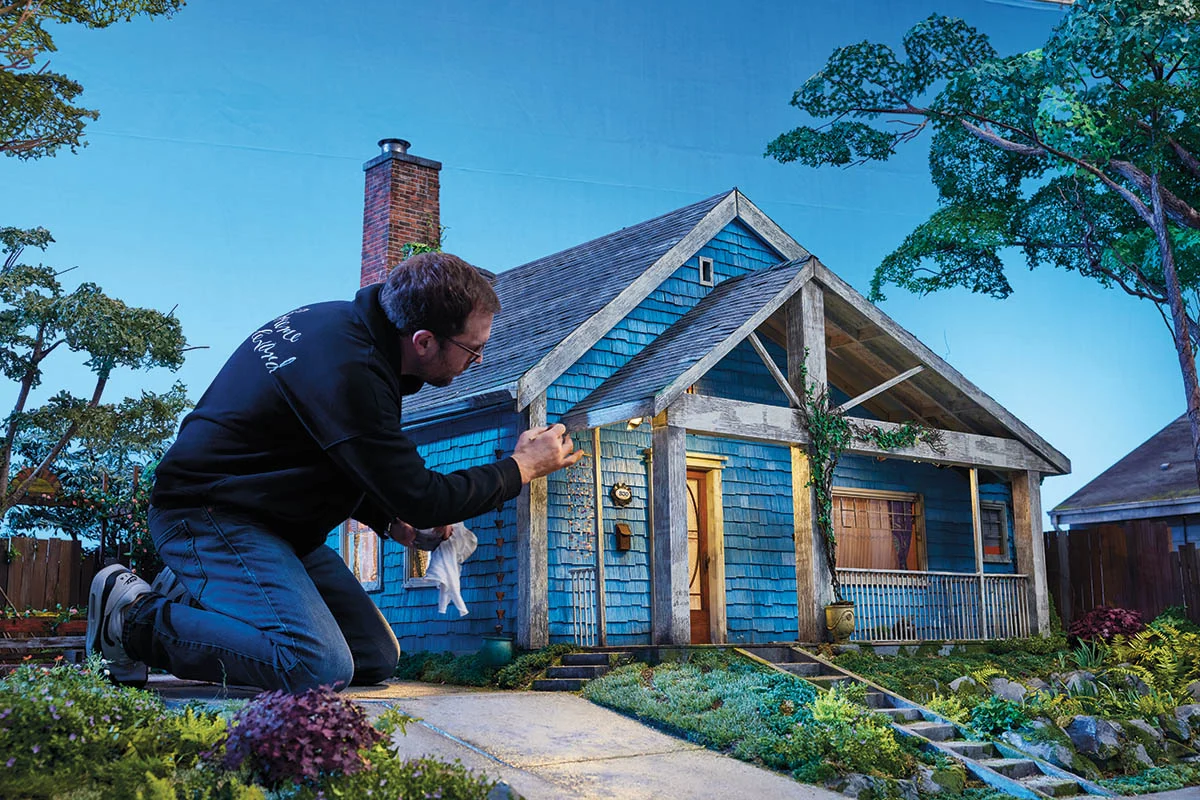
"The world-building ‘wraps’ around the characters to create a holistic vision that feels natural… Two buildings serve as visual touchstones for Portland and Wildwood. Prue’s house is at the heart of the McKeel family… The Pittock Mansion is central to Wildwood’s history. It’s both the home of Alexandra, Grigor and Alexei and, later in its history, a government building that houses a corrupt governing body. These locations act as an anchor for each side of the story."
Cinematographer Caleb Deschanel highlighted the unique adjustment required to shoot miniature practical worlds:
"In stop-motion, the thing that’s missing is the serendipity of an actor coming in and performing something… You have to accept that it’s going to be animated a certain way, and where it goes is going to create its own reality. When we were first starting on the movie, I went outside and shot a number of scenes at different light levels and f-stops so I had an understanding of real human beings in a real situation and what the depth of field should feel like."
Implications: Setting a New Benchmark for Hybrid Animation
The release of Wildwood carries profound implications for the future of stop-motion animation and the commercial viability of uncompromising handcrafted cinema in an era dominated by fully digital workflows.
By successfully orchestrating 2,800 shots—a volume historically reserved for massive computer-animated blockbusters—LAIKA has proven that stop-motion is not an archaic relic of cinematic history, but a scalable, highly adaptable medium capable of epic fantasy storytelling. The studio’s willingness to cross its own threshold and partner with external powerhouses like Wētā FX demonstrates a pragmatic willingness to evolve without sacrificing its foundational identity.
Furthermore, Wildwood serves as an institutional blueprint for how 21st-century technologies—such as advanced wax 3D printing, algorithmic armature rigging, and sophisticated compositing—can breathe new life into centuries-old artisanal traditions.
Ultimately, Wildwood stands as an infrastructural and artistic triumph for Portland’s creative community and a love letter to the city that birthed it. By intentionally choosing the harder path, LAIKA has reaffirmed that the soul of animation lives in the friction between physical reality and digital imagination—ensuring that audiences will continue to recognize, value, and feel the tangible warmth of a handcrafted world.