
From Physical Dust to Digital Pixels: ILM Veteran John Goodson on the Evolution of Movie Magic
By TREVOR HOGG
The history of modern visual effects is inextricably bound to the smell of styrene cement, the whine of the band saw, and the meticulous application of pastel dust on miniature starship hulls. Yet, for all the romanticism attached to the golden era of practical filmmaking, the industry’s evolution has been relentless. Few individuals have lived through every phase of this high-stakes transformation quite like Industrial Light & Magic (ILM) veteran John Goodson.
Spanning a career of over three decades, Goodson’s journey mirrors the technological upheaval of Hollywood itself. From carving physical models for landmark blockbusters to pioneering digital painting in software suites like Mari, Goodson’s story is a masterclass in adaptation, artistic resilience, and the enduring quest to make the unbelievable look entirely real.
Main Facts: The End of an Era and the Birth of a Hybrid Workflow
At the heart of ILM’s legendary status was its physical Model Shop—a creative engine that birthed the iconic spaceships, creatures, and environments of the Star Wars saga, Indiana Jones, and Back to the Future. George Lucas originally established the studio to replicate the kinetic, tactile feel of World War II aerial dogfights using physical miniatures. However, the inevitable convergence of computer-generated imagery (CGI) and digital compositing eventually rendered the traditional model shop model financially and logistically unsustainable.

The heartbreaking closure of the ILM Model Shop, prominently featured in the Disney+ documentary series Light & Magic, marked a watershed moment for the industry. Artists who had spent decades mastering physical materials were suddenly faced with a stark ultimatum: adapt to the digital landscape or risk obsolescence.
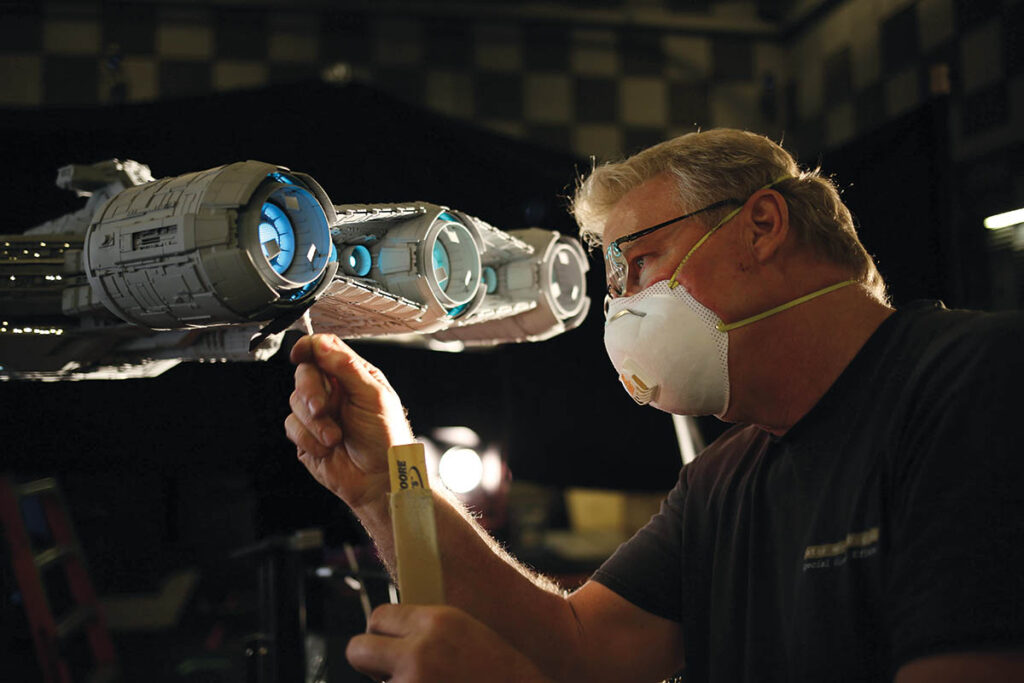
John Goodson was one of the fortunate—and talented—few who made the leap. Transitioning from a practical model project supervisor to a digital artist, Goodson found himself navigating a steep learning curve. Today, the legendary artisan operates within a fascinating hybrid paradigm. Far from abandoning the physical world entirely, Goodson, alongside ILM colleagues like John Knoll and machinist Dan Patrascu, operates an informal, garage-based collaborative affectionately dubbed "Three Garages Productions." They continue to build physical miniatures—such as the Razor Crest and Moff Gideon’s Light Cruiser for The Mandalorian—while seamlessly integrating them with cutting-edge technologies like LED volumes and advanced digital look development.
Chronology: From a 1970s Starstruck Fan to an ILM Staple
Formative Years and Early Inspiration
Goodson’s lifelong obsession with visual storytelling began at the tender age of three. While watching "The Derelict," an episode of the classic sci-fi television series Lost in Space, he was completely mesmerized by full-frame shots of the Jupiter II being drawn into a giant alien spacecraft.
Growing up on an Air Force base, Goodson was surrounded by aviation and engineering influences. His next-door neighbor, a fighter pilot, introduced him to Star Trek. When someone handed him a copy of The Making of Star Trek, a crucial psychological shift occurred: Goodson understood that the universe on screen wasn’t real, but more importantly, he realized it was something a human being could build.
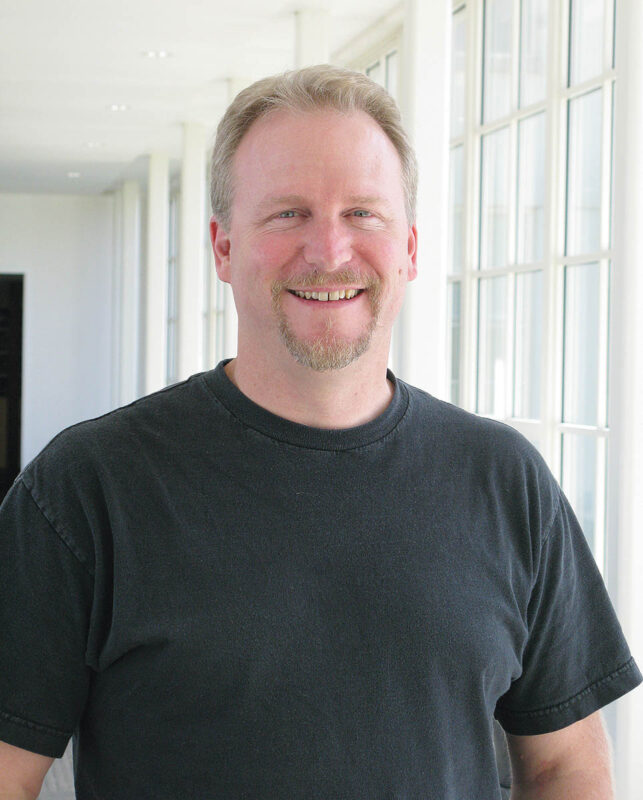
When Star Wars: Episode IV – A New Hope premiered in 1977, a 14-year-old Goodson was forever changed. He began writing fervent letters to ILM, initiating a correspondence that would literally come full circle decades later.
Education and Hitting the Ground Running (1988)
Noticing a recurring trend in the biographical blurbs of the Art of Star Wars books—namely, that many ILM artists hailed from industrial arts or architecture backgrounds—Goodson enrolled in the School of Design at North Carolina State University to study Product Design. It was the closest academic equivalent to what he already knew he wanted to do with his life.
In 1988, Goodson packed his bags and moved to California. He was promptly hired by ILM for a one-week stint on Body Wars, a simulated thrill ride for Disney akin to Star Tours, where guests are miniaturized and sent coursing through the human body. That single week turned into a legendary career.
The Crucible of Practical Effects (1989–1990s)
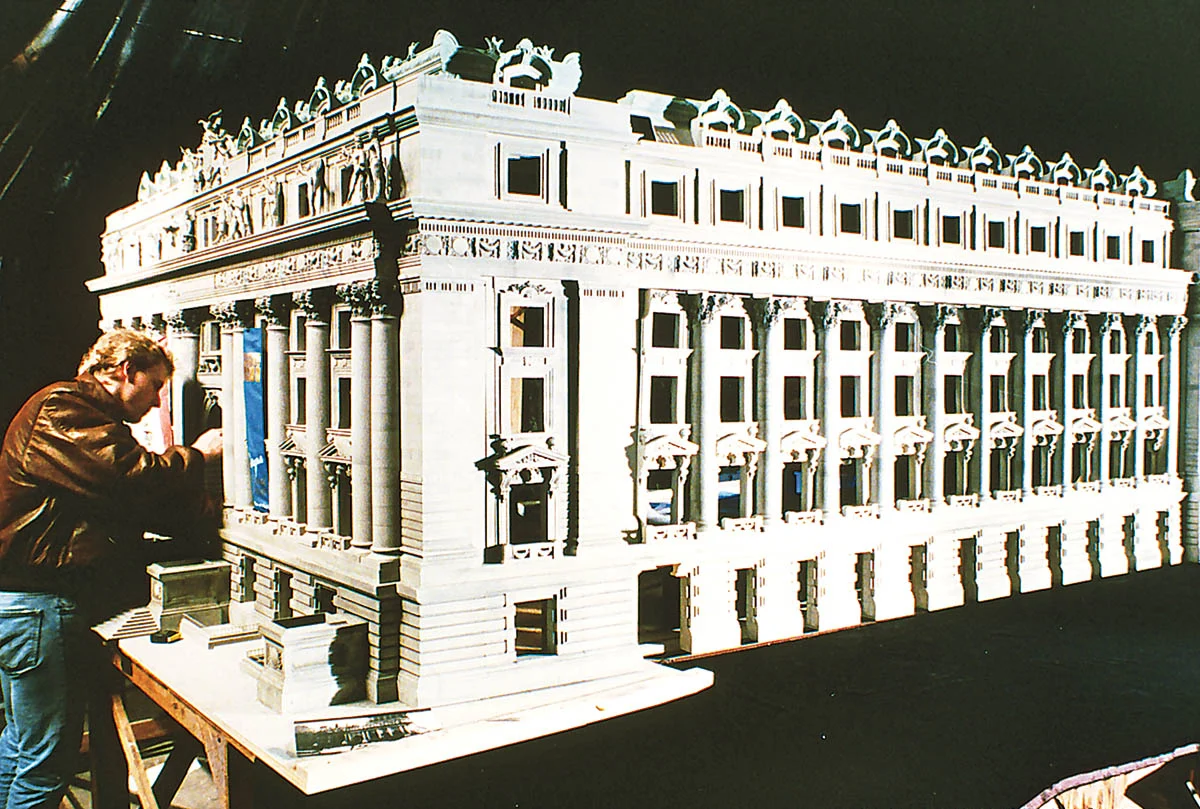
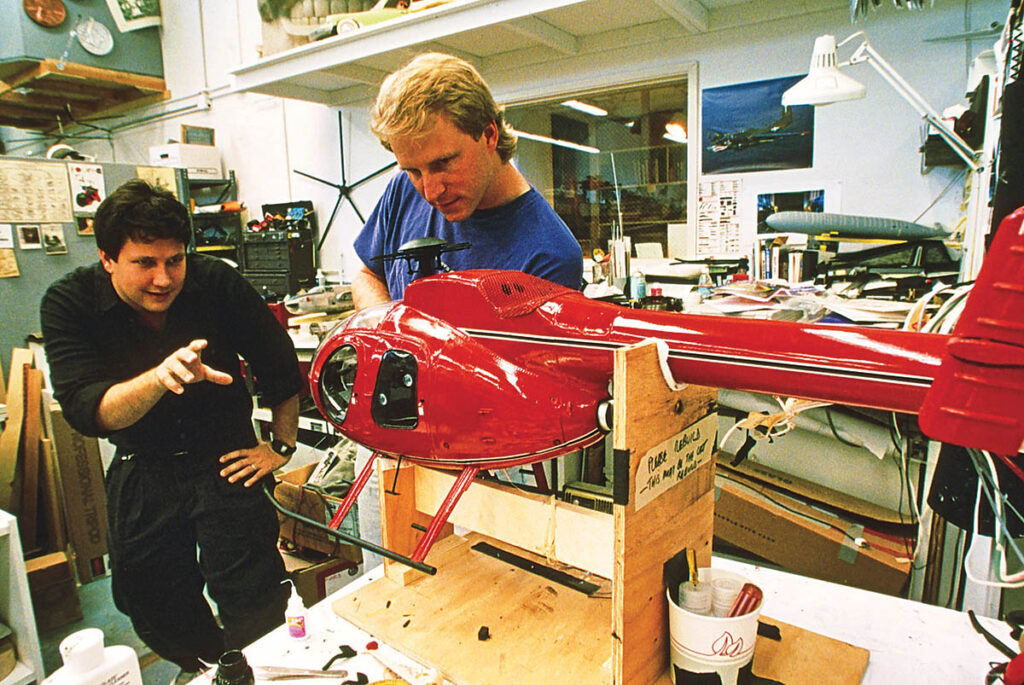
Throughout the late 1980s and 1990s, Goodson worked as a concept modelmaker and painter on some of cinema’s biggest spectacles. Whether he was frantically applying modeling clay and stipple texture to the hull of the Titanic model during a lunch break on Ghostbusters 2, or building helicopter models for the intense Chunnel sequence in Brian De Palma’s Mission: Impossible, Goodson operated under a perpetual baptism by fire.
The Digital Pivot and Modern Hybrid Era (2000s–Present)
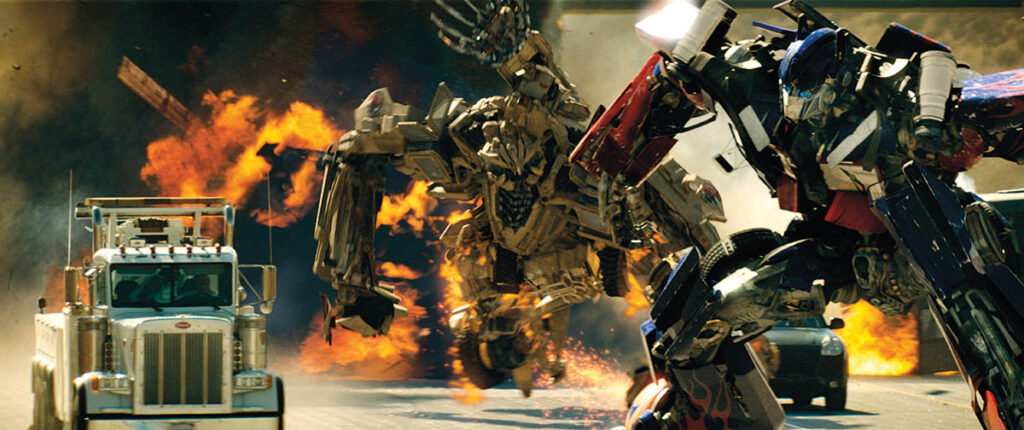
When the digital revolution reshaped the visual effects landscape, Goodson received a crash course in digital painting. Despite initial struggles with unfamiliar software packages, he mastered the craft, eventually contributing digital assets to massive franchises like Transformers, Star Trek Into Darkness, and Iron Man 2.
Today, Goodson bridges the analog and digital divide. By utilizing modern tools like 3D printing alongside traditional hand-built fuselages, and shooting physical models inside state-of-the-art LED volumes for Disney+ streaming series, he continues to push the boundaries of what is possible in cinematic art design.
Supporting Data: Career Highlights and Accolades
Goodson’s extensive contributions to the visual effects industry have earned him widespread critical acclaim, including multiple Visual Effects Society (VES) Award nominations. Below is a snapshot of key projects defining his legendary career:
| Project | Medium / Role | Notable Contribution / Achievement |
|---|---|---|
| Body Wars (1989) | Practical Model Shop | Goodson’s first ILM project, setting the stage for theme park ride visual effects. |
| Ghostbusters 2 (1989) | Practical Effects | Executed a high-pressure, last-minute texture fix on the Titanic miniature hull using pastel dust and stipple brushes. |
| Mission: Impossible (1996) | Modelmaker | Built physical helicopter models to study real-world physics and movement for animators. |
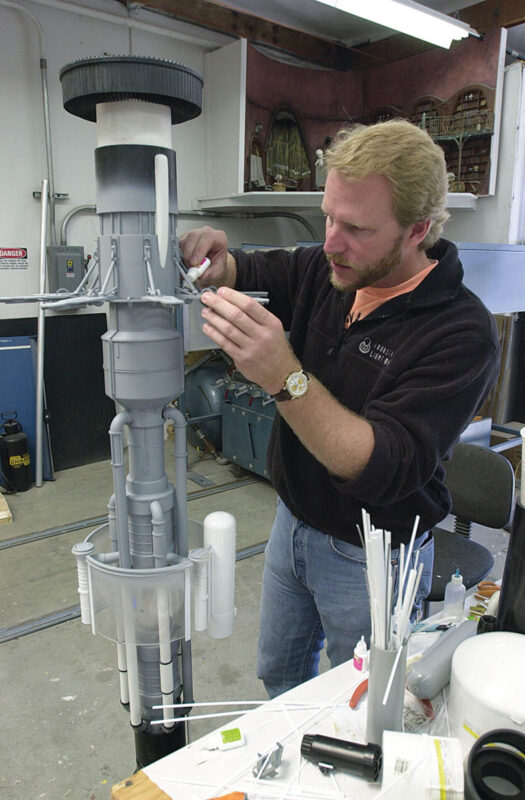
| Star Wars: Episode II – Attack of the Clones (2002) | Concept Modelmaker | Crafted intricate physical architecture, including the Droid Factory Tower. |
| The Day After Tomorrow (2004) | Practical / Hybrid | Built a makeshift plywood-and-styrene frozen oil tanker hull over a single weekend, earning personal praise from director Roland Emmerich. |
| The Mandalorian (2020–Present) | Practical & Digital Hybrid | Constructed 2-foot and 4-foot physical Razor Crest models and Moff Gideon’s Light Cruiser, shot on modern LED volumes. VES Award Nominee. |
Official Responses and Perspectives
The human cost of technological progress is a recurring theme when veteran artisans reflect on the transition from practical workshops to server farms. Goodson offers a candid, pragmatic perspective on the obsolescence of older job roles:
"It was really brutal," Goodson admits, reflecting on the closure of the ILM Model Shop. "The ripples from that are still happening because so many people didn’t make the transition. It is the story of technology. New technology comes in. Older jobs go away. New jobs are created. But for the people caught in the gears, it’s tough."
This sentiment extends to the artistic divergence between physical and digital mediums. While a physical model is final the moment the paint dries, digital assets require a collaborative, highly interpretive pipeline:
"When you’re building a model and painting it, that’s what you’re going to get," Goodson explains. "When you’re doing the digital work, you’re working hand in hand with the look development technical director; they take the information you give them in the paint, apply materials to it, and massage all those different elements. You can work with one TD and get a completely different result than if you worked with another one. There’s artistry involved in that."
Despite his deep-seated preference for hand-built craftsmanship, Goodson acknowledges the necessity of embracing modern innovations—even those he is initially skeptical of, such as 3D printing:
"I don’t like 3D prints because I don’t trust the material. It’s delicate. But sometimes it is the best solution. I have to get over my bias because on the Razor Crest I work with a guy named Dan Patrascu, a machinist who does 3D printing… The engines on both the four-foot and two-foot Razor Crest are full-on 3D prints."
Directors, too, have long recognized the unique problem-solving capabilities Goodson brings to the table. Following his legendary weekend-long construction of a frozen oil tanker model for The Day After Tomorrow, director Roland Emmerich sent him a succinct, telling note:
"I don’t know how you did it, but thank you so much."
Perhaps the most poetic moment of Goodson’s career reconciliation occurred quite literally by accident during the final clean-out of the ILM Model Shop warehouse. While sorting through stacked boxes of speeder bikes, minecarts, and rancor arms, Goodson stumbled upon a small, six-inch cardboard box pushed into a back corner:
"I thought, ‘I wonder if my letters are in there?’ They said they were on file. And they were in there! I got my letters back."
Implications: The Future of Hybrid Filmmaking
The trajectory of John Goodson’s career offers profound implications for the future of the entertainment industry. For years, industry prognosticators framed the rise of CGI and AI-driven workflows as an absolute extinction-level event for practical arts. Yet, as productions increasingly return to physical elements—blending miniature photography with real-time LED volume rendering seen in modern series like The Mandalorian—it is clear that cinema thrives best in the tension between the physical and the digital.
The legacy of the ILM Model Shop lives on not merely as a nostalgic chapter in Hollywood history, but as a living philosophy. Whether an artist is applying pastel dust to a styrene hull with a 60-grit sandpaper block or mapping multi-layered textures in Mari, the core objective remains entirely unchanged: acute observation of the real world translated into fantastical imagery.
As Goodson and his "Three Garages Productions" cohort continue to engineer complex rotating gear mechanisms and hand-built fuselages in suburban workspaces, they prove that the heart of movie magic is not tethered to a specific medium. It belongs entirely to the ingenuity, stubbornness, and artistry of the humans behind the tools.
