
The Anatomy of the Midpoint: Why Your Screenplay’s "Slippery" Center Matters
Screenwriting is often described as a discipline of structural rigor, yet few beats in the traditional three-act architecture are as nebulous—or as fiercely debated—as the midpoint. For Academy Nicholl Fellow and screenwriter Haley Bartels, the midpoint is a "slippery little bugger," a narrative pivot point that occupies the structural heart of a film but remains maddeningly difficult to define.
As Bartels, whose upcoming feature The Great God Pan is set to commence production with Nightshade Pictures, notes, the industry is rife with conflicting advice. Some practitioners call it the "point of no return," while others offer vague platitudes about "major plot points." In an era where online discourse often dictates that there is only one "correct" way to structure a script, Bartels advocates for a more nuanced, character-driven approach—one that prioritizes internal evolution over superficial shock value.
The Philosophical Framework: Defining the Midpoint
To understand the midpoint, one must first abandon the rigid, prescriptive dogmas often found on social media platforms like Twitter. While some pundits insist that a midpoint must accomplish specific mechanical goals, Bartels argues that screenwriting remains an art of exception. Drawing from the wisdom of legendary screenwriter William Goldman—who famously stated, "Nobody knows anything"—Bartels suggests that while structural rules exist, they are secondary to the emotional authenticity of the narrative.
For the purpose of this analysis, we are focusing on the "traditionally structured character-arc film." This is a narrative model where a protagonist’s want—their external objective—propels them on a journey that forces them to confront a deep-seated flaw. By the end of the film, the resolution of this conflict is achieved when the protagonist learns the necessary lesson to overcome said flaw, thereby fulfilling their need.
The Case Study: Finding Nemo as a Structural Masterclass
While many screenwriters look to complex, high-concept thrillers to illustrate structure, the most effective pedagogical example is perhaps Pixar’s 2003 animated classic, Finding Nemo.
Marlin’s Internal Arc: From Fear to Trust
To grasp the midpoint’s function in Finding Nemo, one must analyze the protagonist’s evolution. Marlin, the clownfish, begins the film operating from a position of paralyzing fear. His want—to retrieve his son, Nemo—serves as the catalyst for a journey that forces him to confront his need: learning to trust and, ultimately, to let go.
Throughout the first half of the film, Marlin’s trajectory is defined by a series of reactive, fear-based decisions. He encounters threats—sharks, deep-sea predators, the vastness of the ocean—and responds with flight-or-fight panic.
The Midpoint Collision
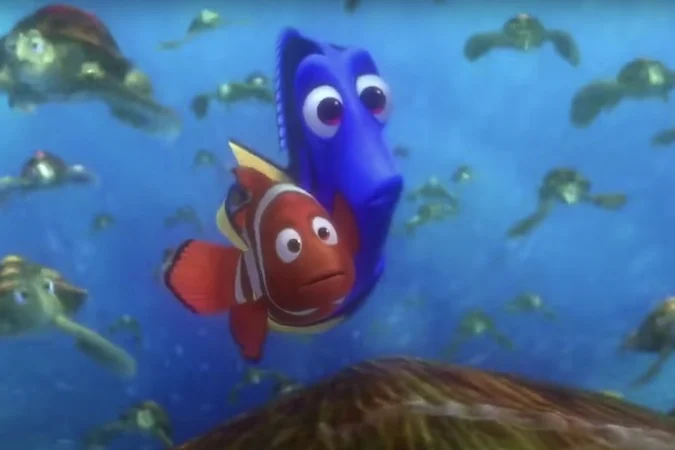
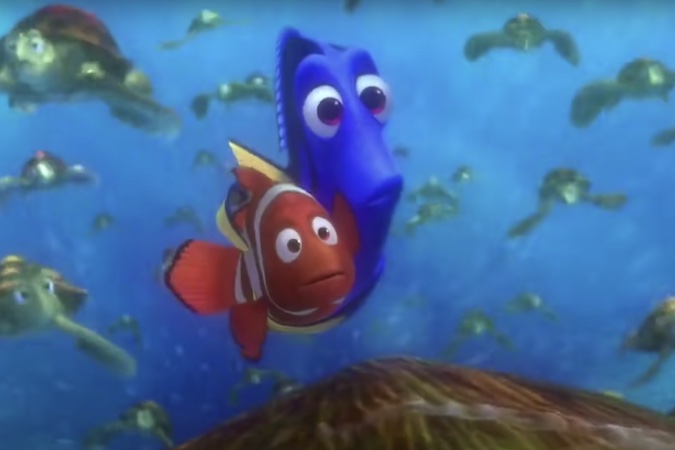
The brilliance of the Finding Nemo midpoint lies in its role as the intersection of want and need. Following a significant failure in the narrative—specifically, Marlin’s refusal to trust Dory, which leads directly to her being stung by jellyfish—the story shifts.
The midpoint provides a visceral realization of the cost of Marlin’s flaw. It is here that he encounters Crush, the sea turtle. Through Crush’s laissez-faire, trust-based parenting style, Marlin witnesses a reflection of his own inadequacies. When Crush’s son, Squirt, is bumped out of the East Australian Current, Marlin’s instinct is to spiral into terror. Crush, however, remains calm, stating, "Let us see what Squirt does flying solo."
This moment is the "reversal." Marlin sees the possibility of a different way of life. He begins to comprehend that his overbearing, fear-driven protectionism is not a safeguard for his son, but a barrier to his son’s development.
The Mechanics of the Midpoint: Beyond Plot Twists
A common trap for emerging screenwriters is the belief that the midpoint must be an explosive, plot-altering twist. While a plot reversal is helpful, Bartels posits that the most effective midpoints are characterized by an internal shift.
The Shift in Thinking
The midpoint is not where the character becomes "fixed" or fully enlightened—that is reserved for the climax. Rather, it is the moment of insight. It is the protagonist’s first clear glimpse of what their life could look like if they managed to transcend their flaw.
This internal pivot allows the audience to understand the stakes of the transformation. If a character does not experience this moment of clarity at the midpoint, the second half of the film often feels like a repetitive slog of obstacles rather than a meaningful progression toward self-actualization.
Supporting Data: Why Structure Matters in Development
The professional screenwriting landscape is increasingly competitive. With projects like Bartels’ Pumping Black currently in development, the ability to demonstrate structural competence is a prerequisite for professional success.
Industry analysis of successful feature films consistently shows that those which adhere to clear, character-driven arcs—even if they subvert genre expectations—perform better with both critics and audiences. The "Midpoint Reversal" acts as a structural anchor that prevents the "sagging second act." By ensuring that the midpoint is rooted in the protagonist’s internal conflict, writers create a bridge that connects the inciting incident to the final act, ensuring that the narrative momentum remains consistent.
Implications for Future Screenwriters
The implications of this structural philosophy are significant. By shifting the focus from "what happens next" to "what is the character learning," writers can elevate their scripts from formulaic exercises to compelling human dramas.
The Professional Consensus
While Bartels emphasizes that there is no singular "right" way to write a movie, the professional consensus remains that structure serves the story, not the other way around.
- Avoid Prescriptive Overload: Do not be intimidated by "gurus" who claim your midpoint must contain a specific action or reveal.
- Prioritize the Arc: Ensure that every major structural beat reflects the protagonist’s movement toward or away from their core need.
- Embrace the "Slippery" Nature: Recognize that the best midpoints are those that surprise the audience by being both inevitable and unexpected.
Conclusion: Nobody Knows Anything
Ultimately, the midpoint is a tool, not a cage. As Bartels suggests, if the advice provided here does not resonate, there are nine other screenwriters to consult, and one of them will surely offer a perspective that clicks.
The goal of the screenwriter is not to satisfy a checklist, but to craft a narrative that resonates on a human level. Whether you are writing a horror film like The Great God Pan or a character-driven animation, the lesson remains the same: identify your protagonist’s flaw, understand what their life could be without it, and ensure that your midpoint provides the first, flickering light of that realization.
In the high-stakes world of professional screenwriting, that clarity of purpose is often the difference between a project that gets lost in the "development hell" and one that makes it to the screen. If you can master that emotional beat, you are already ahead of the pack.
