
Brightness Meets Versatility: An In-Depth Look at the New SWIT K7 7-Inch Cine Monitor
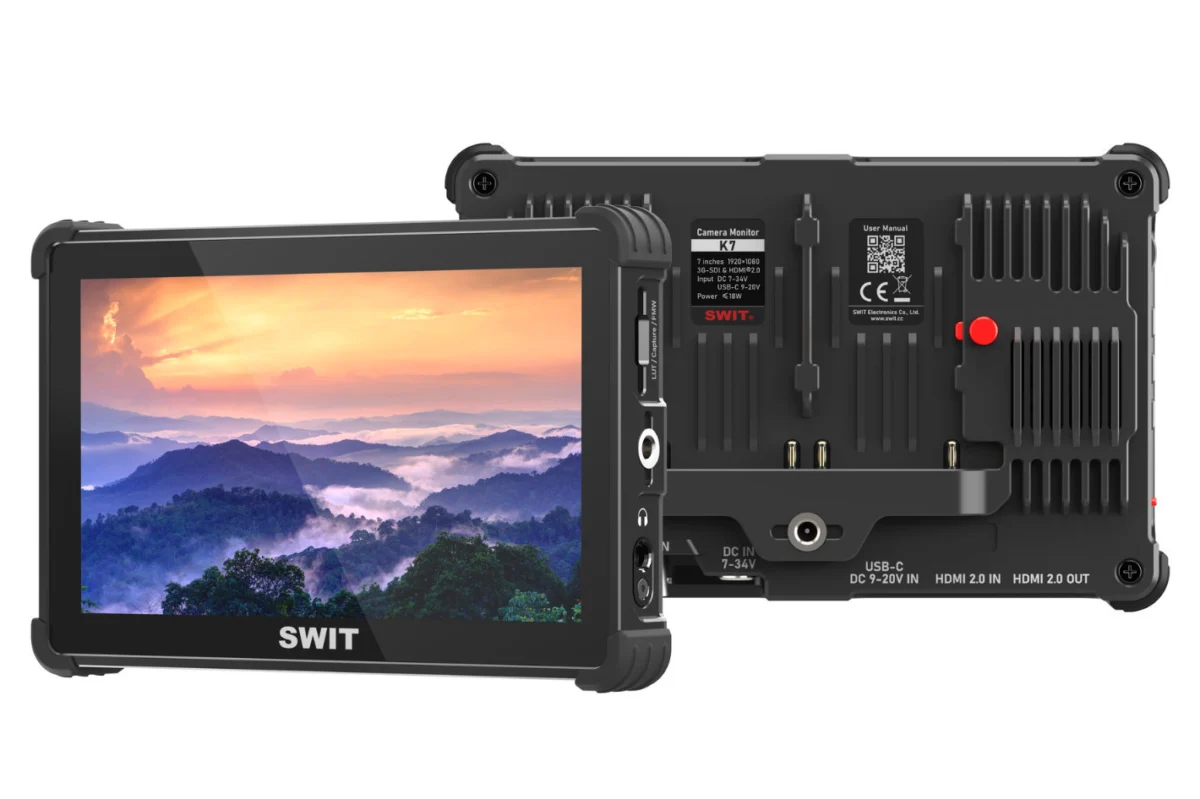
In the high-stakes world of professional cinematography, the monitor is often the single most important bridge between the sensor and the operator’s creative vision. As production environments move from controlled studio settings to unpredictable, harsh daylight locations, the demand for high-brightness, reliable, and versatile monitoring solutions has never been higher. SWIT, a veteran in the professional broadcast and cinema gear space, has responded to these challenges with the launch of the K7, a 7-inch touchscreen monitor designed to serve as the ultimate "Swiss Army knife" for video professionals.
By combining an optically bonded 2,800-nit display with advanced signal conversion and a multi-tiered power delivery system, the K7 aims to simplify the complexities of modern, mixed-format camera rigs. Whether a shooter is operating a high-end cinema camera or a compact mirrorless unit, the K7 is engineered to ensure that critical focus, exposure, and color decisions are made with absolute confidence, regardless of the ambient lighting conditions.
Main Facts: Engineering for the Modern Set
At its core, the SWIT K7 is built to solve the "visibility problem." With a sustained brightness of 2,800 nits, the display remains viewable even under direct, harsh sunlight, eliminating the need for cumbersome sun hoods that often restrict viewing angles. The display itself is a 1920 x 1080 Full HD panel that features optical bonding, which minimizes reflections and improves contrast by removing the air gap between the LCD and the glass.
Signal Versatility and Built-in Conversion
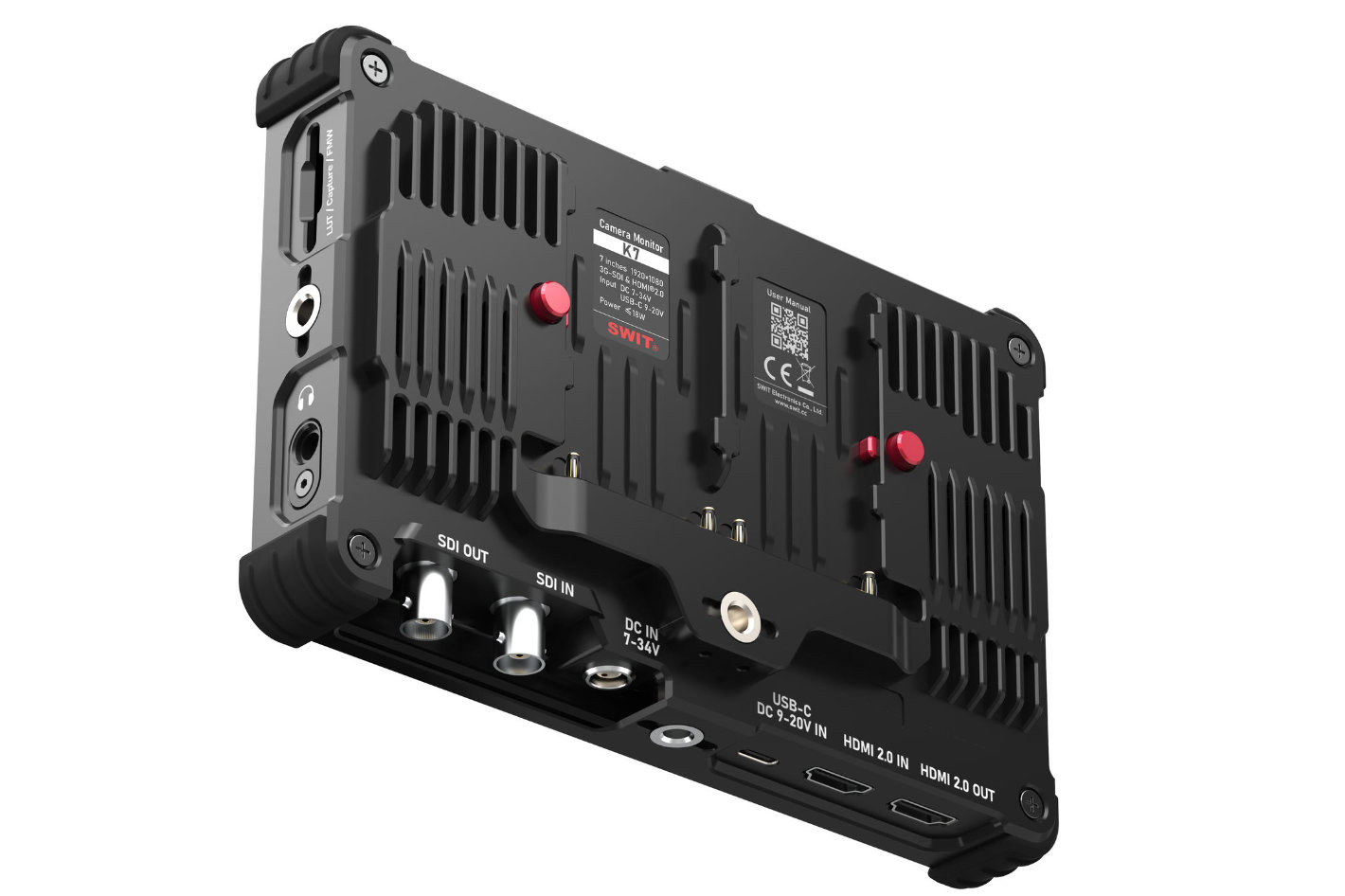
The K7 is not merely a display device; it acts as a signal processor. It is equipped with both HDMI 2.0 and 3G/HD-SDI inputs and loop outputs. Perhaps its most significant feature is the built-in cross-conversion capability. For operators using HDMI-only mirrorless cameras, the K7 allows the signal to be converted internally to SDI, outputting up to 2048 x 1080p60. This effectively renders external HDMI-to-SDI converters obsolete, streamlining the rigging process and reducing potential failure points in the signal chain.
The Power Trifecta
Power management is often the Achilles’ heel of monitor setups. SWIT has addressed this with three distinct power input methods:
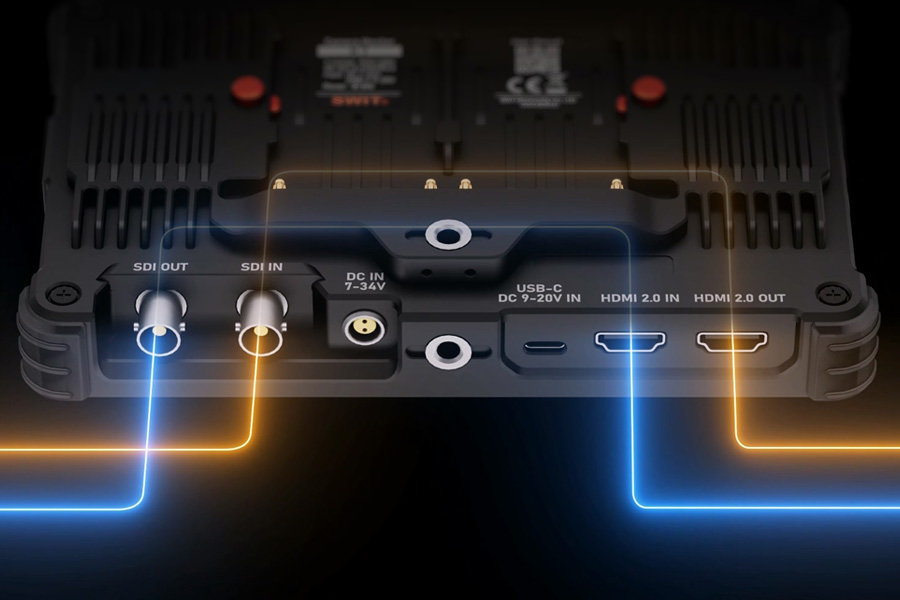
- Dual NP-F Hot-Swap: Dual integrated battery slots allow for uninterrupted operation. When one battery runs low, it can be swapped without powering down the monitor.
- 2-pin LEMO: A robust, locking connection standard for cinema rigs, supporting a wide 7-34V DC range.
- USB-C PD: Providing flexibility for lightweight, run-and-gun setups by utilizing the increasingly common Power Delivery standard (9-20V).
Chronology of Development: A Response to Market Needs
The development of the K7 follows a clear industry trajectory toward "hybridization." Over the last three years, the lines between professional cinema cameras and high-end mirrorless cameras have blurred. Shooters are increasingly mixing Sony, Canon, and Blackmagic bodies on the same production, often needing to interface with broadcast-grade SDI monitoring gear.
- Initial Research Phase: SWIT identified that professionals were frustrated by the lack of "all-in-one" monitors that handled both high-brightness requirements and signal conversion.
- Engineering Prototype: The focus shifted toward thermal management. Achieving 2,800 nits in a thin, 7-inch chassis creates significant heat; the all-metal housing of the K7 was developed specifically to act as a heat sink.
- The UI/UX Refinement: Recognizing the need for speed on set, the team refined the touch interface to include a physical scroll wheel and dedicated function keys, acknowledging that touchscreens can be temperamental in extreme weather or when the operator is wearing gloves.
- Official Launch: The product was finalized for a global rollout, with a strategic showcase scheduled for the NAB Show New York in late 2026, positioning it as a key tool for the upcoming production season.
Supporting Data: Technical Specifications at a Glance
The technical capabilities of the K7 reflect the rigorous standards of modern production. Below is a breakdown of the monitor’s performance specifications:
| Feature | Specification |
|---|---|
| Display Size | 7 inches |
| Resolution | 1920 x 1080 (Full HD) |
| Brightness | 2,800 nits (Sustained) |
| HDMI Input | Up to 4K60p |
| SDI Output | Up to 2K60p (via internal conversion) |
| Power Inputs | Dual NP-F (Hot-swappable), 2-pin LEMO (7-34V), USB-C PD (9-20V) |
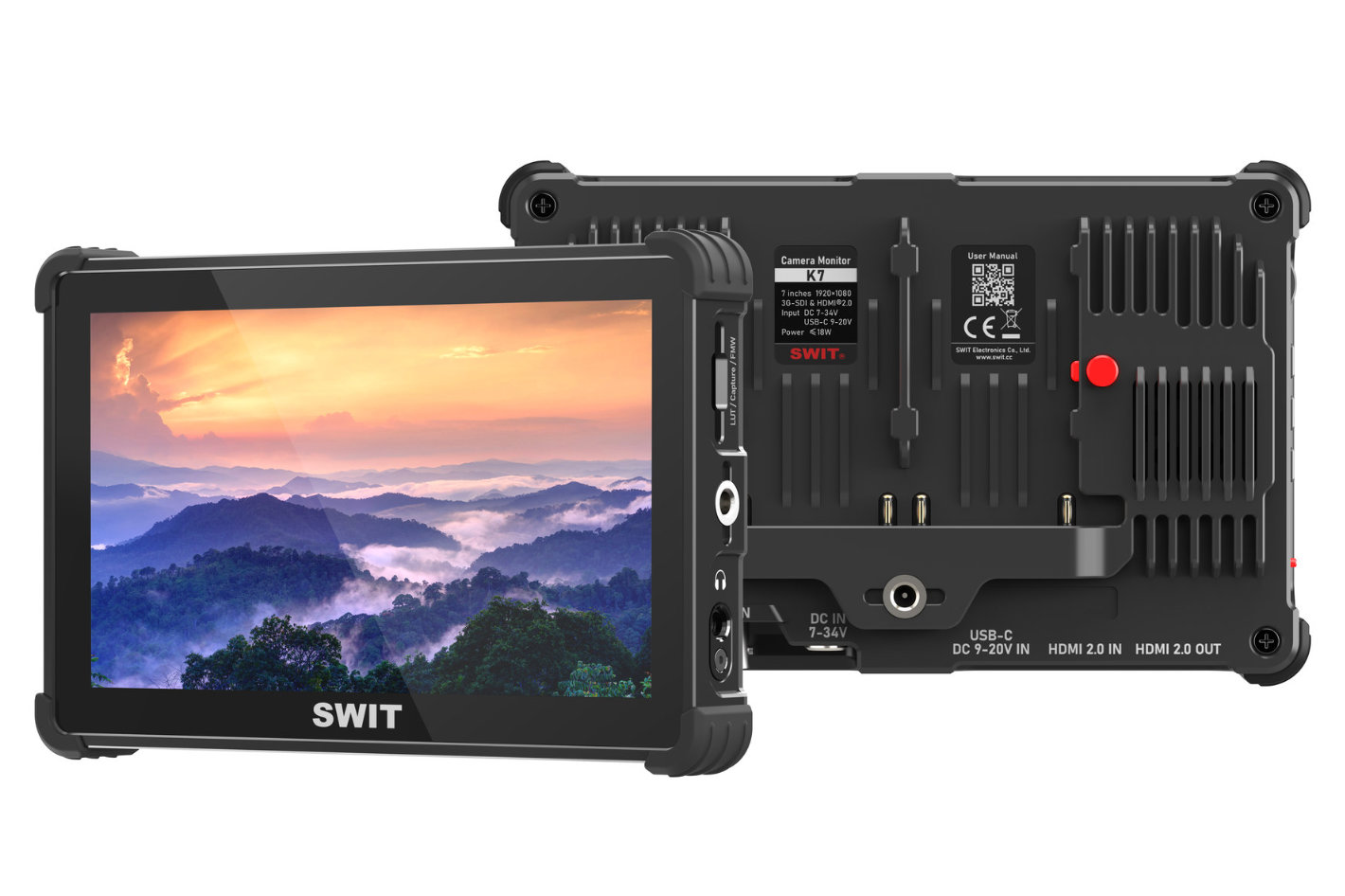
| Housing Material | All-metal with rubber corner guards |
| Software Tools | LUTs, Peaking, Zebra, False Color, Waveform, Vectorscope, Histogram |
The inclusion of an SD card slot is not just for firmware updates; it allows users to load their own 3D LUTs and—critically—capture frames. This frame-capture feature allows an operator to grab a still of a previous take and overlay it onto the live feed with adjustable transparency, ensuring perfect continuity in framing and actor positioning between takes.
Official Responses and Industry Positioning
In early statements, SWIT representatives emphasized that the K7 was designed by listening to "the field." By implementing features like the "touch lock" and the physical scroll control, the company is directly addressing complaints from ACs (Assistant Cameras) who find pure-touch interfaces unreliable during high-pressure situations.
Industry analysts note that the monitor’s build quality—specifically the use of metal rather than plastic—signals a push into the professional rental house market. Rental houses require gear that can survive years of transport and frequent rigging, and the addition of protective rubber corner guards suggests that SWIT is prioritizing durability over weight-saving measures.
"The goal," one spokesperson noted during the announcement, "is to remove the friction between the camera sensor and the operator. We want the monitor to be the last thing you worry about on set, not the first."
Implications: Changing the Workflow of the Independent Filmmaker
The release of the K7 has several implications for the future of independent and small-team productions.
1. Simplification of the Rig
By integrating signal conversion and flexible power, the "monitor-as-a-hub" concept becomes a reality. Independent filmmakers often struggle with the "spaghetti" of cables and external adapters required to make a mirrorless camera play nicely with a professional SDI setup. The K7 removes these bottlenecks.
2. Standardization of Monitoring
With the K7, a DP (Director of Photography) can move from a large-scale production using a cinema camera to a solo project with a mirrorless camera without changing their monitoring habits. Because the K7 supports user LUTs and professional scope tools (waveform, vectorscope), the "look" of the footage remains consistent regardless of the camera being used.
3. Sustainability in Power
The shift toward USB-C PD as a standard is particularly notable. As many newer cinema cameras and peripherals move to USB-C, the ability to share power sources across a rig decreases the total weight and cost of the battery kit. The K7’s ability to take power from almost any modern source makes it future-proof.
4. The Future of Field Production
As cameras move toward higher frame rates and higher bitrates, the monitor becomes the only reliable check for technical errors. The K7’s internal processing, which allows for advanced diagnostics like false color and histogram-driven exposure, ensures that the raw data being captured is technically sound.
Conclusion
The SWIT K7 is more than just a screen; it is a comprehensive monitoring ecosystem packed into a 7-inch chassis. By balancing the raw power of 2,800 nits of brightness with the refined utility of signal conversion and intelligent power management, SWIT has created a tool that respects the complexities of the modern set.
For the professional who demands both performance and reliability, the K7 stands as a compelling choice. Whether you are navigating the bright sun of an outdoor location or the tight confines of a studio, the K7 is designed to keep you focused on what matters most: the image. With its availability and upcoming showcase at the NAB Show New York, it is poised to become a staple in the gear bags of professionals worldwide.
As the production landscape continues to evolve, tools like the K7 prove that the most effective gear is often the kind that simply works, allowing the creator to disappear into the work and let the technology do the heavy lifting.
