
Adobe and NVIDIA Expand Strategic Partnership to Bring RTX Spark Optimizations to Premiere, Photoshop, and Frame.io
By Tech & Digital Media Desk
Published: October 2023 / Updated for Hardware Ecosystem Release
Main Facts
In a significant expansion of their ongoing strategic partnership, tech giants Adobe and NVIDIA have announced a comprehensive suite of hardware-software integrations designed to supercharge professional creative workflows. Building upon foundational collaborations first unveiled earlier this year in March, the two companies are officially extending advanced NVIDIA RTX Spark optimizations across Adobe’s flagship creative applications—including Adobe Premiere Pro, Adobe Photoshop, Substance 3D, and the cloud-native collaboration platform Frame.io.
The catalyst for this performance leap is the newly launched NVIDIA RTX Spark superchip, which began shipping to hardware manufacturers earlier this month. By closely coupling Adobe’s software architecture with NVIDIA’s cutting-edge silicon, creative professionals can expect up to twice the processing speed for artificial intelligence (AI) tasks, timeline editing, color grading, and visual effects when operating on compatible RTX Spark-powered machines, such as the newly announced ASUS ProArt P16 and P14 laptops.
Key highlights of the expanded integration include:
- Photoshop: Rearhitected around GPU-accelerated compositing for ultra-responsive canvas interactions, faster AI removal tools, and instantaneous filter renderings.
- Premiere Pro: Full RTX acceleration applied to timeline playback, rendering, heavy effects, and AI-driven features like Enhance Speech and Object Mask.
- Substance 3D Painter: Drastically accelerated texturing pipelines capable of handling heavy 3D assets natively on mobile and desktop workstations.
- Frame.io: Cloud pipelines supercharged via NVIDIA NVDEC hardware-accelerated decoding, alongside TensorRT and CUDA optimizations that yield up to a 5x increase in embedding generation speeds and an 80% reduction in search proxy footprints.
Chronology of the Partnership
To fully understand the magnitude of this latest hardware-software convergence, it is helpful to trace the timeline of collaboration between Adobe and NVIDIA over the past year:
- March 2023 (Initial Announcement): Adobe and NVIDIA first formalize a broad strategic partnership aimed at bringing advanced GPU acceleration to media ingestion and intelligence workflows inside Frame.io. The initial phase also lays the operational and technical groundwork for deep-dive development programs focusing on Adobe Substance 3D, the Firefly Foundry enterprise generative AI ecosystem, and large-scale 3D digital twin workflows for enterprise environments.
- Mid-2023 (Development and Rearchitecting Phase): Engineers from both companies work in tandem to rewrite core rendering and composition pipelines within Adobe’s flagship Creative Cloud applications. The primary goal transitions from general GPU assistance to native hardware-level integration with NVIDIA’s upcoming unified architectures.
- Early October 2023 (Hardware Rollout): NVIDIA officially commences commercial shipments of the RTX Spark superchip, establishing a new hardware benchmark for creator-focused laptops and mobile workstations—notably featured in upcoming hardware releases like the ASUS ProArt P16 and P14.
- Late October 2023 (Current Expansion Announcement): Adobe and NVIDIA officially announce the full realization of their partnership expansion, detailing specific performance metrics across Photoshop, Premiere Pro, Substance 3D, and Frame.io. Adobe confirms that these optimized builds will begin rolling out to global subscribers later this year.
Supporting Data & Performance Metrics
The architectural synergy between Adobe’s newly rearchitected software suite and NVIDIA’s RTX Spark superchip is backed by impressive internal benchmarks and technical metrics released by both companies.
Creative Cloud (Photoshop & Premiere Pro)
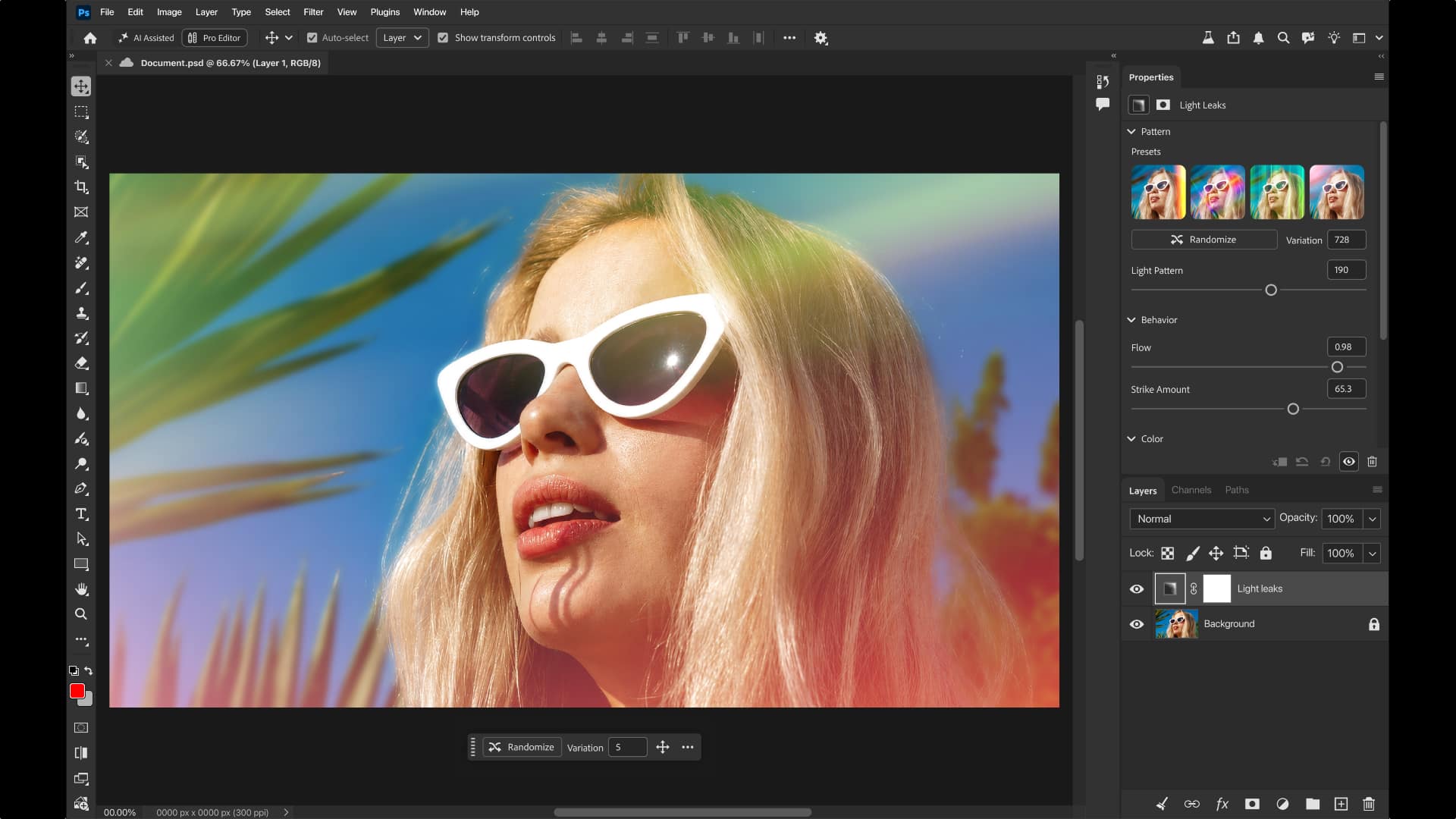
By shifting baseline tasks away from traditional CPU bottlenecks and directly onto GPU-accelerated pipelines, users can expect up to 2x faster overall AI processing and editing performance.
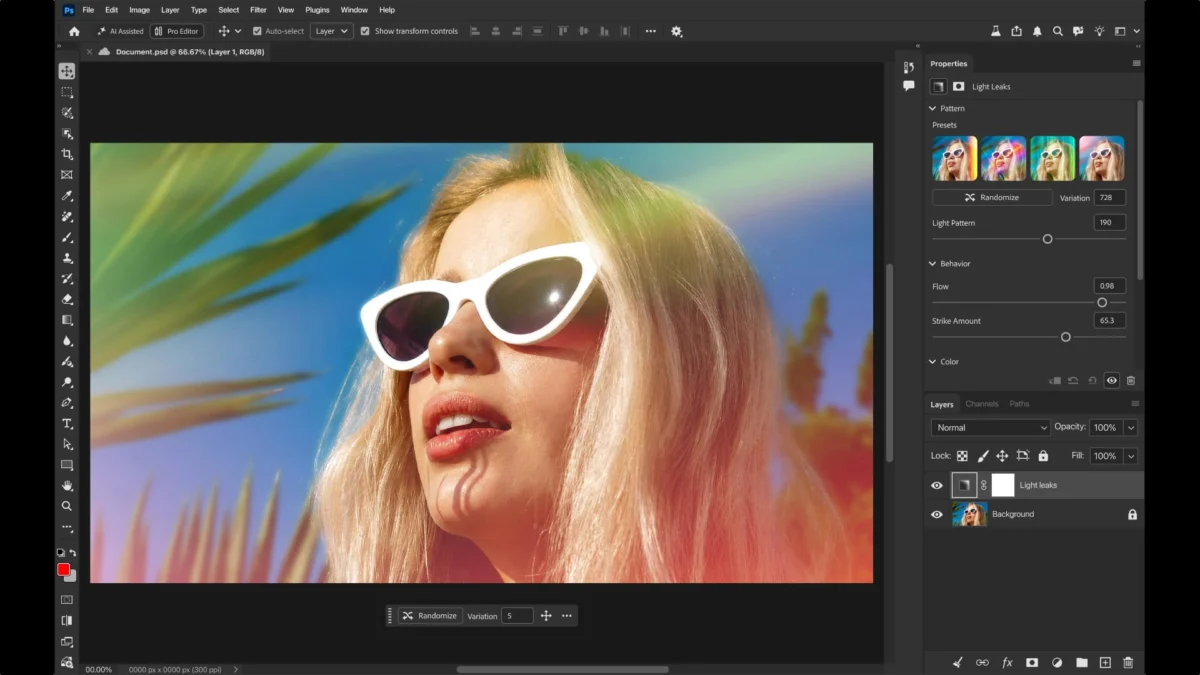
- In Photoshop: The introduction of GPU-accelerated compositing allows for near-zero latency when applying intensive filters or editing workflows directly on-canvas. Tasks that historically bogged down systems—such as utilizing the AI-driven Remove Tool, rendering complex Gaussian Blurs, or layering dynamic Light Leaks—now execute instantaneously.
- In Premiere Pro: Timeline playback, multi-stream rendering, and color-correction suites have been entirely tuned for RTX Spark. Furthermore, heavily compute-intensive AI tools like Enhance Speech (which cleans up noisy audio tracks via machine learning) and Object Mask (which tracks complex subjects across video frames) run at a fraction of their previous render times.
- In Substance 3D: 3D artists working in Substance 3D Painter benefit from accelerated texture generation, allowing complex material maps to bake and update in real-time, even when dealing with high-polygon assets.
Frame.io Cloud Pipeline
The backend data handling of Frame.io has undergone a total overhaul to leverage NVIDIA’s advanced hardware processing capabilities:
- Hardware Decoding: The cloud pipeline now utilizes NVIDIA NVDEC (NVIDIA Decoder) to offload video decoding duties entirely to dedicated hardware blocks.
- AI & Machine Learning: By integrating TensorRT and CUDA, Frame.io’s content preprocessing and embedding generation pipelines have achieved extraordinary efficiency milestones:
- 5x Faster Embedding Generation: Search and asset recognition metadata is compiled five times faster than previous legacy builds.
- 4x to 5x Improvement in P95 Processing Latency: System responsiveness during peak cloud retrieval operations has been drastically smoothed out.
- 80% Smaller Search Proxies: Cloud storage and bandwidth overhead are significantly reduced through optimized proxy generation, allowing remote teams to search through massive media libraries with virtually zero buffering delay.
Official Responses and Industry Context
Neither Adobe nor NVIDIA has treated this partnership as a simple marketing collaboration; both engineering organizations view the integration as a fundamental shift in how creative software must be built to accommodate the demands of modern artificial intelligence and high-resolution video codecs.
While hardware manufacturers have long chased raw compute power, the challenge in the digital content creation (DCC) market has historically been software efficiency. Programs like Photoshop and Premiere Pro are notoriously complex, requiring a delicate balance between CPU thread management, RAM allocation, and GPU parallel processing.
Industry analysts note that the introduction of the RTX Spark superchip—coupled with Adobe’s willingness to rearchitect core application loops—signals a broader industry trend toward hardware-software co-design. Rather than writing software to run on any generic computer, companies are increasingly leaning into dedicated silicon architectures to unlock performance multipliers that were previously thought impossible on mobile workstation platforms.
Adobe representatives emphasized that these updates are tailored specifically to meet the grueling demands of modern content creators, who are increasingly expected to output 4K/8K video, hyper-detailed 3D environments, and complex generative AI assets on thin-and-light mobile hardware without sacrificing productivity.
Implications for the Creative Industry
The deployment of RTX Spark-optimized Adobe applications running on new-generation hardware like the ASUS ProArt lineup carries profound implications for various sectors of the creative economy:
1. The Death of the Desktop Tether
For years, professional video editors, digital painters, and 3D artists have been tethered to massive, power-hungry desktop tower workstations if they hoped to maintain efficient workflows. With mobile superchips like RTX Spark delivering double the AI and rendering performance, the performance gap between desktop rigs and mobile workstations narrows dramatically. Creators can now perform heavy color grading, AI upscaling, and 3D texturing on location sets, client offices, or during travel without compromising render times.
2. Democratization of High-End AI Workflows
As generative AI tools (such as Adobe Firefly, automated speech enhancement, and intelligent masking) become standard fixtures in daily creative workflows, the hardware tax on local machines has skyrocketed. By offloading these compute-heavy models to dedicated Tensor cores and GPU pipelines, everyday editors and designers no longer need enterprise-grade setups just to take advantage of productivity-boosting AI features.
3. Streamlined Cloud Collaboration
The dramatic optimizations made to Frame.io—specifically the 80% reduction in search proxy sizes and 5x faster embedding generation—directly target the bottlenecks of remote and hybrid workflows. As post-production houses increasingly rely on distributed teams spread across different continents, seamless, low-latency cloud asset management is no longer a luxury; it is a operational necessity.
Looking Ahead
As these optimized software builds officially roll out to subscribers later this year, the market will closely monitor real-world benchmarks to see how well these theoretical performance gains translate into daily studio environments. However, one thing is certain: the era of standard CPU-reliant creative software is rapidly giving way to deeply integrated, AI-accelerated hardware ecosystems.
