Sigma Expands APS-C Lens Lineup with the Lightweight 50-120mm F2.8 and Nikon Z-Mount 16-300mm Zoom
By [Author Name] Published: October 2026
Main Facts
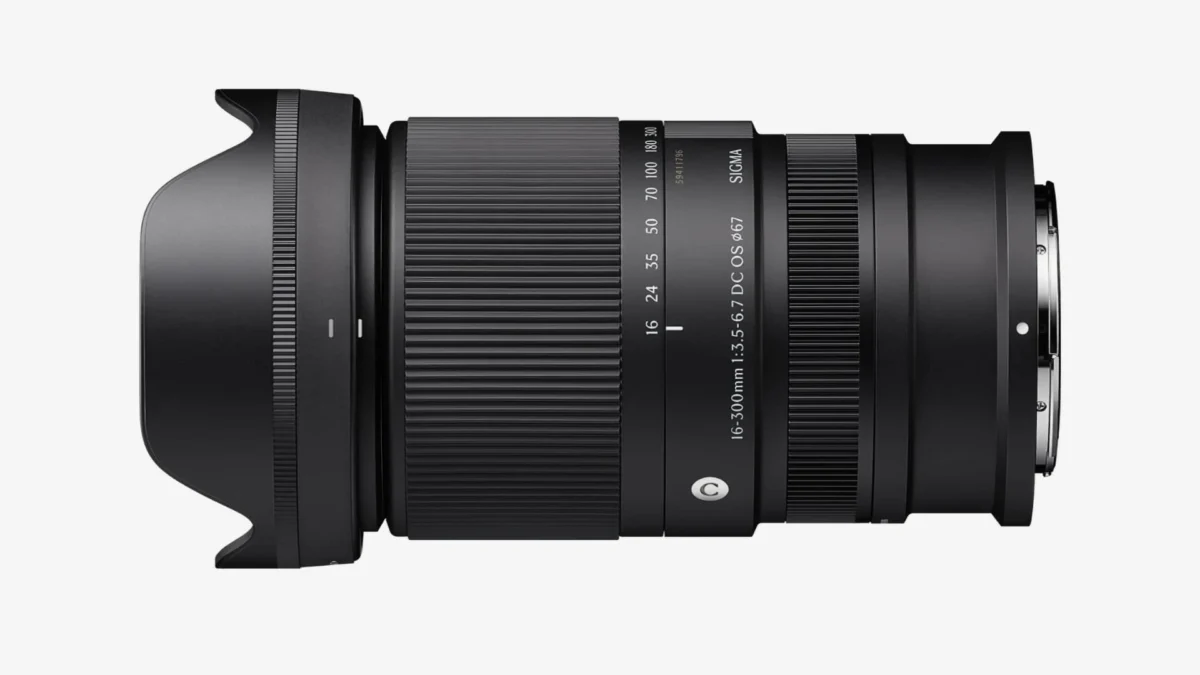
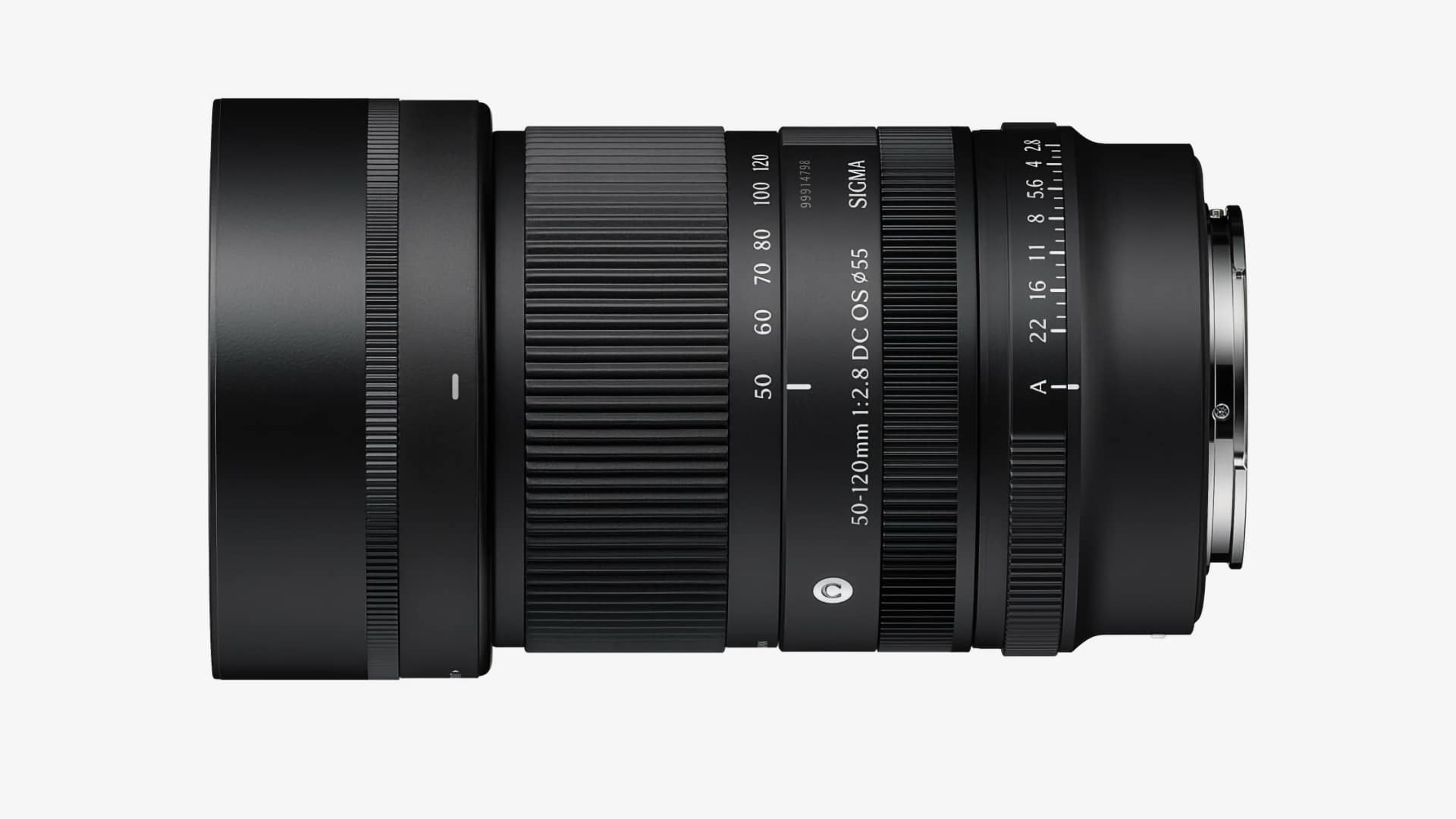
Sigma Corporation has once again disrupted the APS-C mirrorless lens market with the official announcement of two significant glass additions: the brand-new Sigma 50-120mm F2.8 DC OS | Contemporary telephoto zoom and the expansion of the Sigma 16-300mm F3.5-6.7 DC OS | Contemporary to the Nikon Z-mount ecosystem.
Designed specifically for crop-sensor mirrorless camera systems, the newly unveiled 50-120mm F2.8 offers a 35mm full-frame equivalent focal length of approximately 75–180mm. Maintained at a constant maximum aperture of F2.8 throughout the entire zoom range, the lens is built to cater to portrait, event, and travel photographers who demand professional light-gathering capabilities without the traditional physical burden of full-frame glass. Weighing a mere 390 grams (13.8 ounces) for the Sony E-mount version and stretching just 99 mm (3.9 inches) in length, it redefines the form factor expected from a fast telephoto zoom. (Canon RF-mount variants weigh slightly more at 410 grams due to flange depth adaptations, while FUJIFILM X-mount versions match the featherlight Sony build).
Simultaneously, Sigma addressed the growing demand from Nikon mirrorless users by bringing its powerhouse all-in-one travel lens—the 16-300mm F3.5-6.7 DC OS | Contemporary—to the Nikon Z-mount. Boasting an unprecedented 18.8x zoom ratio (roughly a 24–450mm full-frame equivalent), this optic holds the title of the world’s first autofocus interchangeable lens with such an expansive range built exclusively for mirrorless systems.
Chronology
The rollout of these two versatile optics represents the culmination of years of optical refinement and strategic market positioning by Sigma’s engineering teams in Aizu, Japan.
Early Development Phase (2023–2024): Following the successful launch of its compact APS-C trio—the 10-18mm F2.8, 18-50mm F2.8, and earlier zoom ranges—Sigma engineers recognized a glaring gap in the market for a lightweight, fast telephoto complement that wouldn’t break the backs of content creators. The blueprint for the 50-120mm F2.8 Contemporary began taking shape with a strict mandate: keep it under 400 grams while delivering edge-to-edge sharpness.
Mid-2025: Optical formulas incorporating high-refractive and specialized low-dispersion glass elements were finalized. Prototypes utilizing Sigma’s proprietary High-response Linear Actuator (HLA) motors were sent out for rigorous field testing among select professional creators shooting on Sony, Fujifilm, and Canon platforms.
Late 2025: Concurrently, Sigma’s software and mechanical teams developed a specialized control algorithm dedicated entirely to optimizing AF drive and communication speeds for the Nikon Z-mount communication protocol, setting the stage for the high-magnification travel zoom adaptation.
October 22, 2026: Official global release date for the Sigma 50-120mm F2.8 DC OS | Contemporary across Sony E, FUJIFILM X, and Canon RF mounts, priced competitively at $799 USD.
November 5, 2026: Official market rollout for the Sigma 16-300mm F3.5-6.7 DC OS | Contemporary in Nikon Z-mount, retailing at $769 USD.
Supporting Data & Technical Specifications
A closer examination of the optical and physical architecture of both lenses reveals the advanced engineering required to achieve such compact footprints without compromising image fidelity.
Sigma 50-120mm F2.8 DC OS | Contemporary Specifications
Optical Construction: 1 FLD (F Low Dispersion) glass element, 3 SLD (Special Low Dispersion) glass elements, and 4 aspherical elements designed to suppress chromatic aberrations, color fringing, and spherical distortion.
Focusing System: Driven by a fast, quiet HLA (High-response Linear Actuator) motor. Focus breathing is heavily minimized, making the lens equally attractive for videographers.
Optical Stabilization (OS2 Algorithm): Delivers up to 6.5 stops of stabilization at the wide end (50mm) and 4.5 stops at the telephoto end (120mm).
Physical Dimensions & Weight: 99 mm (3.9 in) in length; 390 g (13.8 oz) for Sony E and Fuji X mounts; 410 g for Canon RF mount.
Weather Sealing: Dust- and splash-resistant rubber gasketing at the mount, paired with a water- and oil-repellent coating on the front front element.
Interface Redesign: In the interest of weight savings and minimal footprint, traditional physical switches—such as the focus mode switch and the OS (Optical Stabilization) toggle—have been completely eliminated, moving these controls natively into modern mirrorless camera menu systems.
MSRP: $799 USD (Available October 22, 2026).
Sigma 16-300mm F3.5-6.7 DC OS | Contemporary (Nikon Z-Mount) Specifications
Focal Length Range: 16-300mm (approx. 24-450mm full-frame equivalent), delivering an industry-first 18.8x optical zoom ratio for mirrorless interchangeable systems.
Maximum Magnification: 1:2 macro-style reproduction capability at intermediate focal lengths, allowing for impressive close-up detail capture.
Autofocus Performance: Employs an HLA motor alongside a newly written, dedicated control algorithm optimized for Nikon Z-mount communication speed and focusing accuracy. Fully supports Continuous AF (AF-C) and in-camera aberration corrections on supported Nikon bodies.
Image Stabilization: Provides 6 stops of correction at the wide end and 4.5 stops at the telephoto end.
Build Quality: Features a rubber-sealed lens mount to protect against environmental elements.
MSRP: $769 USD (Available November 5, 2026).
Official Responses & Manufacturer Insights
In statements accompanying the global product launch, Sigma executives emphasized the philosophy behind the "Contemporary" product line: balancing uncompromising optical performance with everyday portability.
"When we looked at the landscape of APS-C mirrorless systems today, creators were constantly forced to compromise," noted a senior product development lead at Sigma Corporation. "They either had to carry heavy, oversized full-frame glass to get professional apertures like F2.8, or they had to settle for slow, variable-aperture consumer lenses that struggled in low light. With the 50-120mm F2.8, we wanted to complete a trinity of lenses that a creator could throw into a small everyday bag, hike all day with, and pull out to shoot professional work without feeling any physical fatigue."
Regarding the engineering feat of the Nikon Z-mount 16-300mm, Sigma representatives highlighted the deep collaboration required to integrate third-party optics seamlessly into Nikon’s proprietary ecosystem:
"The Nikon Z mount possesses a wide inner diameter and a short flange focal distance, which opens up fascinating optical possibilities," a company spokesperson stated. "However, achieving an 18.8x zoom ratio while maintaining reliable tracking, fast autofocus acquisition via our HLA motor, and dependable stabilization meant rewriting our firmware communication protocols from the ground up for Nikon users. The result is an all-in-one travel lens that performs unlike anything else currently on the market."
Implications for the APS-C Mirrorless Market
The arrival of these two lenses marks a strategic shift in how manufacturers view crop-sensor systems. For years, the industry narrative dictated that serious enthusiasts and hybrid shooters must eventually transition to full-frame systems to access professional lens lineages, such as the classic 70-200mm F2.8 workhorses.
However, Sigma’s aggressive expansion of its APS-C catalog upends that paradigm. By completing a lightweight F2.8 zoom trinity—consisting of the 10-18mm F2.8, the 18-50mm F2.8, and now the new 50-120mm F2.8—Sigma has created an entire professional-grade focal range (spanning a 15-180mm full-frame equivalent field of view) that weighs under 1 kilogram (2.2 pounds) combined. Sigma points out that an equivalent full-frame setup would tip the scales at nearly three times that weight, requiring heavy-duty tripods, larger camera bags, and significantly more physical stamina.
Furthermore, the introduction of the minimalist design philosophy—stripping away physical switches on the 50-120mm to save grams—signals a broader design trend. As mirrorless camera software becomes more sophisticated, physical lens switches are increasingly handled via touchscreens and customizable body buttons, allowing lens manufacturers to optimize internal glass elements and environmental sealing without adding bulk.
For Sony E, Fujifilm X, Canon RF, and now Nikon Z shooters alike, these releases solidify APS-C not as a mere "entry-level" stepping stone, but as a fully mature, highly capable, and fiercely portable system for modern content creators, documentary filmmakers, travel vloggers, and landscape photographers alike.