
The A-List Paradigm: Tokyo International Film Festival and the Shifting Landscape of Global Cinema
Introduction: A Prestigious Designation in a Changing World
As the 39th Tokyo International Film Festival (TIFF) unfolds, casting a spotlight on the best of global and domestic cinema, the event finds itself at the center of an industry-wide conversation regarding hierarchy, prestige, and the mechanics of festival recognition. Following a landmark decision by the International Federation of Film Producers’ Associations (FIAPF) to streamline its accreditation system, Tokyo has been officially cemented as one of 17 “A-list” festivals globally.
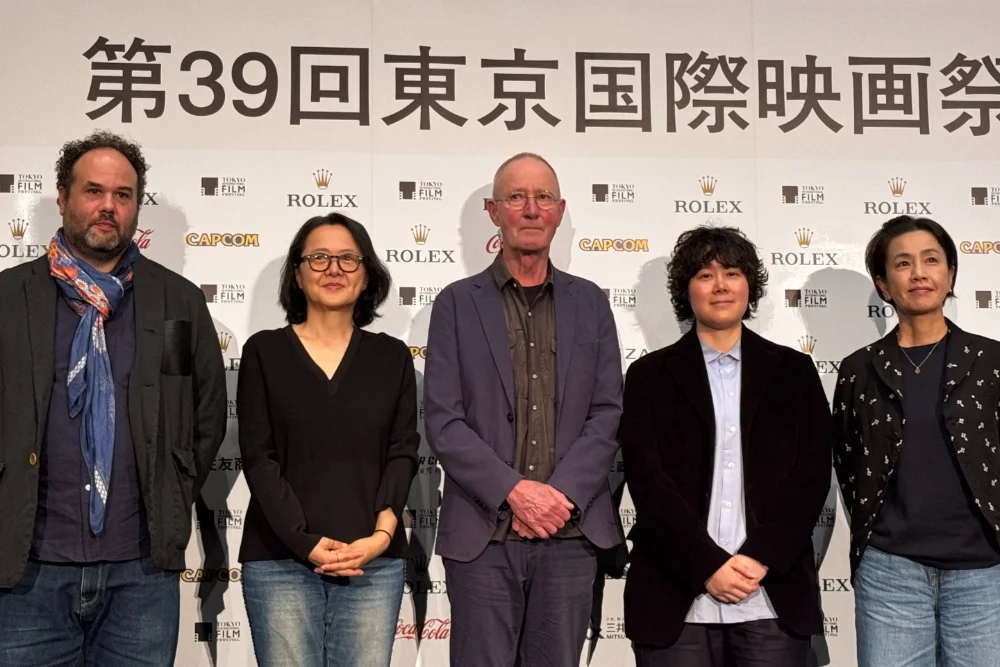
However, as the festival’s competition jury gathered this week to address the press, the consensus among industry veterans was nuanced: while the “A-list” designation carries symbolic weight, its practical impact on the actual experience of filmmakers, audiences, and the festival’s artistic soul remains a point of spirited debate.
Chronology of a Structural Shift
The landscape of global film festivals underwent a seismic shift this past March. For years, FIAPF—the governing body responsible for regulating the world’s major film festivals—utilized a complex four-tier accreditation system. This system, while intended to organize the international festival circuit, had become increasingly convoluted in an era where digital distribution and global connectivity have leveled the playing field.
In a move to modernize, FIAPF discarded its multi-tiered hierarchy in favor of a single, unified list. This new list identifies 17 key festivals that represent the pinnacle of international film exhibition. Among the elite, alongside long-standing titans like Cannes, Berlin, and Venice, are festivals such as Busan, Shanghai, Cairo, and, crucially, Tokyo.
For industry insiders, the move was less of an innovation and more of a formal recognition of reality. The industry had long operated with an informal "A-list" understanding—a professional shorthand for the events that truly move the needle in terms of premieres, star power, and market influence. Toronto and Busan, both of which were included in the new list for the first time, join this cohort, marking a clear shift toward a more geographically diverse, yet equally prestigious, global stage.
The Jury’s Perspective: Is the Label Meaningless?
At the 39th Tokyo International Film Festival’s jury press conference, the question of whether this classification matters was put directly to the jury president, acclaimed Australian filmmaker Rolf de Heer. Known for his uncompromising vision in films like Bad Boy Bubby and Ten Canoes, de Heer offered a pragmatic, perhaps even skeptical, take on the label.
"I think Tokyo has always been considered one of those festivals by most people who attend," de Heer noted. "Tokyo was effectively an A festival. And so in that sense, I don’t think it makes a lot of difference."
De Heer’s sentiment reflects a broader industry belief that the "quality" of a festival is derived from its history, its programming, and its host city, rather than a bureaucratic stamp of approval from a trade association. However, he did acknowledge the subtle leverage such a status provides. In an increasingly competitive landscape, where festivals fight for the same high-profile premieres, being officially branded as "A-list" can serve as a potent tool for procurement. "It may help that it is officially now again A," de Heer conceded, "but I don’t think it changes the festival so much."
Audience and Industry: Beyond the Rankings
While the designation might matter to festival programmers chasing talent and prestige, the view from the ground—both from the audience and from producers—is markedly different. Korean producer Oh Jungwan, the founder of the influential Bom Film Productions, provided a refreshingly grounded perspective. Having produced iconic works like A Tale of Two Sisters and A Bittersweet Life, Oh admitted that the technicalities of FIAPF classifications are far from the minds of those who make or watch movies.
"I’m not a ‘film festival person’ in that sense," Oh remarked during the press conference. "I don’t know what is A-list or not. Maybe it means good, but as an audience, we’re not going to the festival because of their A-list status. We go to watch film and enjoy the feeling, the festival feeling."
This distinction—the "festival feeling"—is the heartbeat of the event. It is a sentiment shared by many in the industry who view these classifications as necessary administrative framework for business, but ultimately irrelevant to the emotional and artistic resonance of cinema. When pressed by a journalist who hoped for a critique of the hierarchy itself, de Heer offered a final, philosophical observation: "It matters a great deal to some people, and not at all to others. And that is as it should be."
Supporting Data: The Composition of the Jury
The 39th edition of the Tokyo International Film Festival boasts a five-member jury panel tasked with awarding the prestigious Tokyo Grand Prix. The diversity of the panel, both in geography and discipline, reflects the festival’s commitment to a holistic evaluation of cinema:
- Rolf de Heer (President): Renowned Australian writer-director.
- Watanabe Makiko: Acclaimed Japanese actor (M/Other, Love Exposure, Tokyo Vice).
- Alex Lo: New York- and Tokyo-based producer whose recent work includes Jim Jarmusch’s Father Mother Sister Brother.
- Yov Moor: Tokyo-based colorist, celebrated for his work on The Taste of Things and Grand Tour.
- Oh Jungwan: Prolific Korean producer.
These five individuals will deliberate over 15 competition titles between now and the festival’s conclusion on November 4. The process of reaching a consensus is rarely straightforward, as noted by Oh, who recalled a grueling seven-hour debate during a previous stint as a juror. "Every other jury member hated me," she joked, expressing hope that the current, "very reasonable" panel would find common ground without similar levels of acrimony.
Implications: Co-production and the Future of Collaboration
Beyond the talk of status, the conversation at the press conference turned toward the practicalities of international filmmaking. De Heer addressed the challenges of Australia-Japan co-productions with characteristic bluntness, noting that "it makes no sense for a Japanese film to shoot in Australia, it makes no sense for an Australian film to shoot in Japan" unless the story demands it. He argued that while Europe has mastered the financial model of co-production, Australia remains more focused on narrative necessity.
This view was complemented by juror Alex Lo, who pointed to the rising tide of global co-productions, largely driven by the erosion of local government funding. As producers look outside their borders to bridge financial gaps, festivals like Tokyo—regardless of their "A-list" status—become vital networking hubs for these international ventures.
Conclusion: The Endurance of the Festival Experience
As the Tokyo International Film Festival proceeds, the FIAPF accreditation serves as a useful, if largely secondary, component of its identity. The "A-list" label may provide a veneer of institutional validation, but the reality of the festival is defined by its jurors, its selection, and its audience.
Whether one views the new system as a necessary evolution or a redundant formality, the consensus in Tokyo is clear: the prestige of a festival is earned, not assigned. As de Heer, Oh, and their fellow jurors prepare to crown a new Grand Prix winner, they do so with the understanding that while the industry thrives on rankings, the magic of cinema is found in the screen, the story, and the shared experience of the festival itself. The label may be "A," but the work—and the passion behind it—remains timeless.
