
The Soundtrack Preservationists: Navigating the Golden Age and Uncertain Future of Film Music Labels
Introduction: A Symphony for the Dedicated
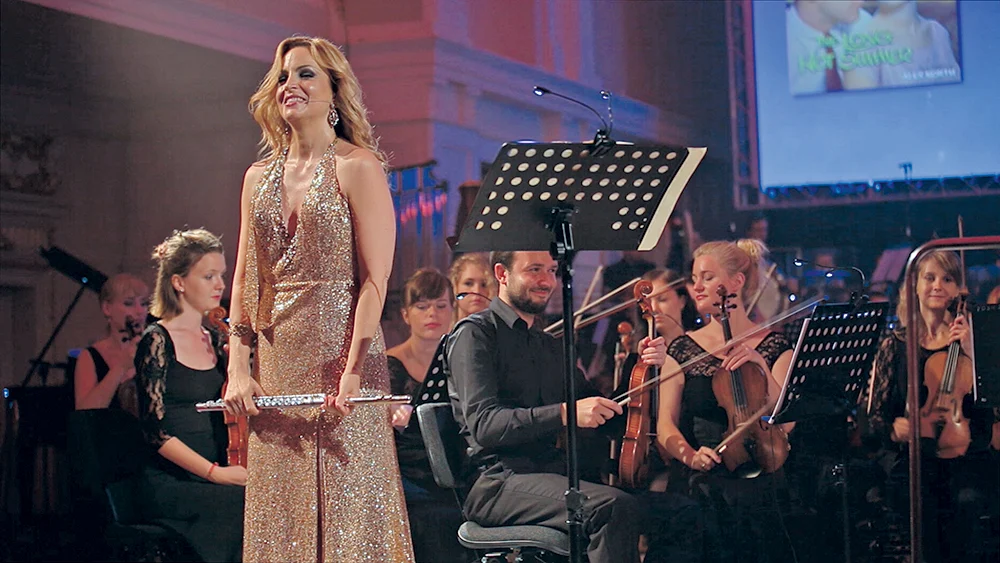
Earlier this summer, the Warner Grand Theater in San Pedro, California, reached capacity, its seats filled with a devoted crowd of cinephiles and audiophiles. The occasion: the 35th anniversary of Varèse Sarabande, a specialty record label that has long served as the cornerstone of the film soundtrack industry. The presence of industry titans like Hans Zimmer and Danny Elfman—who turned out to support the celebration—underscored the unique symbiosis between the composers who create the music and the boutique labels that ensure these works are archived, restored, and distributed to a niche but intensely loyal customer base.
However, beneath the celebratory atmosphere of the anniversary gala lies a complex, shifting landscape. While Varèse Sarabande remains the gold standard of the industry, the mission of restoring and releasing archival film scores—once a singular pursuit of a few pioneers—has been overtaken by a wave of specialized "upstart" labels. These labels have transformed a disorganized, bootleg-heavy hobbyist scene into a refined, albeit challenging, business model that bridges the gap between historical preservation and modern commercial viability.
A Brief History: From the Wild West to the Digital Archive
To understand the current state of the film music industry, one must look back at the chaotic origins of the market. In the 1980s and early 90s, the soundtrack landscape was effectively the "Wild West." Major film studios were notoriously protective of their assets, often viewing unreleased music as intellectual property with no commercial value. Simultaneously, the American Federation of Musicians (AFM) maintained rigid structures regarding reuse fees, making the legal licensing of archival music a bureaucratic nightmare.
As Douglass Fake, founder of the Bay Area-based Intrada Records, recalls, "Studios weren’t licensing, the union wouldn’t negotiate, and there was no clear path to legitimacy." This vacuum of availability, fueled by the rising tide of the early internet, led to the birth of a vibrant, albeit illicit, black market. Bootleg tapes and "composer promos"—unofficial, often poor-quality recordings—began circulating among fans.
Intrada, founded by Fake in 1985, began by releasing contemporary soundtracks, mimicking the model popularized by Varèse Sarabande. By 1988, however, the label pivoted toward the archival restoration of older films, a move that would define its legacy. Today, Intrada stands as one of the most successful entities in the space, having secured high-profile titles like Alan Silvestri’s Back to the Future and brokering landmark, historically difficult deals with major studios like Disney and Universal.
The blueprint for the modern label was further codified by Film Score Monthly (FSM), founded by Lukas Kendall in 1996. With its debut release—David Shire’s score for The Taking of Pelham One Two Three—FSM set the gold standard for the industry’s methodology: tracking down original audio elements, meticulously remastering them for digital release, securing proper licensing, and packaging the final product with scholarly essays and detailed musical commentary. When FSM released its 250th and final album in March, it marked the end of an era for the pioneer who famously stated in 2011, "I wanted to make sure the tapes were preserved and presented correctly."
The Demographic Shift: Catering to the "Fanboy" Market
As the market matured, labels began to recognize a fundamental truth about their audience: the people with the most disposable income were those who grew up during the cinematic boom of the 1980s and 90s.
Enter La-La Land Records, founded in 2002 by Matt Verboys and M.V. Gerhard. While labels like Varèse Sarabande focused on broad, prestigious catalogs, La-La Land leaned into the "Comic-Con" demographic. By targeting the "holiest grails" of 80s and 90s cinema—from John Williams’ Home Alone to James Horner’s Commando—they successfully captured a generation of collectors eager to own the music that defined their childhoods.
This shift, however, has not been without its critics. Bruce Kimmel, founder of Kritzerland (2005), remains a staunch advocate for the "Golden Age" of film scores—the period spanning the early sound era through the 1970s. With a catalog of over 150 releases, including the recent restoration of Laurence Rosenthal’s 1962 score for The Miracle Worker, Kimmel often finds himself at odds with the industry’s obsession with the 80s. "A few labels glommed onto the fact that, whatever the children of the 80s saw then was a masterpiece," Kimmel observes. "So, everything in the 80s was selling huge and selling out, and the focus became narrow."
Supporting Data: The Economics of Niche Music
Operating in the niche soundtrack market is a high-stakes, low-margin game. Project costs are notoriously unpredictable, dependent on the physical state of the source tapes, the studio’s licensing fees, and the complexity of the rights ownership.
While labels are understandably guarded about their profit margins, industry consensus suggests that a label must move roughly 600 units of any given release just to break even. Most limited editions are capped between 1,000 and 5,000 units. As Kimmel explains, "You make money if you sell out the thousand. If the limited edition is 3,000, then that extra 2,000 is nothing but pure gravy."
These unit caps are rarely arbitrary; they are usually contractual requirements set by the AFM to prevent over-saturation. They also serve a psychological purpose, creating a "limited edition" urgency that drives collector interest. However, when contrasted with the mass-market success of contemporary soundtracks—such as Hans Zimmer’s The Dark Knight Rises, which sold over 109,000 units on Watertower Records—the small-batch nature of the archival market is stark. Even song-heavy soundtracks, like Disney’s Teen Beach Movie, can reach upwards of 129,000 units, highlighting the disparity between archival preservation and pop-culture consumption.
Implications: A Bleak Horizon or a New Chapter?
The industry faces significant headwinds as the compact disc era draws to a close and the "goldmine" of unreleased scores begins to thin out. Some analysts fear that the saturation of the market, combined with the difficulty of discovering new "masterpieces" from the past, could lead to a decline for smaller labels.
Yet, there is a prevailing sense of optimism among the key players. Varèse Sarabande leverages its deep catalog and permanent licensing agreements to maintain its stability. Intrada has secured an exclusive, long-term partnership with Disney that ensures a steady stream of high-value archival material for years to come. La-La Land Records is diversifying, expanding its portfolio beyond film scores into television and the rapidly growing sector of video game music.
For veterans like Douglass Fake, the business is as much about passion as it is about profit. "It’s not all gloom and doom," he maintains, noting that he would be willing to operate his own CD pressing plant should the industry’s supply chain collapse. "I’m a realist, but each year it’s progressively stronger for us. Most labels were started by people who are just interested in the music. We weren’t driven to make money."
Ultimately, the story of these labels is a testament to the power of preservation. In an era where digital content is often fleeting and streaming services can remove titles with a single click, these boutique labels provide something tangible and permanent. Whether through the preservation of a 1960s drama score or the high-fidelity release of an 80s action masterpiece, these archivists are ensuring that the history of cinema remains audible for future generations. While the market may be tightening, the dedication of the "fanboy" audience and the commitment of the labels suggest that, much like the scores they release, this industry is designed to endure.
