
An Era Ends: William Shatner Leads Tributes Following the Passing of Star Trek Legend Sir Patrick Stewart
Main Facts
The science fiction community is mourning what is widely being described as one of the darkest weeks in the history of the Star Trek franchise. Sir Patrick Stewart, the legendary British actor globally renowned for his definitive portrayals of Captain Jean-Luc Picard in Star Trek: The Next Generation, its subsequent feature films, and the critically acclaimed sequel series Star Trek: Picard, has passed away at the age of 86.
Stewart’s death comes merely days after the tragic loss of fellow franchise icon Walter Koenig, who famously portrayed Pavel Chekov in the original Star Trek television series and film franchise, and who passed away at the age of 90.
The passing of Sir Patrick Stewart marks a devastating milestone for the legendary sci-fi institution: he is the first actor to have played a primary Star Trek series lead captain to pass away. The news has sent shockwaves through Hollywood, generating an outpouring of grief from fans, colleagues, and cultural institutions worldwide. Among the most anticipated and poignant responses was that of William Shatner—who originated the role of Captain James T. Kirk—whose heartfelt public tribute underscored the profound bond shared by those who have commanded the fictional USS Enterprise.
Chronology of a Heavy Week for Trekkies
The sequence of losses began earlier in the week with the passing of Walter Koenig at 90 years old, robbing the fandom of another vital link to the 1960s origins of Gene Roddenberry’s universe. Before the global fan base could fully process the loss of Chekov, the announcement of Sir Patrick Stewart’s death at 86 dropped like a thunderclap.
Stewart’s career was inextricably linked with the stars. Having cemented his legacy on the classical stage before stepping onto the bridge of the USS Enterprise-D in 1987, he redefined what a television captain could be. For seven seasons of The Next Generation, four feature films, and later the introspective streaming series Star Trek: Picard, Stewart anchored a universe of philosophical exploration, diplomacy, and moral inquiry.
His sudden departure closes a monumental chapter in television history. As the first primary captain to leave us, Stewart’s passing transitions Star Trek from a living history shared by its original pioneers into a legacy preserved entirely by its surviving icons and the generations of actors inspired by them.
Supporting Data: A Legacy Etched in Stage and Screen
To understand the magnitude of Sir Patrick Stewart’s impact, one must look beyond the phasers and warp drives to the immense theatrical pedigree he brought to science fiction. Born in Mirfield, Yorkshire, England, in 1940, Stewart’s early career was defined by his celebrated tenure with the Royal Shakespeare Company (RSC). His mastery of verse, commanding physical presence, and resonant voice made him a titan of the British stage long before he ever wore Starfleet gold.
When Gene Roddenberry cast an English classical actor with a shaved head and a serious demeanor to lead the 1980s revival of his prized franchise, many skeptics predicted failure. Instead, Stewart transformed Captain Jean-Luc Picard into an intellectual powerhouse, a diplomat, and a reluctant action hero who quoted Shakespeare and literature as easily as he issued red alerts.
His counterpart, William Shatner, shares a surprisingly parallel background. While Shatner is often playfully stereotyped—and has happily leaned into the caricature—as a scenery-chewing ham (most famously in his comedic Emmy-winning turn as Denny Crane on Boston Legal), he too began his career rooted in classical theater. During the 1950s, Shatner honed his craft as a prominent stage actor at Ontario’s prestigious Stratford Shakespeare Festival.
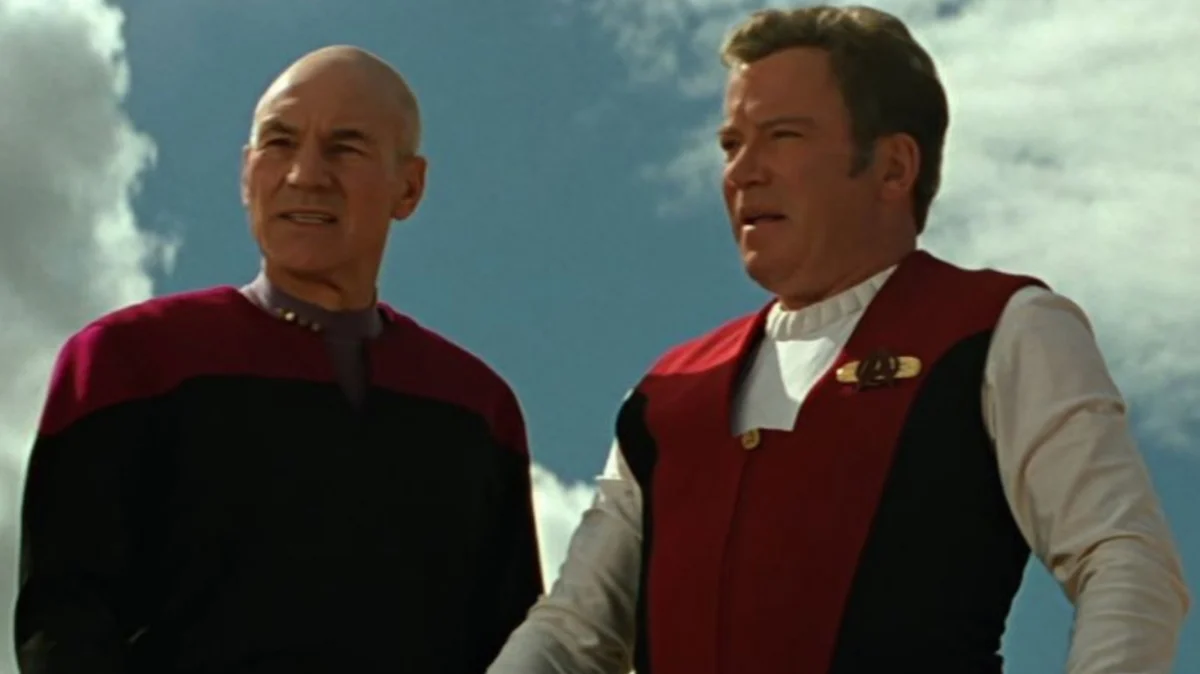
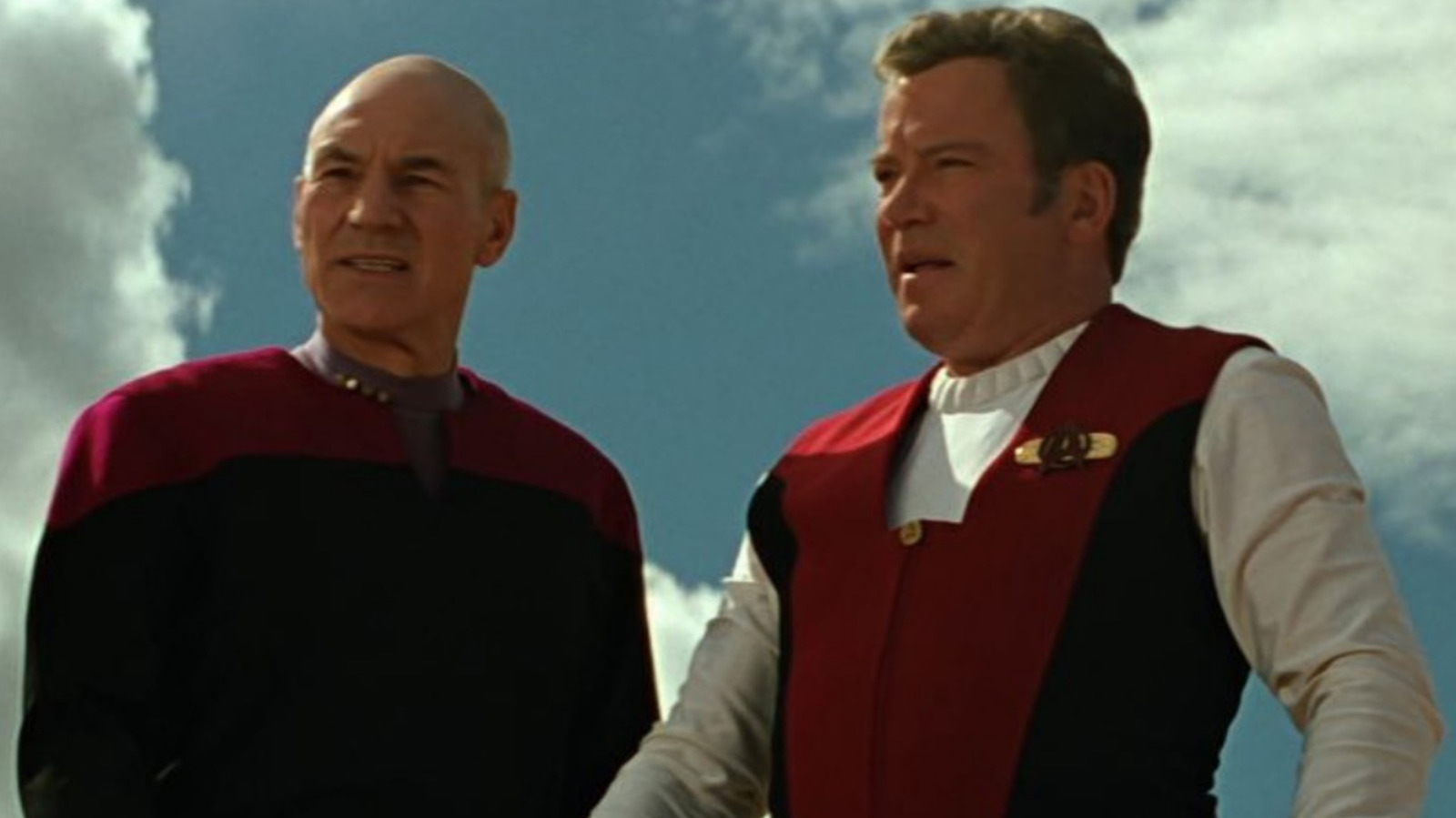
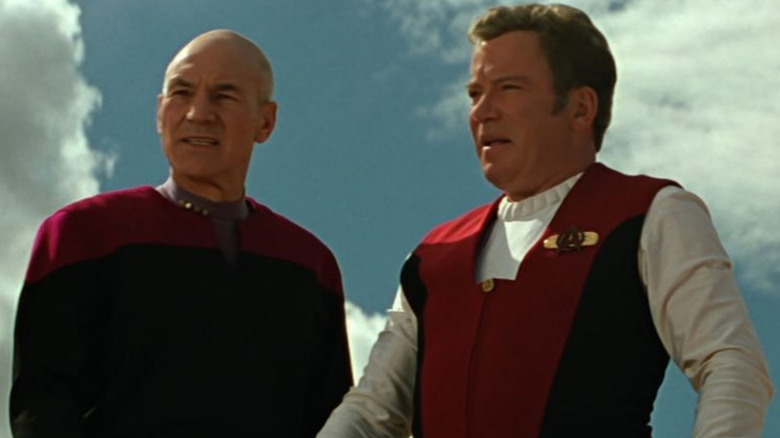
This shared classical foundation eventually brought the two acting heavyweights together on screen in the 1994 feature film Star Trek: Generations. Though separated by a century of fictional timeline physics, the plot utilized the timeless sci-fi concept of the "Nexus"—an extra-dimensional realm of pure joy—to unite Captain Kirk and Captain Picard. While Star Trek: Generations has historically received a mixed reception from purists, the intimate, character-driven dialogue scenes wherein Picard convinces Kirk to leave the illusion of the Nexus behind for one final, real act of heroism remain widely regarded as a masterclass in acting. In those quiet moments, Shatner held his own against a master of the stage, proving that beneath the pop-culture mythology lay two profoundly gifted classical actors.
Official Responses: William Shatner’s Heartfelt Tribute
Following the confirmation of Sir Patrick Stewart’s passing, William Shatner—now 95 years old and one of the last surviving members of the original series main cast alongside George Takei—took to social media, sharing statements across platforms including Instagram and X (formerly Twitter).
Shatner’s full statement captures the deep, mutual respect that transcended their professional rivalry at the box office:
"What a heartbreaking week it has been. Sir Patrick Stewart was a friend, a colleague, and a magnificent actor. From the stage to the bridge of the Enterprise, he brought intelligence, grace, and a deep sense of humanity to everything he did. Captain Picard stood for the best of us, and so did the man who played him. I was filled with affection and admiration for him and his work. My heart goes out to Sunny [Ozell, his wife] and his family. He will be deeply missed."
This emotional response mirrors the grace Shatner exhibited earlier in the week following the death of Walter Koenig, demonstrating a maturing fraternity among the men who carried the weight of the Star Trek mythos. Shatner has previously noted that watching Stewart elevate the franchise with The Next Generation actually renewed his own appreciation for Star Trek later in life, praising Stewart’s portrayal as a "great piece of work."
Implications: The Changing Guard of Science Fiction
The loss of Sir Patrick Stewart, coming so close to the passing of Walter Koenig, carries profound implications for the Star Trek fandom and the entertainment industry at large.
- The End of an Era: As the first primary series captain to pass away, Stewart’s death signifies the undeniable march of time upon the pioneers of modern television sci-fi. The pillars upon which modern geek culture was built are beginning to fall, leaving fans to grapple with the mortality of their childhood heroes.
- Preservation of Classical Craft: Both Stewart and Shatner proved that genre television is elevated immeasurably when populated by classically trained actors. Stewart’s success opened doors for subsequent generations of theater actors to embrace science fiction without fear of typecasting or loss of prestige.
- The Passing of the Torch: At the conclusion of Star Trek: Generations, Captain Picard was left standing alone to carry on the memory and legacy of Captain Kirk. Now, more than three decades later, those cinematic roles are permanently reversed. The surviving generation of actors, creators, and fans must now carry forward the memories of both Captains, ensuring that the ideals of exploration, diplomacy, and humanism championed by Kirk and Picard continue to inspire future generations across the final frontier.
