
Beyond the Slate: Jason Kartalian and the Unflinching Reality of Independent Filmmaking
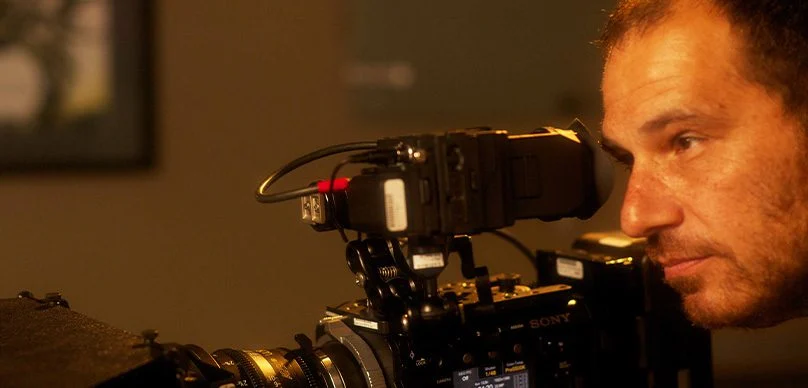
Main Facts: The Blueprint of Indie Resilience
There is a stark, unbridgeable chasm between the idealized version of filmmaking taught in university lecture halls and the frantic, improvisational reality of an active independent set. While textbooks present cinema as a pristine sequence of diagrams, storyboard grids, and carefully measured shot lists, the actual trenches of indie filmmaking are defined by ticking clocks, equipment malfunctions, uncooperative locations, and the crushing weight of a twelve-page daily schedule.
Writer, producer, and director Jason Kartalian—known for indie features such as Driller and Seahorses—operates squarely in the latter world. For Kartalian, creativity is not merely an artistic differentiator or a stylistic flourish; it is a vital survival mechanism. In the independent sphere, where budgets are thin and margins for error are nonexistent, resourcefulness keeps a production alive.
Kartalian’s career offers a masterclass in modern micro-budget filmmaking. His philosophy strips away the romanticism often associated with the medium, replacing it with hard-earned pragmatism: master your tools, respect your crew, protect your assets, and, above all, remember that the audience only cares about the emotional truth projected onto the screen.
Chronology: A Lifelong Education in the Language of Cinema
From Studio Lots to Super 8: An Early Introduction
Kartalian’s relationship with the film industry began unusually early, nurtured by a Hollywood lineage. His father, Buck Kartalian, was a prolific character actor whose iconic credits included the original Planet of the Apes (1968), Cool Hand Luke (1967), and Clint Eastwood’s The Outlaw Josey Wales (1976). Growing up, Jason spent his formative years visiting studio lots, observing firsthand how massive crews constructed artificial worlds and assembled complex scenes piece by piece.
Rather than shielding him from the industry’s instability, his family encouraged his growing curiosity. Kartalian began experimenting with Super 8 and early VHS cameras, shooting absurd, rudimentary movies for family gatherings. Over time, he realized he felt significantly more comfortable behind the camera than in front of it. Watching the precarious, unpredictable life of a working character actor also left a lasting impression. Filmmaking offered a profound alternative: the power to initiate work independently rather than constantly waiting for permission from gatekeepers.
The Debut Feature and the Lesson of Humility
That upbringing fundamentally shaped how Kartalian interacts with performers. On his directorial feature debut—initially titled Pedestrian and later released as One False Step—he directed his own father alongside a cast of seasoned character actors.
The experience proved to be a humbling baptism by fire. Rather than fixating exclusively on camera packages, lens choices, and technical perfection, Kartalian learned a foundational truth: technical tools are merely conduits designed to make an audience feel something. Writing, acting, cinematography, lighting, and production design are not separate silos; they are interlocking cogs in a single emotional machine. A technically flawless image holds zero value if the human truth at the core of the scene evaporates.
Supporting Data & Practical Philosophy: The Mechanics of Survival
The Low-Budget Calculus: Protecting the Master
On low-budget sets, time is exponentially more valuable than currency. Kartalian cautions against the common trap of burning hours chasing endless coverage that will likely end up on the cutting-room floor.
He recalls witnessing a production waste an extraordinary amount of time repeatedly filming an actor entering a doorway, only for the entire entrance sequence to be completely excised from the final cut. His counter-strategy is fiercely pragmatic: secure the scene first. When the clock is running out, Kartalian’s default directive is to capture the entire sequence in a master shot.
"At least we got the scene," he notes, encapsulating the core survival logic of the indie director. Once the foundational narrative exists safely on digital sensors, additional coverage can be layered on to elevate the work. However, if circumstances suddenly implode—weather turns, daylight fades, or a location gets shut down—the core movie survives.
Taming the Elements: Malibu Rattlesnakes and Controlled Chaos
The capacity to absorb sudden shocks is the ultimate hallmark of an independent filmmaker. Kartalian recalls shooting Driller at night on a remote Malibu ranch under punishing conditions. The production battled freezing temperatures, hazardous terrain, crawling tarantulas, venomous snakes, aggressive bees, and actors performing in minimal wardrobe.
Exhausted by the elements, Kartalian initially fantasized about his next project taking place entirely within the controlled environment of an indoor stage. Yet, he quickly discovered a universal truth of production: controlled locations simply trade outdoor hazards for indoor complications.
"Filmmaking is about dealing with adversity," Kartalian observes simply. When one obstacle is conquered, another inevitably rises to take its place. Consequently, the greatest asset an indie director can cultivate is not expensive gear, but a trusted team. When actors, producers, grips, and department heads trust one another and maintain a unified front against chaos, a production becomes virtually unstoppable.
Technical Literacy and Post-Production Safeguards
Kartalian firmly believes that an independent director must understand the mechanics of the machinery surrounding them. While he does not advocate for directors micro-managing their cinematographers, he stresses the necessity of possessing working knowledge of cameras, lighting ratios, focal lengths, sound recording, and grip equipment. This literacy prevents a director from being completely helpless when technical glitches inevitably occur. More importantly, it prevents the entire production from becoming dangerously dependent on any single individual.
This rigorous mindset extends directly into post-production hygiene:
- Written Agreements: Enforcing strict, legally binding contracts with cast and crew before a single frame is shot.
- Daily DIT Protocols: Backing up and offloading raw footage at the conclusion of every single shooting day.
- Redundant Backups: Maintaining multiple drive backups throughout the editing and post-production phases.
While these administrative habits lack glamour, losing an entire feature film because a single hard drive failed is considerably less glamorous.
Official Responses & Industry Perspectives: Questioning the Film School Mythos
Kartalian maintains a nuanced, somewhat critical perspective regarding traditional film education. Having attended California State University, Northridge (CSUN), he acknowledges the value of certain academic pillars—particularly creative writing classes and mentorship from inspiring professors. However, he maintains that the most vital lessons of physical production cannot be taught in a lecture hall.
"Cameras and shot terminology can be taught," Kartalian suggests. "The harder lessons involve diplomacy, leadership, collaboration, creative problem-solving, and developing a unique perspective."
In his view, aspiring filmmakers can construct a highly effective modern education independently by listening to veterans, volunteering on active sets, studying classic craft, and immediately putting that knowledge into practice. The ultimate goal of film education should never be learning how everyone else manufactures movies; rather, it is discovering what makes an individual creator’s perspective distinct.
Implications: Writing, Self-Distribution, and the Magic of Illusion
Character-Driven Screenwriting and Collaboration
This commitment to individuality heavily influences Kartalian’s screenwriting methodology. While he respects traditional three-act structures and utilizes detailed outlines, he refuses to let rigid structural formulas suffocate organic character development.
Instead, he builds scripts from the ground up using granular details—specific wardrobe choices, beverage preferences, idiosyncratic habits, and behavioral tics. These discoveries actively shape the screenplay’s trajectory.
During the production of Seahorses, this collaborative approach expanded during rehearsals. Kartalian actively incorporated elements of his actors’ real-life backgrounds into script rewrites. The film’s visual language mirrored its thematic core: subtle water imagery, deliberate lighting choices, meticulous production design, and grounded performances coalesced around the central metaphor of the seahorse.
The Self-Distribution Reality Check
Seahorses stands as perhaps the purest expression of Kartalian’s artistic ethos. He largely self-funded the picture using capital earned from outside work because the project was deeply personal. He reached a liberating creative threshold where external validation no longer mattered; he simply needed to make the movie for himself.
The film ultimately secured festival recognition and reached international audiences. Choosing to bypass traditional gatekeepers, Kartalian opted to self-distribute the project rather than surrender its rights for a protracted period to a third-party aggregator.
However, this independent distribution journey exposed another sobering reality of the modern streaming landscape: simply placing a completed movie onto a digital platform is far from the finish line.
"Availability is not awareness," Kartalian emphasizes.
Even after a film is successfully completed, delivered, and hosted online, the independent filmmaker must still act as the primary engine driving attention, cutting through the digital noise, and convincing audiences that the work deserves their valuable time.
The Cruel and Magnificent Illusion
Ultimately, Jason Kartalian’s journey serves as a vital blueprint for the next generation of independent creators. His philosophy can be summarized by a few core tenets: master your technical tools without worshiping them, safeguard your footage with religious discipline, understand the jobs of those around you, build a crew rooted in mutual trust, prioritize character over plot mechanics, and invest resources where the audience will actually look.
Above all, Kartalian reminds creators to make art they genuinely care about. When the credits roll and the audience sits in the dark, viewers remain entirely oblivious to the freezing night air, broken equipment, heated arguments, budgetary compromises, and crippling exhaustion that forged the project.
As Kartalian eloquently observes:
"They don’t see the pain and suffering… They see what we show them."
That single sentence captures both the brutal cruelty and the transcendent magic of independent filmmaking.
