
The Architecture of Silence: How Daniel Reis’s ‘The Gift of Room Tone’ Reveals the Soul of Filmmaking
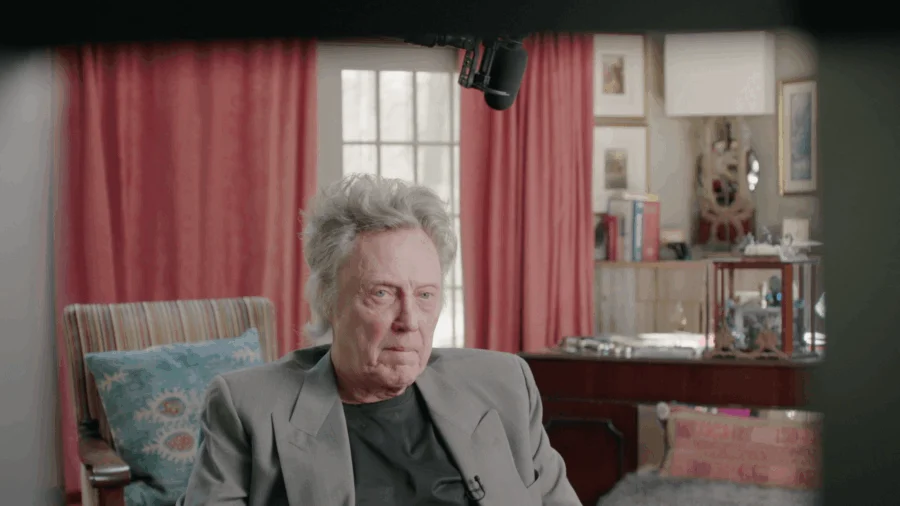
In the meticulous world of motion picture editing, the most profound moments often occur not when a director yells "Action!" or a star delivers a monologue, but in the seconds that follow the "Cut." It is here, in the lingering, heavy quiet of a set, that "room tone"—the ambient signature of a physical space—is captured. A new, meditative video project by Criterion Collection editor Daniel Reis, titled The Gift of Room Tone, has transformed this technical necessity into a poignant, star-studded homage to the unseen craft of filmmaking.
Featuring icons ranging from Martin Scorsese and Bong Joon-ho to Christopher Walken and Roger Deakins, the project offers an intimate glimpse into the silent intervals that bridge the gap between art and artifice.
The Anatomy of the Edit: What is Room Tone?
To the uninitiated, room tone may sound like an insignificant technicality—a byproduct of a busy day on set. However, for those in the post-production industry, it is the fundamental "mortar between the bricks" of a film.
As Daniel Reis explains, room tone is the specific sonic footprint of a location. Whether it is the low-frequency hum of a bustling studio in Manhattan, the subtle draft of an old house, or the near-vacuum silence of a sound-isolated stage, every space possesses a unique auditory character.
The Technical Imperative
In the digital age of non-linear editing, filmmakers are constantly sculpting performances. Editors routinely remove "ums," "ahs," and elongated pauses to tighten the pacing of a scene. If an editor simply cuts out a segment of dialogue, they create a "hard cut" in the audio track, resulting in a jarring, unnatural silence that alerts the viewer’s brain that something has been tampered with.
By layering in room tone, the editor maintains the continuity of the soundscape. It acts as a sonic adhesive, allowing the audience to remain immersed in the scene without being distracted by the underlying digital construction. As Reis notes, "Room tone is something that can’t really be faked, because each space has its own ambience, and it’s very hard to re-create once you’ve left."
Chronology: From Pandemic Boredom to Curated Art
The genesis of The Gift of Room Tone is deeply rooted in the global climate of early 2020. As the COVID-19 pandemic brought the world’s film sets to a sudden, screeching halt, industry professionals found themselves facing an unprecedented period of isolation.
The Spark of Inspiration
In early 2020, Reis began sifting through his extensive personal archive of project footage. For years, he had been accumulating these "leftover" seconds—the moments where the camera remained rolling after the director had finished their questions and the subjects were simply existing in the space.
Development and Curation
Over the following months, Reis meticulously stitched together these fragments. The process was not merely about editing; it was an act of preservation. He sought to create a narrative flow out of silence, arranging the clips to highlight the vulnerability of the subjects. When the film was eventually published by The Criterion Collection, it served as a time capsule, capturing the essence of the film industry during a moment of existential pause.
A Galaxy of Stars in Stillness
One of the most striking aspects of the video is the roster of talent that populates it. The juxtaposition of high-profile directors, cinematographers, and actors in their most unguarded moments is captivating.
The Cast of Characters
The video features a diverse array of cinematic luminaries:
- The Auteurs: Martin Scorsese, Spike Lee, Bong Joon-ho, and Alfonso Cuarón.
- The Artisans: Legendary cinematographer Roger Deakins and master puppeteer/director Frank Oz.
- The Performers: Christopher Walken, Carey Mulligan, and Jake Gyllenhaal.
- The Cultural Icons: Skateboarder and entrepreneur Tony Hawk.
These figures are shown in their "off-duty" state. We see them waiting, shifting in their chairs, or looking off-camera—the human moments that occur when the performance persona has been stripped away. By including the hardworking production crews—the camera operators, sound recordists, and gaffers—Reis acknowledges that the "gift" of room tone is a collaborative effort, a communal breath taken by everyone on the stage.
Supporting Data: The Science of Ambient Audio
While The Gift of Room Tone is an artistic endeavor, it rests upon a foundation of acoustic science. Sound designers often refer to the "noise floor" of a recording.
The Signal-to-Noise Ratio
In professional recording, the goal is to capture the cleanest dialogue possible. However, total silence is an anomaly in nature. Even in a sound-deadened room, there is a "noise floor" created by the electronics of the equipment and the ambient movement of air.
- Frequency Range: Room tone often covers the lower-mid frequencies, which are essential for maintaining the "weight" of a scene.
- Psychoacoustics: The human brain is highly sensitive to changes in background noise. If an editor removes a word, the sudden drop in ambient background noise creates an effect known as "audio drop-out," which can be physically jarring to the viewer.
- Reverberation: Room tone also contains the subtle, short-decay reverberations of the room’s walls, which provide the brain with spatial cues about the size and nature of the environment.
Official Responses and Industry Reception
The release of the video was met with significant warmth from the film community. At a time when set life had become a memory for many, The Gift of Room Tone functioned as a digital "comfort food."
Industry commentators praised Reis for his observational eye. Critics noted that the video serves as a reminder that filmmaking is a labor-intensive process defined by small, invisible decisions. On social media platforms and film forums, editors shared their own experiences, noting that room tone is often the first thing they look for when receiving footage from a shoot. If a production crew fails to record adequate room tone, the editor is forced to "generate" it using synthesizers or white noise—a process that rarely yields the same organic result as the original capture.
Implications: The Legacy of the Unseen
The implications of Reis’s work extend beyond a simple video compilation. It highlights a shift in how we perceive the "behind-the-scenes" culture of filmmaking.
The Humanization of the Icon
We are accustomed to seeing Martin Scorsese or Spike Lee in the context of high-pressure interviews, discussing their filmographies with authority. In The Gift of Room Tone, we see them as humans existing in time. This creates a bridge between the viewer and the subject, stripping away the hierarchy of celebrity.
The Value of the "Quiet"
In an industry increasingly obsessed with high-octane spectacle and rapid-fire editing, The Gift of Room Tone advocates for the power of silence. It suggests that the most meaningful parts of a story are not always the ones that scream for attention.
A Lesson for Future Filmmakers
For aspiring editors, the video serves as a masterclass in the importance of technical diligence. It emphasizes that a film’s quality is defined as much by the "invisible" work—the sound mix, the room tone, the color grading—as it is by the visible performances. It encourages a new generation of creators to pay attention to the spaces between the lines, for that is where the soul of the work resides.
Conclusion
Daniel Reis has provided the industry with a unique artifact. The Gift of Room Tone is more than a technical demonstration; it is a profound meditation on the nature of being present. In a world that is constantly asking us to speak, perform, and produce, there is a quiet dignity in simply sitting, waiting, and listening to the air around us. As we look toward the future of film production, perhaps we will carry with us a newfound appreciation for those silent, ambient moments—the essential, invisible threads that hold our stories together.
