
Sigma Expands Nikon Z-Mount Ecosystem with the Groundbreaking 16-300mm F3.5-6.7 DC OS | Contemporary Lens
By the Editorial Team
Published November 2023
Main Facts
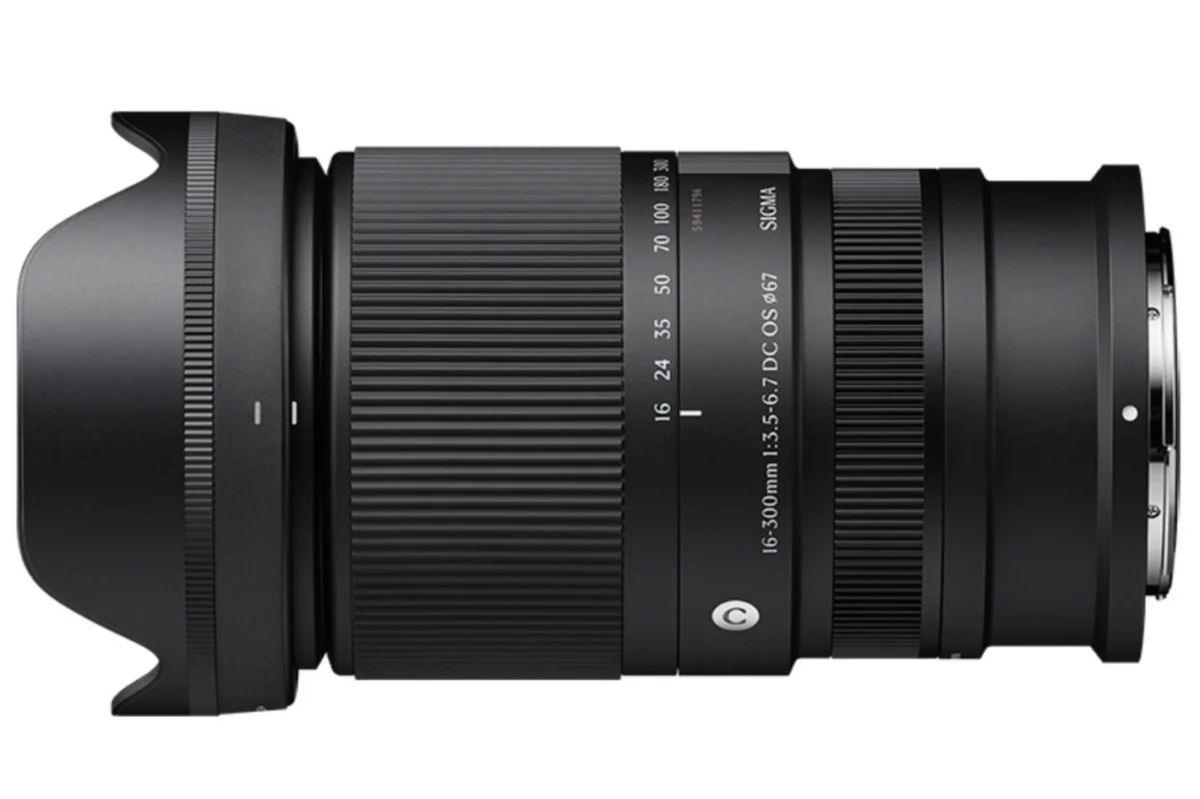
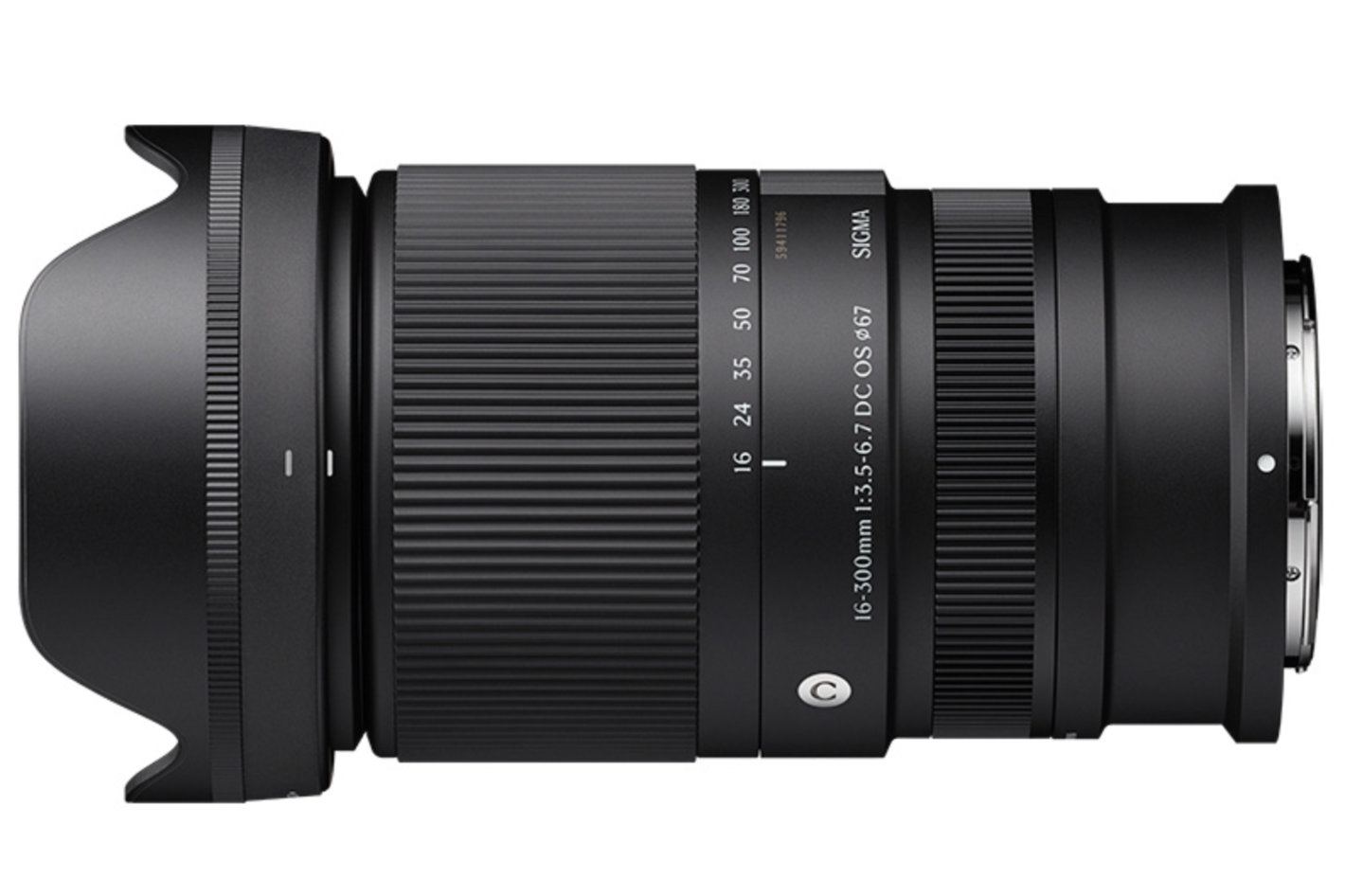
The photographic landscape for APS-C mirrorless shooters has experienced a significant paradigm shift following Sigma’s official announcement of the Sigma 16-300mm F3.5-6.7 DC OS | Contemporary lens tailored specifically for Nikon Z-mount cameras. Slated to hit store shelves on November 5, this highly anticipated optic will carry a retail price tag of $769 USD.
At the core of this release is a historic engineering milestone: the lens achieves an astonishing, industry-first approximately 18.8x zoom ratio designed natively for mirrorless systems. Covering an expansive focal length equivalent range (factoring in the APS-C crop factor), it bridges the gap between ultra-wide-angle vistas and extreme super-telephoto reach within a single, cohesive barrel.
Designed under Sigma’s acclaimed "Contemporary" product line—which prioritizes a delicate balance between optical performance, compact dimensions, and everyday portability—the 16-300mm F3.5-6.7 DC OS aims to serve as the ultimate "walk-around" and travel lens. It eliminates the need for creators to constantly swap lenses in the field, making it an invaluable asset for hybrid shooters, travel vloggers, street photographers, and casual enthusiasts alike.
Key technical specifications and capabilities include:
- Mount Compatibility: Nikon Z Mount (APS-C / DX format)
- Aperture Range: Variable F3.5 at the wide end to F6.7 at the telephoto extreme
- Zoom Ratio: World-first ~18.8x optical zoom for mirrorless
- Autofocus System: High-response Linear Actuator (HLA) motor for rapid, silent, and precise autofocus tracking
- Close-Up Performance: Maximum magnification ratio of 1:2 for macro-like detail capture
- Optical Stabilization (OS): Built-in stabilization yielding up to 6 stops of correction at the wide end and 4.5 stops at the telephoto end
- Nikon Z Optimization: Custom control algorithms for optimized communication speed, full AF-C (Continuous Autofocus) support, and in-camera aberration correction (on supported camera bodies).
Chronology
The journey leading up to the commercial debut of the Sigma 16-300mm F3.5-6.7 DC OS | Contemporary for Nikon Z mount reflects a broader industry trend of third-party lens manufacturers gaining wider licensing and support to build native optics for mirrorless platforms.
The Evolution of Third-Party Nikon Z Support
For years, Nikon’s proprietary Z-mount system was tightly guarded, limiting users exclusively to Nikkor glass. However, as the mirrorless market matured and competition intensified, Nikon began opening its mount specifications to reputable third-party manufacturers like Sigma, Tamron, and Viltrox. Sigma’s entry into the Nikon Z APS-C ecosystem began with prime lenses, but user demand quickly pivoted toward versatile, high-value zoom lenses that could maximize the compact nature of bodies like the Nikon Z50, Zfc, and Z30.
Development and Engineering Breakthroughs
Designing a lens with an 18.8x zoom range without suffering from catastrophic optical degradation, excessive weight, or sluggish autofocus speeds is a monumental engineering feat. Sigma’s optical designers utilized advanced aspherical and specialized low-dispersion glass elements to manage chromatic aberrations, distortion, and diffraction across the massive focal sweep. Simultaneously, the integration of the High-response Linear Actuator (HLA) motor represented a crucial milestone, ensuring that the heavy internal lens groups could be shifted with the extreme speed required by modern mirrorless contrast and phase-detection autofocus systems.
The Official Announcement and Launch Timeline
- Late October / Early November: Sigma officially pulls back the curtain on the Nikon Z-mount variant of the 16-300mm F3.5-6.7 DC OS | Contemporary, accompanied by detailed specifications, behind-the-scenes video breakdowns, and global marketing materials.
- November 5: Official retail release date, making the lens available globally through authorized dealers and online storefronts at an MSRP of $769 USD.
Supporting Data
To fully appreciate the engineering achievement behind the Sigma 16-300mm F3.5-6.7 DC OS | Contemporary, one must examine the hard data, optical metrics, and practical performance benchmarks associated with the lens.
Focal Range Versatility
An 18.8x zoom ratio translates to a staggering sweep of capabilities. At the 16mm end, users are greeted with a broad field of view perfect for sweeping landscapes, tight architectural interiors, and dynamic vlogging self-portraits. As the user zooms through the standard 24mm, 35mm, 50mm, and 85mm equivalents, the lens enters classic portrait and documentary territory. Pushing past 100mm and all the way to 300mm opens up the world of wildlife, sports, distant details, and compressed landscape perspectives—all without taking a single step closer to the subject.
Optical Stabilization (OS) Metrics
Shooting at 300mm on an APS-C sensor (which incurs a 1.5x crop factor, resulting in a 450mm full-frame equivalent field of view) inherently introduces camera shake challenges. To combat this, Sigma integrated a high-performance optical stabilization system. The lens provides:
- 6 stops of compensation at the 16mm wide end, allowing for remarkably clean hand-held low-light captures at slow shutter speeds.
- 4.5 stops of compensation at the 300mm telephoto end, drastically minimizing micro-jitters and ensuring sharp, crisp images even when working in challenging outdoor lighting conditions without a tripod.
Close-Focusing Capabilities (1:2 Macro Ratio)
Traditional all-in-one superzoom lenses often suffer from poor minimum focus distances, forcing photographers to step back when trying to capture details of flowers, insects, or small objects. Sigma subverted this limitation by engineering a maximum magnification ratio of 1:2 (half-life-size reproduction). This allows users to get remarkably close to their subjects, adding a layer of creative macro capability that is rarely found in traditional travel zoom lenses.
Autofocus Speed and Tracking
The incorporation of the HLA (High-response Linear Actuator) motor is critical for a lens of this class. Traditional micro-motors or DC motors would struggle to drive the complex lens groups quickly and quietly. The HLA motor operates electromagnetically with minimal physical friction, delivering nearly instantaneous focus acquisition. This makes the lens exceptionally well-suited for tracking unpredictable, fast-moving subjects such as soaring birds, running pets, fast-paced team sports, and moving vehicles.
Official Responses
Industry analysts, early reviewers, and corporate representatives have weighed in on the significance of Sigma’s latest offering.
Sigma Corporation’s Perspective
In official press statements accompanying the launch, Sigma representatives emphasized that the Contemporary product line is fundamentally driven by the needs of modern, mobile content creators.
"Our goal with the 16-300mm F3.5-6.7 DC OS was to defy conventional expectations of what an all-in-one zoom lens can achieve," a Sigma spokesperson noted. "By combining an unprecedented 18.8x zoom range with advanced linear autofocus technology and robust optical stabilization, we are empowering photographers to travel lighter, shoot faster, and never miss a defining moment, regardless of the genre they are working in."
Sigma also highlighted the bespoke software optimization engineered specifically for the Nikon Z mount. Recognizing that third-party lens integration relies heavily on seamless communication between lens and camera, Sigma’s engineering team developed custom control algorithms. These algorithms govern the AF drive and optimize communication speeds, ensuring that the lens fully supports advanced Nikon features such as Continuous Autofocus (AF-C) and in-camera aberration correction (distortion, lateral chromatic aberration, and peripheral illumination) on compatible Nikon Z bodies.
The Photography Community and Early Reactions
Reaction from the broader photography community—particularly within forums dedicated to Nikon mirrorless shooters—has been overwhelmingly enthusiastic. For years, Nikon DX (APS-C) shooters using bodies like the Z50 and Zfc have voiced a desire for more expansive, high-quality third-party lens options that do not compromise on modern autofocus speeds.
Reviewers who received pre-production models for testing have praised the lens’s build quality, noting that despite its expansive zoom range, it maintains a relatively balanced footprint when mounted on a compact mirrorless body. The inclusion of native Nikon Z electronic communication has also been met with high praise, as early testers reported reliable tracking performance when pairing the lens with Nikon’s advanced subject-detection algorithms (human, animal, and vehicle tracking).
Implications
The release of the Sigma 16-300mm F3.5-6.7 DC OS | Contemporary for Nikon Z mount carries profound implications for the consumer camera market, system adoption rates, and the evolving role of third-party lens manufacturers.
1. Strengthening the Nikon Z APS-C Ecosystem
For a long time, critics argued that Nikon’s APS-C mirrorless lineup lacked a robust, diverse catalog of native lenses compared to competitors like Fujifilm (X-mount) or Sony (E-mount). By opening the mount to manufacturers like Sigma and Tamron, Nikon is aggressively addressing this historical critique. The introduction of an ultra-versatile, high-value lens like the 16-300mm makes the Nikon Z DX system significantly more attractive to entry-level creators, budget-conscious enthusiasts, and travel photographers who might otherwise have invested in competing ecosystems.
2. The Redefinition of "Travel Photography"
The concept of the "one-lens travel kit" has been revolutionized. Historically, achieving a focal range from 16mm to 300mm required carrying a heavy camera bag stuffed with at least two or three separate zoom lenses, along with the inherent risk of dust entering the camera sensor during mid-shoot lens changes. The Sigma 16-300mm condenses this entire workflow into a single piece of glass weighing a fraction of a multi-lens kit. This democratization of focal reach allows backpackers, hikers, and documentary creators to travel significantly lighter without sacrificing creative flexibility.
3. Raising the Bar for Third-Party Engineering
Sigma’s success in engineering an 18.8x zoom for mirrorless platforms sets a new benchmark for optical design. It proves that third-party manufacturers are no longer merely producing budget alternatives to brand-name glass, but are actively pioneering world-first technological innovations. As consumers experience the seamless integration of Sigma’s HLA motors and custom Nikon Z communication protocols, demand for further third-party collaborations is expected to skyrocket.
4. Market Competitiveness and Pricing Value
At $769 USD, the Sigma 16-300mm occupies a sweet spot in the marketplace. It offers professional-grade focal versatility and advanced stabilization at a price point accessible to hobbyists and semi-professionals. This aggressive pricing strategy puts pressure on camera manufacturers to continually deliver high value within their proprietary lens lineups, ultimately benefiting the end consumer through increased competition, technological innovation, and more affordable gear.
Conclusion
The arrival of the Sigma 16-300mm F3.5-6.7 DC OS | Contemporary for Nikon Z mount represents far more than just another lens release; it is a testament to how far mirrorless optical engineering has progressed. By successfully fusing an unprecedented 18.8x zoom range, rapid HLA autofocus, robust optical stabilization, and native Nikon Z electronic integration into a single package, Sigma has delivered a transformative tool for APS-C creators. As it hits store shelves on November 5, this lens is poised to become an indispensable companion for photographers seeking ultimate versatility, uncompromising performance, and boundless creative freedom in the field.
