
The Stargate Dials Up Again: How Jac Schaeffer and Amazon MGM Studios Are Plotting the Sci-Fi Franchise’s Next Great Leap
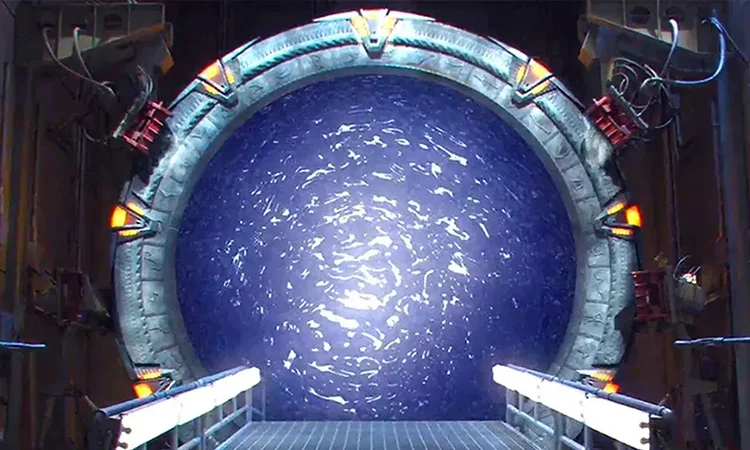
Main Facts
The iconic science-fiction universe of Stargate is preparing to spin up once more. In a major development for genre television, Jac Schaeffer—the visionary creator behind Marvel’s critically acclaimed WandaVision and its supernatural successor Agatha All Along—is reportedly developing a brand-new Stargate television series for Amazon MGM Studios.
According to industry reports breaking from Variety, this high-profile project falls directly under Schaeffer’s lucrative three-year overall creative deal with Amazon MGM Studios. To ensure the production hits the ground running, a dedicated writers’ room is expected to assemble in the near future. Furthermore, the creative scaffolding of the project is solidifying, with Joby Harold and Tory Tunnell of Safehouse Pictures officially attached to executive produce the series alongside Schaeffer.
This announcement marks a significant pivot for Amazon following a tumultuous period for the franchise. The studio is eager to crack the code on a successful modern television revival after the abrupt collapse of its previous Stargate reboot earlier this year. While exact plot details, character rosters, and narrative frameworks remain tightly guarded secrets, the hiring of a creative powerhouse like Schaeffer signals that Amazon is looking to bridge the gap between deeply ingrained fan nostalgia and broad, mainstream, contemporary appeal.
As the project enters its earliest developmental stages, questions abound regarding whether Schaeffer’s vision will honor the expansive, multi-series continuity established by the likes of Stargate SG-1, Stargate Atlantis, and Stargate Universe, or if it will completely wipe the slate clean for a fresh interpretation of Roland Emmerich and Dean Devlin’s 1994 cinematic blueprint.
Chronology of a Franchise Revival: From MGM Acquisition to Schaeffer’s Appointment
To understand the weight of Jac Schaeffer stepping through the Stargate, one must trace the winding, often unpredictable path the franchise has taken over the past decade.
For years, the Stargate universe lay largely dormant in live-action terms. Following the conclusion of Stargate Universe in 2011, the franchise survived primarily through expanded media, fan conventions, and the short-lived digital series Stargate Origins in 2018. However, the true game-changer occurred when Amazon officially finalized its massive multi-billion-dollar acquisition of MGM in 2022. Suddenly, one of the most valuable sci-fi libraries in cinematic and television history was sitting squarely in the hands of Amazon Studios, sparking immediate speculation among fans regarding when the ancient alien portals would activate again.
The first major signal of intent came in 2025. Amazon officially announced that a brand-new Stargate series was in active development, spearheaded by franchise veteran Martin Gero. A writer and producer deeply embedded in the franchise’s golden era, Gero’s credits include foundational work on both Stargate SG-1 and Stargate Atlantis. To further appease the die-hard fanbase—affectionately known as the "Stargate fandom"—Amazon brought on franchise mainstays Brad Wright and Joseph Mallozzi to serve as consulting producers. Expectations within the community skyrocketed; it finally felt like the gate was opening to a triumphant homecoming.
Alas, the universe had other plans. In June 2026, the landscape shifted dramatically when Amazon abruptly pulled the plug on Gero’s iteration. Reports surfaced that studio executives harbored deep anxieties that Gero’s pitched vision was too insular, potentially struggling to capture a mainstream audience outside of the established fandom. While individuals close to the canceled production strongly disputed this assessment—arguing that the show could have balanced legacy appeal with fresh storytelling—the corporate hammer came down regardless.
Yet, true to the resilient nature of the franchise, Amazon made it explicitly clear at the time of the cancellation that it had no intention of abandoning the IP. The studio vowed to continue exploring alternative pathways to bring Stargate back to the small screen.
That exploration has now culminated in the hiring of Jac Schaeffer. Having signed her three-year overall television deal with Amazon MGM Studios earlier this year to write, develop, direct, and produce new projects, Schaeffer was immediately positioned as a prime candidate to tackle high-profile intellectual property. With her creative engine revving, the Stargate franchise enters a brand-new chronological chapter—one defined by cinematic ambition, high-concept genre-blending, and the backing of one of the world’s most powerful streaming platforms.
Supporting Data & Creative Background: The Schaeffer Touch
When evaluating Amazon’s decision to hand the keys of a multi-million-dollar sci-fi ecosystem to Jac Schaeffer, one need look no further than her extraordinary track record of dismantling, deconstructing, and lovingly reconstructing beloved pop-culture mythologies.
Schaeffer’s ascent in the television industry is a masterclass in narrative innovation. She first captured the global consciousness as the head writer and creator of Marvel Studios’ WandaVision (2021). Facing the daunting task of launching Marvel’s first-ever streaming series, Schaeffer opted for a wildly unorthodox approach. Instead of a standard, CGI-heavy superhero slugfest, she framed the grief-stricken reality-warping powers of Wanda Maximoff through the stylistic lens of decades of classic American television sitcoms—progressing meticulously from 1950s black-and-white multicam setups to the glossy, self-aware single-camera mockumentary styles of the 2000s.
WandaVision was not just a critical darling; it was a cultural phenomenon that proved genre storytelling could be deeply emotional, formally daring, and endlessly inventive. Schaeffer followed this triumph by creating its spin-off, Agatha All Along, further cementing her status as a creator who understands how to spin rich, compelling character arcs out of fantastical lore.
Beyond television, Schaeffer’s feature film credits include penning Marvel’s Black Widow, writing the female-led comedy heist The Hustle, and writing and directing the critically praised indie sci-fi film The Timer. Her ability to ground high-concept sci-fi and fantasy premises in profound human emotion makes her an exceptionally compelling choice for Stargate.
Furthermore, the involvement of Safehouse Pictures—specifically Joby Harold and Tory Tunnell as executive producers—adds another layer of robust genre pedigree to the production. Harold’s writing and producing credits include major blockbusters and television hits such as Obi-Wan Kenobi, Army of the Dead, Transformers: Rise of the Beasts, and King Arthur: Legend of the Sword. Together, Schaeffer, Harold, and Tunnell represent a formidable creative triad capable of scaling the cinematic ambition of Stargate to match the demands of modern prestige television.
Official Responses and Industry Context
Unsurprisingly, the announcement of Schaeffer’s attachment to Stargate has sent shockwaves through the entertainment industry, eliciting reactions from trade analysts, fans, and insiders alike.
In the wake of Martin Gero’s departure earlier this year, industry insiders whispered that Amazon was caught in a classic studio dilemma: how to satisfy the fervent demands of a legacy fanbase without alienating the broader, uninitiated subscriber base necessary to justify a massive streaming budget. Traditional sci-fi revivals often stumble when they lean too heavily into obscure lore, creating a barrier to entry for casual viewers. Conversely, stripping away too much of the foundational mythos risks alienating the core audience that kept the franchise alive during its decade-plus dormancy.
By pivoting to Jac Schaeffer, Amazon is signaling a deliberate strategy to sidestep this binary trap. Schaeffer’s superpower lies in creating accessible, character-driven narratives wrapped in high-concept packaging. WandaVision was fully watchable and emotionally resonant for viewers who had never seen a Marvel movie, yet it was layered with enough Easter eggs to satisfy the most hardcore comic book historians.
While official statements from Amazon MGM Studios regarding the narrative direction of Schaeffer’s Stargate remain tightly managed—with executives choosing to let the trades break the news rather than dropping a bombastic press release—the industry context is clear. Amazon is positioning Prime Video as a premier destination for top-tier science fiction. With other massive genre properties in their stable, the studio views Stargate not merely as a nostalgia play, but as a potential anchor franchise capable of competing with the likes of Star Wars, Star Trek, and The Lord of the Rings: The Rings of Power.
Implications for the Future: Continuity, Streaming, and the Fandom
As the dust settles on the initial reports, the science fiction community is left to ponder the profound implications this new development holds for the broader Stargate universe.
1. Continuity vs. Reboot: A High-Stakes Decision
The most pressing question on the minds of fans is simple: Will this series acknowledge the past? For seventeen continuous years of television—spanning Stargate SG-1 (10 seasons), Stargate Atlantis (5 seasons), and Stargate Universe (2 seasons)—alongside two direct-to-video films (The Ark of Truth and Continuum), a vast, intricate canon was built. Ancient Ascended beings, the Goa’uld empire, the Wraith, the Pegasus Galaxy, and the sprawling mythology of the Stargate network itself form the bedrock of this universe.
If Schaeffer decides to maintain continuity, she must navigate decades of established lore while finding an entry point for newcomers. If she chooses to wipe the slate clean with a total reboot—similar to what Roland Emmerich originally envisioned—she risks triggering a severe backlash from the dedicated fanbase that has kept the flame alive since 1997. Finding the narrative sweet spot between honoring legacy and forging a completely independent path will be Schaeffer’s greatest diplomatic and artistic challenge.
2. The Prime Video Era of Sci-Fi
For Amazon MGM Studios, the financial and cultural stakes are extraordinarily high. Over the past several years, streaming services have aggressively fought for dominance in the speculative fiction space. By securing Schaeffer under an overall deal and tasking her with unlocking the potential of the Stargate intellectual property, Amazon is making a clear statement about its creative priorities. The streaming landscape demands prestige, spectacle, and emotional depth—qualities that Schaeffer has repeatedly demonstrated she can deliver.
3. Keeping the Iris Open
For over a decade, live-action travel through the ancient ring has been suspended. Fans have weathered false starts, digital experiments, and canceled reboots, often wondering if the franchise would ever reclaim its rightful place on the television landscape.
With a writers’ room forming under the guidance of one of Hollywood’s most inventive modern showrunners, the Stargate is officially spinning up once more. Whether Jac Schaeffer’s unique vision will successfully navigate the event horizon and land triumphantly on Prime Video remains to be seen. But one thing is undeniably certain: after years of radio silence, Amazon isn’t ready to close the iris just yet.
