
The Quiet Conclusion: Why ‘Better Call Saul’ Defied the Expectations of a Violent Finale
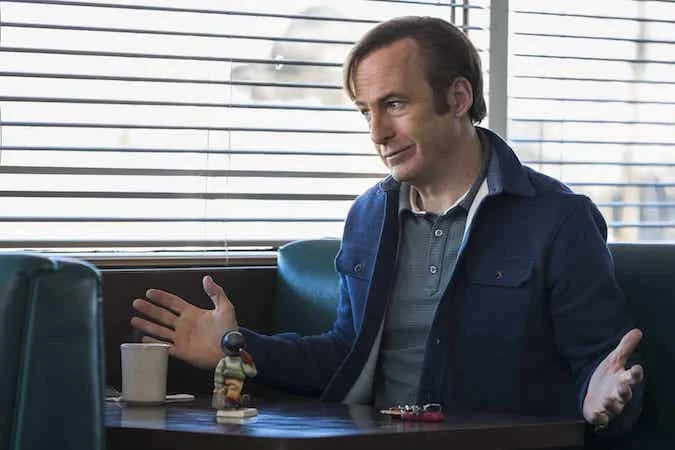
After six seasons of legal maneuvering, moral degradation, and the slow-motion transformation of Jimmy McGill into the gaudy, morally bankrupt Saul Goodman, Better Call Saul concluded its run. Unlike its predecessor, Breaking Bad—a show defined by explosive confrontations, desert shootouts, and the operatic destruction of its protagonist—Better Call Saul opted for a finale grounded in profound, quiet introspection.
In a recent installment of the Better Call Saul Insider Podcast, lead actor Bob Odenkirk and co-creator Peter Gould sat down to dissect the creative philosophy behind the show’s final bow. For fans accustomed to the high-octane chaos of the Albuquerque underworld, the finale’s lack of “fireworks” was a deliberate, artistic choice—a pivot away from the visceral violence of the Breaking Bad universe in favor of something far more human.
The Anatomy of a Departure: Breaking the Mold
To understand the final act of Better Call Saul, one must first acknowledge the shadow cast by Breaking Bad. When Vince Gilligan and Peter Gould first conceived of this spin-off, they were faced with a daunting challenge: how to expand upon a world-renowned masterpiece without simply replicating its formula.
Breaking Bad functioned on the momentum of a thriller; its climax, which featured Walter White utilizing a remote-controlled machine gun to annihilate a Neo-Nazi compound, was the ultimate catharsis of a man who had burned every bridge he ever crossed. Conversely, Better Call Saul began as an idiosyncratic character study, a legal dramedy that prioritized the slow decay of a man’s soul over the immediate threat of gunfire.
As Odenkirk noted during the podcast, the contrast between the two shows is stark. “Breaking Bad ended with a roomful of Nazis being mowed down by a spring-trap-loaded machine gun,” Odenkirk remarked. “And an explosion. And this show ends with people talking, and facing quiet suffering.”
The Conscious Choice for Restraint
The writers’ room, led by Gould, faced significant pressure to deliver a conclusion that could match the spectacle of their previous work. However, the narrative trajectory of Jimmy McGill demanded a different kind of resolution. According to Gould, the team spent countless hours debating the merits of a “flashier” ending, but every alternative felt inherently dishonest to the character they had spent years cultivating.
“There’s nobody in the writers room who’s more scared about this stuff,” Gould admitted to Odenkirk. “I’m the one who’s most likely to question everything, every decision that we make, 50 times. But the truth was, the more we talked about it, it just felt like it was the only way to go.”
Chronology of a Final Act: The Omaha Shift
The final season of Better Call Saul presented a structural anomaly that confused some viewers initially. By the eighth episode of the sixth season, the primary conflicts involving the Lalo Salamanca and Gus Fring storylines had essentially resolved. In traditional television, this would have been the moment to ramp up the stakes toward a final, massive bloodbath.
Instead, Gould and his team took a bold, unconventional path: they essentially ended the "crime saga" early to focus on the aftermath.
The Post-Breaking Bad Reality
Following the eighth episode, the series underwent a significant time jump. By removing the immediate, high-stakes violence of the Breaking Bad era, the show transitioned into the monochrome world of Omaha, Nebraska, where Jimmy lived under the alias "Gene Takovic."
This period served as the true test for the series. By abandoning the "Who is going to die?" mentality—a common trope in prestige dramas—Gould forced the audience to reckon with the consequences of Jimmy’s choices rather than his survival.
“Nobody dies after Episode 8,” Gould noted. “We have five more episodes. That’s what the fans always ask: Who’s gonna die? Like they’re betting on horses… And we don’t kill anybody after that point. Which to me says: at least it’s something different.”

Supporting Data: The Shift in Narrative Focus
The decision to pivot toward the Omaha timeline was not merely a stylistic choice; it was a thematic necessity. The writers understood that the Breaking Bad timeline was defined by Walter White’s ego and his insatiable desire for power. Jimmy McGill, however, was a different animal entirely.
Why Jimmy Isn’t Walter White
The fundamental difference between the two protagonists lies in their motivations. Walter White built a machine gun because he needed to control his environment and eliminate threats. Jimmy McGill, even at his most compromised, operates through manipulation, legal loopholes, and social engineering.
“Saul Goodman, Gene Takovic, Jimmy is not going to be the guy who builds a gun,” Gould explained. “Walter White would do that. Walter White would poison a bunch of people to get what he wants. But that’s not how Jimmy operates.”
This distinction allowed the series to transition into its most "eccentric" phase. The final episodes focused heavily on the relationship between Jimmy and his ex-wife, Kim Wexler (played by Rhea Seehorn). Their reconciliation and the legal reckoning that followed provided a emotional weight that a shootout simply could not achieve.
Official Responses and Creative Reflections
The dialogue between Odenkirk and Gould reveals a deep, mutual respect for the series’ evolution. Odenkirk, who embodied the character for over a decade, expressed genuine relief that the team resisted the urge to go for the "broader, high-concept choices."
The Burden of Expectation
Even with the confidence of a finished script, there was anxiety. When the podcast was recorded, the final episodes had not yet aired, and the creators were acutely aware of the audience’s thirst for a dramatic payoff. Odenkirk voiced a concern shared by many creators in the industry: the fear that the audience wants spectacle over substance.
“I worry that some people will find it not as flashy as they want it to be,” Odenkirk confessed. “Nobody wants Kim to die, but secretly, they want something big to happen. I think what happens is big, but it’s more human and more real and more grounded than another death—another tragic, bloody ending.”
Implications: The Legacy of the "Quiet" Ending
The reception of the Better Call Saul finale has largely validated the creators’ restraint. By choosing to end on a note of truth and integrity rather than an explosion, the show has cemented its place in television history as a rare example of a prequel that stands on equal footing with its predecessor.
A New Standard for Television Dramas
The success of Better Call Saul serves as a lesson for future showrunners: audiences are often more capable of appreciating complex, grounded character work than they are given credit for. The “fireworks” of Breaking Bad were the perfect ending for that specific story, but the "quiet suffering" of Better Call Saul was the only possible conclusion for the man who was once Jimmy McGill.
Ultimately, the show succeeded because it stayed true to the "truth and integrity" Odenkirk praised. It proved that a series does not need a rising body count or a high-octane set piece to deliver a satisfying conclusion. By shifting the focus from the external world of cartels and crime to the internal world of regret, reconciliation, and the high cost of a life built on lies, Better Call Saul transformed from a simple spin-off into a profound meditation on the human condition.
The fans who tuned in for the spectacle stayed for the humanity, and in doing so, they witnessed one of the most intellectually honest conclusions in the history of the medium. The fireworks may have been absent, but the impact of the final frame will likely resonate for years to come.
