
Slicing Into the Unknown: The Blood & Ink Horror Script Contest Kicks Off With Eric Levin’s Killer-Mold Comedy, The Mold
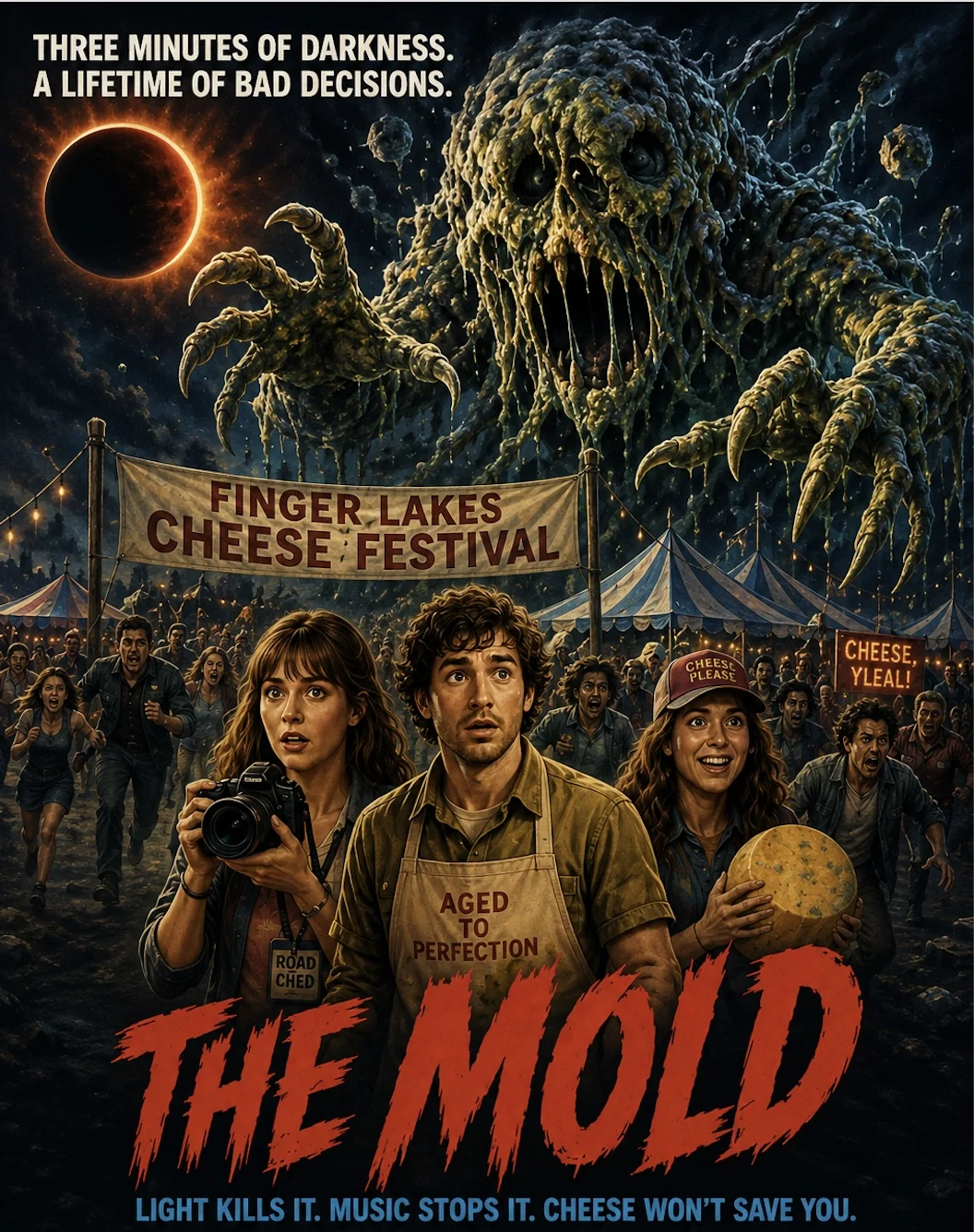
Main Facts: The Blood & Ink Horror Script Contest Opens Its Vaults
The screenwriting world is watching closely as the exclusive Blood & Ink Horror Script Contest officially gets underway. Founded on a rigorous vetting process, the competition required prospective entrants to pitch and earn their way in through a strictly selective concept-approval phase rather than a standard open-door submission policy. Out of hundreds of pitches, just under 100 writers cleared the initial hurdle, earning a grueling six-month window to flesh out their ideas into full-length screenplays.
Now, the heavy lifting of evaluation begins. Contest organizers have confirmed that all qualifying scripts are currently under review, with the top 10 entries slated for an intensive, two-week spotlight review series.
Setting the pace for the entire competition is the very first officially evaluated script: The Mold by Eric Levin. Clocking in at 85 pages, this genre-bending horror-comedy blends small-town agricultural traditions with extraterrestrial terror, centering on a killer space mold that attacks a regional celebration in upstate New York. While the entry showcases immense promise and a brilliantly quirky premise, it also highlights the common pitfalls that plague even the most creative spec scripts: a brilliant opening act that gives way to structural, character, and tonal inconsistencies in the back half.
Chronology: From Cosmic Crash to the Finger Lakes Cheese Festival
To understand how Eric Levin’s The Mold unfolds on the page, one must trace its bizarre, dairy-infused narrative arc from its sunlit beginnings to its chaotic extraterrestrial climax.
- The Setup: The story follows Bri, a twenty-something food journalism intern, and Mac, her ex-boyfriend and aspiring cheesemonger. Eager to secure a full-time promotion at her publication, Bri heads to upstate New York to cover the regional Finger Lakes Cheese Festival. She brings Mac along to decode the complex, artisanal world of cheesemaking for her article.
- The Cosmic Intrusion: Unbeknownst to the festival-goers, an alien meteorite has crash-landed near a local farm, unleashing an aggressive, light-sensitive space mold. Early observations establish a single, hard-and-fast rule: direct sunlight is fatal to the organism.
- The Festival and the Eclipse: Upon arriving, Bri and Mac meet Lyla, an enthusiastic local farm resident, as well as Jason, Bri’s problematic bad-boy ex. The plot thickens dramatically when a lunar eclipse casts the festival grounds into sudden darkness. Deprived of sunlight, the alien mold seizes a strict three-minute window of totality to decimate a dozen attendees.
- The Escalation: Bri and Mac manage a narrow escape to a nearby farm, but as night approaches, the threat intensifies. The mold mutates, coalescing into a sentient, humanoid alien creature. In a bizarre narrative twist, Mac discovers that singing to the mold monster temporarily halts its attacks. Meanwhile, Bri is mysteriously beamed aboard an alien starship, where she encounters the piloting extraterrestrial—a cosmic entity who casually reveals a sadistic hobby of seeding planets with his pet mold for planetary destruction.
- The Resolution: Stranded on a spaceship while Mac is trapped below in a web of mold, Bri faces a race against time to rescue her ex before the sun finally rises.
Supporting Data: Strengths, Weaknesses, and Structural Analysis
An in-depth review of The Mold reveals a stark contrast between a masterclass in first-act setup and a second-half narrative decline. Industry analysts examining the script have broken down its core components into actionable takeaways for aspiring screenwriters.
What Works: The Power of Specificity and "Doggy Bag" Moments
Levin shines brightest in the screenplay’s opening thirty pages. Rather than relying on lazy exposition, the writer employs what screenwriting circles call "doggy bag" moments—elements that educate the audience on a specific subculture so they can take that knowledge home. The deep dive into artisanal cheesemaking provides a rich, grounded flavor reminiscent of Alexander Payne’s Sideways, substituting wine for curd and whey.
Furthermore, Levin demonstrates visual storytelling maturity by showing rather than telling his rules. When the mold spreads through the shade and instantly disintegrates upon touching a stray patch of sunlight, the audience instantly understands the parameters of the threat without a single line of explanatory dialogue.
Where It Falls Short: Character Dynamics and Missed Payoffs
Despite a stellar setup, the script stumbles once the horror elements take center stage:
- Flattened Kills: The horror sequences lack variety. Most mold-attack scenes follow a repetitive formula: mold approaches, a victim attempts to flee, the victim fails, and the mold consumes them. The lack of creative, memorable set-piece kills diminishes the visceral impact of the horror-comedy genre.
- Underbaked Relationships: The core character dynamics feel unearned. Bri and Mac’s history lacks clearly defined, actionable flaws. Critics argue that a much stronger emotional engine could have been built around a love triangle involving Bri, Mac, and Lyla—where Mac arrives hoping to win Bri back, only for Bri to watch in horror as Mac and Lyla forge an undeniable chemistry.
- The Jason Subplot: The inclusion of Jason, Bri’s toxic ex, remains underdeveloped and confusingly motivated, offering little narrative utility other than frustration for the reader.
- Abandoned Motifs: Perhaps the most glaring missed opportunity is the complete abandonment of cheese after the first act. Having established a deep reverence for dairy, the script never utilizes cheese as a weapon, missing a prime opportunity to bring its heavy thematic setup to a satisfying, comedic payoff.
Official Responses and Contest Mechanics
With the inaugural script officially reviewed, the broader mechanics of the Blood & Ink Contest have come under scrutiny. Founder and judges have issued clarifications regarding the submission pool and upcoming timeline:
- Clarification on Admissions: Organizers acknowledged initial tracking difficulties. Because entries were funneled through multiple secret pathways, some unapproved concepts slipped past the filter, requiring administrative sorting to reconcile the official roster of under 100 accepted writers.
- The Evaluation Timeline: Evaluation of all submissions will take place over the coming months. Organizers plan to release reviews of the Top 10 scripts sequentially over a two-week "fortnight" window, anticipated to begin roughly one to two months from now. However, due to high enthusiasm, judges may drop sporadic reviews of standout entries early. If those early entries secure a spot in the final Top 10, their reviews will be republished during the official countdown.
- Rating Scale: The Mold was ultimately categorized under the evaluation metric as "wasn’t for me," reflecting its strong atmospheric opening offset by a significant dip in quality and character focus in the latter half.
Implications for Spec Script Writers
The early release of The Mold serves as a cautionary tale and a valuable educational case study for screenwriters navigating the competitive spec market.
The primary takeaway centers on stakes and emotional resonance. When writing ensemble horror-comedies, even minor characters should not be treated as disposable set-dressing without purpose. For instance, a grocery store sequence in The Mold features a cynical customer who brushes past safety warnings and is promptly killed by the alien entity seconds later. Industry feedback notes that spending even a single page establishing that character as an unmitigated jerk—perhaps by being rude to a store clerk—would transform a forgettable death into a deeply satisfying comedic moment for the audience. Writers must engineer scenarios where audiences feel something for every person on screen.
Additionally, the script underscores the dangers of front-loading a screenplay. Many writers invest heavily in crafting a magnetic, high-concept first act while neglecting the structural integrity and thematic payoffs of the second and third acts.
As the Blood & Ink Contest moves forward, writers participating in the challenge—and those watching from the sidelines—are reminded that a great logline opens the door, but deeply realized characters, consistent tone, and imaginative execution are what keep the audience in their seats.
