
Sirui 24mm f/2.8 1.33x Anamorphic Lens Receives Major $100 Price Cut, Bringing Cinematic Wide-Angle Glass to Independent Filmmakers
By the 4KS Editorial Team
Published: October 22, 2026
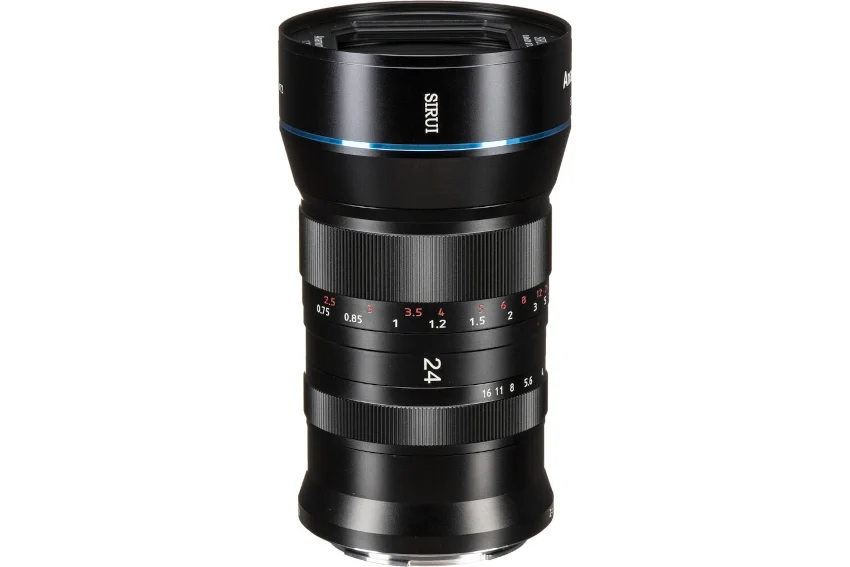
Independent filmmakers and indie production crews operating on tight budgets now have a more accessible gateway to high-end cinematic aesthetics. Retailer B&H Photo has launched a significant price reduction on the popular Sirui 24mm f/2.8 1.33x Anamorphic Lens, slashing $100 off its standard retail price. Originally listing for $299, the versatile wide-angle anamorphic prime is now available for purchase at $199.
This steep discount arrives at a time when the democratization of digital cinema tools continues to accelerate. By lowering the financial barrier to entry for true anamorphic optics—long known for their prohibitive rental costs and expensive purchase prices—Sirui and major retailers are opening up new creative avenues for content creators working with Super35 and APS-C mirrorless systems.
Main Facts: What You Need to Know About the Deal
The core details of this retail promotion focus on immediate savings for budget-conscious shooters looking to introduce unmistakable Hollywood visual characteristics into their projects.
- The Discount: A direct $100 price drop brings the lens down from $299 to $199 at B&H Photo.
- Format Coverage: Engineered specifically for Super35 and APS-C sensor cameras.
- Optical Squeeze Factor: Features a 1.33x horizontal squeeze, allowing shooters to capture a wider field of view and achieve a cinematic 2.4:1 widescreen aspect ratio when paired with standard 16:9 recording formats.
- Aesthetic Signature: Built to deliver iconic anamorphic qualities, including horizontal blue streak flares and distinctive oval bokeh.
- Mount Availability: Offered in seven distinct lens mounts to accommodate nearly all major mirrorless ecosystems on the market.
While the $199 price point makes this one of the most cost-effective entry points into anamorphic cinematography, prospective buyers are encouraged to verify that pricing remains consistent across all available mount variations, as retail details can occasionally fluctuate depending on specific stock allocations.
Chronology: The Evolution of Affordable Anamorphic Lenses
To understand the significance of a $199 anamorphic lens, it helps to examine how the market for cinematic glass has shifted over the past decade.

- Pre-2018 (The DIY Era): For decades, true anamorphic shooting was restricted to high-end Hollywood productions or well-funded commercial houses. Independent filmmakers relied on vintage projection lenses (such as the Iscorama or Kowa) mounted via heavy, cumbersome adapter clamps onto standard prime lenses—a process requiring tedious dual-focusing techniques.
- 2019–2021 (The Dedicated Budget Revolution): Manufacturers like Sirui recognized an immense, underserved market of mirrorless video shooters. Sirui disrupted the industry by introducing affordable carbon-fiber and aluminum-bodied anamorphic primes, starting with longer focal lengths (like the 50mm and 35mm 1.33x variants) that offered native, single-focus mechanics.
- 2022–2024 (Expanding the Wide-Angle Field): As the lineup matured, Sirui expanded downward into wider focal lengths, introducing the 24mm f/2.8 1.33x lens to capture expansive landscapes, tight interior locations, and dynamic handheld movements without requiring massive physical setups.
- October 2026 (Current Price Correction): With competition mounting in the budget cinema space, major retail promotions like the current $100 discount at B&H Photo signal a new baseline for accessible filmmaking gear, making entry-level anamorphic glass cheaper than ever before.
Supporting Data and Technical Specifications
For technical directors and camera operators considering adding this piece of glass to their kit, a close examination of the specifications reveals a robust tool built to handle the rigors of field production.
Optical Construction & Mechanics
- Focal Length: 24mm (providing a wide-angle field of view roughly equivalent to a narrower focal length vertically, paired with horizontal expansion).
- Maximum Aperture: f/2.8, allowing for respectable low-light performance and shallow depth-of-field manipulation.
- Optical Design: Constructed with 13 elements arranged in 10 groups.
- Diaphragm Blades: Features an 8-blade iris designed to render out-of-focus highlights into the characteristic oval bokeh expected from anamorphic glass.
- Focus Mechanics: Manual-focus design featuring a generous 189.6-degree focus-ring rotation throw, allowing for precise, repeatable pull-focus operations. Focus markings are clearly calibrated in both feet and meters.
- Filter Thread: 72mm front filter ring, enabling the straightforward attachment of standard screw-on ND filters, polarizers, or diffusion glass without requiring specialized matte boxes.
Comprehensive Mount Options
Versatility is a major selling point for the Sirui 24mm f/2.8 1.33x. The manufacturer produces the lens in seven distinct native mounts, ensuring compatibility across virtually every major modern mirrorless lineup:
- Sony E-Mount
- Fujifilm X-Mount
- Canon RF-Mount
- Canon EF-M Mount
- Micro Four Thirds (MFT)
- Leica L-Mount
- Nikon Z-Mount
Note for Full-Frame Shooters: Because the lens is specifically engineered for APS-C and Super35 image circles, full-frame camera users must verify whether their camera bodies offer a dedicated APS-C/Super35 crop mode or if the native image circle will result in heavy mechanical vignetting.
Understanding the Anamorphic Workflow
Shooting with an anamorphic lens is fundamentally different from using traditional spherical glass. To get the most out of the Sirui 24mm f/2.8 1.33x, productions must factor in post-production and monitoring requirements.
The 1.33x Squeeze Explained
Traditional spherical lenses capture an image with a uniform 1:1 spatial geometry. An anamorphic lens, however, uses cylindrical elements to "squeeze" a wider horizontal field of view onto a standard rectangular digital sensor.
Because the Sirui utilizes a 1.33x squeeze factor, it compresses the horizontal axis by 33%. When recorded onto a standard 16:9 sensor, the resulting footage appears unnaturally tall and skinny. To restore proper geometry, the footage must be "de-squeezed" either in-camera (if supported by the camera body’s monitor settings), via an external video monitor during live shooting, or downstream in editing and grading software like DaVinci Resolve or Adobe Premiere Pro. Once properly de-squeezed, the resulting aspect ratio lands at approximately 2.4:1, yielding an instant cinematic widescreen frame.

Managing Flares and Bokeh
One of the primary reasons filmmakers invest in anamorphic glass is the unique flare signature. The Sirui 24mm is tuned to produce horizontal blue streak flares when striking point light sources—such as streetlights, headlights, or directional film lights—enter the front element. Combined with the elongated oval bokeh created by the 8-blade iris, these artifacts instantly inject a big-budget Hollywood sheen into indie projects, music videos, and commercial spots.
Implications for Independent Filmmakers and Content Creators
The availability of a true anamorphic lens at a sub-$200 price point carries significant implications for the wider creator economy.
Democratizing High-End Aesthetics
For years, achieving a cinematic widescreen look meant either shooting standard 16:9 footage and cropping off the top and bottom in post-production (which discards valuable sensor resolution) or investing thousands of dollars in anamorphic glass. By dropping the price of the Sirui 24mm f/2.8 to $199, professional-grade visual traits—such as expanded horizontal fields of view and organic lens flares—are pushed down to entry-level budget tiers. Student filmmakers, YouTube creators, and micro-budget narrative directors can now elevate their visual storytelling without breaking the bank.
Workflow Considerations for Modern Creators
Despite the attractive price tag, creators must weigh the technical realities of working with manual-focus, crop-specific glass. Because the lens lacks autofocus and electronic communication data passing to the camera body in certain configurations, focus pulling relies entirely on the operator’s tactile skill and the lens’s physical focus scale. Furthermore, checking monitor de-squeeze settings is crucial; directors and cinematographers must ensure their crew can accurately preview the final 2.4:1 composition on set to frame shots correctly.
Conclusion
The $100 price reduction on the Sirui 24mm f/2.8 1.33x Anamorphic Lens, bringing it down to $199 at B&H Photo, represents an exceptional opportunity for visual storytellers looking to expand their creative toolkit. With broad mount support spanning Sony, Fujifilm, Canon, Nikon, Leica, and Micro Four Thirds systems, paired with classic anamorphic characteristics like blue streak flares and oval bokeh, this wide-angle prime remains a compelling purchase for anyone eager to add distinct cinematic character to their Super35 or APS-C video productions.
As with all retail promotions, prospective buyers should verify pricing, stock availability for their specific camera mount, and shipping details directly on the retailer’s listing before completing their purchase.
