
The Architecture of Authenticity: Inside the Directorial Philosophy of Kore-eda Hirokazu
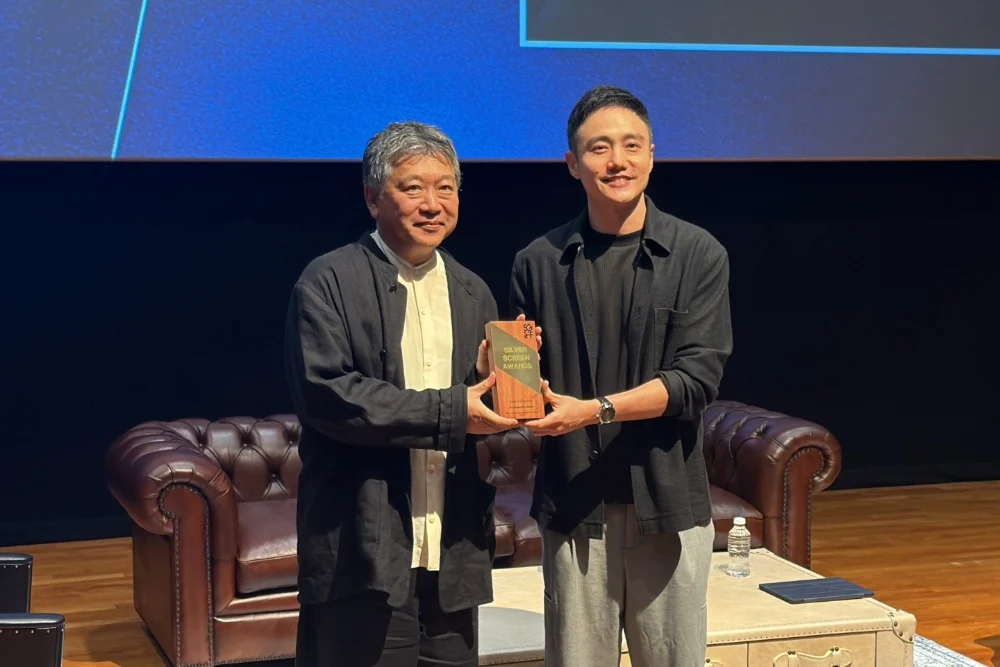
At the Singapore International Film Festival, amidst the hushed reverence of the National Museum of Singapore, Japanese auteur Kore-eda Hirokazu sat down for an onstage conversation with festival chair Boo Junfeng. As he accepted the festival’s Cinema Honorary Award—a prestigious accolade previously bestowed upon luminaries like Jafar Panahi and Deepa Mehta—the conversation inevitably drifted toward the trademark of his storied career: the uncanny, naturalistic performances he elicits from child actors.
Yet, in a revelation that caught many in the audience off guard, the master of human-centric storytelling declared there is one specific image he has consciously banished from his lens: a child crying.
“It’s not that I can’t, or that it’s difficult. I don’t shoot it,” Kore-eda explained. “The ideal is that after viewers finish watching, they remember that child’s smile and cry.” For a filmmaker whose works, such as Nobody Knows and Shoplifters, are lauded for their devastating emotional honesty, this self-imposed restriction speaks to a profound ethical commitment to his subjects—a testament to his belief that cinema should protect the dignity of the performer as much as it should serve the narrative.
A Chronology of Artistic Evolution
Kore-eda’s journey toward this philosophy has been defined by a constant, restless questioning of the medium. His early career in television documentaries laid the groundwork for his feature debut, Maborosi (1995), a film that garnered international acclaim but also served as a painful lesson in rigidity.
Recalling a formative critique from Taiwanese master Hou Hsiao-hsien, Kore-eda recounted how he had approached Maborosi with a meticulous, storyboard-driven blueprint. Hou, having reviewed the film, offered a blunt assessment that initially left the younger director deflated. Hou challenged the necessity of such rigid planning, urging him to look at the space, the light, and the organic movement of actors before determining camera placement.
“Where you shoot a scene from—you go into the location, feel the space, see the light falling there, and that’s when you first decide how the actors move,” Kore-eda recalled. “Once the actors’ movements are decided, only then do you decide the camera position. You have to do it in that order.” The impact of this critique was profound: Kore-eda swore off storyboards entirely, opting instead for a fluid, documentary-style approach that favors discovery over execution.
This evolution continued through his collaborations with international stars and diverse casts. While he famously eschewed scripts for children in films like The Truth and Broker, opting instead to feed lines or describe situations to allow for natural improvisation, he proved he was not beholden to a single method. During the production of Monster, he chose to provide full scripts, sensing that the subject matter’s intensity required a clear, protective boundary between the children and their roles. His approach has become a bespoke process, calibrated “child by child and film by film.”
Supporting Data: The Ethics of Directing Children
Kore-eda’s methodology is not merely aesthetic; it is deeply ethical. He draws significant inspiration from Ken Loach’s 1969 classic Kes. In the film, a young boy’s reaction to finding his dead pet bird is so hauntingly real that it defies traditional performance. When Kore-eda met Loach two decades ago, he pressed him on the ethics of that scene. Loach’s response—that he understood the risks but trusted his relationship with the young actor to navigate the emotional aftermath—became a cornerstone of Kore-eda’s own directing style.
Kore-eda’s "no-lie" policy is central to this. He never rushes a child, never lies to them, and never expresses anger. He aims for an environment where the child leaves the set feeling accomplished and eager to return. This is best illustrated by an anecdote from the auditions for Like Father, Like Son. A young boy, when asked simple questions, responded only with “Why?” at every turn. While staff viewed this as a communication barrier, Kore-eda saw character potential. He adapted the script, allowing the child to exist in his own reality rather than forcing him into a pre-conceived mold.
This refusal to impose judgment on the performance—and the recognition that what worked for one child may be disastrous for another—remains his most guarded principle. “I keep it firmly in mind that judging things that way—it worked on the last shoot so it will work this time—is the most dangerous thing in directing children,” he stated.
Official Responses and Creative Impulses
The director’s recent work suggests a homecoming of sorts. With his 2026 projects, Sheep in the Box and Look Back, Kore-eda describes a return to his roots. Sheep in the Box, which explores a couple’s attempt to process grief through a humanoid robot, might seem like a venture into high-concept sci-fi, but Kore-eda frames it firmly within his comfort zone: a story about the messy, painful process of saying goodbye to the dead.
His skepticism regarding the current obsession with artificial intelligence is palpable. When asked about the use of AI in his filmmaking, he noted that he allowed an AI to read his script for Sheep in the Box. While the software offered praise, claiming the script was a “sure thing” for Cannes, Kore-eda was unimpressed, concluding that the AI lacked the lived experience necessary to understand the human soul of his work.
Furthermore, he maintains a steadfast rejection of "audience targeting." Recalling advice from a senior television colleague, he adheres to the mantra: "If you think of them as viewers, it won’t reach anyone. Picture one person’s face and make it for them." This singular focus has allowed his work to remain intimate even as it achieves global recognition.
Implications for the Future of Asian Cinema
As he enters the fourth decade of his career, Kore-eda finds himself in a contemplative space. The influx of "lifetime achievement" awards brings a sense of unease; he views his career not as a finished tapestry, but as a work in progress. "I feel like I still have about half my career left, and yet it kind of feels like I’m being told it’s time to graduate," he mused.
The implication for his future is clear: he is not settling into a legacy role. He continues to write on long-haul flights and in hotel rooms, keeping his creative process as mobile and unpredictable as his camera work. He plans to begin shooting his next project within the year, continuing his lifelong study of the small, quiet moments that define human existence.
Perhaps the most humanizing insight into the director came when he was asked a question inspired by his 1998 masterpiece, After Life: what dish would he choose for his final meal? Steering away from the existential weight of his films, he chose the tenzaru soba at a humble Tokyo restaurant called Sunaba. It was there, as a young, exhausted assistant director, that he found a moment of respite and the best meal of his life.
It is a fitting metaphor for his cinema: a preference for the simple, the tangible, and the deeply human over the grandiose. As Kore-eda continues to bridge the gap between documentary observation and narrative fiction, his legacy remains anchored not in the accolades he receives, but in the enduring smiles and authentic, unforced emotions of the children he guides through his stories. He is, in every sense, a director who understands that the most profound truths are found not in the tears we force, but in the ones we choose to spare.
