
The Radar Legacy: How Gary Burghoff Achieved a Unique Record Across the MASH* Franchise
Main Facts
Decades after the final helicopter lifted off from the 4077th Mobile Army Surgical Hospital, MASH* remains one of the most revered and culturally significant properties in television history. Based on the 1968 novel by Richard Hooker and Robert Altman’s critically acclaimed 1970 satirical feature film, the CBS sitcom evolved into a cultural touchstone. It navigated the delicate balance between dark war satire and profound human drama across an 11-season run.
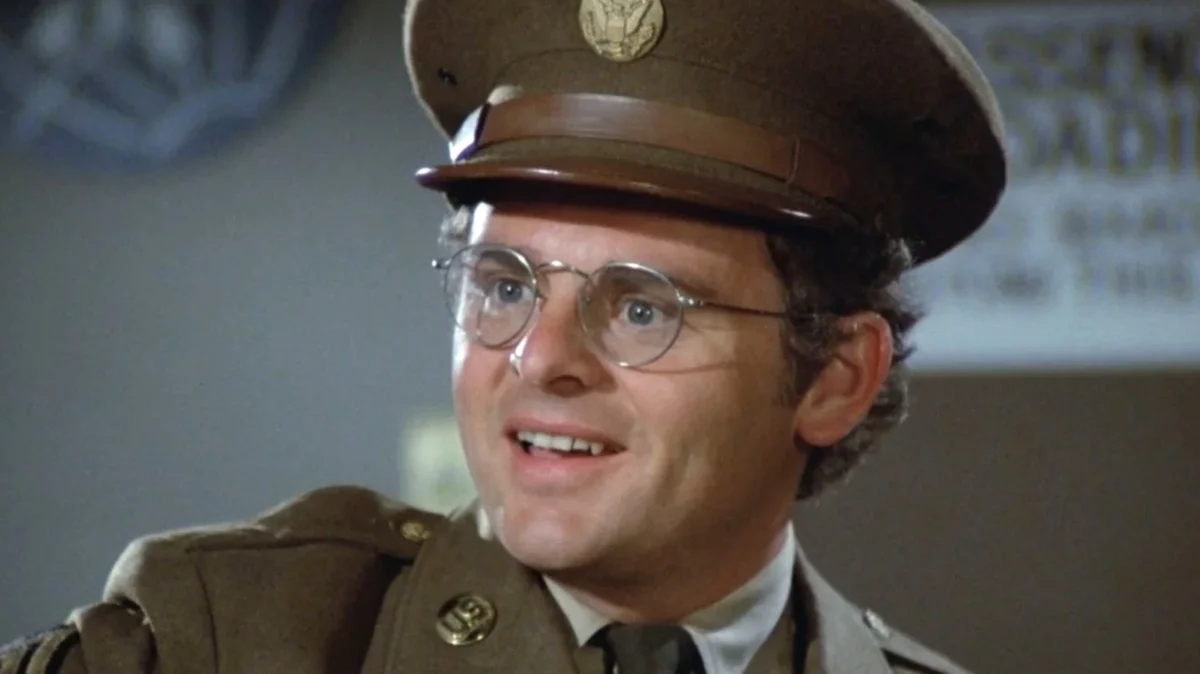
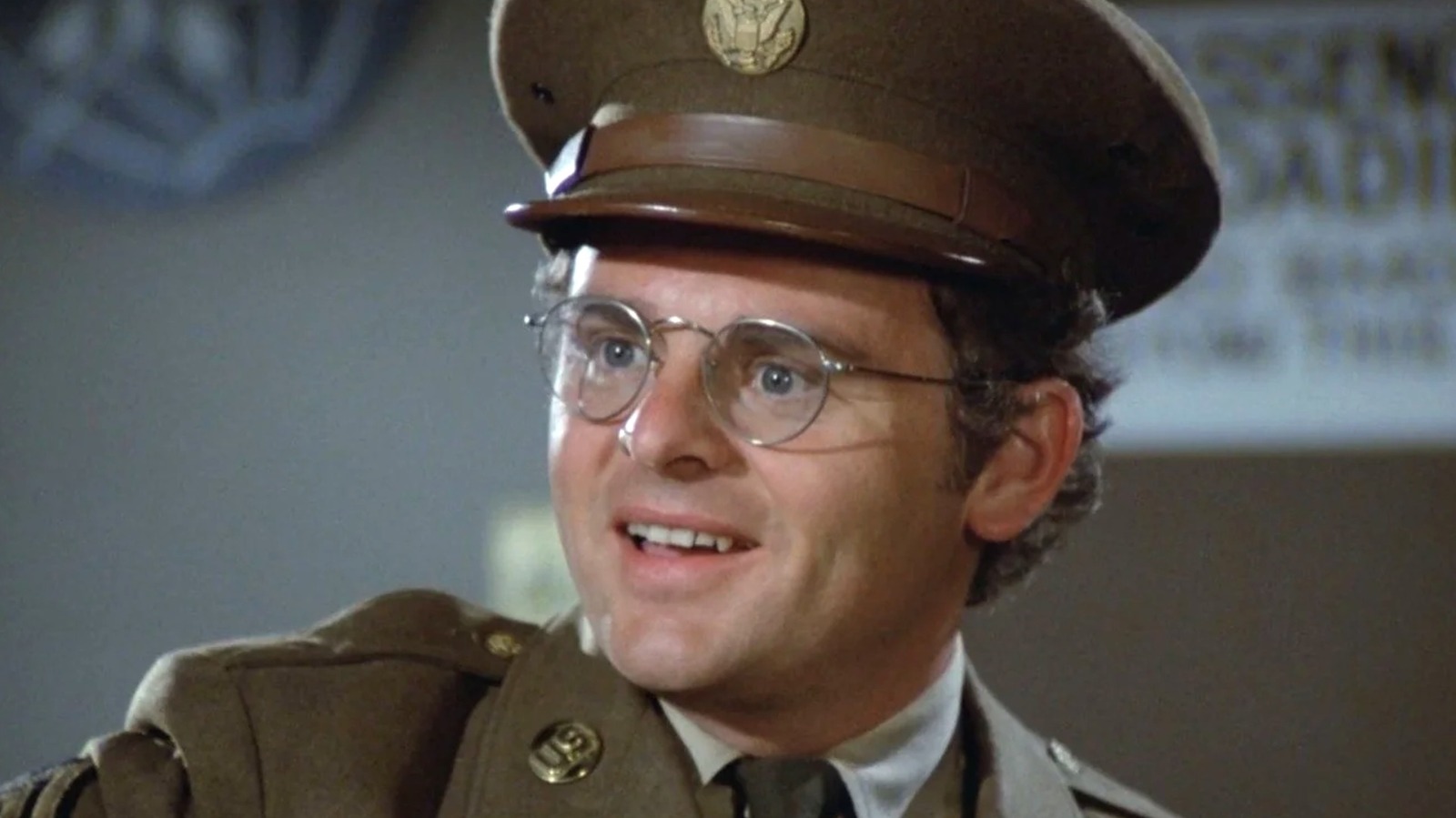
While the television series featured an ensemble cast of legendary performers—including Alan Alda, Loretta Swit, Jamie Farr, and William Christopher—only one actor achieved a rare distinction within the franchise. Gary Burghoff, immortalized as the lovable, clipboard-toting Corporal Walter "Radar" O’Reilly, stands alone as the only actor to appear in the original 1970 theatrical film, the long-running television sitcom, and the franchise’s various television spin-offs.
Burghoff’s portrayal of Radar became the emotional heartbeat of the 4077th. Known for his uncanny ability to finish his commanding officer’s sentences before orders were even spoken, and his supernatural knack for hearing incoming chopper blades long before anyone else on base, Radar was indispensable. Yet, beyond his character’s fictional utility, Burghoff holds a unique piece of entertainment trivia: bridging the gap between Altman’s gritty cinematic vision and the subsequent television iterations that shaped American pop culture.
Chronology
To understand Gary Burghoff’s unprecedented run through the MASH* universe, it is necessary to examine the timeline of the franchise’s evolution from page to screen, and from silver screen to living rooms across America.
1. The Genesis: The 1970 Feature Film
Before CBS developed the television series, director Robert Altman helmed the 20th Century Fox cinematic adaptation of MASH*. Released in 1970, the movie was a critical and commercial smash, blending black comedy with the stark realities of the Korean War. Amidst a cast featuring Donald Sutherland as Hawkeye Pierce and Elliott Gould as Trapper John McIntyre, producers cast a young, relative newcomer named Gary Burghoff to reprise his stage experience. Burghoff played Corporal Radar O’Reilly, marking the character’s cinematic debut and establishing the nervous yet endearing mannerisms that would define the role for the next decade.
2. The Television Era Begins (1972–1979)
When CBS adapted MASH* into a weekly half-hour sitcom in 1972, the network retained Burghoff from the original film. He was the sole principal actor cast to make the leap from the movie to the television series.
The transition was not immediate smooth sailing. MASH* famously struggled to find its footing during its freshman run, nearly facing cancellation after Season 1. However, intervention by network executives—specifically Babe Paley, wife of CBS founder William S. Paley—saved the series, allowing it to find its unique tone. As the series matured, Burghoff’s Radar evolved from a savvy, slightly cynical clerk into a more innocent, naive mascot of the camp.
Throughout his time on the show, Burghoff earned seven Primetime Emmy Award nominations for his work, culminating in a well-deserved Emmy win in 1977 for Outstanding Continuing Performance by a Supporting Actor in a Comedy Series.
3. Departure and the "Good-Bye Radar" Arc (1979)
By the end of the 1970s, Burghoff experienced severe burnout and a desire to spend more time with his family, leading him to request an exit from the grueling production schedule of MASH*. Producers granted his request during Season 8, crafting a poignant two-part send-off titled "Good-Bye Radar." The storyline required Radar to secure an early discharge to return home to Iowa and help run his family’s farm after his uncle passed away. His departure marked the end of an era for the series, signaling a shift toward darker, more dramatic storytelling in the final seasons.
4. The Post-MASH Expansions: AfterMASH and WALTER (1983–1984)
Even after leaving the flagship series, Burghoff’s ties to the franchise remained active. He reprised his iconic role as Radar O’Reilly in subsequent television extensions.
First came AfterMASH, a sitcom that followed several former 4077th personnel (including Col. Potter, Max Klinger, and Father Mulcahy) working at a stateside veterans hospital after the Korean War. Burghoff made guest appearances to check in on his old comrades.
Following that, television executives attempted to build a dedicated vehicle for the character: WALTER. This obscure 1984 pilot was centered on Radar’s post-military life as a police officer in St. Louis, Missouri. Although the pilot ultimately failed to secure a full series pickup, its production ensured that Burghoff maintained his unbroken streak across every official iteration of the MASH television and film ecosystem.
Supporting Data
While Burghoff’s footprint across the core franchise is unmatched, the broader MASH* universe includes complex production histories, ratings milestones, and statistical anomalies that contextualize his achievement.
The Great Exception: Trapper John, M.D.
Despite Burghoff’s extensive presence in the franchise, there is one notable outlier in the broader television landscape: Trapper John, M.D. Running on CBS from 1979 to 1986, the medical drama series is technically a spin-off of the MASH* universe, focusing on an older version of Trapper John McIntyre (played by Pernell Roberts instead of Wayne Rogers from the original film or McLean Stevenson’s television world connections). Because the show focused strictly on a San Francisco hospital decades later and leaned entirely into dramatic medical procedural tropes, Gary Burghoff never appeared in the series, leaving his streak limited to the direct film and sitcom extensions.
Franchise Metrics and Statistics
- Theatrical Success: The 1970 MASH* film grossed over $81 million at the box office against a $3.5 million budget, making it one of the most profitable films of its era and securing an Academy Award for Best Adapted Screenplay.
- Television Longevity: The CBS sitcom ran for 11 seasons, producing 251 episodes between 1972 and 1983.
- The Finale Record: The series finale, titled "Goodbye, Farewell and Amen," aired on February 28, 1983. It drew a staggering 105.7 million viewers, holding the record for the most-watched television broadcast in U.S. history for decades.
- Emmy Dominance: Across its run, the primary MASH* series accumulated over 100 Emmy nominations, winning 14. Burghoff was a vital contributor to this prestige, holding seven consecutive individual nominations from 1974 through 1980.
Official Responses and Behind-the-Scenes Insights
Reflecting on his historic run and his time wearing the trademark bucket hat and oversized uniform, Gary Burghoff has frequently discussed the unique pressures and rewards of playing Radar O’Reilly.
In past retrospective interviews, Burghoff noted that developing Radar required walking a fine line between comic relief and genuine emotional vulnerability. "Radar was the innocent heart of the camp," Burghoff remarked during a 20th-anniversary retrospective. "Surrounded by cynical, battle-hardened surgeons dealing with the absolute worst of humanity, Radar represented the kid next door who was thrust into a nightmare he didn’t ask for. Keeping that innocence alive without making him a caricature was the challenge."
Showrunners and fellow cast members frequently credited Burghoff’s theatrical background with his precise comedic timing. Before his breakout on screen, Burghoff was an accomplished stage actor, most notably originating the role of Charlie Brown in the 1967 off-Broadway musical You’re a Good Man, Charlie Brown.
Regarding his departure in Season 8, producers acknowledged that writing out Radar was one of the most difficult narrative hurdles the show ever faced. Executive producers developed the "Good-Bye Radar" storyline to honor the character’s profound impact on the audience, ensuring that his farewell felt earned rather than abrupt. When later asked about returning for AfterMASH and the failed WALTER* pilot, Burghoff expressed gratitude for the character, noting that Radar remained a beloved fixture of his identity that fans embraced across generations.
Implications
Gary Burghoff’s unique distinction as the only actor to span the entire lineage of the MASH* film and television universe holds significant implications for how television franchises are constructed and remembered today.
1. The Blueprint for Modern Cinematic Universes
Long before Marvel or Star Wars popularized the concept of cross-media continuity—where actors seamlessly jump between feature films, television series, and specialized spin-offs—MASH* quietly executed this feat in the 1970s and 1980s. Burghoff’s presence served as a vital narrative anchor, assuring audiences that despite shifts in tone between Robert Altman’s satirical film and Larry Gelbart’s network sitcom, the universe maintained a continuous thread.
2. Character Ownership and Audience Loyalty
Burghoff’s record highlights the power of iconic casting in television history. By maintaining the same actor in the same role through radical shifts in format, the production team capitalized on deep viewer loyalty. When viewers transitioned from the cinematic portrayal of Radar to the weekly television iteration, they were greeted by a comforting consistency. This loyalty allowed the franchise to experiment with spin-offs like AfterMASH and WALTER*, banking on the residual warmth audiences felt toward the character.
3. Cementing Television History
Ultimately, Burghoff’s achievement ensures that his name is permanently etched into television lore. As classic television continues to find new audiences through streaming platforms and syndication, the legacy of the 4077th remains pristine. Within that sprawling history, Gary Burghoff stands alone: the single bridge connecting the silver screen beginnings of MASH* to its enduring small-screen immortality.
