
Uncanny Parallels: How Prime Video’s ‘Carrie’ Channels the Eerie Spirit of David Lynch’s ‘Twin Peaks’
Main Facts: A Modern Terror Meets a Classic Aesthetic
More than half a century after Stephen King published his debut novel, and five decades after Brian De Palma seared Sissy Spacek’s blood-soaked prom queen image into the global consciousness, the telekinetic terror of Carrie has returned. Released in 2026, Prime Video’s modernized television adaptation is spearheaded by modern horror heavyweight Mike Flanagan. Rather than offering a straightforward, beat-for-beat retelling of the 1974 text, Flanagan’s series expands the scope of Ewen High School and its surrounding community.
Unexplained forces quietly encroach upon a superficially wholesome small town, while the narrative periodically detours into the backstories, teenage angst, and casual cruelties of local residents. It poses deeply unsettling questions about the fragile architecture of American society and the very nature of reality.
For viewers experiencing an uncanny sense of deja vu, the explanation extends beyond the familiarity of King’s source material. Prime Video’s Carrie shares an unmistakable, thematic, and atmospheric DNA with Twin Peaks—the iconic surrealist mystery co-created by another celebrated baby boomer auteur, the late David Lynch. While references to Lynch’s seminal ABC-turned-Showtime masterpiece are hardly unprecedented in modern television history—having influenced everything from The Simpsons and The Sopranos to Riverdale—their manifestation in Carrie offers a fascinating lens through which to analyze Flanagan’s latest prestige horror endeavor.
Chronology: From the Ashes of Ewen High to the Shores of Black Lake
To understand how Prime Video’s Carrie mirrors Twin Peaks, one must examine the chronological entry points of both narratives. Both stories begin with the catastrophic, tragic annihilation of a young woman who serves as the pivotal focal point of her respective universe.
In Flanagan’s adaptation, the sequence of events is deliberately upended. Chronologically, the prom massacre—fueled by years of systemic trauma at the hands of Carrie’s fanatically religious mother, Margaret (played by Samantha Sloyan), and a particularly cruel, unsanitary prank pulled by her peers—serves as the climax of the story. Yet, the series chooses to open in media res with the smoking ruins of Ewen High School and panicked 9-1-1 calls flooding emergency lines in the immediate aftermath of Carrie White’s (Summer H. Howell) telekinetic rampage.
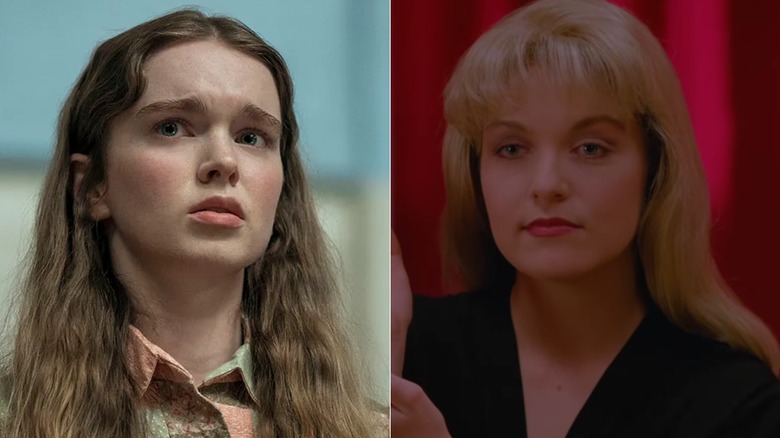
This structure immediately recalls the opening minutes of Twin Peaks, which commences when local fisherman Pete Martell (Jack Nance) discovers the body of homecoming queen Laura Palmer (Sheryl Lee) washed ashore, "dead… wrapped in plastic."
Laura and Carrie function as inverse funhouse-mirror reflections of one another. Laura dies; Carrie kills. Laura is a radiant, charismatic pillar of her community who harbors a secret double life involving cocaine and sex work. Carrie, conversely, is a socially isolated, deeply awkward former homeschooler whose dark side is less outwardly titillating than Laura’s, but exponentially more destructive. Both figures are intensely singled out by their respective communities: Laura is dangerously elevated onto a golden pedestal, while Carrie is ruthlessly cast out into the mud. Yet, both ultimately expose the rot festering beneath the picturesque facades of small-town America.
Supporting Data: Casting Choices and Parallel Performances
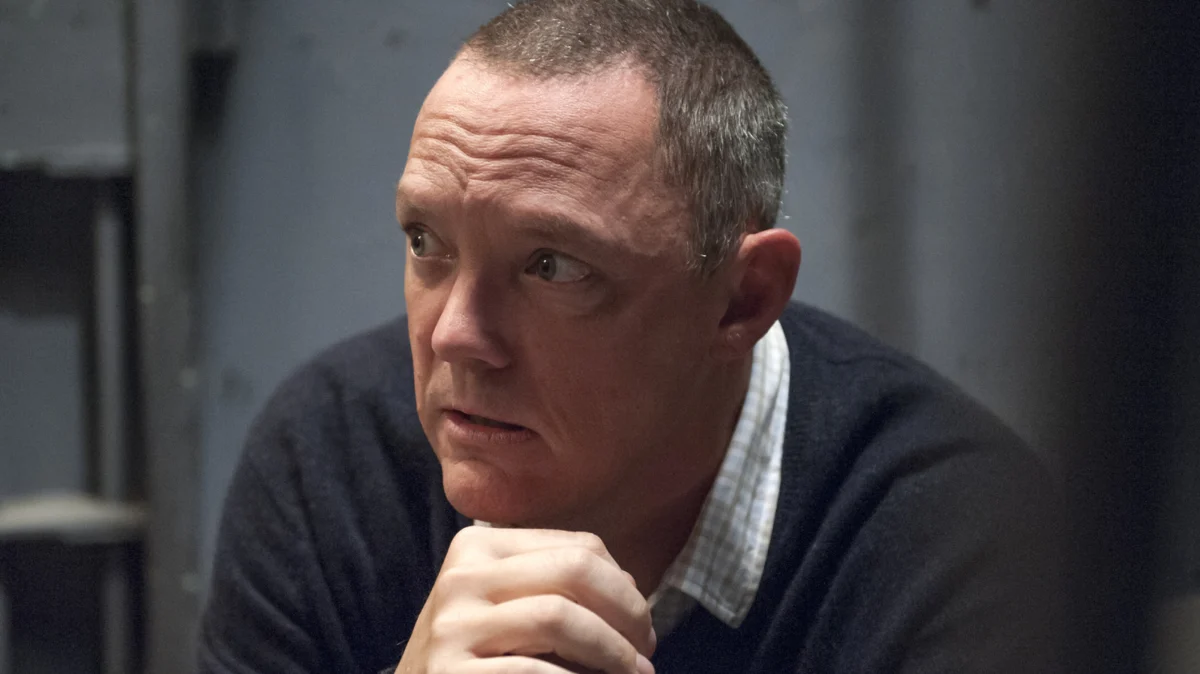
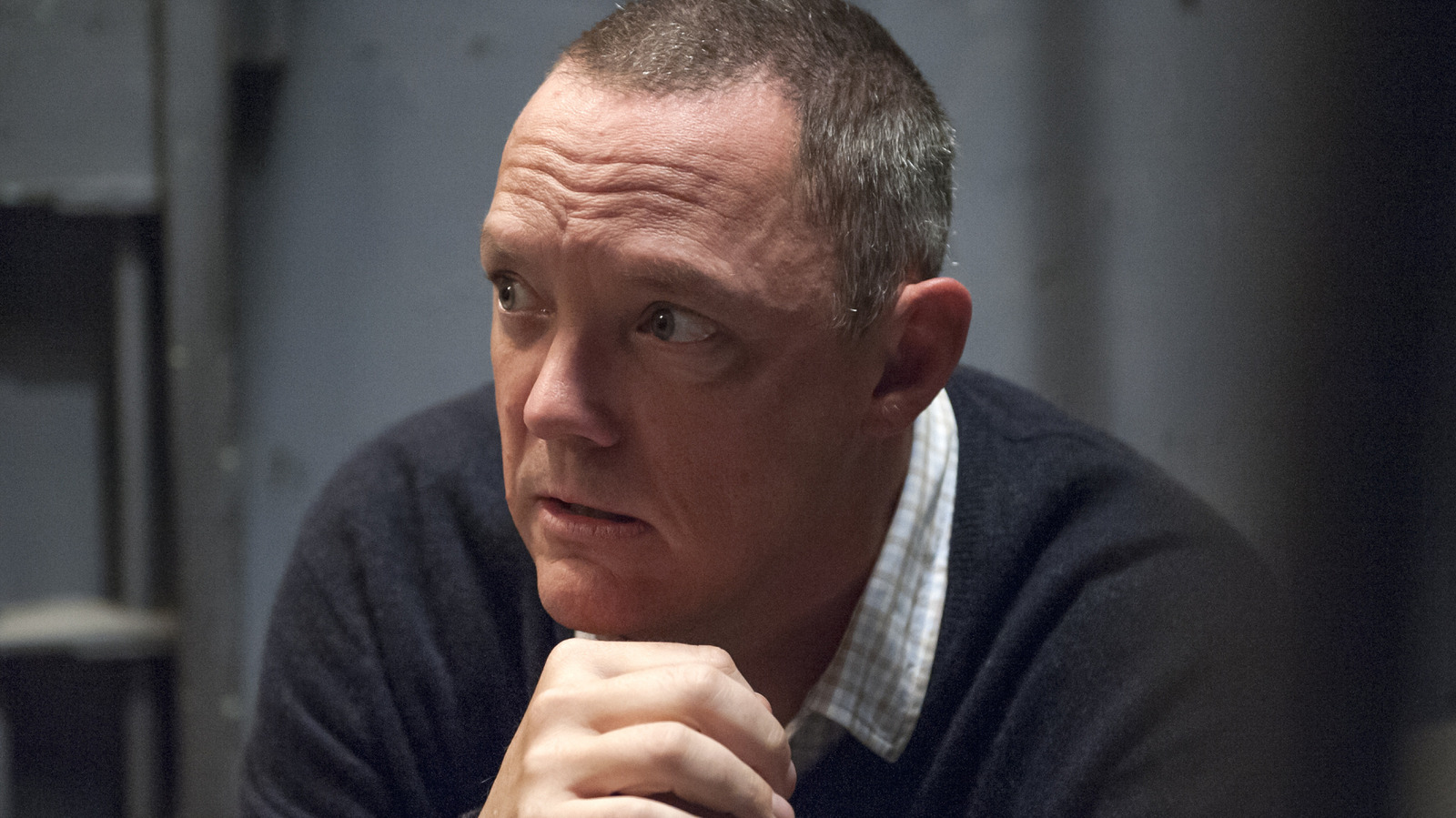
The thematic convergence between the two properties is further solidified by a masterstroke of casting—or an astonishing coincidence. Actor Matthew Lillard, a genre veteran recognized globally for his frantic comedic turns in 1990s teen cinema, portrays a high school principal in both Prime Video’s Carrie and David Lynch’s 2017 Twin Peaks revival on Showtime.
In Carrie, Lillard plays Principal Grayle, a man desperately attempting to maintain administrative order and systemic status quo amid escalating chaos at Ewen High School. In Twin Peaks, Lillard tackles the role of William "Bill" Hastings, a mild-mannered high school principal from Buckhorn, South Dakota, who finds himself hopelessly entangled in forces bending the laws of space, time, and fidelity. While Hastings acts as a cosmic disruptor and tragic victim, both characters share a profound, underlying bad luck.
Lillard’s performance in Twin Peaks demanded an extreme emotional baseline. Reflecting on his experience with Lynch’s notoriously opaque production style, Lillard revealed in an interview with The A.V. Club:
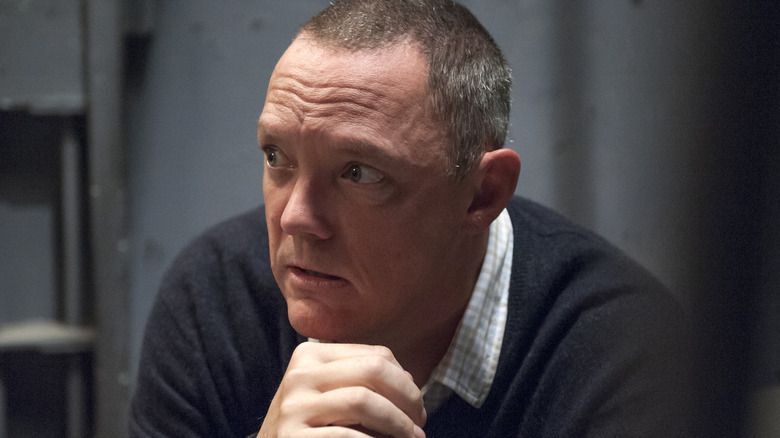
"I had a scene in that show which is the hardest scene I’ve ever had to do. It’s a three-page monologue and in the middle of the scene the slug line is: ‘He breaks down hysterically sobbing.’ … And [at the time] the monologue is nonsense to me, because I don’t see any other piece of the script, so I don’t know what the character’s talking about."
The contrast between Lillard’s roles highlights his expansive dramatic range. While Hastings serves as a sobbing vessel of existential dread and confusion, Principal Grayle is forced to maintain a stoic, placid exterior while furious parents scream at him across a desk.
Official Responses and Creative Context
Further blurring the lines between these two fictional universes is the inclusion of actress Heather Graham, whose casting creates a meta-textual bridge for cinephiles. Graham, a luminary of 1990s independent cinema through acclaimed roles in Boogie Nights and Drugstore Cowboy, finds herself similarly underutilized in both franchises—though to distinct narrative ends.
In Twin Peaks Season 2, Graham portrayed Annie Blackburn, a gentle love interest for Special Agent Dale Cooper (Kyle MacLachlan). Her kidnapping in the 1991 season finale served as the emotional catalyst that drove Cooper directly into the malevolent, extradimensional pocket dimension known as the Black Lodge.
In Prime Video’s Carrie, Graham steps into the shoes of the long-suffering mother of alpha mean girl Chris Hargensen (Alison Thornton). Rather than functioning as a catalyst for cosmic terror, Graham’s character provides crucial psychological context for Chris’s toxic behavior, grounding the malice in domestic neglect.
Despite these striking structural and casting parallels, important distinctions separate Flanagan’s vision from Lynch’s surrealist blueprint. Carrie deliberately weaponizes an upbeat, cheerful alterna-pop soundtrack that violently clashes with the grim reality of the narrative—a stark departure from the moody, jazz-infused atmospheric soundscapes crafted by Twin Peaks composer Angelo Badalamenti. Furthermore, social media and digital connectivity play a ubiquitous role in Prime Video’s adaptation. The constant presence of glowing smartphone screens in the hands of teenagers, paired with Margaret’s parroting of contemporary right-wing online rhetoric, firmly anchors the series in the modern sociopolitical landscape.
Conversely, David Lynch’s projects have traditionally remained untethered from standard news cycles. Twin Peaks famously stretches across a quarter-century, bending temporal logic to the point where Agent Cooper must earnestly ask, "What year is this?"
Implications: The Evolution of Prestige Horror Television
The stylistic and narrative cross-pollination between Mike Flanagan’s Carrie and David Lynch’s Twin Peaks carries significant implications for the evolution of the horror genre on streaming platforms. For decades, cinematic adaptations of Stephen King’s work leaned heavily toward straightforward creature features or literalist interpretations of small-town dread. However, Flanagan’s approach signals a maturation of horror television, moving away from simple jump scares and toward atmospheric, deeply psychological world-building.
By adopting the pacing, visual motifs, and societal critique popularized by Lynch, modern horror series are increasingly willing to treat familiar intellectual property as raw clay. They are no longer bound by the rigid constraints of a 120-minute feature film; instead, they stretch out across episodic arcs to explore the peripheral lives of community members, the systemic failures of educational institutions, and the digital panopticon of contemporary youth culture.
Ultimately, Prime Video’s Carrie demonstrates that classic horror storytelling does not need to reinvent itself to remain relevant. By leaning into the surreal, unsettling undercurrents that made Twin Peaks a cultural touchstone, Flanagan has transformed a familiar telekinetic tragedy into a sprawling, multi-layered examination of American malaise—proving that the monsters lurking beneath the surface of a small town are always far more terrifying than the supernatural powers unleashed upon it.
