
Michelle Yeoh: Bridging Worlds from Busan to the Neon-Lit Streets of ‘Blade Runner 2099’
Executive Summary: A Cinematic Icon in Transit
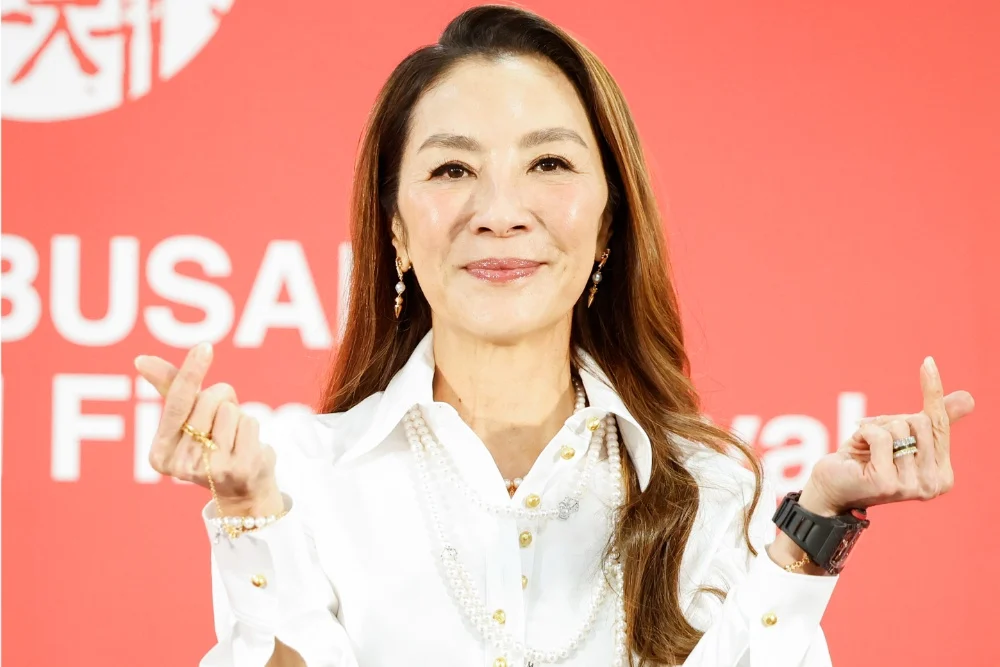
Michelle Yeoh, the trailblazing Oscar-winning actress, continues to redefine the boundaries of global cinema. Currently appearing at the Busan International Film Festival (BIFF), Yeoh is balancing a diverse slate of projects that highlight both her enduring legacy in Asian cinema and her pivotal role in high-profile Western franchises. As she prepares to depart for New York Comic Con to champion the highly anticipated Prime Video series Blade Runner 2099, Yeoh’s career trajectory serves as a testament to the seamless integration of Eastern and Western storytelling traditions.
The Neon Horizon: Entering the World of ‘Blade Runner 2099’
The most immediate focus for Yeoh is her immersion into the cyberpunk landscape of Blade Runner 2099. Set to debut on November 25, the eight-episode limited series represents a major expansion of the Ridley Scott-helmed franchise. Yeoh stars as Olwen, a replicant Blade Runner nearing the twilight of her programmed life. Her character is set to partner with Cora, a mysterious new recruit portrayed by Hunter Schafer.
At a press conference in Busan, Yeoh expressed profound enthusiasm for the project. "To be given an opportunity to take it to 2099 is indeed an amazing journey, and to work with such a great talent like Hunter Schafer is a great joy," Yeoh stated. She credited showrunner Silka Luisa and the production team—including Alcon Entertainment and the legendary Ridley Scott—for fostering an environment that respects the franchise’s deep philosophical roots. "They have welcomed us into this world of replicants and humans, and I can’t wait for all of you to watch it."
The industry is watching closely, as Blade Runner 2099 represents a high-stakes effort to translate the dense, atmospheric tension of the original films into a serialized format. With Yeoh and Schafer leading the cast, the show is expected to be a focal point at the upcoming New York Comic Con, where the creative team will convene to discuss the nuances of bringing this dystopian future to the small screen.
A Return to Roots: ‘It’s My Time’ and the Busan Connection
While her eyes are fixed on the future of science fiction, Yeoh is also celebrating a significant return to her linguistic and cultural heritage. In Busan, she is promoting It’s My Time, a film based on a true story that marks her long-awaited return to Chinese-language cinema.
Directed by Bai Xue and produced by Wen-Hui Yeh, the film features Yeoh as Zhao Yanhong, a woman in her 70s residing in a nursing home who discovers an unexpected talent for the Rubik’s Cube. The narrative is inspired by the real-life story of Zhao Wenying, a retired math teacher who shattered records as the fastest competitor over 60 to solve the puzzle while blindfolded.
Yeoh’s involvement in the project was facilitated by Peter Lam of Media Asia. It serves as a poignant reminder of her commitment to projects that bridge cultural gaps. Reflecting on her career, Yeoh noted, "I think I spent quite a few years trying to build a bridge from the East to the West, and then now from the West to the East. Hopefully, the bridge will just stay there, and I’m able to cross over whenever I want."
Her appearance at BIFF is particularly symbolic. Having first participated in the festival’s Pusan Promotion Plan as a producer in 2002 and attended in 2011 for The Lady, this visit marks her first return to the festival in 15 years. During the opening ceremony, she was honored with the prestigious Asian Filmmaker of the Year award, further cementing her status as a pillar of the regional industry.
Professional Chronology: From Bond to Blockbuster
Yeoh’s career has been defined by a refusal to be pigeonholed. Her early years in Hollywood were marked by frustration; she recalled the shock of being labeled a "minority" and the repetitive, stereotypical roles offered to her following her appearance as Wai Lin in the James Bond film Tomorrow Never Dies.
She famously waited roughly two years—a lifetime in the fast-paced world of film—before choosing the right project to pivot her career, eventually landing the role of Yu Shu Lien in Ang Lee’s Crouching Tiger, Hidden Dragon. The filming of that iconic masterpiece was not without its trials. Yeoh shared an amusing anecdote about the film’s emotional climax, where she cradles a dying Chow Yun-fat. Due to a knee injury that necessitated surgery mid-production, she could not physically cross her legs. "I had my leg literally on a box," she laughed. "So it’s kind of funny looking, with one leg up there and then Chow up here."
Following her historic Oscar win for Everything Everywhere All at Once, Yeoh’s trajectory has only accelerated. She was recently awarded an honorary Golden Bear at the Berlin Film Festival earlier in 2026, marking a period of unprecedented global recognition.
Artistic Philosophy: The Director’s Vision
During the Busan press conference, Yeoh was asked whether she intends to step behind the camera to direct. Her response was one of humble pragmatism. "I love being an actor; I actually love being a producer, but I think being an amazing, great director, you have no life," she remarked. "There is so much of your vision of that person, that writer, and I think I am not able to rise to that. So I will stick to what I know a little bit better, and hope to support directors who have that vision."
Yeoh’s preference for supporting visionary directors is evident in her track record. She has a penchant for working with emerging talent, a trend she continued with the Daniels on Everything Everywhere All at Once and, more recently, with Roshan Sethi on The Surgeon.
"If you read their script, you’d wonder if they were actually a little bit insane," Yeoh said of the Daniels. "The fact is they are, that’s why they’re such geniuses." This willingness to embrace the unconventional is perhaps the defining trait of her late-career renaissance.
Future Implications and Cultural Aspirations
Yeoh’s vision for the future extends beyond her own filmography. She expressed a deep desire to increase her presence in South Korean cinema, citing her love for K-pop, K-drama, and the country’s robust film culture. Specifically, she noted her admiration for directors like Park Chan-wook and Bong Joon Ho and expressed excitement for Lee Chang-dong’s Possible Love.
As she navigates the transition between the high-concept world of Blade Runner 2099 and the intimate, character-driven storytelling of It’s My Time, Yeoh remains a unique force in global entertainment. She has successfully dismantled the "East-West" dichotomy that once constrained her early career.
Her upcoming schedule, which includes the global promotional circuit for the Blade Runner universe, suggests that the industry has finally learned to meet her on her own terms. By choosing roles that challenge both her physical capabilities and her emotional range, Michelle Yeoh continues to prove that she is not merely an actor, but a bridge-builder who has permanently altered the landscape of modern cinema. Whether she is solving Rubik’s Cubes in a nursing home or hunting replicants in a neon-drenched dystopia, Yeoh remains a beacon for artists who refuse to compromise their vision in the face of institutional expectations.
