
Isabelle Huppert at Busan: Defying the AI Tide and Championing the Human Spirit in Cinema
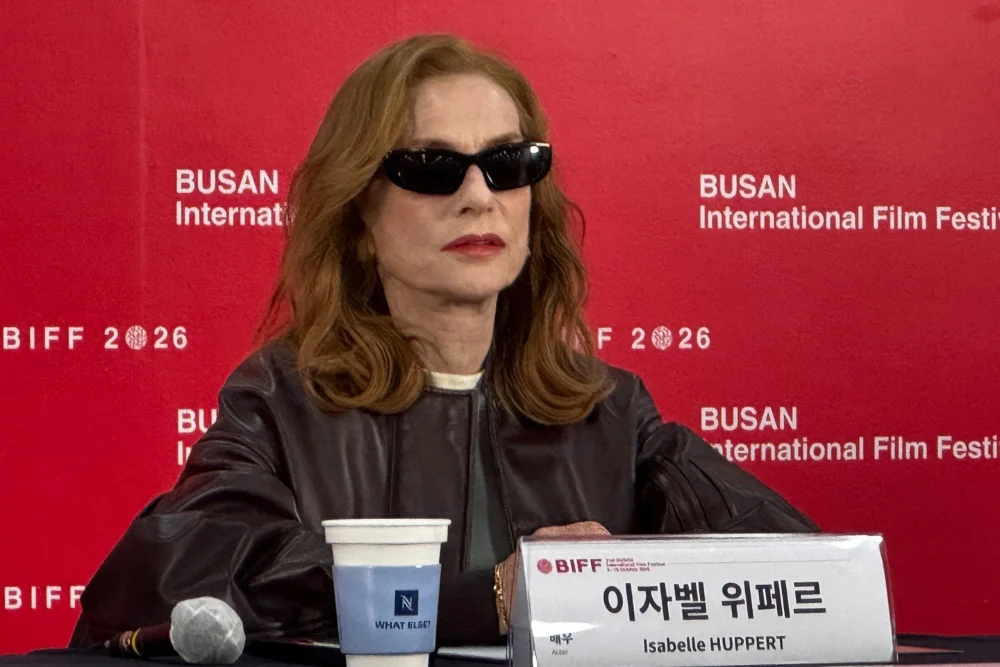
The Busan International Film Festival (BIFF) recently played host to one of French cinema’s most enduring icons, Isabelle Huppert. As the industry grapples with the existential anxieties brought on by the rapid advancement of Artificial Intelligence, Huppert provided a refreshing, grounded perspective. Amidst discussions of her latest collaborative project with director Marc Fitoussi, All About Corinne, the veteran actress dismissed the notion that technology is poised to render human performance obsolete, even as she acknowledged the ironic whispers that she may soon be "speaking" Japanese or Korean via digital synthesis.
The Human Element: Huppert on the AI Frontier
For an actress of Huppert’s stature, the conversation surrounding AI is not merely technical—it is philosophical. At a press conference held during the festival, Huppert addressed the pervasive fear that digital doubles and generative AI might soon replace flesh-and-blood performers.
"I didn’t know I spoke Korean," Huppert joked, referring to AI-driven voice cloning and translation technologies. "I just know how to say annyeonghaseyo [hello]."
While the industry often views AI as a looming "grim prospect," Huppert remains decidedly unbothered. She emphasized that her work on screen remains authentically her own. "So far, I’ve seen that it’s still my face on screen, and I hope that continues," she remarked. Her optimism is rooted in a historical perspective; she drew parallels between current fears and past panics regarding the death of cinema or the displacement of vinyl records—technologies that, despite predictions of their demise, have shown remarkable resilience and cultural staying power.
Whether her optimism is well-founded or a form of artistic defiance, Huppert’s stance serves as a reminder that the nuance, unpredictability, and emotional depth of a human performance remain the bedrock of the cinematic experience.
Chronology of a Collaboration: From Locarno to Busan
The arrival of All About Corinne at the Busan Gala Presentation section marks another milestone in the creative partnership between Isabelle Huppert and director Marc Fitoussi. Their relationship is one of mutual admiration and artistic synergy, with All About Corinne serving as their fourth feature-length collaboration.
The film, which premiered at the Locarno Film Festival, tells the poignant story of Corinne Maclou, a veteran film extra who has never abandoned her dream of stardom. The narrative, which features cameos from French stars like Sandrine Kiberlain, functions as both a comedy and a meditation on the hierarchy of the film industry.
The project’s inception was unconventional. Fitoussi revealed that the film began almost as an inside joke—the idea of casting one of France’s most prolific and successful actors as someone who, by definition, remains largely invisible in the background of a shot. "It’s because she said yes that I started writing," Fitoussi noted. Before penning a single line of the script, Fitoussi secured Huppert’s commitment, followed by the participation of the other actors who play versions of themselves.
The film’s thematic roots trace back to Fitoussi’s 2008 documentary, Des Figurants. In that project, he observed the lives of extras, including one woman who wore a bright pink scarf in a desperate attempt to be noticed by the director. In All About Corinne, that desperation is echoed in a distinct, eccentric tuft of hair that the protagonist sports.
Supporting Data: Hierarchy and the "Loser" Archetype
All About Corinne is not a sycophantic love letter to the film industry. Huppert was quick to push back against the suggestion that the film views the profession with unadulterated warmth. Instead, she identifies a "certain cruelty" within the narrative.
"Obviously, that applies to any similar organization where there are those who have power and those who don’t," Huppert explained. "It isn’t necessarily about demonizing the world of cinema either." By portraying the industry as a deeply hierarchical structure, the film highlights the systemic invisibility of those at the bottom.
Fitoussi echoed this sentiment, noting his affinity for the "losers" and the "invisible" characters he portrays. By centering the story on an extra, the film grants a fleeting sense of heroism to those usually relegated to the periphery. This theme of the "invisible hero" is a hallmark of Fitoussi’s filmography, which previously included a script about a truck driver—a project he paused after discovering that Juliette Binoche had taken on a similar role in an American film.
Official Responses and Future Trajectories
The festival also served as a platform for future announcements. Isabelle Huppert confirmed her upcoming involvement in a project directed by the legendary horror maestro Dario Argento. "I’m very happy about it. I think it will be some time next year," she said, fueling excitement for a collaboration between one of Europe’s most intellectual actresses and the master of the giallo genre.
Director Fitoussi also hinted at a future endeavor. Inspired by a Joan Crawford film he recently viewed, he expressed interest in a potential remake, with Huppert as the natural choice for the lead. When asked if she would be open to it, Huppert replied with a simple, "I hope so."
Huppert’s presence in Busan was not limited to the screen. The actress arrived after participating in a live reading of works by Nobel laureate Han Kang in Seoul, alongside her frequent collaborator Lee Hye-young. This was part of a larger cultural exchange, following a previous performance at the Avignon Festival. Huppert, who has worked extensively with Korean auteur Hong Sang-soo, continues to bridge the gap between European and Asian cinematic cultures, further cemented by her recent election as the first female president of the Cinémathèque Française.
Implications for the Industry
The intersection of these events—Huppert’s rejection of AI-driven obsolescence, her deep-rooted collaboration with Fitoussi, and her ongoing cultural cross-pollination—speaks to the evolving nature of the film industry.
- The Persistence of the Star System: Despite the advancements in CGI and AI, the "star" remains a vital, irreplaceable entity. Huppert’s ability to draw audiences and command respect, even while playing an "extra," highlights the importance of the human brand.
- The Globalization of Talent: As Huppert moves seamlessly from the stage in Seoul to a Gala Presentation in Busan and prepares for a film with an Italian horror master, the boundaries of "national cinema" continue to dissolve.
- The Critique of Hierarchy: All About Corinne serves as a mirror to the industry, challenging the power dynamics inherent in film production. It suggests that the industry is becoming more self-reflective, willing to expose its own "cruelty" and the precariousness of the labor force that sustains it.
As Isabelle Huppert continues to challenge herself—whether by playing a marginalized extra, performing Nobel-winning literature on stage, or partnering with genre-defining directors—she reinforces a simple, powerful truth: the soul of cinema resides not in the technology of the medium, but in the humanity of the performance. While AI may be capable of mimicking the mechanics of speech and movement, it cannot replicate the trajectory of a career built on artistic curiosity, cultural bridge-building, and an unwavering commitment to the craft.
As the film industry looks toward the next year, with All About Corinne set to open in South Korea next spring, it is clear that for Huppert, the show is far from over. If anything, the arrival of AI has only served to clarify the value of the real thing.
