
Digital Chaos and Denim Dreams: SGIFF Returns to Tradition with a Bold Closing Act
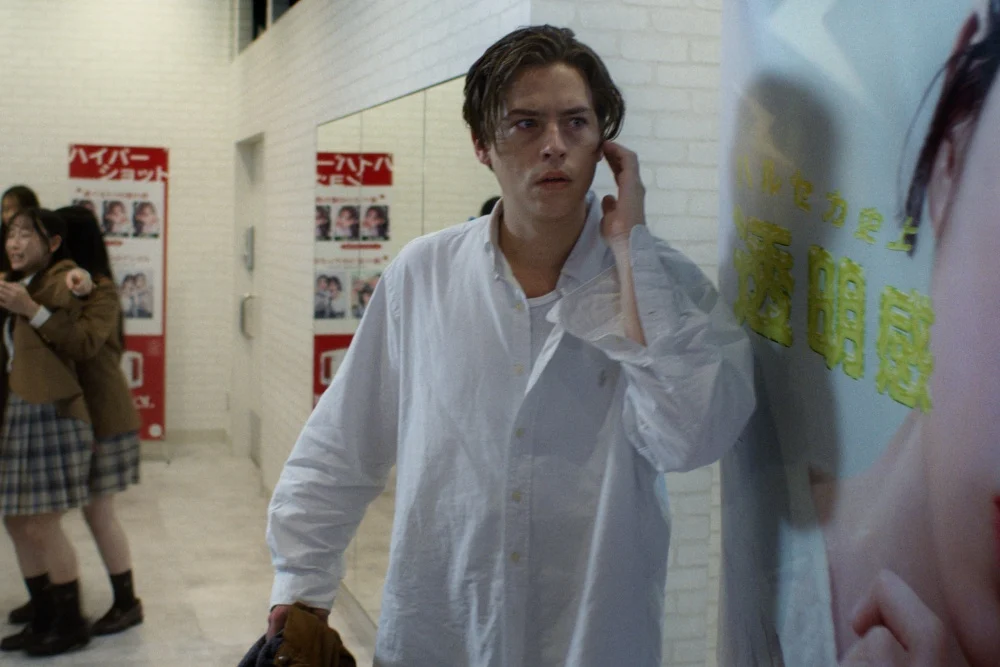
The Singapore International Film Festival (SGIFF) is poised to mark a significant milestone in its 37-year history. As the curtain rises on its latest edition, the festival has announced a strategic shift in its programming structure: the return of a standalone closing film. This year, the honor falls to Vintage Violence, the frenetic, livestream-era crime caper directed by Eugene Kotlyarenko.
The announcement, which signals a return to a tradition last observed in 2014, sets the stage for a grand finale on November 1. With the Asian premiere of the film set to take place at the historic Capitol Theatre, the festival is reinforcing its commitment to the cinematic experience as a communal, live event.
The Narrative: A High-Stakes Denim Heist
Vintage Violence is not your traditional crime thriller. It is a digital-age odyssey that dissects the intersection of internet celebrity, global consumerism, and the criminal underworld. The plot follows Carter, a livestreamer whose penchant for discovery leads him to a derelict mine in Colorado. His life takes an unexpected turn when he unearths a pair of 19th-century Levi’s—an artifact that catches the eye of Izumi, a Japanese viewer with an acute knowledge of the Tokyo vintage denim market.
What begins as an opportunistic plan to flip a pair of jeans for a fortune quickly spirals into a multi-continental disaster. Izumi’s indebted boyfriend inserts himself into the scheme, inadvertently dragging in Edoga, a formidable underworld figure obsessed with rare denim. The chaos reaches its peak with the arrival of Ko, an exiled yakuza whose unique arsenal—a cybernetic finger capable of spraying a narcotic mist—adds a surreal, high-tech edge to the confrontation.
Kotlyarenko, known for his incisive critiques of online behavior, employs a distinct visual language in the film. By utilizing split screens that simultaneously display text threads, live video streams, and frantic chat room commentary, Vintage Violence mimics the sensory overload of the digital landscape. It is a film designed to mirror the very platforms it critiques, forcing the audience to engage with the frantic pace of modern connectivity.
The Director’s Lens: Eugene Kotlyarenko’s Digital Obsession
To understand the gravity of Vintage Violence, one must look at the trajectory of its creator. Born in Odessa and later shaped by the intellectual rigor of Columbia University—where he studied film, philosophy, and literature—Eugene Kotlyarenko has carved out a niche as the preeminent chronicler of the digital age.
His previous works, Wobble Palace (2018) and the breakout success Spree (2020), established his interest in how technology mediates human interaction. While Spree focused on the dark allure of influencer culture and the desperate quest for viral fame, Vintage Violence expands that scope, moving from the singular pursuit of likes to the globalized, often dangerous, world of high-end vintage trading.
Kotlyarenko’s presence in Singapore, alongside leads Cole Sprouse and Kiko Mizuhara, underscores the festival’s ambition to foster a direct dialogue between creators and their audiences. Their participation is not limited to the red carpet; it is part of a broader educational initiative at SGIFF.
Chronology: A Festival of Heavy Hitters
The 37th edition of the SGIFF is a meticulously curated affair that balances high-profile commercial projects with deep-dive industry discourse. The festival’s calendar reflects a deliberate attempt to showcase the breadth of Asian and global cinema.
- October 21: The festival kicks off with Hur Jin-ho’s The Assassin(s). This opening film has been the subject of significant political scrutiny, having been targeted by South Korea’s conservative People Power Party. The party, representing 109 lawmakers, formally requested the festival drop the film, citing concerns that it "distorts history." SGIFF has remained steadfast, maintaining the screening as a testament to its commitment to artistic freedom.
- October 22: The festival transitions into its "In Conversation With" series, featuring industry titans Aamir Khan, Peter Chan, and Shim Eun-kyung.
- October 24: Acclaimed Japanese auteur Koreeda Hirokazu will take the stage, offering insights into his humanistic approach to storytelling.
- October 29: Legendary actor Anthony Wong is slated for an appearance, providing a retrospective on his extensive career in Hong Kong cinema.
- October 31: The pre-closing momentum builds with an "In Conversation With" session featuring the cast and director of Vintage Violence at the National Museum of Singapore.
- November 1: The festival reaches its climax with the closing ceremony and the premiere of Vintage Violence.
Official Responses and Strategic Vision
The decision to reintroduce a standalone closing film is a tactical maneuver designed to consolidate the festival’s identity. SGIFF executive director Jeremy Chua framed this move as an attempt to reclaim the "event" nature of cinema.
"After more than a decade, we are excited to bring back the festival closing as a moment for audiences to come together for one final film on the big screen," Chua said in an official statement. He noted that Vintage Violence was selected precisely because of its "unruly" nature. "It felt like the right film to close this edition—contemporary and deeply attuned to the ways technology has changed how we see, share, and experience the world around us."
The festival, which receives critical support from the Infocomm Media Development Authority (IMDA), is positioning itself as a hub for both traditional film appreciation and the study of emerging digital media. By hosting sessions that dissect the mechanics of modern screen acting and the technical challenges of filming across multiple digital formats, SGIFF is acknowledging that the future of cinema is inseparable from the future of communication technology.
Implications: The Future of the Cinematic Experience
The choice of Vintage Violence to anchor the closing of the festival carries profound implications. It signals a shift away from the "prestige" period drama as the only valid choice for closing ceremonies, instead opting for a film that thrives on the frantic, fragmented reality of the 21st century.
For the actors, the festival offers a unique platform to discuss the shift from traditional acting to the "screen-bound" performance required in digital-centric films. The "In Conversation With" sessions are expected to explore how Cole Sprouse and Kiko Mizuhara navigate the transition between global stardom and the intimate, often voyeuristic nature of the roles they portray in the film.
Furthermore, the festival’s refusal to bow to political pressure regarding The Assassin(s) serves as a clear declaration of independence. By keeping the film on its slate, SGIFF has affirmed its role as a space where controversial or politically sensitive topics can be explored without censorship. This stance is likely to bolster the festival’s reputation among international filmmakers who prioritize creative autonomy.
A Global Stage for Local and International Dialogue
The 37th edition of SGIFF is more than just a series of screenings; it is an attempt to bridge the gap between the physical and the digital. As the audience gathers in the Capitol Theatre on November 1, they will be participating in a ritual that has remained largely unchanged for decades—the communal viewing of a narrative. Yet, the narrative itself will be one of screens, streams, and digital decay.
As the industry grapples with the rise of AI, the dominance of streaming platforms, and the changing habits of younger demographics, the SGIFF’s focus on "screen culture" provides a vital roadmap. By inviting figures like Aamir Khan and Koreeda Hirokazu to share the same stage as the avant-garde team behind Vintage Violence, the festival is fostering a necessary conversation between the masters of the past and the innovators of the future.
Ultimately, the success of this year’s SGIFF will be measured not just by ticket sales or red-carpet appearances, but by its ability to provoke. By selecting a closing film that is as divisive and energetic as Vintage Violence, the festival is betting on the idea that audiences are still hungry for stories that challenge their perception of reality, even if that reality is viewed through the glowing, fragmented frame of a smartphone screen.
As the 37th edition draws to a close, the SGIFF cements its place as a critical node in the global film circuit—a festival that is as comfortable with the gravitas of history as it is with the chaotic, unfiltered pulse of the internet.
