Navigating the Acidic Tides: Inside Jack Wedge and Will Freudenheim’s Oscar-Contending Sci-Fi Short Acid City
As the race for the 2027 Academy Awards heats up, the animation community’s attention turns toward the inventive, boundary-pushing shorts that have successfully secured qualification. Among the most unique and critically lauded contenders this cycle is AcidCity, a 12.5-minute U.S. computer-generated short film directed by JackWedge and WillFreudenheim. Produced by Laser Days Studio and co-produced by Tom C J Brown, the film punched its ticket to the Oscars by capturing the prestigious Golden Dragon at the Krakow Film Festival.
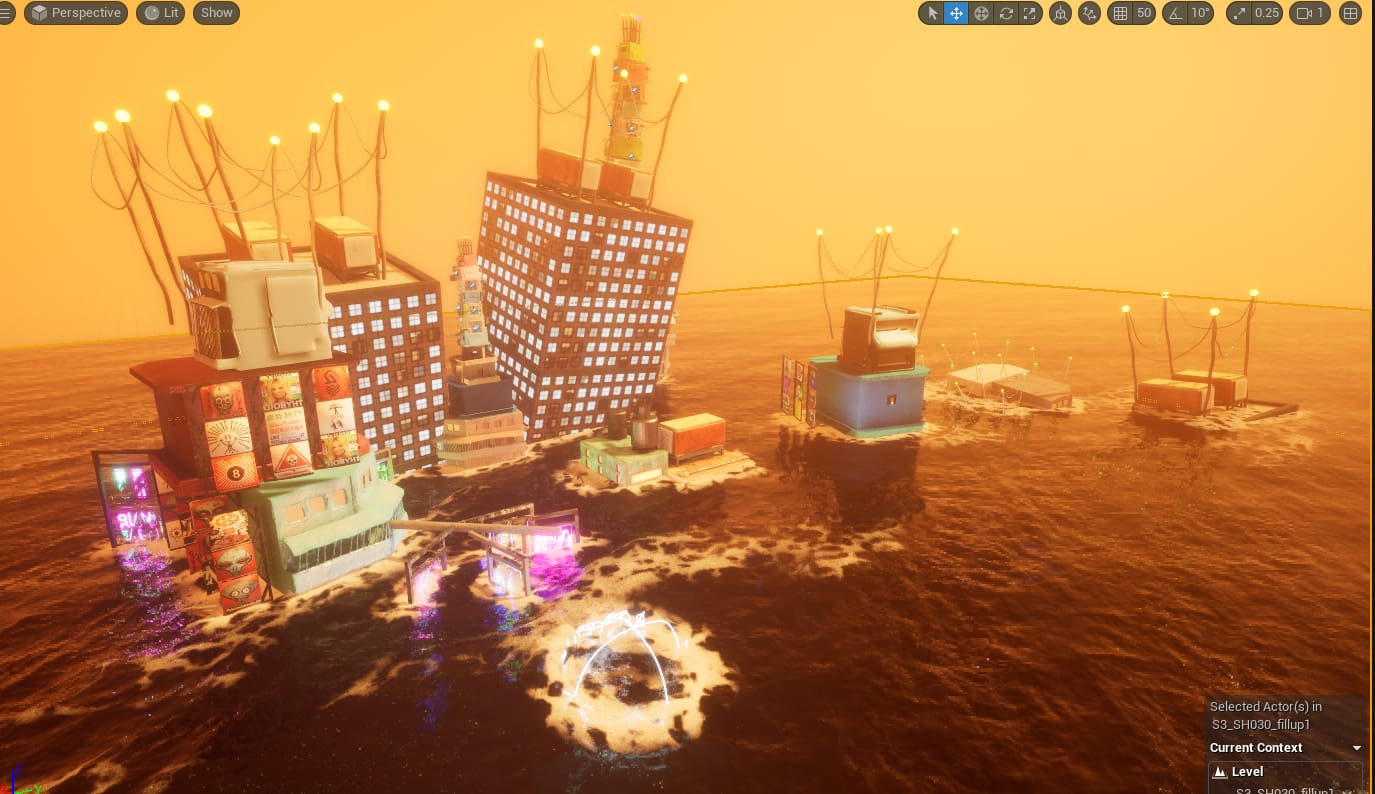
Blending cutting-edge game-engine technology, motion-capture pipelines, and authentic New York City street recordings, Acid City presents a psychedelic, climate-ravaged future. Yet, beneath its surreal sci-fi veneer lies a deeply human interrogation of modern anxiety, ecological collapse, and the strange resilience of daily life.
Main Facts: The Anatomy of a Dystopian Masterpiece
Acid City takes place in a fictionalized urban community drifting on a vast, hazardous ocean of acid. Over the course of a single day, the film follows a documentary crew as they capture the mundane rhythms, systemic pressures, and quirky survival tactics of the city’s isolated inhabitants.
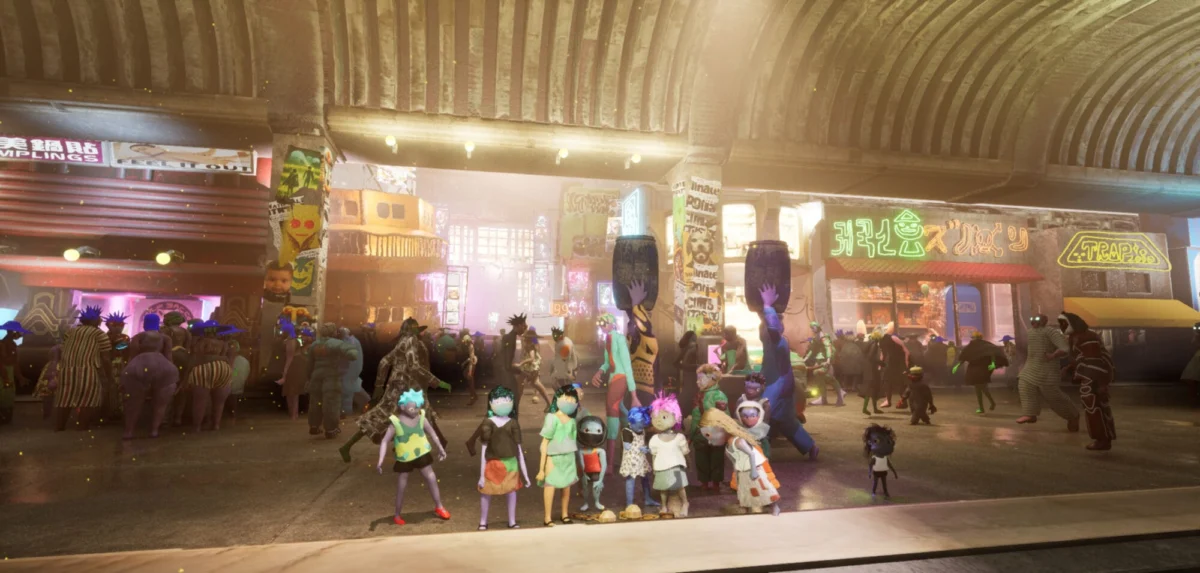
Rather than relying on a traditional narrative arc driven by a singular protagonist, the directors chose an observational, mosaic-like structure. The film weaves together meticulously crafted 3D characters with real audio interviews gathered across New York City. The contributors to the soundscape include a diverse array of voices—scientists, emergency responders, children, and pedestrians—recontextualized within an alien environment defined by extreme heat, corrosive water, and the looming shadow of climate change.
Key Production Metrics:
Runtime: 12 minutes and 30 seconds
Medium: Computer-generated animation utilizing game-engine tech and motion capture
Studio: Laser Days Studio
Co-Producer: Tom C J Brown
Qualification Route: Winner of the Golden Dragon at the Krakow Film Festival (Qualifying for the 2027 Oscars)
The journey of Acid City from a blank slate to an Academy Award-qualified short film was marked by radical creative shifts, technical experimentation, and exhaustive field research.
Phase One: Early Worldbuilding and the Narrative Pivot
In the early stages of development, Wedge and Freudenheim pursued a much more conventional storytelling approach. For months, they built a narrative centered on a single protagonist navigating the flooded city. However, as the production progressed, the directors realized this structure was artificially narrowing the scope of the film.
Choosing to abandon months of strenuous work, they pivoted toward a documentary framework. This structural change allowed them to let meaning accumulate organically across interviews, varied locations, infrastructure, and routines rather than forcing a linear character arc.
Phase Two: Field Recording and Procedural Design
While Wedge took to the streets of New York City with a field recorder—engaging strangers, children in parks, local scientists, and emergency workers—Freudenheim engineered procedural systems.
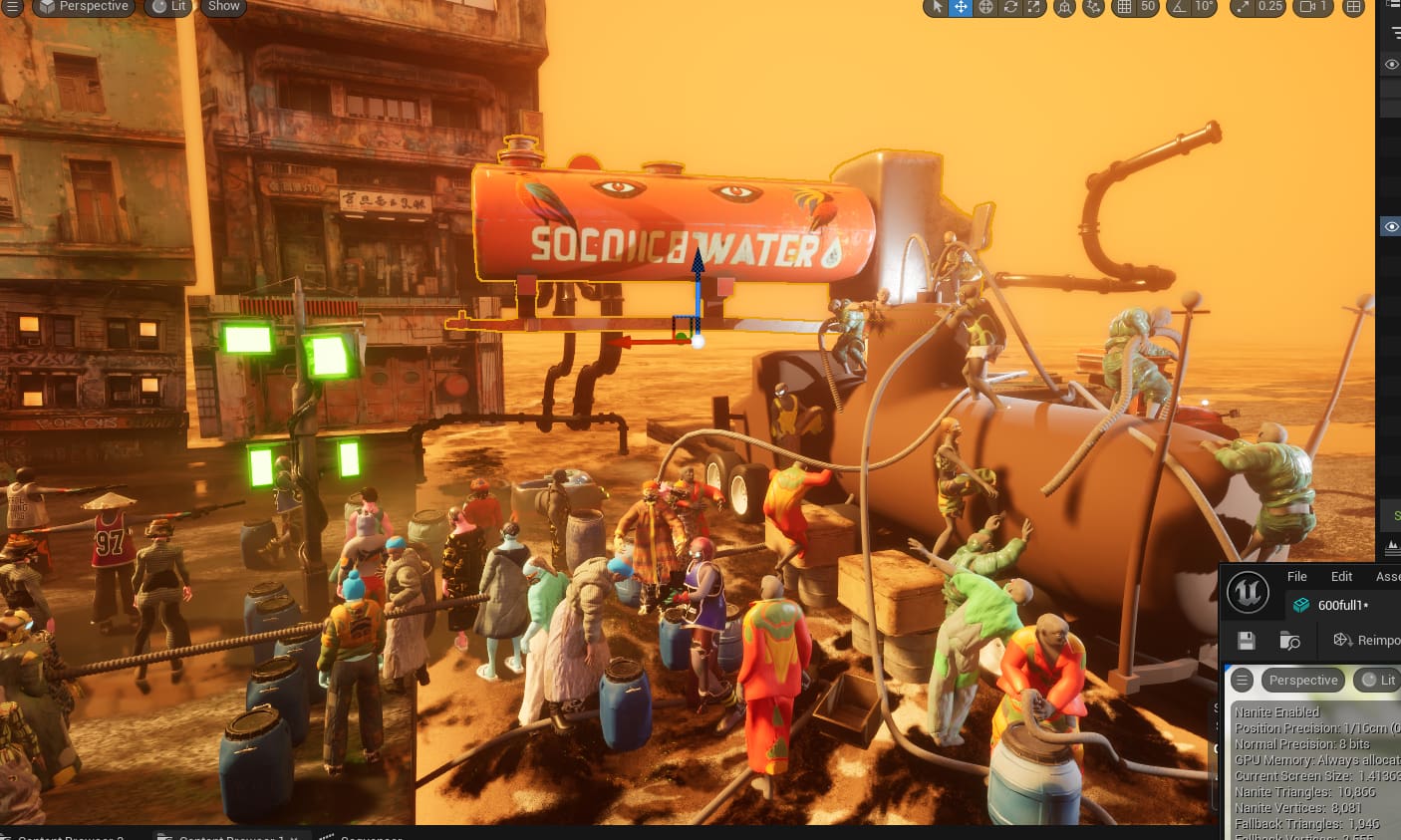
Because the production was primarily driven by just two individuals, they needed a way to multiply visual density without flattening the aesthetic. Wedge hand-built individual assets (characters, architecture, signs, and civic infrastructure), while Freudenheim’s procedural pipelines scattered, deformed, and recombined these elements to generate massive, sprawling environments.
Phase Three: Festival Circuit and Oscar Qualification
With the film completed, Acid City entered the international festival circuit. Its unique synthesis of documentary realism and speculative fiction caught the eye of critics and programmers alike. Its defining moment came at the Krakow Film Festival, where it was awarded the Golden Dragon—securing its official qualification for the 2027 Academy Awards.
Supporting Data: The Intersection of Climate Reality and Animation Technology
Acid City stands out not only for its narrative choices but also for its technical methodology. By leaning heavily on game engines and procedural generation, the filmmakers bypassed the traditional bottlenecks of linear rendering pipelines. This allowed them to act almost like "location scouts" within their own digital creations—discovering spaces for scenes after the world had already been built, and subsequently looping back to refine assets as narrative needs shifted.
Furthermore, the film’s statistical foundation rests on its sound design. The audio landscape is anchored entirely by real-world testimonials. By taking unfiltered human anxieties—gathered from real discussions about safety, infrastructure, and environmental shifts—and dropping them into an extreme sci-fi setting, the project creates a bridge between contemporary sociological data regarding climate dread and imaginative futurism.
Official Responses: Insights from Directors Jack Wedge and Will Freudenheim
In an exclusive interview with Cartoon Brew, Wedge and Freudenheim opened up about the creative philosophies, production hurdles, and thematic intentions that shaped Acid City.
On the Conceptual Drive Behind the Film
When asked what compelled them to direct the film, the directors emphasized the need to explore climate change on a human scale:
"We’re both drawn to science fiction that builds a world in order to test an idea against everyday life. Climate change is often discussed through temperature curves, emissions targets, sea-level projections, but it is lived through much smaller things: a neighborhood changing, a water system failing, a season becoming unfamiliar."
They noted that Acid City was designed to examine how such environmental pressures accumulate over generations—manifesting not just in heavy infrastructure, but in daily habits, jokes, cultural rituals, and collective memory.
On Creative Breakthroughs and Learning Curves
Reflecting on the painful decision to scrap their initial narrative draft, the directors shared vital lessons learned during production:
"Letting go of [the traditional protagonist-driven structure] was painful because we had already put so much work into that version. The documentary framework gave us another way to organize the story… One crucial lesson was that stories about places can be built through the accumulation of many characters and places, rather than through a single character’s arc."
On Blending Fiction with Real-World Testimony
Balancing invented futuristic scenarios with actual documentary audio required a delicate touch. Wedge described how the writing and the field recordings occurred simultaneously in a symbiotic loop:
"Jack spent a lot of time around New York with a field recorder… Things people said would change how we thought about characters, neighborhoods, or what daily life in the city might actually feel like. At other times, research or worldbuilding would send us back out looking for different conversations. We changed bodies, locations, and context quite radically, but tried to leave the actual meaning of what people said intact."
Implications: What Acid City Means for the Future of Indie Animation
The ascent of Acid City toward the 2027 Oscars carries significant implications for independent animated short films, particularly those operating outside major studio pipelines.
Democratization of Scale: By demonstrating how a two-person team can utilize game engines and procedural generation to construct an entire sprawling metropolis, Acid City serves as a technical roadmap for indie creators looking to achieve epic visual scale on modest budgets.
Hybrid Storytelling Formats: The film’s success proves that audiences and festival juries are eager for unconventional narrative structures. By marrying documentary audio methodologies with speculative narrative animation, Wedge and Freudenheim have opened up new avenues for non-fiction storytelling within the animated medium.
Reframing Climate Narratives: As ecological anxiety permeates global consciousness, Acid City offers a blueprint for how art can address climate change without falling into didactic or overly clinical traps. By grounding macro-level environmental disasters in the micro-level voices of real people, the film elevates animated sci-fi into a potent tool for sociological reflection.
As the Academy Award season approaches, Acid City stands as a testament to the power of creative pivot, technological resourcefulness, and the enduring resonance of authentic human voices captured in a strange, shifting world.


.png)