
Revisiting David Fincher’s The Game (1997): A Masterclass in Paranoia, Prestige Filmmaking, and the American Film Institute Legacy
Introduction and Main Facts
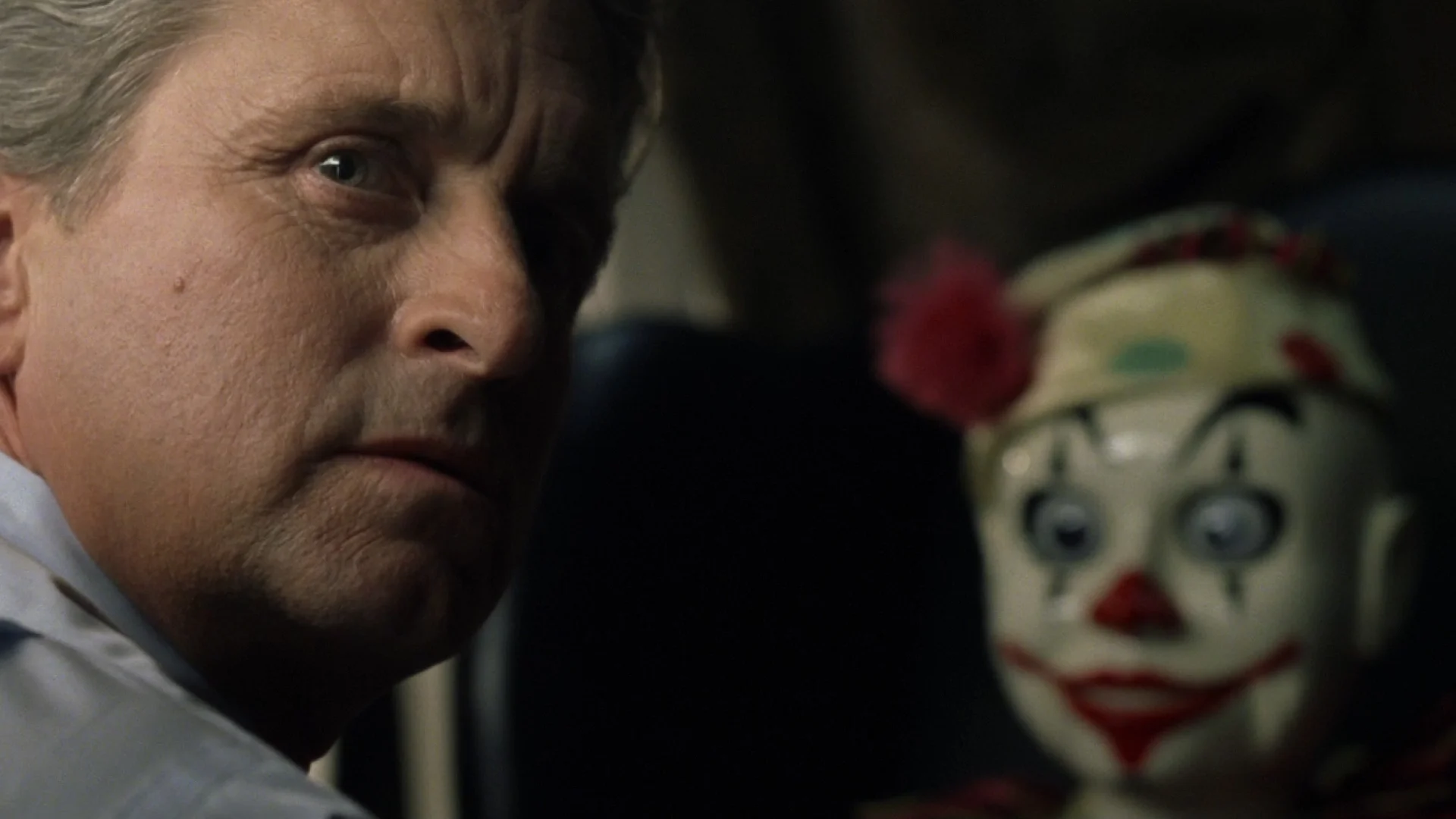
Released in the fall of 1997, director David Fincher’s psychological thriller The Game arrived at a fascinating crossroads in modern American cinema. Sandwiched between the explosive, genre-redefining cultural impact of Fincher’s 1995 masterpiece Se7en and his subversive 1999 countercultural milestone Fight Club, The Game often finds itself described as the middle child of the director’s early filmography. Yet, decades after its theatrical release, the film has undergone a major critical re-evaluation. Far from being a mere Hollywood genre exercise, it stands as a labyrinthine, anxiety-inducing descent down the rabbit hole—a meticulously constructed puzzle box that explores wealth, existential isolation, and the terrifying loss of control.
At the center of this cinematic labyrinth is Nicholas Van Orton, portrayed by legendary actor and American Film Institute (AFI) Life Achievement Award honoree Michael Douglas. Van Orton is a ruthless, emotionally bankrupt San Francisco investment banker whose meticulously ordered world is upended by a mysterious, all-encompassing birthday gift orchestrated by his unpredictable younger brother, Conrad, played with nervous energy by Sean Penn.
The vehicle for this disruption is Consumer Recreation Services (CRS), a shadowy, omnipotent entertainment company that promises to integrate a personalized, high-stakes game into a client’s actual life. What begins as a series of unsettling, low-level inconveniences quickly metastasizes into a relentless, high-octane nightmare where reality and artifice blur. Van Orton finds himself stripped of his wealth, his credibility, and his safety, forced to navigate a harrowing urban landscape where every stranger could be an actor and every routine encounter a calculated trap.
The production lineage of The Game is deeply tied to the prestige of the American Film Institute. The film was produced by the late, visionary AFI Alum Steve Golin (AFI Class of 1981), whose prolific career helped shape independent and mainstream American cinema through his work with Anonymous Content and Gramercy Pictures. Golin’s eye for complex, character-driven narratives helped provide the structural bedrock that allowed Fincher and screenwriters John Brancato and Michael Ferris to push psychological tension to its absolute breaking point.
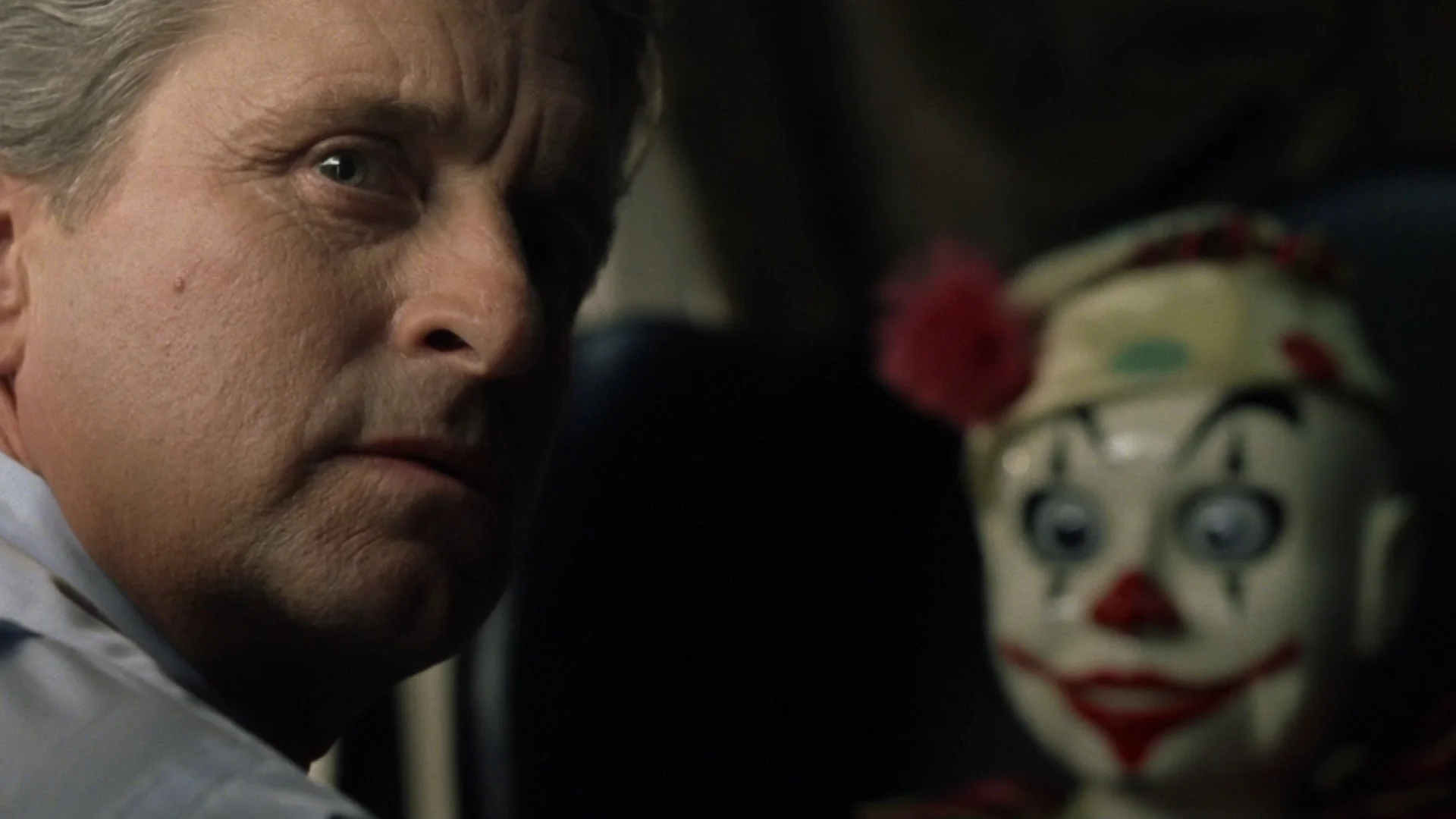
Today, as audiences continue to re-examine the film through platforms like the AFI Catalog, The Game is recognized not only as a high-water mark of 1990s neo-noir, but as a prescient look at the psychological tolls of surveillance, immersive entertainment, and the commodification of human experience.
Chronology of Production and Release
The journey of The Game to the silver screen was a long, arduous process marked by script rewrites, shifting studio leadership, and intense logistical hurdles. Understanding its chronology illuminates why the film carries such a distinct, pressurized atmosphere.
- Early 1990s (The Development Phase): Screenwriters John Brancato and Michael Ferris originally penned the spec script for The Game in the early 1990s. Initially, the script bounced around Hollywood, attracting the interest of various studios and directors—including Ridley Scott at one point—before landing at PolyGram Filmed Entertainment and Propaganda Films, the latter co-founded by future producer Steve Golin.
- Mid-1990s (Fincher Enters the Fold): Following the massive critical and commercial success of Se7en in late 1995, director David Fincher was granted significant creative leverage. Looking for a project that would test his visual and narrative boundaries in a different register, Fincher gravitated toward The Game. He worked closely with Brancato and Ferris to punch up the script, injecting it with his trademark visual claustrophobia and intensifying the psychological stakes for the protagonist.
- Late 1996 (Principal Photography): Production kicked off on location in San Francisco and Los Angeles. Shooting in the steep, fog-draped streets of San Francisco provided Fincher with the exact architectural vertigo he needed. The city’s towering financial district skyscrapers and winding Victorian alleys served as physical manifestations of Nicholas Van Orton’s tightening mental prison.
- September 1997 (Theatrical Release): Distributed by PolyGram Filmed Entertainment and Buena Vista Pictures in the United States, The Game premiered in theaters on September 12, 1997. Opening against traditional autumn counter-programming, the film received generally positive reviews from critics who praised its technical virtuosity and Douglas’s powerhouse performance, though its labyrinthine plot divided mainstream audiences expecting a standard thriller.
- Post-2000s (Critical Reassessment and Legacy): As home video formats evolved and streaming platforms democratized access to cinema, The Game shed its initial reputation as an underperforming genre piece. Film historians and cinephiles began championing it as a quintessential Fincher puzzle film, paving the way for later works like Panic Room (2002) and Gone Girl (2014). Its integration into the AFI Catalog further cemented its status as a vital artifact of American cinematic history.
Supporting Data and Production Metrics
To fully appreciate the scale and execution of The Game, one must look at the data, box office figures, and collaborative pedigree that brought it to life.
Budget and Box Office Performance
- Estimated Production Budget: Approximately $50 million to $70 million—a substantial mid-tier budget for a psychological thriller in the late 1990s, heavily allocated toward San Francisco location shooting, complex practical stunt work, and top-tier talent.
- Global Box Office Gross: Grossing roughly $109 million worldwide, the film performed respectably, though it was overshadowed by the historic, record-shattering box office juggernaut of James Cameron’s Titanic, which dominated the global consciousness in the winter of 1997.
Key Talent and AFI Connections
- Michael Douglas (Nicholas Van Orton): Bringing a lifetime of cinematic authority to the role, Douglas’s casting was pivotal. As an AFI Life Achievement Award honoree, Douglas brought the exact blend of aristocratic arrogance and vulnerable desperation required to make Van Orton’s descent believable.
- Steve Golin (Producer, AFI Class of 1981): Golin’s stewardship through Propaganda Films was essential in bridging the gap between high-concept studio filmmaking and gritty, indie-sensibility execution. Golin’s legacy within the American Film Institute continues to inspire generations of producers through the Franklin J. Schaffner Award and conservatory programs.
- David Fincher (Director): Known for his notoriously exacting approach—often demanding dozens of takes to achieve micro-expressions of dread—Fincher utilized San Francisco’s natural lighting, muted color grading, and a sweeping orchestral score by composer Howard Shore to build a sensory-deprivation chamber for the viewer.
Official Responses and Critical Reception
Upon its release in September 1997, The Game received a polarized yet largely respectful response from film critics. Reviewers were universally captivated by the film’s high-wire tension and technical mastery, though many debated the plausibility of its convoluted, high-concept third act.

Roger Ebert of the Chicago Sun-Times awarded the film three out of four stars, writing, "It works because Michael Douglas is so good at playing this kind of man, and because David Fincher directs with a relentless, driving energy that doesn’t give us time to pause and ask logical questions." Ebert praised the film’s refusal to pounce on easy answers, noting that its commitment to atmospheric dread kept the audience hooked.
Janet Maslin of The New York Times highlighted the film’s stylish paranoia, noting that "Mr. Fincher has a genius for making the modern urban environment look like a cold, hostile machine designed expressly to crush human individuality."
Over the decades, critical consensus has only grown warmer. Modern film essays frequently cite The Game as a precursor to contemporary anxieties surrounding data privacy, targeted psychological manipulation, and immersive entertainment experiences—such as escape rooms and interactive theater. The American Film Institute’s continuous preservation and cataloging of the film ensure that its intricate design work, led by production designer Jeffrey Beecroft and cinematographer Harris Savides, remains studied by scholars and aspiring filmmakers alike.
Implications: Paranoia, Surveillance, and the Modern Psyche
The enduring resonance of The Game lies not merely in its twist-heavy narrative, but in its dark thematic implications about wealth, isolation, and the terrifying elasticity of reality.

At the beginning of the film, Nicholas Van Orton is a man who believes he owns everything. He lives in a cavernous, empty mansion, emotionally divorced from his past, his family trauma, and his fellow human beings. CRS capitalizes on this profound emotional isolation, weaponizing his wealth and routines against him. The "game" is, paradoxically, the only thing that can break through his emotional armor. By stripping him of his credit cards, his cell phone, his car, and his clothes, CRS forces Van Orton to confront his deepest fears: vulnerability, loss of control, and mortality.
In the contemporary landscape, The Game feels more prophetic than ever. We live in an era where hyper-targeted algorithms curate our reality, where corporate surveillance monitors our every movement, and where the line between organic experience and manufactured entertainment is increasingly blurred. Consumer Recreation Services prefigures the modern experience economy, where companies monetize not just physical products, but personalized, psychological journeys.
Furthermore, the film’s exploration of fraternal trauma—anchored by the complex psychological dynamic between Michael Douglas and Sean Penn—adds an enduring emotional core to the high-concept machinery. Beneath the collapsing floors, fake blood, and elaborate double-crosses is a poignant story of a brother trying to pull another brother back from the brink of spiritual death.
As audiences continue to explore the treasures of the AFI Catalog and revisit classics like The Game, Fincher’s 1997 masterwork remains a chilling reminder of the fragility of our perceived reality. It challenges viewers to ask a deeply unsettling question: If your entire world were suddenly pulled out from under you by unseen architects, how long would it take before you lost your mind—and would you emerge from the fall stronger, or entirely broken?
