
Echoes of the Past: How ‘Reservation Dogs’ Mastered the Art of Sonic Storytelling in ‘Deer Lady’
As FX’s critically acclaimed series Reservation Dogs concludes its final season, it is doing so with a level of narrative bravery and technical sophistication that has defined the show’s legacy. While the series has always been known for its blend of grounded realism and surreal humor, its third season—and specifically the third episode, "Deer Lady"—serves as a masterclass in atmospheric filmmaking. By moving beyond a simple origin story for the titular recurring character, played with fierce intensity by Kaniehtiio Horn, creator Sterlin Harjo and his team have crafted a harrowing, poignant exploration of intergenerational trauma, survival, and the lingering scars of the American Indian boarding school system.
The Weight of History: Setting the Stage
The "Deer Lady" episode serves as a pivotal pivot point for the series, anchoring the mythic, supernatural presence of the Deer Lady in the brutal reality of historical fact. The narrative transports the audience into the past, specifically to a Native boarding school—institutions notorious for their role in the federal government’s policy of forcibly removing Indigenous children from their families to "civilize" them.
While the Indian Child Welfare Act of 1978 eventually curbed the systemic kidnapping of Native children, the trauma of these schools remains a foundational wound in the collective memory of Indigenous communities. In the episode, the visual storytelling is matched by an innovative, often disorienting soundscape designed to place the viewer directly into the terrified perspective of the young protagonist, Georgeanne (played by Georgeanne Growingthunder).

The Technical Alchemy of Sound Design
The brilliance of "Deer Lady" lies in its refusal to treat the boarding school setting as a mere backdrop. Instead, the post-production team, led by sound supervisor Patrick Hogan, sought to recreate the sensory overload and alienation experienced by children forced into a linguistic and cultural prison.
The Search for Unintelligibility
A significant challenge for the creative team was depicting the moment the children arrive at the school, where they are immediately bombarded by nuns yelling in English—a language completely foreign to them. Initially, the team experimented with having the actors speak gibberish.
"The problem with the gibberish version was that it started sounding like a weird German-Dutch hybrid," Hogan explained in an interview with IndieWire. "It didn’t sound like young people who simply didn’t understand English; it raised questions about whether these were Dutch missionaries."

Subsequent attempts to have actors deliver lines in a scrambled, stilted English also fell flat, evoking an unintended, "Yoda-like" quality that undercut the gravity of the scene. To solve this, Hogan and dialogue editor David Beadle turned to audio manipulation. They opted to pitch down the voices of the adults, turning their shouting into a low, booming, dragon-like roar. By further reversing these sounds, the team successfully created a texture of pure, terrifying disorientation. "There was no way to get there without adding that," Hogan noted. "The whole point was that it had to be completely disorienting to the audience."
The Lyrical Power of the Deer Spirit
The sound design shifts dramatically when the young girl encounters the Deer Spirit. Rather than relying on the harsh, oppressive audio used for the nuns, the team sought to create a connection that felt ethereal and sacred. After initially consulting with composer Mato Wayuhi to integrate music into the dialogue, the team ultimately decided to record the spirit’s lines in Kiowa, an endangered language with fewer than 20 native speakers remaining.
By blending the Kiowa dialogue—coached by language consultant Warren C. Queton—with pitched-down textures and musical motifs, the sound team created a "deeper communication." This was not just dialogue; it was an emotional resonance that bridged the gap between the supernatural and the human, signifying that the girl was truly being seen and heard in a place that sought to erase her.

Musical Scores as Emotional Architecture
Composer Mato Wayuhi has consistently treated each season of Reservation Dogs as a "mini-movie," using motifs to track the characters’ emotional arcs. However, "Deer Lady" demanded a shift from his usual style toward a darker, more dissonant sonic palette.
"I can’t even imagine not only the cacophony but just the cognitive dissonance of what it was like for those kids," Wayuhi shared. Scoring the episode was an intensely personal process for him, one that required a period of emotional "self-care" afterward. His goal was to move away from the traditional, often Eurocentric tropes used to score Native stories, opting instead for a soundscape that felt like the lived experience of an Indigenous person navigating a hostile, predominantly white institution.
Finding Hope in Hopelessness
The most challenging sequence for Wayuhi was the episode’s end credits, which transition from a tender moment of the children planning a future to the cold, final reality of a grave. To score this, Wayuhi leaned into a delicate arrangement of keys and strings that mimic the rhythm of breathing or ripples on water. It is a hauntingly beautiful piece that manages to hold space for both the tragedy of the past and the enduring spirit of survival.

Implications for Indigenous Representation
The success of Reservation Dogs in depicting these difficult themes is not merely a technical achievement; it is a cultural one. By prioritizing "verisimilitude" over sensationalism, the show has fundamentally shifted the way Indigenous stories are told on television.
Wayuhi emphasized the importance of this shift, noting that historically, cinema has been designed in opposition to Indigenous peoples—often functioning as a tool of dehumanization. "This show is so revolutionary in its humanization of who we are and also when we are," Wayuhi said. "It brought us to the modern era."
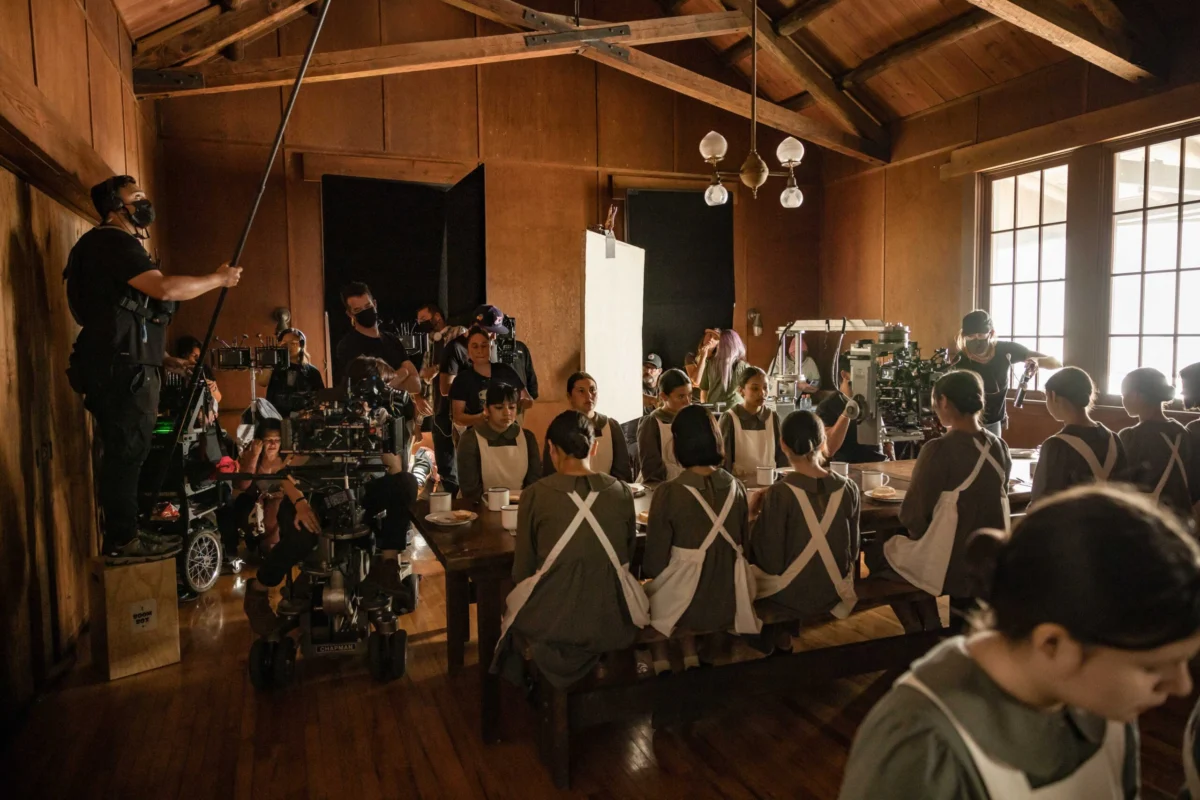
The production’s commitment to this humanization extended beyond the editing bay. During filming at the remains of an actual boarding school, the team held space for prayers and smudging, ensuring that the work was grounded in respect for the ancestors and the gravity of the events that took place on that soil.

Conclusion: A Legacy of Truth
"Deer Lady" is more than just a standout episode of television; it is a profound testament to the power of collaborative, conscientious filmmaking. By fusing technical innovation with deep, historical reverence, Sterlin Harjo and his team have ensured that the history of Native boarding schools is not just remembered, but felt.
As Reservation Dogs reaches its final bow, it leaves behind a blueprint for future storytellers. It proves that by listening to the past—and by being brave enough to distort the present to reflect that past accurately—television can serve as a vessel for truth, healing, and, ultimately, a lasting, revolutionary form of representation.
New episodes of "Reservation Dogs" continue to premiere Wednesdays on Hulu, marking the final chapters of a series that has redefined the landscape of modern American television.
