
A Chronicle of Exile and Regret: Paweł Pawlikowski Returns with the Haunting Post-War Drama Fatherland
By the Culture Desk
Published originally following the 2026 Cannes Film Festival; theatrical release begins Friday, October 23, via MUBI.
Main Facts
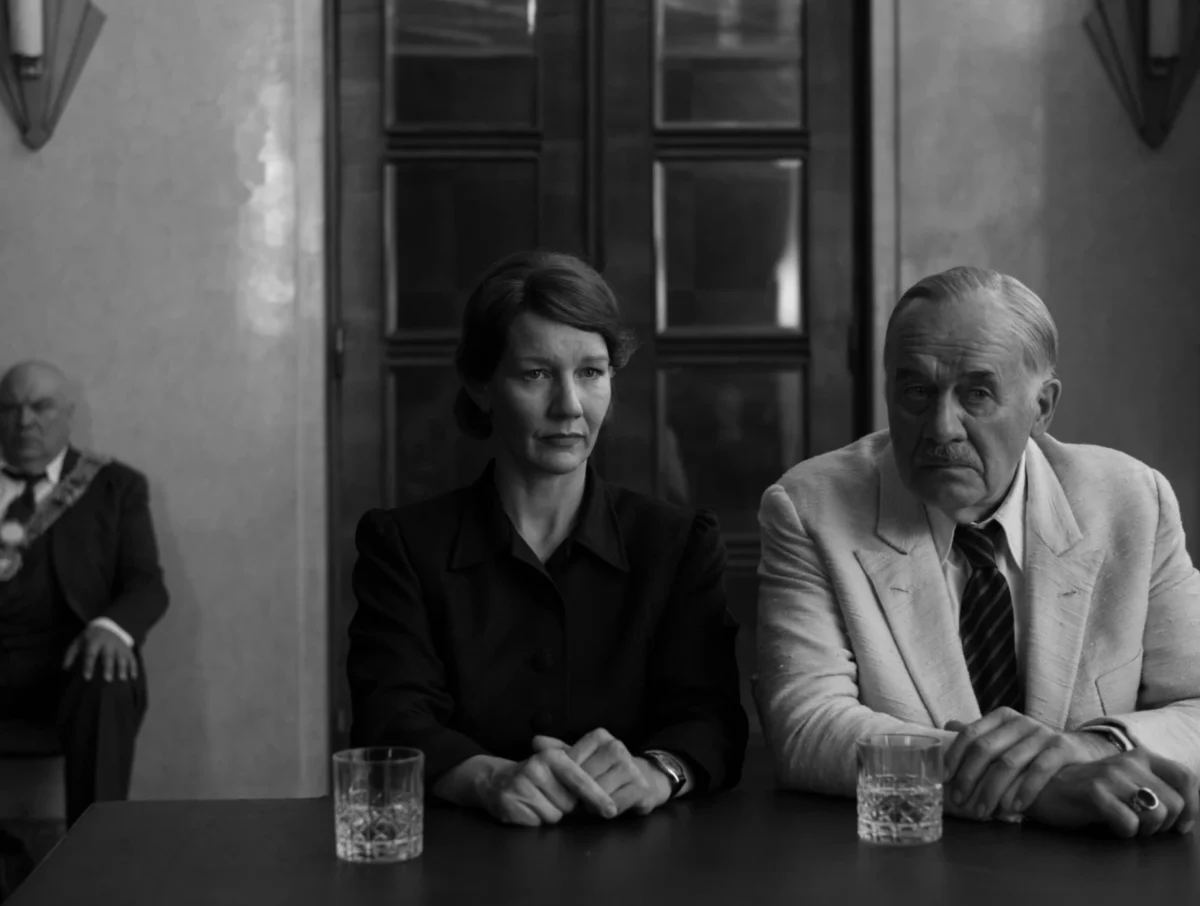
The unmistakable visual grammar of Polish auteur Paweł Pawlikowski—the aching, high-contrast monochrome cinematography, the claustrophobic Academy aspect ratio, and a pervasive current of historical fatalism—returns to the screen in his latest feature, Fatherland. Set against the fractured geopolitical landscape of 1949, the 82-minute film chronicles a melancholy, tension-filled road trip across Germany. The journey tracks legendary The Magic Mountain author Thomas Mann, played with weary gravitas by Hanns Zischler, and his devoted daughter and literary assistant, Erika, portrayed with characteristic precision by Sandra Hüller.
Departing from U.S.-occupied Frankfurt and heading toward Soviet-run Weimar, the film captures Mann’s first return to his native soil since fleeing the Nazi dictatorship in 1933. Armed with an invitation to receive the prestigious Goethe Prize—a desperate cultural olive branch from a country scrambling to salvage its national identity amid the nascent Cold War—the literary icon and his daughter navigate a landscape haunted by recent atrocities.
Distributed in select theaters by MUBI beginning October 23, Fatherland arrives as a stylistic companion piece to Pawlikowski’s Academy Award-winning Ida (2013) and Cold War (2018). Together, these works form a loose, austere trilogy exploring the psychological topography of European postwar trauma, memory, and displacement.
Chronology
To fully understand the emotional weight of Fatherland, one must trace the historical and narrative timeline established both on and off-screen:

- 1933: Thomas Mann leaves Germany, entering a 16-year political exile in the United States (primarily residing in the Pacific Palisades) in staunch opposition to Adolf Hitler’s regime.
- 1949 (The Present of the Film): The narrative opens in the glamorous, sunlit enclave of Cannes—a stark, almost mocking contrast to the physical and moral ruin of northern Europe. Here, a furtive telephone conversation between Thomas’s children, Klaus and Erika Mann, highlights both their deep familial bond and the invisible fractures threatening to tear them apart.
- The Eurotour Commences: Thomas and Erika arrive in Frankfurt under American jurisdiction, embarking on a diplomatic and literary pilgrimage eastward toward Weimar.
- The Weimar Bicentennial: The journey culminates in Weimar for the celebration of Johann Wolfgang von Goethe’s 200th birthday—an event hijacked by political rhetoric as East and West Germany formalize their ideological divorce.
- The Turning Point: Midway through the tour, father and daughter receive devastating news regarding Klaus Mann (played by August Diehl), whose real-life struggles with his Communist sympathies and sexuality ultimately led to his suicide in Cannes. This tragedy catalyzes the simmering resentments between Thomas and Erika, forcing them to confront their codependent dynamic.
- May 2026: Fatherland makes its world premiere in Competition at the Cannes Film Festival, drawing critical praise for its aesthetic discipline and powerhouse central performances.
- October 23, 2026: MUBI brings the film to select theatrical markets across North America and Europe.
Supporting Data and Production Details
Fatherland relies heavily on a lean, elliptical filmmaking style that trades exposition for atmosphere. Shot on location in Poland (standing in for late-1940s Germany) by Pawlikowski’s frequent collaborator, cinematographer Łukasz Żal, the film tracks the characters’ black Buick through foggy, guilt-ridden vistas.
| Production Element | Detail / Description |
|---|---|
| Director | Paweł Pawlikowski |
| Key Cast | Hanns Zischler (Thomas Mann), Sandra Hüller (Erika Mann), August Diehl (Klaus Mann), Devid Striesow (Johannes R. Becher), Anna Madeley (Betty Knox), Joanna Kulig (Cameo Lounge Singer) |
| Cinematography | Łukasz Żal (Black-and-White, 4:3 Academy Ratio) |
| Runtime | 82 Minutes |
| Key Locations | Frankfurt, Weimar, Cannes (Historical and narrative framing) |
| Distributor | MUBI |
| Theatrical Release Date | October 23, 2026 |
The supporting cast weaves a web of mid-century literary and political figures into the Manns’ orbit. Devid Striesow appears as German Communist author Johannes R. Becher, while Anna Madeley portrays Associated Press journalist Betty Knox. Eagle-eyed fans of Pawlikowski’s oeuvre will also spot Cold War star Joanna Kulig in a memorable cameo as a melancholic lounge singer.
Official Responses and Critical Reception
Reaction to Fatherland upon its Cannes premiere has been largely positive, though critics note a distinct tension between Pawlikowski’s formal rigor and the historical gravity of his subjects. Holding a solid Grade: B in critical consensus, reviewers have praised the film’s economic storytelling while debating its emotional accessibility.
Sandra Hüller’s performance has drawn significant attention, rounding out a monumental year for the German actress that includes her role in the blockbuster-leaning Project Hail Mary and her Berlinale Best Actress win for Markus Schleinzer’s black-and-white period drama Rose. Critics have noted that while Hüller plays Erika with her trademark airtight control—relying on chilling stares and strained silences—the screenplay’s narrow focus occasionally prevents the audience from fully penetrating the character’s interior life beyond her role as a doting, defensive daughter.
Hanns Zischler’s portrayal of Thomas Mann has similarly been hailed as a masterclass in quiet desperation. In one of the film’s most resonant exchanges, Erika urges her father, "Let’s go home," to which Mann chillingly replies, "Where is that?" Reviewers have compared the pair to "two lost suitcases on a carousel going nowhere," capturing the rootlessness of intellectuals caught between a rejected fascist past and a divided, uncertain future.

Implications
Fatherland occupies a unique space in contemporary European cinema. Unlike Pawlikowski’s previous features, which utilized fictional protagonists to navigate historical trauma (such as the young novitiate in Ida or the star-crossed musicians in Cold War), Fatherland tackles real historical heavyweights. This shift proves both a fascinating challenge and a minor limitation; while the real-life resonance grounds the narrative in undeniable truth, it occasionally keeps the audience at arm’s length.
Furthermore, the film’s subtle backdrop carries heavy implications for modern geopolitical discourse. By illustrating the rapid hardening of borders between Soviet-occupied Weimar and American-run Frankfurt, Pawlikowski constructs a mirror for contemporary anxieties regarding fractured national identities and political polarization.
Though the picture occasionally risks sacrificing emotional intimacy on the altar of immaculate aesthetic design, it ultimately delivers a poignant grace note. As the Manns witness the quiet encroachment of Soviet carceral systems running parallel to banquet halls celebrating socialist culture, Fatherland reminds viewers of the high cost of ideological conformity. It is a brisk, haunting elegy for a lost Europe—one that cements Pawlikowski’s status as one of cinema’s most uncompromising stylists.
